There is a lot of buzz in our modern world talking about discipleship. Everywhere you turn there seems to be a new video series, course, or initiative that promises to be the next big thing in discipling the people in your church! And, as often happens with this kind of stuff, while it may be very good, it certainly doesn’t do all that it has promised. But why is this the case? Firstly, it is not about the intention or desire of those wishing to disciple or create this content. Everyone involved has a serious and deep desire to see Jesus transform people’s lives, and to make them disciple making members of God’s Kingdom. The good intentions and love of Christ are not what is questionable here.
I believe more fundamentally in the modern evangelical space, we have somewhat forgotten what discipleship is all about. So many of the pipelines or pathways of discipleship I hear about are all looking to keep people coming back every week, get involved in volunteering, inviting other people to church, and Lord willing to start giving. None of these actions are bad, and we certainly want to see them happen. But, these are not the point of discipleship.
The theological capstone of being a Methodist is the idea of Entire Sanctification, or Perfect Love. Simply put, the work of the Holy Spirit has done its work (to the extent possible in our mortal human lives this side of eternity), where our love has been transformed, and while we are not perfect in performance, our love is wholly set on Christ. Certainly sounds like a lofty goal, but John Wesley and his theological descendants certainly believe it is possible. Where many Methodists stop is looking back to where Wesley was inspired to understand this as the goal of the Christian life, and that comes from the Eastern Orthodox position of theosis. Similar in end, theosis, or deification, where the believer achieves unification or the likeness of God.
Now, this might seem like too much for some, and I certainly get it. But if we look at the Biblical data, we see that ultimately the goal of the Christian life is to look like Jesus. To be His image bearer. While sin entered the world and broke us, Christ in what He has done has paved the way for us to do what we were originally created to do: embody His character and co-create within His good creation.
But if this is the actual goal of the Christian life, how have we gotten to where we are today? Well, in my estimation, much of our discipleship material is decidedly more informational and training based than it is anything else. Fundamentally what we have forgotten is the Christian faith is not a set of ideas you are convinced of and believe. It is a way of life that you embody and engage the world with. It has been a product of post-enlightenment philosophy that has relegated personal belief and faith to a set of ideas, and not an all-encompassing way of life.
When we look at the Old Testament, through to the first centuries of the Church we see not people changing where they go on weekends, but a fundamentally different way of life. And in losing this way of thinking, we have forgotten how to do discipleship. Not because we don’t love Christ, or love people. But because we are limiting something that is supposed to have full reign of our entire being, and turned it into a training program.
So all this being said, what does ancient discipleship look like? It can be boiled down to two primary pillars. Spiritual Disciplines, and the Means of Grace.
Richard Foster describes spiritual disciplines as practices that help us draw closer to Christ and experience spiritual freedom, not as ends in themselves. They are the actions that through encountering Christ in the build up our character and relationship with Christ to know Him more. Practices such as prayer, reading, fasting, silence, giving, worship, celebration and more. I highly encourage people to read Foster’s book, Celebration of Discipline. This classic lays out the forms and flow of the main Christian disciples that make up the Christian way of life.
More than just building up our lives, spiritual disciplines are also essential because they ultimately form what we love. Through repeated and intentional action, doing these things form and shape our minds and lives in a certain way. We are creatures of habit, and when we get set in a way of doing things, it is part of what makes us who we are. So by daily participating in spiritual disciples, we encounter Christ, and we also shape our lives around Him.
Means of Grace as traditionally understood in the Christian faith, and in Methodism are those ways by which God imparts His grace to the believer. Grace is easily understood often as two different things. Unmerited grace and also divine enablement. It is the latter especially that is important here. Because we know as humans we are unable to do what we are called to as followers of Christ in our own strength (or at least I know I can’t!), there are certain ways Christ has promised as channels through which the Holy Spirit endows and bestows His strength and enablement.
With this the first question is, “can’t the Holy Spirit do that without a specific physical means?” Sure He can. But what the Christian faith has always believed is that stuff matters. We are not totally disembodied, and our encounters with God are not just subjective, internal experiences where we meet Him. We are physical beings as much as we are spiritual beings. We cannot get away from stuff, and to disconnect the two is an unfortunate recent trend in particularly the Evangelical world that smacks of a tacit gnosticism that disdains the physical.
It does not mean that God cannot and does not meet us in times of prayer, singing, silence or in hearing the Word. He certainly does do all of those things! But we can never forget that He has also, through His Church, ordained and established various physical means that we know by faith we encounter Him and receive His grace.
Of course there are the Sacraments (which we will talk about in a moment). But there are also other means of grace that are not Sacraments that people have seen how Christ endows His enablement to His followers. Mattox, in his book Responsible Grace, has quite a list of those non-Sacraments means of grace that Wesley recognized. In more traditional expressions of the Church these are called sacramentals. Other means from the Sacraments that grace is given.
The two Sacraments the Protestant world recognizes (I talk about them HERE) are those of Baptism and the Eucharist (Communion/the Lord’s Supper). In Baptism, the initiatory Sacrament there is grace conveyed to the believer as Christ, not the baptized is the primary actor and agent (See St. Paul in Colossians speak about Baptism). The specific effects of the grace conveyed at Baptism are discussed, debated and understood differently. John Wesley spoke about sinning away his baptism by the age of 10 or 12. But what is undisputed is that Baptism brings the person into the Church, and they are given grace, whether they are an infant or a newly converted adult.
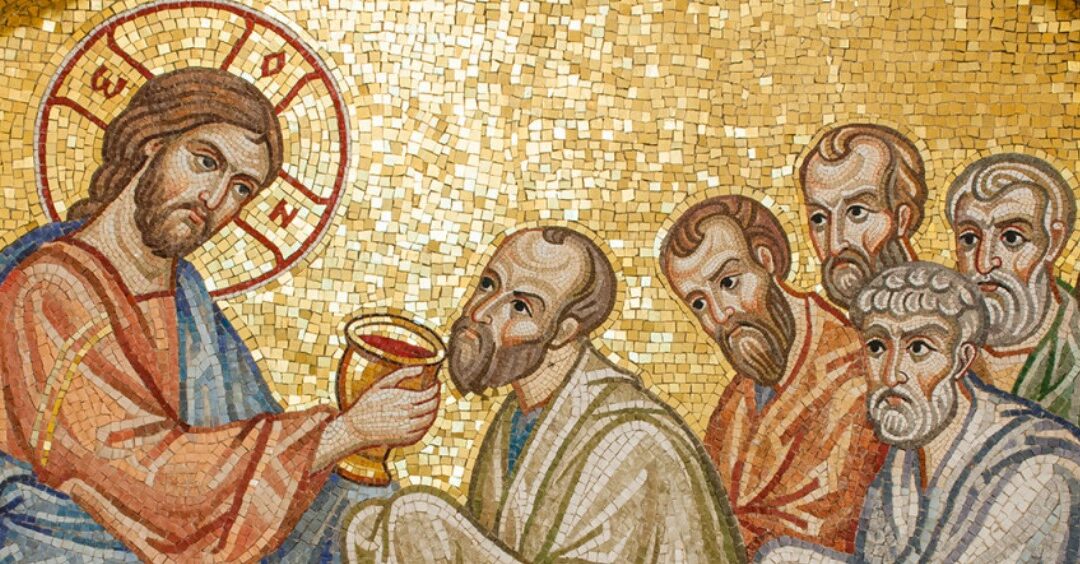
The second of course is the Table. The pinnacle and high point of Christian worship universally for the first 1500 years of the faith, and still for much of the Church in our day. Celebrating Communion is not just a remembrance of what Christ has done, but is also a reception of the benefits of His work on the cross. It is here that we encounter Jesus as both the host of the feast, and as the meal itself. Just as the consumption of the Passover Lamb was an essential part of being saved, likewise in the consuming of the perfect Paschal Lamb, we too receive grace and our salvation as we eat and drink in faith.
It is these two things, the spiritual disciplines and the means of grace that a Christian is discipled. The disciplines are like a lattice that is built. It is a structure or a framework of the Christian life. And then through the means of grace, that life grows, is nourished and eventually fruit is produced. What distinguishes this understanding of discipleship from more modern forms we often see is that this is life encompassing, not just for a time on Sunday and sometime else during the week.
The spiritual disciples are elements we should build our days around. Morning, Midday, Evening & Compline prayer as the traditional offices of the Church provide an opportunity to keep our hearts and minds on the goodness of God, and our ever need for His help. Regular reading and studying of Scripture keep us in constant understanding of the person of Jesus Christ that Holy Scripture points us to. Fasting empties us of our physical strength so that we can better rely on His strength. These, and the other spiritual disciplines construct and formulate our lives around a life knowing it is for God, and God alone that we live. Rather than the modern secular practice of fitting our faith in our life as another thing, classic Christian discipleship recognizes life is truly lived the other way around. We construct our lives around the truth of the world as explained and lived out in the Christian faith.
Then, as that structure is being built we are then nourished by the means of grace. Yes, the spiritual disciples in and of themselves are also offered as means by which Christ, through the Holy Spirit gives His graces to us, and then it is with these others, especially the Lord’s Table that we are nourished. If the spiritual disciples are common means of grace, the Lord’s Supper is as John Wesly called it “the grand channel of God’s grace.” It is not just one among many of the ways God gives His grace to us, but is the primary ordained way in which we encounter the Spirit and are enabled and empowered for the Christian life.
Sure, other kinds of studies, small groups and opportunities for learning the nuts and bolts of the faith are essential and important, but they must be done in conjunction and subject to the work of how the Church has always discipled new believers. Not just by being informational, but first transformational through spiritual disciplines and the means of grace, and then build up with information.
One of the most fascinating discussions in practical theology is that of deliverance and exorcism. It is an area of practice that is full of fruits and nuts, who do and say kooky things. A lot of misunderstanding, malpractice and unknowns. At the same time, there are also those out there who have a very excellent handle on both the theology and practice of spiritual deliverance and exorcism as it is more widely known, but they are often not as recognizable and are paid much less attention than the people who just shout and scream at demons to leave for the sake of making it a show of power and force.
One of the big reasons why this area is misunderstood or not looked at is because there are certain wings of the Church that don’t believe in the operation of the demonic, or at least in their operation in our day and age. On the edge of this camp are those that believe when the demonic operates, it instantly goes away at salvation.
Then there’s the other end of the spectrum as referenced earlier who thinks that there is a demon behind every lampshade. While theoretically this maybe has some merit it produces in the ways I’ve seen it an overstimulated anxiety over every single part of life. The reality, as it often is in things with theology, is right in the middle.
The first main reason why this get so misunderstood has to do with our Bible translations. A great example of this is Mark 1:32, “When evening came, after the sun had set, they began bringing to Him all who were ill and those who were demon-possessed.” We see the word “demon-possessed” and we immediately think of totally control, that a demonic being has a puppet like control over a person Our minds start flashing with scenes from The Exorcist, or other similar movies with crawling up a wall, floating and speaking in Latin. Part of this comes from the dramatization of Hollywood, and the other part of it comes from the translation not being the most accurate. A better translation of daimonizomenous (used 13 other times in the New Testament) would be “demon oppressed”.
What any practitioner of spiritual deliverance will tell you (be it Roman Catholic, Protestant, Orthodox etc…), is that there are varying levels of oppression and agreement with the demonic. There can be lower levels of oppression from a demon where there is attachment to trauma, patterns of sin and the like, and they like to wreak emotional havoc in a life. It can go from there, to full blown agreement with a demonic being that would be more akin to the possession we often think of.
What this washes out to is for most people (90-99% of cases) there is no direct confrontation with a demonic entity as we often think of.
Now, there is so much here that I have skimmed over, simplified, or not even touched, and at the end of the blog I will link to some excellent resources and books if you are interested in learning more. But back to the main question at hand. Can a Christian be possessed?
Actually possessed by a demon? No, a Holy Spirit residing in them Christian can not be possessed by a demon. But can they be oppressed? Yes. A friend of mine recently put it this way.
“When a person becomes a Christian the deed to their life is transferred from the Kingdom of Darkness to God. So the “house” (person) is legally free from the powers of darkness. But, they still might have garbage strewn across all the floors that need to be cleaned out.”
Everything that happens after salvation is a part of the work of healing and sanctification in a believer’s life. You see, deliverance and exorcism are ultimately rites of healing. It is the work of the Spirit through the authority vested in the Church that a person is healed from the brokenness in their lives, and that includes the demonic oppression that might be there.
This blog post is just the tip of the iceberg when it comes to this topic. As someone who has had some training in this, has been reading more on the topic, and practised a bit, it is a deep, deep rabbit trail. But, I hope this tiny primer has cleared up the initial question, and has also created some more questions to lead to further research and discernment for the future.
The last thing I will say is, Christ wants His people to be free. Our sins have been paid for, bought with the price of His blood, and we are no longer owned by sin and death. And now, just as the image of Christ is to be continually made in us, that also includes clearing out the broken garbage in our lives so we can experience the abundance He has for us.
Have you ever had those moments when prayer feels lonely? You may be surrounded by people and still feel like you are the only one praying. At other times, the greater struggle is not loneliness but silence—seasons when life weighs so heavily that we do not know what to say to God. Pressures, fears, and the relentless forward march of time can make us feel like we are holding our breath, not knowing what comes next.
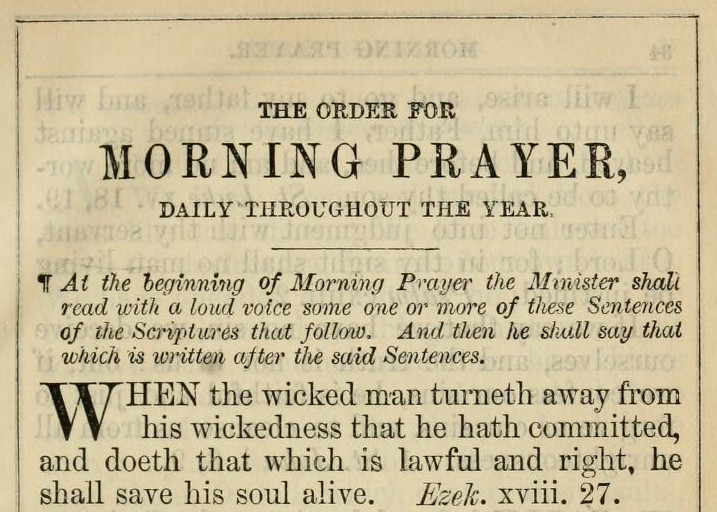
In those moments, it is a gift to remember that we do not pray alone. We can pray with the entire “great cloud of witnesses” who have gone before us [Hebrews 12:1]. This pattern is found in the structured daily office of the Book of Common Prayer. The flows and prayers of Morning and Evening Prayer have their roots in the early church and took definite shape during the English Reformation in the 16th century.
These are the prayers that shaped John Wesley’s spiritual life. As a priest in the Church of England, Wesley was dedicated to praying Morning and Evening Prayer every single day. His journals record innumerable instances of his participation in the daily office, both individually and corporately.
Yet as Free Methodists, we may ask: Why structured prayer? If the Spirit is meant to speak to and through us, won’t preset prayers and a set order inhibit that flow?
The concern is understandable, but it rests on a false opposition. Structure and Spirit are not enemies. In fact, the history of the Church suggests the opposite: the Spirit has consistently formed God’s people through shared patterns of prayer.
Scripture itself gives us structured prayer. The Psalms were not spontaneous utterances in the moment—they were prayed, sung, repeated, and handed down across generations. Israel learned how to pray by being given words. Jesus himself gave a set prayer to his disciples: “When you pray, say…” [Luke 11:2]. The early church did not abandon form in pursuit of freedom; rather, they received forms as gifts that shaped their freedom rightly.
The daily office is not a script that replaces authentic prayer; it is a trellis that helps it grow.
A trellis does not produce fruit, but without it, growth often becomes tangled and stunted. In the same way, the daily office gives shape to our prayer so that it can mature over time. It holds us in a pattern of Scripture, confession, praise, and intercession that gradually forms our hearts.
When words fail us, the office gives us words. When our emotions are chaotic, it steadies us. When our faith feels thin, it lends us the faith of the Church. It teaches us to pray not only from our own experience, but from the full range of human experience before God—joy and sorrow, confidence and doubt, repentance and praise.
This is one of its quiet strengths: it refuses to let us reduce prayer to whatever we happen to be feeling in the moment. Left to ourselves, we often circle around the same concerns, the same anxieties, the same limited vocabulary. The daily office stretches us. It brings us into contact with the breadth of Scripture and the depth of the Church’s prayer across centuries.
There is also a profoundly communal dimension to this practice, even when it is prayed alone.
When you pray the psalms appointed for the day, you are praying words that are being prayed by Christians around the world. When you follow the lectionary readings, you are hearing the same Scriptures that are shaping countless other lives that day. When you pray the familiar collects, you are joining your voice to generations who have carried these prayers through times of persecution, renewal, doubt, and awakening.
This is what it means, in part, to belong to the communion of saints. The daily office makes that communion tangible.
It also reorients our sense of time. Modern life trains us to experience time as something we manage, spend, or lose. It becomes fragmented, driven by urgency and distraction. The daily office gently resists this formation by sanctifying time itself.
Morning Prayer declares that the day begins with God, not with our notifications, responsibilities, or anxieties. Evening Prayer gathers the fragments of the day and returns them to God in thanksgiving and repentance. Over time, this rhythm begins to reshape our awareness. We start to see our lives not as a series of disconnected moments, but as something held within God’s presence.
This is not about adding another burden to already busy lives. It is about receiving a pattern that, paradoxically, lightens the burden by grounding us.
And far from stifling the Spirit, this rhythm often creates space for deeper attentiveness. Many who pray the office regularly discover that spontaneous prayer does not diminish—it becomes richer. The language of Scripture and the cadences of historic prayer begin to inhabit the heart, shaping how we speak to God even outside the set forms.
We might say it this way: structured prayer trains the imagination so that spontaneous prayer can flourish.
There are, of course, common objections beyond concerns about the Spirit.
Some worry that written prayers can become rote or mechanical. That danger is real—but it is not unique to liturgical prayer. Spontaneous prayer can become just as repetitive and inattentive. The issue is not the form, but the heart we bring to it. The daily office, when engaged with even a modest level of attentiveness, can actually cultivate deeper focus precisely because it does not depend on our ability to generate meaningful words in the moment.
Others feel that such practices are too formal or distant from their tradition. Yet for those in the Wesleyan family, this is not foreign ground. Wesley himself never abandoned the rhythms of the Book of Common Prayer. He saw no contradiction between heartfelt religion and structured devotion. In fact, he understood the liturgy as a means of grace—a channel through which God forms and sustains his people.
Recovering the daily office, then, is not about becoming something we are not. It is about reclaiming a means of grace that has always been available to us, though often neglected.
In a time when many feel spiritually isolated, unsure how to pray, or spiritually fatigued, the daily office offers a simple and profound invitation: join the prayer that is already happening.
You do not need to invent the words. You do not need to wait until you feel spiritually strong. You do not even need to feel particularly focused on any given day. You simply step into the stream of prayer that has been flowing long before you arrived.
And over time, that stream begins to carry you.
You are not the first to pray these words. You are not praying them alone. And you are not carrying the weight of prayer by yourself.
The Church is praying—with you, for you, and alongside you—morning and evening, day after day, generation after generation.
And in that shared rhythm, we may find not only words, but rest. Not only structure, but freedom. Not only discipline, but grace.
A few months ago I was accused of mocking. In this particular instance, I would say it was a quick attempt a labeling, a response that it often utilized as a way to write off, and side skirt whatever issue is the topic at hand. In this article we are going to start to develop something of a theology of righteous mocking or scoffing. Why would we even do that? Because like many things that we find in Scripture, there are emotions or actions that can be done correctly, and incorrectly. One major example that people often think of is anger. In modern American Christianity we often instantly associate anger with totally being bad, and thus a sin. But the Scriptural picture is much more nuanced than that. There are several examples presented to us of someone being angry, and it was wholly justified, even righteous. One prime example that we can often think of is Jesus when He cleanses the Temple just days before His crucifixion.
Then Jesus entered the temple area and drove out all those who were selling and buying in the temple courts, and turned over the tables of the money changers and the chairs of those selling doves. 13 And he said to them, “It is written, ‘My house will be called a house of prayer,’ but you are turning it into a denof robbers!” (Matthew 21:12–13, NET 2nd ed.)
There is no way around it in this passage. Jesus is angry, and righteously so. His Father’s house has been defiled by overcharging, and the Court of the Gentiles has been converted from its intended usage of allowing non-Jews to worship the True and Living God, and is being used to extract as much money as possible. Because of this, I think every honest Christian agrees that Jesus is righteously angry.
So now, back to scoffing and mocking. Like anger, this can be done rightly, but we must be so careful, because Scripture does warn about scoffing and mocking. “How blessed is the one who does not follow the advice of the wicked,or stand in the pathway with sinners, or sit in the assembly of scoffers. (Psalm 1:1, NET 2nd ed.). As followers of Christ we must be careful to not be a scoffer by character or reputation. Scoffing is something that can so easily be done incorrectly, and just fall into a mentality of mocking everything. Proverbs paints the scoffer as proud, resistant to correction, and destructive to community life (Prov. 9:7–8; 21:24). In the New Testament, scoffers are those who deny God’s promises and mock His people’s hope (2 Pet. 3:3–4; Jude 18).
This is no small matter. Scoffing is not just a bad habit of speech; it reveals the condition of the heart. To mock truth, holiness, or God’s promises is to place oneself in opposition to Him. For this reason, Christians are urged to avoid contemptuous ridicule and to let their words instead be gracious, seasoned with salt (Col. 4:6).
A striking biblical example of this kind of righteous mockery is found in Elijah’s confrontation with the prophets of Baal on Mount Carmel. As they cried out and cut themselves in a desperate attempt to rouse their god, Elijah began to taunt them: “Shout louder! Perhaps he is a god, but he may be deep in thought, or busy, or traveling. Perhaps he is asleep and needs to be awakened” (1 Kings 18:27). This is not petty ridicule; it is prophetic exposure. Elijah’s words highlight the impotence and absurdity of Baal, contrasting sharply with the living God who answers by fire. His mockery is aimed not at the personal weakness of the prophets, but at the falsehood they represent and the spiritual deception they perpetuate. In doing so, Elijah cuts through the illusion of power surrounding Baal worship and calls the people of Israel back to reality: a god who must be awakened, entertained, or persuaded is no god at all.
The same pattern appears in the wider tradition of the Church. Consider St. Boniface, who famously cut down the sacred oak of Thor at Geismar, not merely as an act of destruction, but as a lived argument, an embodied mockery of pagan impotence when no divine retribution followed. Likewise, the Church Fathers often employed sharp, even biting rhetoric to expose the absurdity of idolatry and false worship. Justin Martyr ridiculed the idea that gods could be fashioned by human hands and then worshiped, while Tertullian sarcastically pressed pagan critics by pointing out the moral contradictions in their own myths and practices. Even Augustine, with his characteristic wit, mocked the Roman gods in The City of God, highlighting their moral failings and the irrationality of trusting them. In each case, the aim was not cruelty, but clarity: to strip false religion of its perceived power and dignity, revealing it as hollow so that the truth of the living God might stand all the more plainly.
There is a correct way to scoff. There are seven principles found in Scripture when it comes to scoffing that keep it in the bounds of righteously doing so correctly. As we will see, mockery is always ultimately done out of the context and foundation of love. This is especially applicable when there are those who are being hurt or led astray by spiritual leadership, or wrong ideologies.
Aim mockery at power, not the vulnerable.
Target: false teachers, abusive leaders, oppressive systems. Never those sincerely struggling, doubting or deceived.
Example: Jesus mocked Pharisees (Matt. 23), but gently restored the confused and broken. (John 4 & 8)
Expose Absurdity, Don’t Just Insult
Mockery should unmask lies by showing their foolishness.
Example: Elijah mocking Baal’s prophets (1 Kings 18:27). His sarcasm made their god look ridiculous, not just insulting them personally.
Check Your Motives
Ask: Am I doing this to protect the flock and glorify Christ, or to boost my ego?
Wrong motive = you become the scoffer condemned in Proverbs (Prov. 21:24).
Keep the Gospel Centered
Satire without truth just tears down. Always point back to Christ as the true alternative.
Example: Paul mocks false apostles (2 Cor. 11:19–20) but immediately re-centers the church on the true gospel.
Use It Sparingly and Strategically
Righteous ridicule is a scalpel, not a sledgehammer.
If every sermon, post, or conversation drips with sarcasm, you risk cynicism.
Example: Jesus rarely used biting mockery—He saved it for entrenched hypocrisy (Matt. 23, Luke 11:37–54).
Make the Falseness Obvious
Highlight contradictions, exaggerations, or hypocrisy.
Example: Isaiah 44:14–20 ridicules idol-makers: burning half a log for firewood while worshipping the other half. The point is crystal clear—idols are absurd.
Be Willing to Weep as Well as Mock
Prophets wept even as they derided falsehood (Jer. 9:1).
Mockery without compassion risks becoming cruelty.
These guidelines laid out are also included in the attached graphic.
So the question is why should Christians know the guidelines of how to correctly scoff or mock? Because in cases of aberrant theology, abusive leadership, or abhorrent evil, mocking and scoffing can be an effective tool at cutting through whatever veil of power or superiority is present in a conversation, especially when there is a huge power differential. The difference lies in intent. Sinful scoffing flows from pride and aims to humiliate. Righteous mockery flows from zeal for God’s glory and aims to expose folly so that repentance might be possible. This means that for most of us, most of the time, scoffing should be avoided. But on rare occasions, in moments of prophetic confrontation, sharp words may be necessary to defend truth and unmask lies.
Of course, objections come quickly. Isn’t mockery unloving? Shouldn’t Christians be humble? Won’t it push people away? These are important questions, and they remind us that mockery is not a tool to be used lightly. Love usually speaks gently. Humility usually refrains from biting words. But sometimes love requires severity, and humility means trusting God enough to call sin what it is.
As a pastor, I find this both challenging and liberating. Challenging, because it calls me to examine my heart before I speak. Am I exposing falsehood for God’s sake, or am I indulging in sarcasm to make myself look clever? Liberating, because it reminds me that God’s people are not called to be endlessly polite in the face of evil. We are called to speak the truth in love, and sometimes love has a sharp edge.
Most of the time, our call is to bless those who mock us and to endure patiently, following Christ who “did not revile in return” (1 Pet. 2:23). But in those rare moments when the honor of God is at stake, Christians may find themselves called to words that cut, not to destroy, but to heal; not to humiliate, but to awaken.
This article is an AI generated summary of the Light in Life podcast, which can be listened to HERE
This episode of Light in Life asks a simple but searching question: what is a pastor? It argues that pastoral ministry is not mainly about charisma, administration, or crisis management, but about a distinct calling to preach the Word, administer the sacraments, and shepherd the people of God. The episode frames that calling within the Free Methodist tradition and within the broader Christian heritage of ordained ministry.
The conversation begins by stressing that pastors are not experts speaking from a distance, but practitioners speaking from the realities of ministry. That matters because the episode is less interested in abstract theory than in faithful pastoral formation. It also highlights the value of a denomination that has written structures, clear expectations, and a shared inheritance.
The Pastor’s Calling
A major theme in the episode is that pastoral ministry is a vocation before it is a job. A pastor is not merely someone who fills a weekly role or handles emergencies, but someone set apart for holy service. The episode describes this as being called to a way of life, not just to a list of tasks.
The Free Methodist Book of Discipline is used to define the role in practical terms. Ordained ministers are set apart for the study and proclamation of the Word of God, intercessory prayer, the winning of persons to Christ, the administration of the sacraments, and the defense of the gospel. That definition gives the episode its backbone: the pastor’s work is centered on Word and sacrament.
Word and Sacrament
The episode insists that preaching and sacramental ministry are not side functions. They are the core of ordained pastoral work. Preaching declares the truth of Christ, while the sacraments embody and communicate that truth in visible, communal form.
This emphasis pushes back against a modern tendency to make pastors into generalists. The conversation notes that pastors are often expected to do everything from crisis counseling to maintenance work, but those tasks cannot replace the central call to proclaim the gospel and administer the sacraments. Other forms of service may be necessary, but they must remain secondary to the primary office.
Priestly Service
Another important theme is the priestly character of pastoral ministry. The episode explains that the language of priest, elder, and pastor carries historical continuity, especially in the Methodist and Anglican tradition. That language does not mean a pastor replaces Christ, but that a pastor stands in a mediating, sacramental role on behalf of the church.
This priestly dimension also helps explain why ordination matters. The laying on of hands, the vows taken, and the authority given are not treated as empty ceremony. They mark a genuine setting-apart for sacred work, and they reinforce the seriousness of the office.
Shepherding the People
The episode also emphasizes that a pastor is a shepherd, not just a speaker. Shepherding includes care, discernment, formation, and presence. It is not reducible to preaching a good sermon or managing an organization.
At the same time, the episode rejects a purely sentimental view of pastoral care. Shepherding includes accountability, holiness, and responsibility. A pastor’s life shapes the congregation, not only through formal teaching but through personal example and spiritual gravity.
Holy Fear and Holiness
A strong thread throughout the conversation is the need for reverence. The pastoral office should be approached with holy fear, because pastors handle sacred things. When they speak the Word and administer the sacraments, they are not performing a neutral function; they are serving in a weighty calling before God.
This is tied to holiness. The episode argues that pastors should live in a way that reflects the truths they proclaim. Ministry is not only about what a pastor does in public, but about the kind of person a pastor is in private. The office demands integrity, seriousness, and spiritual discipline.
Formation and Presence
The conversation also critiques a modern tendency to reduce ministry to programs. Discipleship is not simply a curriculum or a sequence of lessons. It is relational, embodied, and formed through sustained presence.
That does not mean ministry must remain small or informal. The episode explicitly says that it is not arguing for tiny churches or for pastors to become mere chaplains. Instead, it calls for honesty about what pastoral ministry can and cannot do well, and it urges churches to value spiritual depth as much as numerical growth.
Classic Guides
Toward the end, the episode turns to classic Christian texts on pastoral ministry. Gregory the Great’s Pastoral Rule and Richard Baxter’s The Reformed Pastor are mentioned as formative works that help define the pastor’s calling more deeply. These books are presented as timeless guides for understanding the seriousness and complexity of the office.
Their inclusion reinforces the episode’s central message: pastoral ministry is ancient, demanding, and spiritually formative. The role of the pastor is not invented by modern leadership culture. It is rooted in the church’s historic understanding of ordained service.
Summary of the Episode
This episode presents a clear and weighty vision of pastoral ministry. A pastor is called to preach the Word, administer the sacraments, shepherd the people, and live a holy life worthy of the office.
In summary, the episode argues that pastoral ministry is sacred work, not generic leadership. It is a vocation of Word, sacrament, prayer, holiness, and shepherding, and it should be treated with the seriousness that such a calling deserves.