by Joel V Webb | Mar 31, 2026 | Uncategorized
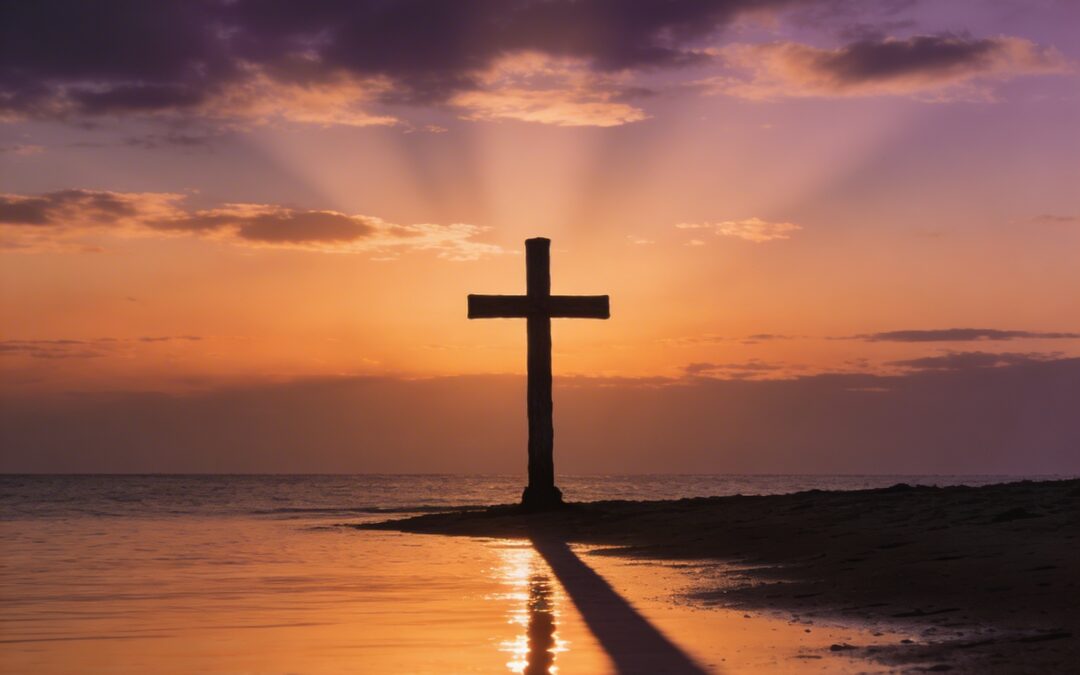
What sort of benefits does the cross of Christ provide us?
It certainly is an appropriate question to ask as we are just days away from Good Friday and Easter. Jesus died on the cross, something happened, and now because of it things are different for us. Throughout Church history there certainly have been a variety of understandings of that what, and for the most part they have been fairly consistent with each other. But something happened in the 20th century that provided a very different spin on what the work of Christ means for us in this life, and the next.
Any Christian who affirms the Nicene Creeds affirms that the work of Christ is for the forgiveness of our sins. Because Christ took our sins, we receive the blessing and benefit of having them no longer on us. Now we have to ask the question: what does that look like and mean? Classically, that question has been answered by the Church as proclaiming that we now receive new life, free from the curse through and because of Christ that enables us to become like Him in a way that was not possible before His once for all sacrifice.
The early Christian witness is remarkably unified: the cross is the place where God’s love, justice, and mercy converge. Paul writes, “God made him who had no sin to be sin for us, so that in him we might become the righteousness of God” (2 Cor 5:21). In Colossians he adds that God has “forgiven us all our trespasses, having canceled the record of debt that stood against us with its legal demands. This he set aside, nailing it to the cross” (Col 2:13–14, ESV). The cross, then, is the hinge of both forgiveness and new creation. We are no longer under the curse of the law, yet we are not left to drift into easy moral license; instead, we are placed into a new story—death to sin, life in Christ, formation into holiness.
The Church Fathers amplify this picture. St. Irenaeus speaks of Christ as the “last Adam” who recapitulates human life, summing up and redeeming every stage of our fallen history so that “what Adam rendered a slave he might make lord” (cf. Adv. Haer. 5.1.1). The cross is the definitive act through which Christ undoes the pride of the first Adam and restores human nature to communion with God. St. Augustine, writing in the 4th–5th century, similarly stresses that the cross is the place where God’s love and righteousness coincide: the innocent Son bears the punishment we deserve, and in that very act love is shown to be greater than our sin. As he puts it in one of his sermons, the cross bends the head to kiss us, extends the arms to embrace us, and opens the heart to receive us.
St. John Chrysostom, preaching in the 4th century, declares that the cross is not only the salvation of the Church but also “the boast of those who hope in it” (cf. his homilies on the Cross). For him, the cross frees us from enmity with God, breaks the authority of the devil, and delivers us from death and destruction. Through the cross, he says, we learn piety, discover the true nature of God, and are taught to die for others as Christ first died for us. In this ancient vision, the cross is never a mere event in the past; it is the living center of a transformed life and a reconciled world.
But in the 20th century, a new story attached itself to the cross. The so‑called “prosperity gospel” teaches that Christ’s death purchased not only spiritual salvation, but also material abundance, physical health, and social success. In this way of thinking, the atonement covers not just sin and guilt, but also poverty, sickness, and misfortune. Advocates of this view claim that if you have faith, give generously, and “confess” God’s promises, you will be rewarded with wealth, health, and a life free from suffering. The cross thus becomes less about reconciliation and more about a transaction in which God is obligated to grant earthly prosperity to those who “activate” their faith.
This message is a radical departure from Scripture. The apostles promise suffering, not immunity from it (Rom 8:17; 1 Pet 4:12–13). Jesus says, “If anyone would come after me, let him deny himself and take up his cross and follow me” (Matt 16:24), not “follow me and I will guarantee you comfort.” Paul writes that “if we are children, then we are heirs—heirs of God and co‑heirs with Christ, if indeed we share in his sufferings in order that we may also share in his glory” (Rom 8:17). The New Testament repeatedly pits the way of the cross against the way of the world, warning that those who love money stand in danger of idolatry (1 Tim 6:10; cf. Matt 6:19–21).
The prosperity gospel also distorts the biblical doctrine of the Abrahamic covenant. It claims that believers are Abraham’s heirs and therefore entitled to material prosperity as part of God’s covenant blessing. But when Paul speaks of “the blessings of Abraham” falling on the Gentiles in Christ, he immediately explains that this blessing is the promise of the Spirit through faith (Gal 3:14). The covenant is fulfilled spiritually in reconciliation, adoption, and the indwelling of the Spirit, not primarily in bank accounts or real estate.
The Bible sounds a clear warning against the idolatry of wealth and the illusion that faith is a lever for acquiring it. Jesus warns that “no one can serve two masters… You cannot serve God and money” (Matt 6:24). The apostle John exhorts, “Little children, keep yourselves from idols” (1 John 5:21) a phrase that early Christian moralists read as a summons to flee the idolatry of greed. The pastoral letters likewise warn that the love of money is a root of many evils and can lead believers to wander from the faith (1 Tim 6:9–10). The Fathers echo these warnings. St. Augustine repeatedly warns against the “lust of the eyes” and the danger of treating wealth as a sign of God’s favor, pointing instead to the cross as the true mark of Christian identity. Likewise, St. John Chrysostom rails against the obsession with riches among his flock, urging them to see Christ crucified rather than Caesar adorned. For the Fathers, the cross is the final answer to the world’s false promises: it is the place where God exposes the emptiness of power, status, and wealth and offers something far greater: union with himself.
The prosperity gospel is not simply a different emphasis on the Christian life; it is a different gospel altogether. By teaching that the atonement guarantees material prosperity, it turns the relationship between God and human beings into a quid pro quo transaction: you give, you speak, you believe, and God must pay. This view undermines the very nature of grace, which is the unmerited favor of God. If prosperity is automatically attached to faith, then grace becomes a tool, and God becomes a kind of cosmic vending machine, programmed to dispense rewards when the right buttons are pressed. Moreover, the prosperity gospel misrepresents the nature of faith itself. The New Testament portrays faith as trust in the person and promises of Christ, not as a “spiritual force” that manipulates God. Yet many prosperity teachers speak of faith as a self‑generated power that can be harnessed to make God give. This is far removed from the Pauline picture of faith as the instrument by which we receive forgiveness, righteousness, and the Spirit (Gal 3:14; Eph 2:8–9). It is also alien to the apostolic view of prayer, which is directed to “Your will be done,” not to getting God to serve our desires (Matt 6:10; James 4:3).
The true gospel offers something more profound and lasting than the prosperity gospel’s glittering promises. The cross secures for us not an escape from suffering, but a share in the life of the risen Christ. St. Paul can write, “I have been crucified with Christ. It is no longer I who live, but Christ who lives in me. And the life I now live in the flesh I live by faith in the Son of God, who loved me and gave himself for me” (Gal 2:20). This is the heart of the gospel‑centered alternative: the Christian life is not about maximizing personal gain, but about being conformed to the image of Christ, even through the cross.
The cross brings us:
- Reconciliation with God: “We were reconciled to God by the death of his Son” (Rom 5:10) and “the Cross is the reconciliation of enemies to God” (Chrysostom).
- Deliverance from sin and death: the cross annuls the power of sin, breaks the hold of death, and unmasks the petty calculations of the devil.
- Sanctification and holiness: the Spirit is poured out on those who are joined to Christ, enabling us to walk in newness of life (Rom 6:4; Tit 3:5–7).
- Eternal inheritance: the cross is the pledge of resurrection and the promise of a new heavens and a new earth, where sorrow and pain will be no more (Rev 21:4).
For the Fathers, the cross is the icon of both God’s love and our vocation: it is the place where God stoops low enough to save, and where we are called to stoop low enough to serve. It is the standard raised against the world’s values, the pattern of true discipleship, and the guarantee of glory to come.
As we approach Good Friday and Easter, the prosperity gospel should not be our tutor. The cross did not come to make us rich by the world’s standards, but to make us heirs of God and joint‑heirs with Christ (Rom 8:17). It did not come to free us from suffering, but to give our suffering meaning by joining it to the body of the Crucified One. The benefits of the cross are spiritual, eternal, and relational: forgiveness, adoption, the Spirit, communion with God, and the hope of resurrection.
The true prosperity of the believer is to be like Jesus, to love as he loved, to serve as he served, to forgive as he forgave, and to hope as he hoped, even when the world calls it foolishness. As we walk toward the cross and the empty tomb, may we receive the cross’s real gifts, reject the false promises of the prosperity gospel, and live in the light of the one who, though rich, became poor for our sake, that we through his poverty might become truly rich in every way that matters (2 Cor 8:9).
by Joel V Webb | Mar 27, 2026 | Uncategorized
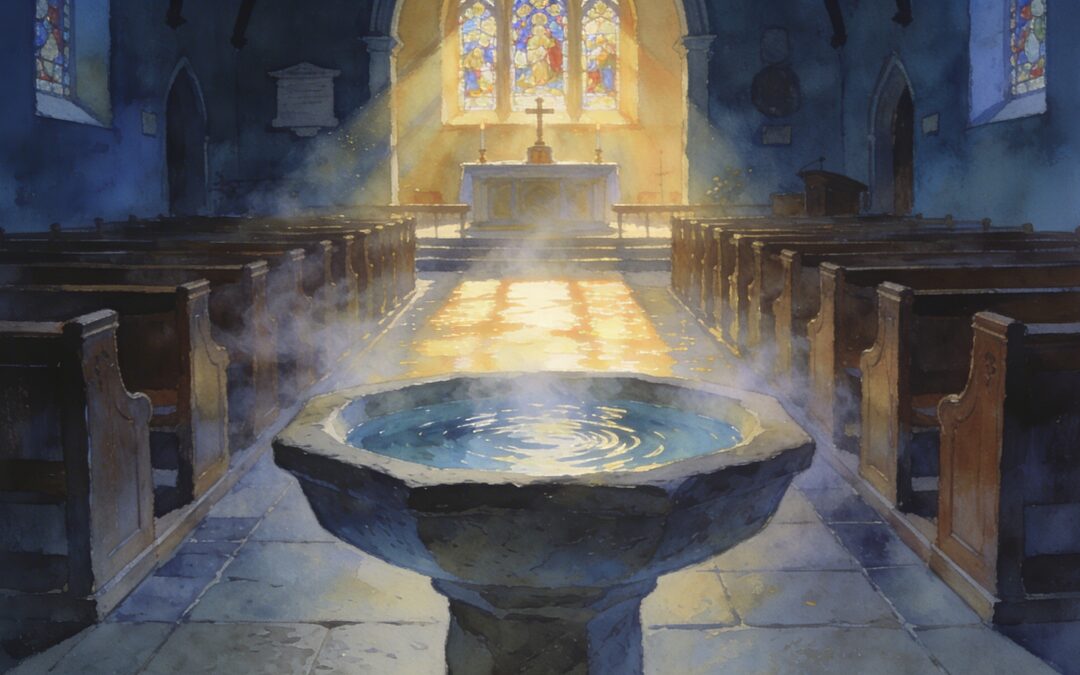
Easter is just around the corner, and for the first time I’ll have the honor of administering the sacrament of baptism on Easter Sunday, one of the traditional days the Church has welcomed those into the Church. The discussion and debates in the church over baptism are a fascinating one. For every Christian, baptism is the universally recognized entrance into life in the people of God, but especially since the Reformation, certain elements of the Church, while acknowledging its importance, have lessened its impact, and flattened the reality and beauty of baptism to a simple, “tell people that you love Jesus.” But what Scripture, and the history and tradition of the Church demonstrates, it is so much more than that.
Before addressing anything more specifically, I want to quickly touch the base that Baptism is a Sacrament. In the Free Methodist Church, the denomination I am in, we recognize the two sacraments of Christ, the Eucharist and Baptism. They are the means of grace that Christ has given His Church. Eucharist (Communion or the Lord’s Supper), as spoken of by John Wesley is the ongoing and continual means by which God provides grace to the Christian in their life (see his sermon The Duty of Constant Communion). And, it is Baptism, as spoken of above, that serves as the rite of entrance into the people of God. In my church, the baptismal font is located at the back of the sanctuary, in direct line with the chancel of the altar, representing the truth that you must first pass through baptism to come into the life of the Church.
The word sacrament in this discussion is important because it focuses on the work of God that takes place as we engage in these means that Christ has given us. Yes, we are commanded to keep them in obedience to His word (Christ’s command to baptize in the Great Commission, and His command to keep the table in continual remembrance of Him). It is the witness of Scripture and the early undivided Church that these acts are much more than us doing, they are the avenue and channel of God to work in and through His people. Physicality matters because we are in a physical world, and God stepped in through the incarnation. So thus, God does not stop working through the physical, rather He has given to His people physical signs through which His graces flow. This is why I distinctively use the language of sacrament, rather than something else such as ordinance.
Now back to the main discussion.
Of all the verses, one of the most controversial is 1 Peter 3:21, “this water symbolizes baptism that now saves you also—not the removal of dirt from the body but the pledge of a clear conscience toward God. It saves you by the resurrection of Jesus Christ.” In this verse, Peter does not mince words—he articulates something that should cause modern evangelicals, especially those of a “believer’s baptism only” persuasion, to slow down and read again. “Baptism now saves you.” It’s hard to argue that Peter could have spoken more plainly. But immediately, he anticipates our misunderstanding: it is not “the removal of dirt from the body.” It’s not a magical washing, or a mere ritual dealing with externals. Peter wants us to understand that baptism’s efficacy is grounded not in ritual precision but in the resurrection of Jesus Christ. In other words, baptism saves, not because of water alone, but because in baptism we are united to the saving work of Christ—the same Christ who plunged into death and rose up into new life.
The apostle’s words echo other deep currents running through the New Testament. Paul declares in Romans 6 that “all of us who have been baptized into Christ Jesus were baptized into his death.” Baptism links the believer personally and mysteriously with the passion and resurrection of the Lord. It is not simply a symbol we perform to show our commitment; it is a real participation in Christ’s own redemptive act. Through it, we are joined to his dying and rising—our old self is buried, and a new self, reborn by grace, comes into being. In this way, baptism is not an optional external mark, but an entrance into life in Christ, a sacramental sharing in his work of salvation.
Here is where much of our modern understanding falters. We have come to think of baptism primarily as an expressive act—something we do to communicate something about ourselves: our faith, our repentance, our decision. But biblically and historically, baptism is primarily receptive. It is something God does in and for us. Yes, we approach in faith; yes, it is a sign of commitment to follow Christ—but at its core, baptism is an encounter with the divine initiative, not a declaration of human resolve.
This shift in emphasis is not a matter of semantics. It shapes our entire theology of grace and discipleship. If baptism is my declaration, then my faith stands primarily on the strength of my sincerity and memory of having “made a decision.” But if baptism is Christ’s act toward me, then my faith stands on divine promise and covenant faithfulness. The former centers on my experience, the latter on God’s grace. And this distinction lies close to the heart of the Reformation concern: that our salvation rests not on our performance but on the steadfast mercy of God.
John Wesley, of course, understood this sacramental tension well. In his sermon The New Birth, he draws together faith and baptism in a deeply practical way. He insists that baptism is both a sign and a means of grace—a vehicle through which God works regeneration. But he also recognizes that the waters alone do not automatically confer salvation; they must be received by faith. Wesley’s nuanced view allowed for both divine action and human response, and it serves the Church today as a helpful corrective to both extremes: the notion that baptism functions mechanically without faith, and the opposing view that it is merely a symbol without power.
Throughout Scripture, water is not a neutral or comforting image—it is chaotic, cleansing, and creative all at once. From the primordial deep in Genesis, to the floodwaters in Noah’s day, to the Red Sea and the Jordan River, God repeatedly uses water as the boundary between old life and new creation. It both destroys and delivers. Peter, drawing on the Noah narrative in the preceding verses of 1 Peter 3, connects baptism directly to this cosmic pattern: just as Noah passed through the waters of judgment into a new world, so too we are borne through the waters of baptism into the new creation of Christ.
The early Church Fathers grasped this profoundly. Tertullian, writing in the second century, called baptism the “seal of faith,” by which the Spirit marks and protects the believer. Cyril of Jerusalem described baptism as a “participation in the death and resurrection of Christ,” an event so transformative that he instructed catechumens to remove their garments before baptism as a sign of laying aside the old self, and then clothe themselves anew as a symbol of their resurrection life. These ancient witnesses saw baptism not as an addendum to salvation but as its visible threshold—the place where the promises of God and the faith of the believer meet in a sacrament of grace.
When I think about standing by the baptismal font this Easter, I can’t help but reflect on how baptism folds each of us into the larger story of redemption. It is not merely our story, it is Christ’s story, into which we are grafted. That’s why the baptismal liturgy traditionally includes the Apostles’ Creed, confessing the faith “once delivered to the saints.” In being baptized, a person doesn’t just say, “I believe in Jesus.” They are, more profoundly, saying, “I believe in the God of Abraham, Isaac, and Jacob; I believe in the Father, Son, and Holy Spirit, and I take my place among His people.”
The Church, in her wisdom, locates baptism at this communal crossroads. It’s never a private ceremony, because baptism ushers us into the Body of Christ. We are baptized into one Body, as Paul says in 1 Corinthians 12:13. The Church becomes the womb from which new Christians are born and the family into which they are adopted. That’s why the placement of the font at the entrance, aligned with the altar is so fitting. The believer enters through those waters to approach the table of grace, joining in the full life of the Church.
This brings us, inevitably, to the question of who should be baptized. For many evangelicals, the assumption is that baptism belongs strictly to those old enough to make a personal declaration of faith. And yet, the witness of the early Church and of Scripture itself offers a broader perspective. When Peter finishes preaching on Pentecost, his message concludes with a promise: “The promise is for you and for your children and for all who are far off” (Acts 2:39). Households are baptized, not just individuals. The covenantal logic that once applied to circumcision now unfolds in baptism. It is the sign of belonging to the covenant community—a sign that anticipates faith as much as it springs from it.
This doesn’t mean that faith is unimportant; rather, it means baptism operates within the economy of grace. For infants, it is a sign planted in hope, to be nurtured and fulfilled by future faith. For adults, it is the sacramental seal of faith received. In both cases, what matters is not the sequence of events but the grace of God uniting them.
John Wesley himself baptized infants with full conviction, but always with pastoral care, urging parents and the Church to raise those baptized children in the nurture of the faith. In that sense, baptism begins a process, not ends one. It marks the beginning of the journey of sanctifying grace, that ongoing “going on to perfection” that Wesley so cherished.
Peter’s grounding phrase, “by the resurrection of Jesus Christ,” cannot be overemphasized. Baptism saves because Christ’s resurrection gives it power. Every baptism is, in fact, a mini-Easter. The movement down into the waters mirrors the death and burial of Jesus; the rising up out of them signifies participation in his resurrection. This is why the early Church baptized converts at sunrise, and often on Easter—those being baptized would literally face the East, toward the rising sun, confessing that they were turning away from the darkness of sin and turning toward the Light of Christ.
Theologically, this resurrection motif tells us that baptism is not a static act but a dynamic participation in life eternal. We are not simply cleansed of sin, we are set free for righteousness. The grace received in baptism calls and empowers us to live differently. As Paul reminds us, “just as Christ was raised from the dead through the glory of the Father, we too may live a new life” (Romans 6:4). Baptism, then, is both forgiveness and new vocation. It is an identity-forming event.
Every time a Christian witnesses a baptism or dips their fingers into the font and makes the sign of the cross, it is a renewal of that truth: “I have died with Christ; I have been raised with Him.” Baptism, while once-for-all, continues to shape the believer’s spiritual imagination. Martin Luther, when plagued by temptation or despair, would often cry out, “I am baptized!”—not “I was baptized,” but “I am.” The reality of that moment endured for him as a present-tense grace.
So when the Free Methodist Church, or any church, remembers the baptized, it is a way of re-rooting our faith not in our wavering emotions but in God’s covenantal promise. Whether we were baptized as infants or as adults, in a river or a font, the same divine life is at work. God’s act remains true even when ours falter. Baptism allows us to locate our lives within that steadiness, to live out of an identity that has already been defined by God’s promise.
What, then, does it mean to “live baptismally”? It means living daily out of the truth that we have been united to Christ. It means resisting sin not from guilt or fear but from identity: “that is not who I am anymore.” It means recognizing the Church not as a voluntary association of like-minded individuals but as the family into which we were birthed through water and Spirit. It means approaching the table each week as those who have entered through the font—as resurrection people who have been called out of darkness into marvelous light.
To live baptismally is also to live missionally. The Great Commission does not end with “make disciples”; it continues, “baptizing them… and teaching them.” Baptism and discipleship are inseparable. Every act of evangelism, every act of mercy, every proclamation of the gospel flows from our baptismal identity—those who have been joined to Christ and sent to embody His Kingdom in the world.
As the early Church would declare at the baptismal font: “You are buried with Christ; you are raised with Christ; you are sealed by the Spirit; you belong to God.” This is not mere poetic flourish—it is the substance of Christian life.
So when Peter writes, “baptism now saves you,” he is not contradicting the gospel of grace, he is articulating it sacramentally. Baptism does not replace faith; it embodies it. It does not operate apart from the resurrection; it manifests it. It does not substitute obedience; it initiates it. The water does not save by itself, but by the divine power that has chosen to work through it.
This Easter, as you prepare to stand beside the font and welcome new believers into the family of faith, you participate in an unbroken story stretching back to the Jordan River, to Pentecost, to the empty tomb. The water that splashes from the font bears witness to the same grace that parted seas and burst forth from graves. It is the water through which the Spirit hovers once again, bringing new creation from chaos. And every drop proclaims the gospel in miniature: Christ has died. Christ is risen. Christ will come again.

by Joel V Webb | Mar 23, 2026 | Uncategorized
The Danger of Needing to Be Certain
In my mind one of the greatest problems we can face in modern American evangelicalism is a sort of pathological need for certainty. We seek to have everything we can sorted out, with a bulletproof argument that is airtight and nothing can touch it. Yet, the reality of the human experience is fraught with times of doubt, questioning, and wondering. And when we have this baseline of having to have sure certainty, when those times of doubts or questions come, we fall apart.
Thankfully, this is not the picture of faith that Scripture gives to us. Yes, we can know for certain that God is real and His Word is true. But that does not mean we shouldn’t have times where we wonder, question, or struggle with our faith. In fact, it is when we do this that our faith becomes more grounded, stronger, and we look like Christ even more.
The Forgotten Day: Holy Saturday
This is what brings us to Holy Saturday—an often forgotten and overlooked day when it comes to Holy Week. We have the triumphal entry on Palm Sunday, the institution of Holy Communion and the washing of the disciples’ feet on Maundy Thursday, and the Passion narrative of Good Friday where Christ dies for the sins of the world. What we often forget, in between Christ’s death and His glorious resurrection on that Easter Sunday, is the period of time on Saturday where all was not well. Yet, if we are honest, most of us find ourselves in times and seasons in our lives that feel more like Holy Saturday than they do like Easter Sunday.
I would argue, in fact, that part of what makes the impact of Easter so powerful is the reality of the day before. The disciples had just seen their Rabbi, the one whom they confessed was not just the Messiah but God Himself, be brutally tortured and crucified. They witnessed His lifeless body being taken down from the cross, prepared and buried in the tomb, with the heavy stone rolled over its entrance. I’m sure there was a sense of desperate finality as the final rumble of stone meeting stone was heard… and then silence.
The Stillness of God
That silence is what defines Holy Saturday. God does not speak. There are no miracles. No visions. No appearances of angels or prophetic words. The tomb is closed, and God seems utterly absent. The disciples are scattered, fearful, and in shock. Even Mary, who had treasured all things in her heart from the day the angel first spoke to her, now must sit in grief beside Joseph’s borrowed tomb.
This silence is sacred. It is not the silence of abandonment—it is the silence of waiting. But from the perspective of those who lived it, it was desolation. They did not yet know how the story would end. To them, the promises seemed broken, the mission failed, the Kingdom delayed. All they had left was a memory of Jesus’ words and the ache of hope deferred.
And that is often where we live. Between promise and fulfillment. Between Good Friday’s pain and Easter Sunday’s joy. In the long, confusing silence of Saturday.
Faith in the In-Between
We see moments like this throughout Scripture as well. Abraham, in those few moments before making a sacrifice of his only son Isaac, must have felt the knife of doubt as much as the knife he held in his hand. God had promised descendants through Isaac—yet now God asked him to give Isaac up. The faith that was “credited to him as righteousness” did not come from perfect understanding but from trust in the middle of contradiction.
So too with Joseph, languishing in the Egyptian prison. He had received dreams of greatness, of God’s favor, of leadership and blessing. But those dreams seemed impossibly far away in the darkness of the dungeon. Yet it was precisely in the waiting—in the years of silence—that his faith was formed into something steadfast and wise.
The psalms, too, are full of “Holy Saturday moments.” “How long, O Lord?” David cries again and again. “Will you forget me forever?” (Psalm 13). These laments are not the voices of faithlessness, but of faith struggling honestly before God. They reveal a God who invites our questions, our confusion, and even our frustration. In doing so, they teach us that faith is not the absence of doubt, but trust in the midst of it.
The Modern Idol of Certainty
This may be why modern evangelicalism struggles so deeply with doubt. We have, in many places, elevated certainty to an idol. We confuse faith with intellectual security, discipleship with having the right answers, and orthodoxy with the inability to ask new questions. We have learned to preach “victory” so loudly that we no longer know how to sit in silence.
Yet the church of the past—the church of the saints, mystics, and martyrs—knew the value of “the cloud of unknowing.” The mystics spoke of the “dark night of the soul” not as something to be feared, but as something through which God forms His saints. It was in St. John of the Cross’s darkness that he found greater intimacy with God.
When we sanitize our theology of its mystery, we lose the very heart of what it means to walk by faith. Hebrews 11 defines faith not as knowing everything, but as the assurance of things hoped for and the conviction of things not seen. Faith leans forward, hopeful yet uncertain, precisely because we cannot yet see the whole picture.
Waiting in Hope
Holy Saturday tells us that waiting is not wasted. The disciples’ grief does not nullify the promise—it prepares their hearts to fully receive it. When Easter morning dawns, it is not the victorious who recognize the risen Christ first, but the grieving. Mary Magdalene, still weeping in the garden, hears her name spoken by her risen Lord. Her waiting becomes wonder. Her sorrow becomes song.
In our lives, too, God often works in the silence. Not through flashy miracle or instant resolution, but through stillness that draws us deeper into dependence. The silence of God is never His absence—it is the quiet preparation of resurrection.
Holy Saturday faith is the kind that waits beside the tomb, trusting that even when everything looks finished, God is not done. It is the faith that still comes to the grave, still rolls the spices, still keeps watch through the night—because love compels it.
Living Holy Saturday Faith
To live “Holy Saturday faith” in our own world means learning to embrace mystery. It means discipling our hearts to sit in unanswered questions without despair. It means comforting others not with platitudes but with presence. It means teaching our children that God is faithful even when He seems silent, and that wrestling with faith is not rebellion but relationship.
Perhaps this is the witness the modern church most needs: a people unafraid to sit in the tension between death and resurrection, who confess with trembling lips, “I believe—help my unbelief.”
In the end, Easter does not erase Holy Saturday—it redeems it. The silence becomes a stage for the song of resurrection. The darkness becomes the fertile soil from which new life bursts forth. And the waiting becomes testimony that our hope is not in our certainty, but in the God who transcends it.
by Joel V Webb | Mar 19, 2026 | Theology & Practice
What we believe about the Church impacts a lot about how we go about being a part of the Body of Christ.
In a recent conversation I had with a church leader I greatly respect, we were talking about the role of leadership training in the Church for pastors and so on. He pointed out how leadership is important, how God is very organized (you can see that from the creation account in Genesis), and that we need to develop those with strong leadership qualities because we are an organization.
Yes, there are some good things we must have in developing leaders, but I came away from that conversation thinking there was more. Later, a friend made a statement that brought it all into focus: “The church is an organism, not an organization.”
That difference matters. Organizations are built by people, structured around efficiency, and maintained through systems. They live or die by planning, leadership, and metrics. But organisms—living realities—are something else entirely. They are born, not built. They flourish through life and nourishment, not through management. Their health depends on vitality, not structure.
That is precisely what the Church is called to be: a living body, the Body of Christ, animated by the Spirit of God rather than by human ingenuity. When we forget that truth, when we begin to operate as if the Kingdom grows by skillful management rather than faithful abiding, we start to treat the Bride of Christ as though she were a business.
There’s a lot of well-meaning leadership language floating around today—vision casting, strategic planning, branding, metrics for success. These things have their place, but when they become central, something subtle yet serious happens. Ministry becomes more about achievement than attentiveness, more about image than incarnation. We start to assume that the same models that work in the corporate world can also guide the Church. But the Church is not a company, because her life is not sustained by human ambition—it is sustained by the Holy Spirit.
What we really need are not more executives but more priests.
And by “priests,” I don’t just mean those who wear robes or serve at the altar. I mean men and women who embody the mediating life of Christ, bridging heaven and earth, bearing the presence of God into the ordinary. Every follower of Jesus is called into that priestly vocation. As Peter wrote, we are “a royal priesthood,” a people set apart to show forth the praise of the One who called us from darkness into light.
A priestly leader measures faithfulness differently. They do not count success by attendance numbers or program launches but by the measure of obedience, by how faithfully the presence of Christ is carried into the lives of others. They are not managers of outcomes, they are stewards of presence. A priest’s focus is not on controlling life but tending it, nurturing growth where grace is already at work.
That is the kind of leadership Jesus modeled. The Son of God didn’t come to optimize efficiency in Galilee. He came to serve, to wash feet, to suffer, and to give His life for the world. He came as a priest, standing between heaven and earth, reconciling humanity to God through His own self-giving love. When He said, “Follow Me,” He wasn’t inviting us into a system but into a life.
Throughout Scripture, the imagery of God’s people is always living, not mechanical. Paul speaks of the Church as a body with many members, joined and held together by what every part supplies. Peter calls us living stones being built into a spiritual house. Jesus compares His disciples to branches connected to a vine, dependent on His life for their fruit. Even the last vision of Scripture in Revelation is that of a living city—a place where God dwells among His people, where rivers flow and trees bear fruit for the healing of nations.
Every one of these images points to the Church as an organism filled with breath, rooted in relationship, and sustained by grace. And this means our structures and plans should always serve life, not replace it. Organization is not wrong; in fact, organization is part of God’s nature. Genesis reveals a Creator who brings order out of chaos. But in God’s world, order always serves love. It exists to make room for life to flourish, not to control it.
The danger comes when we invert that relationship, when order becomes the goal instead of the servant. Then we begin to trust our systems more than the Spirit. We begin to rely on programs instead of prayer. We forget that what brings health to the Body is not a well-laid plan but the living presence of Christ in our midst.
Recovering that organic imagination would change a lot about how we lead and live together as the Church. It would slow us down. We’d talk less about performance and more about formation. We’d spend more time listening, less time strategizing. We’d learn to see failure not as evidence of poor leadership but as part of the slow rhythm of growth. Living things go through seasons, sometimes fruitful, sometimes barren, sometimes pruned. A business might panic in decline, but an organism learns patience. In the Church, life often moves by resurrection, not acceleration.
Priestly leadership, then, is fundamentally intercessory. A priest listens for God on behalf of the people and listens to the people on behalf of God. They stand in the tension of both heaven’s holiness and earth’s need. That kind of leadership is marked by prayer more than planning, by presence more than productivity. It values formation over function and relationship over reach. It sees every encounter as sacred and every moment as potentially sacramental.
That’s not to say we should abandon organization entirely, just that it must bow to life. The Church’s systems exist to serve her people, not define them. Committees, councils, and boards can do holy work when they remember they are tending the living, beating heart of Christ’s Body, not managing a brand.
Jesus established order among His disciples, but He started with communion. He appointed leaders, but He first washed their feet. Even His parting command was not “Run the organization well,” but “Abide in Me.” His way of growing the Church was not through efficiency but through intimacy.
If we truly saw the Church as a living organism, Christ’s own body on earth, our leadership would take a cross-shaped form. We would spend less time guarding turf and more time sharing grace. We would view authority not as control but as service. We would measure success by fruitfulness of the Spirit rather than the size of the crowd.
At the center of all this stands Christ—the Great High Priest, the One who mediates life to the world. His life flows through His body by the Spirit, connecting and nourishing every member. Where He is truly present, the Church comes alive. Her worship becomes the pulse of a new creation. Her service becomes the fragrance of love. Her structure becomes the trellis upon which living vines can grow, not the cage that holds them in.
Maybe what we need in the Church today is less confidence in our ability to manage and more confidence in Christ’s ability to dwell. Maybe revival will not come from better leadership models but from a rediscovery of our calling as a priestly people, those who carry the presence of Christ into every home, workplace, and community with humility and joy.
Because in the end, organizations impress, but organisms live. The Church does not exist to impress the world with polish and productivity. She exists to be alive with the very life of Christ, His hands, His heart, His voice, His presence—moving in the world until all creation is renewed.
That life is what the world truly needs. That life is what we have been given. And that life, shared together in priestly love, is what makes the Church the living Body of Christ on earth.
by Joel V Webb | Mar 10, 2026 | Orthodoxy Matters, Theology & Practice
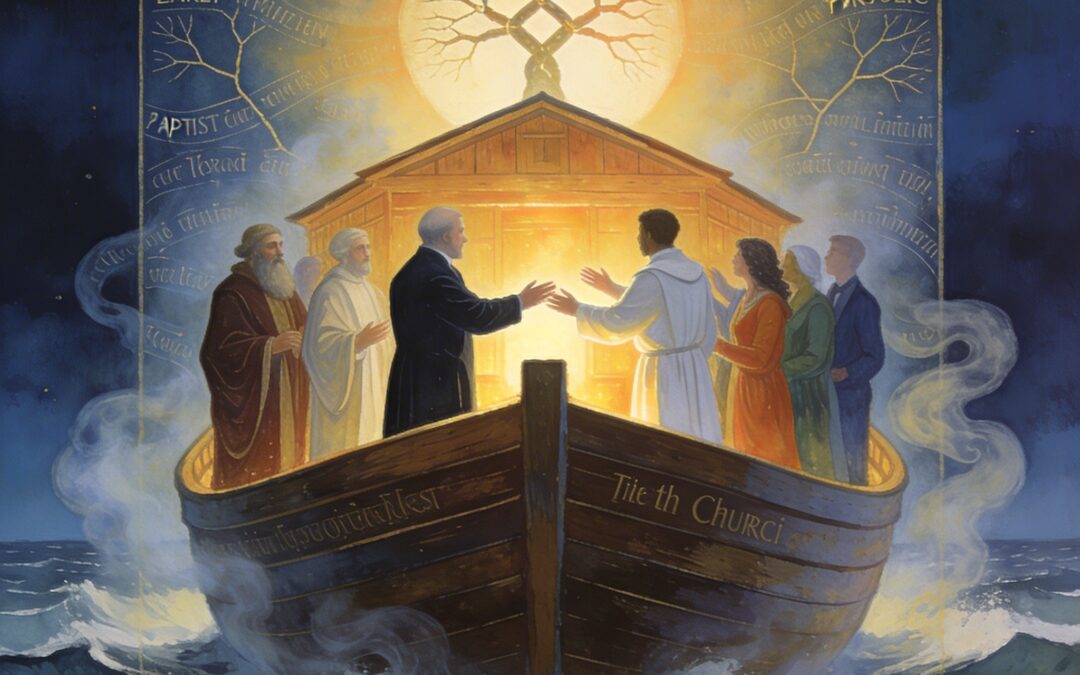
One of the prayers I think every Christian prays for that echoes the words of Christ from St. John’s Gospel, chapter 17: “I pray that they will all be one, just as you and I are one—as you are in me, Father, and I am in you. And may they be in us so that the world will believe you sent me.” (v.21). Where things get sticky is what we all mean by “one.” If you are a Roman Catholic, Orthodox, or Anglican, your ecclesiology (theology of the Church) differs from that of your run-of-the-mill Evangelical or Baptist. For the traditional Christian, the Church is often visualized as an ark (like Noah’s ark) that is sailing through history, with people getting on and off as time passed. Whereas, in a low-church understanding, “the Church” is not a single entity, but a blueprint found in the Bible that is made to be reproduced. Because of these different understandings, the answer to the prayer to “be one” looks different.
In the New Testament, the Church is described as a body—many members, but one life. The image St. Paul gives in 1 Corinthians 12 goes far beyond metaphor: it is the reality of what the Holy Spirit does with the people of God. There aren’t multiple bodies of Christ, only one. When we are baptized, we are joined not merely to Christ but to one another, across all ages, cultures, and nations. Congregations are expressions of that one Body, not separate bodies with their own identity. To be a Christian, then, is never an individual or local affair—it is to belong to something both visible and historical.
But the Church through time has not always lived that reality well. It has divided again and again—sometimes for tragic reasons, sometimes for necessary ones. In truth, some divisions have been like emergency surgeries: painful, but at times necessary to save life. Others, however, have been the result of human ego, political pressure, or differing cultural forms. Once the crisis passes, though, the call remains the same—to heal what has been torn.
Take, for example, our own Methodist heritage. John Wesley never intended to start a new church. A lifelong Anglican priest, he described the Methodist movement as an effort “to reform the nation, particularly the Church, and to spread scriptural holiness throughout the land.” Methodism in its origin was not a schism—it was a renewal movement within the Church of England. Lay preachers, class meetings, and field preaching were ways to reawaken the life of grace in ordinary believers. It was only after the American Revolution, when Anglican clergy were scarce and Wesley reluctantly sent Thomas Coke to ordain new ministers for the colonies, that Methodism took on a distinct ecclesial form—the Methodist Episcopal Church. Even then, Wesley saw Methodism as a continuation of the one Church, not a replacement for it. The split was pastoral and practical, not theological.
A century later, the Free Methodist Church emerged from the Methodist Episcopal Church in the 1860s. The reasons were morally serious and historically necessary: a stand against slavery sympathizers, a desire for “free seats” when pew rentals had become a social barrier for the poor, and a concern to preserve holiness preaching when the larger body was becoming formal and complacent. B. T. Roberts and others didn’t separate to rebel, but to stay faithful to the Spirit’s movement within Methodism itself. The goal was not to leave the people called Methodists—it was to keep their original fire alive.
This is where we must recover a patristic vision of the Church: not as disconnected islands of believers floating independently through time, but as one unified body moving inexorably through history under Christ’s headship. The early fathers—like Ignatius, Irenaeus, and Cyprian—taught that the Church is a single, organic reality, handed down from the apostles, growing and correcting itself across generations. Splits may scar the body, but they do not create new bodies; the one Church persists, calling her wounded members back into communion. For low-church Protestants, this doesn’t mean hierarchy or ritualism—it means seeing our local assembly as a vital part of that ancient, living organism, linked by baptism, creed, and Scripture to every faithful Christian from Pentecost to today.
But the question we must ask today, with gratitude for those who came before us, is whether the reasons that once made divisions necessary still remain. The Church of England that Wesley knew is not the same as the Anglicanism that exists today. Interestingly, the Anglican Church in North America (ACNA) has been deeply shaped by the kind of Spirit-led, Scripture-centered renewal that Methodism championed in the eighteenth century. Anyone looking at ACNA congregations can see strong echoes of early Methodism’s heartbeat—biblical preaching, small-group discipleship, evangelistic zeal, and a hunger for holiness. In a sense, Wesley’s children have helped their Anglican mother recover her vitality. Perhaps that mutual influence is a sign that old wounds might be ready for healing.
Likewise, within Methodism itself, we find new alignments forming. The rise of the Global Methodist Church (GMC) represents a desire to reclaim both scriptural faithfulness and Wesleyan integrity. The brokenness that once split Methodism in the nineteenth century over moral and doctrinal drift may be resolving in our own time through renewed clarity, holiness, and mission. If the theological and moral crises that once necessitated fracture have given way to faithful reform, then perhaps it is time to ask not how to multiply more branches, but how those branches might graft once more into one living tree.
Christian unity doesn’t mean uniformity. It doesn’t mean abandoning our distinctives. It means recognizing that the Body of Christ is one—not only across geography, but across history. It means realizing that our hope lies not in our denominational franchises but in our shared participation in the life of Christ. If the Free Methodist, the Global Methodist, and the Anglican find themselves proclaiming the same gospel and pursuing the same holiness, perhaps it is time to start praying and working toward a visible unity that testifies to the world: Jesus truly is Lord.
Our divisions may have had their reasons, but when those reasons die, so should our excuses for staying apart. The Church is one Body, sailing through time like an ark on God’s mission of redemption. It’s time for those who have stepped off along the way to start rowing toward one another again—until the ship of the Church, battered but unsinkable, carries us all home together.