by Joel V Webb | Jul 13, 2026 | Orthodoxy Matters, Theology & Practice
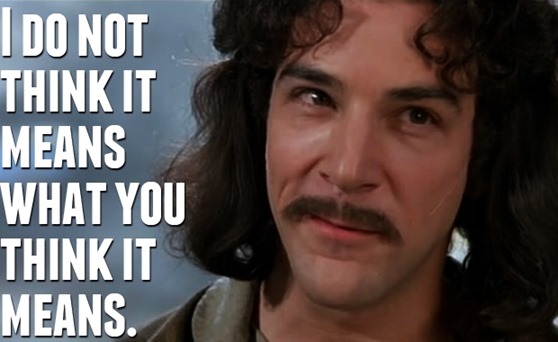
“You keep using that word; I do not think it means what you think it means.”
It is one of the most iconic lines in modern cinema. In The Princess Bride, Inigo Montoya delivers this line in response to Vizzini’s constant use of the word “inconceivable,” a word he clearly does not understand, given how frequently he misapplies it. The humor works because the audience recognizes the gap between the word’s meaning and its usage.
That line often comes to mind when I encounter discussions, especially online, about what are commonly called “Second Commandment violations,” or “2CV” for short.
The argument usually runs like this: because Exodus 20:4 says, “You shall not make for yourself a carved image, or any likeness of anything that is in heaven above…,” any depiction of Jesus, whether in painting, film, or other media, is a direct violation of God’s command and therefore sinful.
To that, I find myself thinking: you keep using that word; I do not think it means what you think it means.
The biggest pitfall with this interpretation is not sincerity. Those who hold this position are often deeply committed believers who want to avoid idolatry at all costs. That instinct is good and worth honoring. But sincerity alone does not guarantee accuracy.
Where this position begins to break down is in two key areas.
First, it fails to read the commandment in context, and not just immediate context, but canonical context.
Sound biblical interpretation requires us to ask not only, “What does this verse say?” but also, “How does Scripture itself apply and clarify this command?” The Second Commandment does not stand alone as an abstract prohibition. It is embedded within a covenantal framework and immediately explained: “You shall not bow down to them or serve them” (Ex. 20:5). The concern is not merely the existence of images, but how they are used.
But the context deepens even further.
In Exodus 32, Israel violates this very commandment with the golden calf. What is striking is not simply that they made an image, but what they claimed about it: “These are your gods, O Israel, who brought you up out of the land of Egypt!” (Ex. 32:4). This is not so much the introduction of a new deity as it is a false representation of the true one, an attempt to render Yahweh visible, controllable, and immediate. That is the heart of the violation.
And then, almost immediately after this, God commands the construction of the tabernacle, which includes images.
In Exodus 25, the Ark of the Covenant is to be fashioned with golden cherubim overshadowing the mercy seat. In Exodus 26, cherubim are woven into the very fabric of the tabernacle curtains. Later, Solomon’s temple is adorned with carved cherubim, palm trees, and open flowers (1 Kings 6:23–29). These are not incidental decorations. They are divinely commanded elements within Israel’s worship.
Even more striking is the bronze serpent in Numbers 21. God commands Moses to make it, and those who look upon it in faith are healed. Yet in 2 Kings 18:4, Hezekiah destroys it because it had become an object of idolatrous devotion.
That example is decisive.
The problem was not that an image existed. The image was commanded by God. The problem was that the image was misused. It shifted from sign to substitute.
So whatever Exodus 20:4 forbids, it cannot be a blanket prohibition on all visual representation. Scripture itself does not allow that conclusion.
The issue is not images. It is idolatry.
Second, it ignores what idol worship actually looked like in the ancient world.
In that world, images were not simply artistic representations. They were understood to participate in the reality they depicted. Through ritual acts, an idol was believed to become a dwelling place of the deity. Offerings were made to it. Prayers were directed toward it. The image functioned not as a reminder, but as a localized presence of the god.
This is the backdrop of the Second Commandment.
God is not prohibiting art. He is prohibiting the construction of rival presences, attempts to represent Him in ways that make Him manageable, containable, or subject to human control. The commandment guards the freedom and transcendence of God.
At this point, an important question arises: what about traditions that use images devotionally, such as icons and statues?
Here we need both clarity and charity.
Before critiquing Catholic or Orthodox practice, we must represent those traditions honestly. It is easy to construct a strawman by assuming that bowing before an image automatically equals worship, or that such practices are simply paganism in Christian dress. But those claims do not reflect how these traditions understand themselves. As Christians, we are called not only to truth, but to truthfulness.
Both Roman Catholic and Eastern Orthodox theology carefully distinguish between worship (latria), which is due to God alone, and veneration (dulia), which is honor given to saints, with a unique form (hyperdulia) accorded to Mary. The Second Council of Nicaea (787) articulated that honor given to an image passes to its prototype. The image is not the endpoint, but a means of directing honor toward Christ or His saints.1
In the Eastern Orthodox tradition especially, this is often expressed through the language of the icon as a “window.” An icon is not understood as a container of the divine, but as a witness that opens the viewer toward a greater reality. It is something one looks through, not merely at. The purpose of the icon is not to localize Christ, but to direct the heart and mind toward Him.
This is deeply tied to the theology of the Incarnation. If the Son of God has truly taken on visible, tangible human flesh, then He can be depicted. The icon becomes, in this sense, a visual confession that the invisible God has made Himself known in Christ. As John of Damascus put it, “I do not worship matter; I worship the Creator of matter who became matter for my sake.”
That is a serious and historically grounded position, and it deserves to be engaged on its own terms.
At the same time, from a Protestant perspective, several concerns remain.
The distinction between worship and veneration, while theologically precise, is not always easily maintained in practice. The Reformers were responding to real pastoral conditions in which the line between honoring and functionally relying upon images had become blurred.
This is strongly reflected in the 39 Articles of Religion of the Church of England,
XXII. Of Purgatory. The Romish Doctrine concerning Purgatory, Pardons, Worshipping and Adoration, as well of Images as of Relics, and also Invocation of Saints, is a fond thing, vainly invented, and grounded upon no warranty of Scripture, but rather repugnant to the Word of God.2
Further, even the “window” language, helpful as it is, raises a question of pastoral caution. Windows are meant to be looked through, but human nature has a way of lingering on the glass. What is intended as a means of directing attention to Christ can, over time or in certain contexts, become an object of misplaced focus.
Here again, the bronze serpent provides a helpful biblical parallel. What God once commanded and used for good can, when misdirected, become an occasion for idolatry.
Finally, the New Testament offers no clear mandate or example of the use of images in the worshiping life of the Church. While that silence does not settle the question, it does suggest that such practices are not essential and should therefore be approached with care.
So we should avoid two equal and opposite errors. We must not misrepresent our Catholic and Orthodox brothers and sisters. At the same time, we must not ignore real pastoral dangers.
The question is not simply whether an image can function as a window.
The question is whether, in practice, it consistently remains one.
The Second Commandment is not violated by the mere existence of an image of Christ.
Scripture itself includes divinely commanded images, even within the holiest spaces of worship. The commandment, therefore, cannot be about representation as such. It is about the misuse of representation, treating something created as if it were the Creator, attempting to bring God under our control, or substituting a manageable image for the living and holy God.
To have a painting of Jesus, to portray Him in film, or to use visual depictions for teaching is not, in itself, a sin. The question is not whether an image exists, but what role it plays.
Does it point beyond itself to the risen Christ revealed in Scripture, or does it subtly replace Him?
The true danger is not that we might depict Christ. It is that we might reduce Him, whether in image or in imagination, to something safer, smaller, and more controllable than He truly is.
And that is precisely what the Second Commandment was given to prevent.

by Joel V Webb | Jul 7, 2026 | Free Methodism, History, Methodism, Orthodoxy Matters, Theology & Practice
Recently a friend of mine, David Wiesner wrote a fantastic article titled “The Wesleyan Quadrilateral Need to Go”, detailing past and current voices in the Methodist movement, along with his own arguments as to why the term coined by Albert Outler should cease to be a framework for theological discernment in the Methodist-Wesleyan tradition. I think he has a very compelling argument, and there are certainly points that I agree with him, and his sources on. Yet, I have my own reasons that I think support the notion that the Quad should stay as the framework for discerning theology and consensus in our pan-Methodist world.
To lay the groundwork, I will quote from Wiesner’s article concerning the origin and definition of the quad, and take specific note of the historic foundations of this framework that Wesley would have derived from his Anglican heritage:
“Outler created the phrase “Quadrilateral” as a way of trying to describe how Wesley came to his theological conclusions and thus as a means for Methodists to likewise do the same. Outler selected scripture, reason, tradition, and experience as the four “legs” of the Quadrilateral based on his understanding of Wesley’s writings and his perception of how Wesley thought, not from anything explicit that Wesley said. Insofar as Wesley remained a devoted Anglican his entire life, it’s more than fair to say Wesley was familiar with the use of scripture, reason, and tradition because (as noted in the quote above) that was and remains the Anglican Trilateral formulation (or Triad) for discerning theology, and adding experience to the mix certainly reflects the importance Wesley placed on spiritual or converting experience within the Christian life.”
There are two arguments of the seven made in Wiesner’s article that I wish to address, and in the order that he did as well. The first, and what I think is the most compelling of these arguments is the misuse of the Quadrilateral. One of the most obvious realities to anyone with eyes is that the United Methodist Church abused and bastardized the Wesleyan Quadrilateral. I am not mincing my words here because there is no way around it. The theological desolation and rejection of Christian orthodoxy that has been seen in the last generation is a result of theological liberalism abusing the quadrilateral to bend orthodox interpretation of Scripture using experience.
Because of this, the Global Methodist Church (GMC) has taken steps away from the quad. This is witnessed in the sourcing of David Watson and others in Wiesner’s article. And I totally and completely understand this move. To see how Outler’s synthesis was abused to allow for everything it did (something Outler himself admitted and regretted towards the end of his life), it makes sense to want to separate from that synthesis and move to a different framework.
That being said, the abuse or misuse of something does not delegitimize the value or goodness of that thing. Just like people blame the Church for the ills and wrongs done to them presently and historically, that in very many cases is true, does not make the Church bad. But it does show the need we have for Christ. And, I would argue the same is true for the quad. The misuse of it by the UMC and others does not negate the need and goodness of it. As we examine its misuse and abuse, we see how its wrong application has wrought the fruit we see now.
The primary problem was how Scripture was relegated to the same level as the other elements of tradition, reason & experience. To understand the quad with Scripture as equal is to not understand the Protestant theological framework, nor is it to understand how Wesley would have understood how to come to the right understanding and doctrine.
I am not in the Sola Scriptura camp. To be of the Anglican heritage, having the synthesis of theologians such as Robert Hooker in his Laws of Ecclesiastical Polity, which would have been foundation to Wesley and his framework (thus the three-legged stool) is to know that the issue is not the truth and reliability of Scripture. The place of diversion comes down to the interpretation of said Holy Scriptures. Hooker at the time of his writing was primarily locked in a theological back and forth with the Puritans who were dogmatically grounded in Continental European Calvinistic theology, and thus if it wasn’t plainly in Scripture then it was wrong (a simplification, but fundamentally true).
Rather, Hooker wrote, “What Scripture doth plainly deliver, to that the first place both of credit and obedience are due; the next whereunto is whatsoever any man can necessarily conclude by force of reason; after these the voice of the Church succeedeth.” (Laws of Ecclesiastical Polity). He also wrote, ““It sufficeth therefore that Nature and Scripture do serve in such full sort, that they both jointly and not severally either of them be so complete, that unto everlasting felicity we need not the knowledge of any thing more than these two may easily furnish our minds with on all sides.” In providing this framework, we see that the issue is not the authority of Scripture, but what we do with interpretation, and with things that scripture does not expressly address.
The reason we must have an avenue of theological synthesis is because heretics use the same Scripture we do. If you listen to the Road to Nicea podcast, or go deeper down the rabbit trail and actually read the Church Fathers (something I think EVERY pastor should be required to do), you see how the argument of the heretics such as the Arians, Gnostics and the like have their root in Scripture. As wrong and faulty as their theology is, it is the interpretation of Scripture that leads to the wrong theology.
So again, the issue is not Scripture itself, but how we come to understand what Scripture is teaching. Because if you have talked theology with someone with aberrant or heretical theology (like I have), they quote Scripture left right and center until their faces are blue. The diversion is that what they believe is not found in the Grand Deposit of faith, handed down to the saints by the saints who have come before, ultimately found in the teaching of the Apostles. That is why we need the Quadrilateral.
It is with this understanding that our conception of the Quadrilateral needs realignment. Scripture must be the unrivaled head of the quad. Yes, tradition, reason & experience are used in the synthesis of what Scripture is saying, but they can never go against what Scripture plainly teaches. And so my encouragement for both David, and those in the GMC (I have both family and dear friends apart of it), is that the problem is not the quad in and of itself, it is the abuse of the tool. Correct the imbalance in the framework of interpretation, don’t jettison the baby with the bathwater (don’t get me started on the paedobaptism discussion, I’m always ready to defend this Scriptural and historic Christian practice!).
Then we come to the second main augment that Wiesner makes, “The reality of how the Church determines theology is a collective and Spirit-infused enterprise, and we should encourage that corporate method instead of the implicitly-individualized method of the Quadrilateral”. My biggest contention with this is that I feel this is a category error. Wiesner commits a category error if he assumes the Quadrilateral’s purpose is to describe exactly the procedural forms the apostles used in Acts, rather than to articulate a method that makes the Spirit‑infused and corporate enterprise of the church intelligible and applicable today.
Again, the concern of this argument is the over individualization of the process that I believe is corrected by right weighting of Scripture as the highest authority, and then I would even posit that experience is the bottom of the pile, with it needing to be ultimately subject to Scripture first, then tradition & reason, before we interject what our experience says.
Part of the reason I am so ardent about this is because I grew up in a theological landscape that had no real and discernable process for making or synthesizing theological decisions outside of the personal experiential authority of a few key leaders. It was not a process or a framework that anyone would be held to if they deviated away from it. Just like how every Sunday in my church’s liturgy we declare the Nicene Creed following my sermon. And, I have explicitly told my congregation the purpose of doing so is that if I preach something contrary to the truths we are declaring, I am to be held to it and corrected.
The quad, I believe, is supposed to function as such for us in the pan-Methodist world. It is a framework that we run ideas, concepts and theologies through to see if it is in concert with true Christian doctrine. As an example, I can take the new Social Standards that the UMC passed just a few years ago following the mass disaffiliation to the new GMC and other similar denominations (like my own parish!). We don’t actually have to go any deeper in the quad than Holy Scripture to see how what was passed is in direct violation of the clear teachings and passages (granted, when you buy into process theology and open-theism, anything is possible). But let’s explore the other elements if we correctly use the quad as intended. As soon as you look at tradition, you will then see that the changes are in clear and direct violation of what the Church has ALWAYS taught, with no grey areas or equivocation. Then with reason and experience, the same conclusion remains: these revisions do not represent a deeper or more faithful reading of Christian truth, but a departure from the settled witness of the Church, the moral logic of Scripture, and the lived moral discernment of the Christian tradition. In other words, when the Quadrilateral is used properly, it does not become a license to baptize novelty; it becomes a means of testing whether a proposed teaching can actually stand within the whole Christian inheritance, and in this case it cannot.
It should be acknowledged that the Church has never discerned theology in a vacuum. Councils, synods, and canonical processes are all legitimate expressions of the Church’s corporate, Spirit-led judgment, and they provide an essential check against purely individual interpretation. The point of the Quadrilateral is not to replace those ecclesial realities, but to give them a coherent theological grammar: Scripture remains the final authority, while tradition, reason, and experience serve the Church as shared and accountable means of discernment. In practice, then, the Quad works alongside the Church’s conciliar life rather than against it, helping to ensure that theological judgments are not merely private opinions, but conclusions tested within the common witness of the body of Christ.
Part of my concern is what is the alternative if the Quadrilateral is done away with? My argument is that the Quadrilateral represents how the Holy Spirit works collectively to bring us to the true doctrine of Christ’s Church. There is a lot of uncharted water if we go a different direction. I have been on the Charismatic/generic Evangelical side of the aisle, where if it process was written down honestly, it would look a heck of a lot like the Quadrilateral. Just like in the Church we need structures and frameworks to operate (like the episcopate), we likewise need to same for discerning how the Holy Spirit is speaking and working in the life and belief of the Church. And I believe the Quadrilateral best represents that vision.
And so, as Methodism in the 21st Century is seeking to figure out who we are, we need the Quadrilateral more than ever. Correctly contextualized and utilized as we seek to determine and define the truth of “the faith entrusted once for all to the saints.” (Jude 1:3 BSB).
by Joel V Webb | Jun 30, 2026 | Orthodoxy Matters, Theology & Practice
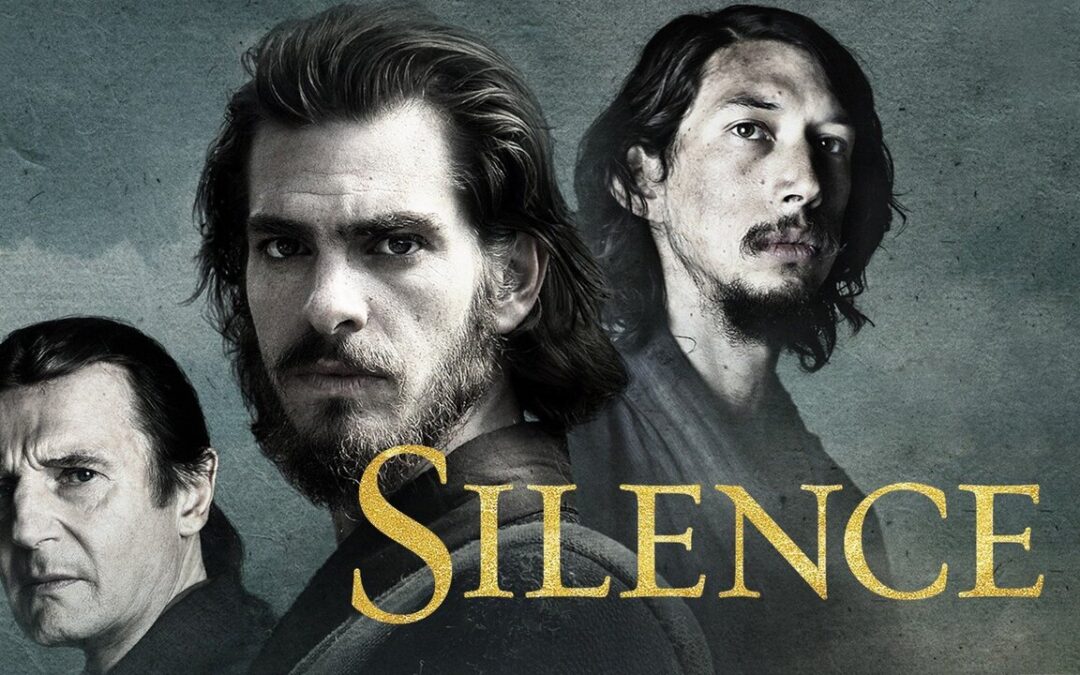
I remember watching the movie Silence a number of years ago when it first came out in 2016. At that time in my life, I was still a part of the more fundamentalist church tradition I grew up in, and so the few others I talked to saw it in a negative light. Yet despite that, there was something in me that thought there was something more there than the sad tale of a person who, through much pain and suffering, leaves their faith.
I won’t give a full-throated walkthrough of the movie, and I highly encourage you to go watch it. It is a testament, firstly, to the sufferings of our brothers and sisters in Christ, still to this day, who go through immense suffering for their faithfulness to Christ—their unwavering allegiance to Him and His Kingdom despite the very real threat of death.
But what does this movie mean for those of us in the West who can still live a life that follows Christ without seemingly costing us anything of significance?
The culmination of the journey of the main character, Rodrigues (played by Andrew Garfield), after his apostatization of the faith, was a comfortable life—a wife, family, status, and a job helping to keep Christianity out of Japan. In the last scene, it is hinted that while he lived his life as someone who renounced the faith and actively worked against it, he may have privately still held to his Christian belief and piety.
And it is in this reality that the problem lies for many of us. It didn’t really matter that Rodrigues may have internally “still been a Christian” because externally no one knew the difference. And that is the challenge for us. Our culture is totally okay with people being Christians…if it’s respectable, nice, and internalized. God forbid we actually believe that our faith in Christ, as members of His Church, means that there are implications in the public sphere. Rather, the zeitgeist of our culture is totally okay with pop stars, actors, politicians, and the general public proclaiming the name of Jesus and being Christian, just as long as it is ultimately private and individual in its impact.
It is this kind of faith that many of us in the West have—a faith similar to that of Rodrigues, where we keep the tenets of our faith to ourselves and live everywhere else as every other secular materialist, and no one knows the difference. But this is not the call of Christ. We are called to pick up our crosses and to follow Him. To deny Him in front of man means that we are denied before the Father, and that is a scary thought to think of.
Does your faith cost you?
Now, this isn’t a call to be a jerk or a Bible-thumping, soapbox-screaming, fire-and-brimstone preacher. That, in itself, becomes the antithesis of the work of the Kingdom. Neither should you be so agreeable to the philosophies, ideas, and ways of the world around us that you are looked at as someone they could work with. We are different, and the difference of being in Christ’s Kingdom means that we will be seen as downright dangerous to the status quo. Why? Because the kingdoms of this world do not wish to turn over their authority to the true and reigning King.
This movie is a call to all Christians—whether you are on the political right or the political left, whether you rightly or unjustly have been given the label nationalist, socialist, racist, homophobe, apostate, or heretic. Maybe the labels are right, but maybe they are not. Rather, are you considered ineligible for integration in the society of the world, or are you able to just float downstream with everyone else?
Silence is a chilling and challenging film to reckon with because we are confronted with the reality that most of us are more like Rodrigues than we like to admit. God, have mercy, and help us by granting us the strength to love and serve you no matter the cost.
by Joel V Webb | Jun 29, 2026 | Orthodoxy Matters, Sacraments, Spiritual Disciplines, Theology & Practice
There is a lot of buzz in our modern world talking about discipleship. Everywhere you turn there seems to be a new video series, course, or initiative that promises to be the next big thing in discipling the people in your church! And, as often happens with this kind of stuff, while it may be very good, it certainly doesn’t do all that it has promised. But why is this the case? Firstly, it is not about the intention or desire of those wishing to disciple or create this content. Everyone involved has a serious and deep desire to see Jesus transform people’s lives, and to make them disciple making members of God’s Kingdom. The good intentions and love of Christ are not what is questionable here.
I believe more fundamentally in the modern evangelical space, we have somewhat forgotten what discipleship is all about. So many of the pipelines or pathways of discipleship I hear about are all looking to keep people coming back every week, get involved in volunteering, inviting other people to church, and Lord willing to start giving. None of these actions are bad, and we certainly want to see them happen. But, these are not the point of discipleship.
The theological capstone of being a Methodist is the idea of Entire Sanctification, or Perfect Love. Simply put, the work of the Holy Spirit has done its work (to the extent possible in our mortal human lives this side of eternity), where our love has been transformed, and while we are not perfect in performance, our love is wholly set on Christ. Certainly sounds like a lofty goal, but John Wesley and his theological descendants certainly believe it is possible. Where many Methodists stop is looking back to where Wesley was inspired to understand this as the goal of the Christian life, and that comes from the Eastern Orthodox position of theosis. Similar in end, theosis, or deification, where the believer achieves unification or the likeness of God.
Now, this might seem like too much for some, and I certainly get it. But if we look at the Biblical data, we see that ultimately the goal of the Christian life is to look like Jesus. To be His image bearer. While sin entered the world and broke us, Christ in what He has done has paved the way for us to do what we were originally created to do: embody His character and co-create within His good creation.
But if this is the actual goal of the Christian life, how have we gotten to where we are today? Well, in my estimation, much of our discipleship material is decidedly more informational and training based than it is anything else. Fundamentally what we have forgotten is the Christian faith is not a set of ideas you are convinced of and believe. It is a way of life that you embody and engage the world with. It has been a product of post-enlightenment philosophy that has relegated personal belief and faith to a set of ideas, and not an all-encompassing way of life.
When we look at the Old Testament, through to the first centuries of the Church we see not people changing where they go on weekends, but a fundamentally different way of life. And in losing this way of thinking, we have forgotten how to do discipleship. Not because we don’t love Christ, or love people. But because we are limiting something that is supposed to have full reign of our entire being, and turned it into a training program.
So all this being said, what does ancient discipleship look like? It can be boiled down to two primary pillars. Spiritual Disciplines, and the Means of Grace.
Richard Foster describes spiritual disciplines as practices that help us draw closer to Christ and experience spiritual freedom, not as ends in themselves. They are the actions that through encountering Christ in the build up our character and relationship with Christ to know Him more. Practices such as prayer, reading, fasting, silence, giving, worship, celebration and more. I highly encourage people to read Foster’s book, Celebration of Discipline. This classic lays out the forms and flow of the main Christian disciples that make up the Christian way of life.
More than just building up our lives, spiritual disciplines are also essential because they ultimately form what we love. Through repeated and intentional action, doing these things form and shape our minds and lives in a certain way. We are creatures of habit, and when we get set in a way of doing things, it is part of what makes us who we are. So by daily participating in spiritual disciples, we encounter Christ, and we also shape our lives around Him.
Means of Grace as traditionally understood in the Christian faith, and in Methodism are those ways by which God imparts His grace to the believer. Grace is easily understood often as two different things. Unmerited grace and also divine enablement. It is the latter especially that is important here. Because we know as humans we are unable to do what we are called to as followers of Christ in our own strength (or at least I know I can’t!), there are certain ways Christ has promised as channels through which the Holy Spirit endows and bestows His strength and enablement.
With this the first question is, “can’t the Holy Spirit do that without a specific physical means?” Sure He can. But what the Christian faith has always believed is that stuff matters. We are not totally disembodied, and our encounters with God are not just subjective, internal experiences where we meet Him. We are physical beings as much as we are spiritual beings. We cannot get away from stuff, and to disconnect the two is an unfortunate recent trend in particularly the Evangelical world that smacks of a tacit gnosticism that disdains the physical.
It does not mean that God cannot and does not meet us in times of prayer, singing, silence or in hearing the Word. He certainly does do all of those things! But we can never forget that He has also, through His Church, ordained and established various physical means that we know by faith we encounter Him and receive His grace.
Of course there are the Sacraments (which we will talk about in a moment). But there are also other means of grace that are not Sacraments that people have seen how Christ endows His enablement to His followers. Mattox, in his book Responsible Grace, has quite a list of those non-Sacraments means of grace that Wesley recognized. In more traditional expressions of the Church these are called sacramentals. Other means from the Sacraments that grace is given.
The two Sacraments the Protestant world recognizes (I talk about them HERE) are those of Baptism and the Eucharist (Communion/the Lord’s Supper). In Baptism, the initiatory Sacrament there is grace conveyed to the believer as Christ, not the baptized is the primary actor and agent (See St. Paul in Colossians speak about Baptism). The specific effects of the grace conveyed at Baptism are discussed, debated and understood differently. John Wesley spoke about sinning away his baptism by the age of 10 or 12. But what is undisputed is that Baptism brings the person into the Church, and they are given grace, whether they are an infant or a newly converted adult.
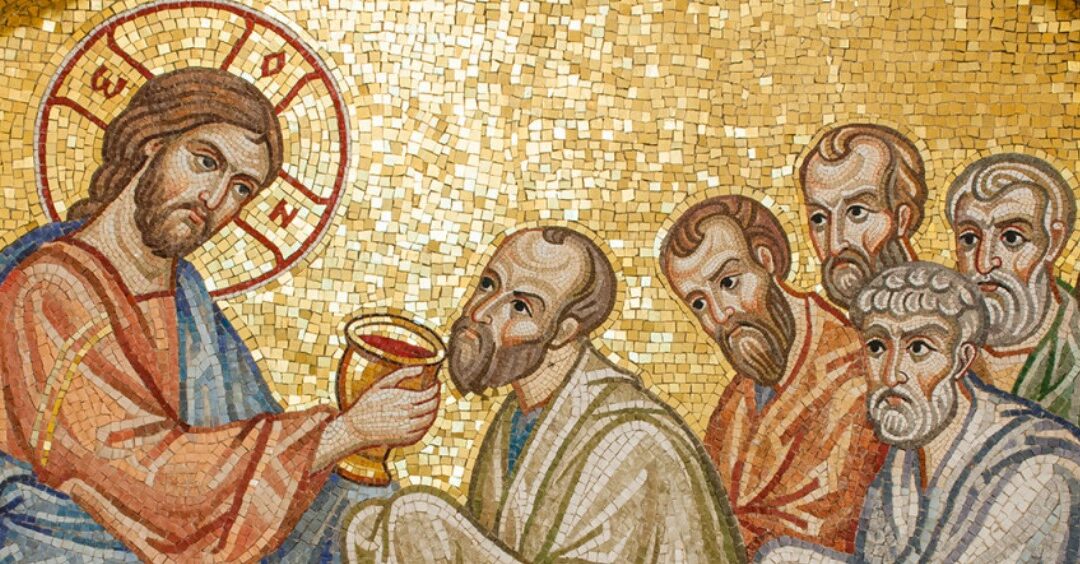
The second of course is the Table. The pinnacle and high point of Christian worship universally for the first 1500 years of the faith, and still for much of the Church in our day. Celebrating Communion is not just a remembrance of what Christ has done, but is also a reception of the benefits of His work on the cross. It is here that we encounter Jesus as both the host of the feast, and as the meal itself. Just as the consumption of the Passover Lamb was an essential part of being saved, likewise in the consuming of the perfect Paschal Lamb, we too receive grace and our salvation as we eat and drink in faith.
It is these two things, the spiritual disciplines and the means of grace that a Christian is discipled. The disciplines are like a lattice that is built. It is a structure or a framework of the Christian life. And then through the means of grace, that life grows, is nourished and eventually fruit is produced. What distinguishes this understanding of discipleship from more modern forms we often see is that this is life encompassing, not just for a time on Sunday and sometime else during the week.
The spiritual disciples are elements we should build our days around. Morning, Midday, Evening & Compline prayer as the traditional offices of the Church provide an opportunity to keep our hearts and minds on the goodness of God, and our ever need for His help. Regular reading and studying of Scripture keep us in constant understanding of the person of Jesus Christ that Holy Scripture points us to. Fasting empties us of our physical strength so that we can better rely on His strength. These, and the other spiritual disciplines construct and formulate our lives around a life knowing it is for God, and God alone that we live. Rather than the modern secular practice of fitting our faith in our life as another thing, classic Christian discipleship recognizes life is truly lived the other way around. We construct our lives around the truth of the world as explained and lived out in the Christian faith.
Then, as that structure is being built we are then nourished by the means of grace. Yes, the spiritual disciples in and of themselves are also offered as means by which Christ, through the Holy Spirit gives His graces to us, and then it is with these others, especially the Lord’s Table that we are nourished. If the spiritual disciples are common means of grace, the Lord’s Supper is as John Wesly called it “the grand channel of God’s grace.” It is not just one among many of the ways God gives His grace to us, but is the primary ordained way in which we encounter the Spirit and are enabled and empowered for the Christian life.
Sure, other kinds of studies, small groups and opportunities for learning the nuts and bolts of the faith are essential and important, but they must be done in conjunction and subject to the work of how the Church has always discipled new believers. Not just by being informational, but first transformational through spiritual disciplines and the means of grace, and then build up with information.
by Joel V Webb | Jun 5, 2026 | Orthodoxy Matters, Review, Sacraments, Theology & Practice
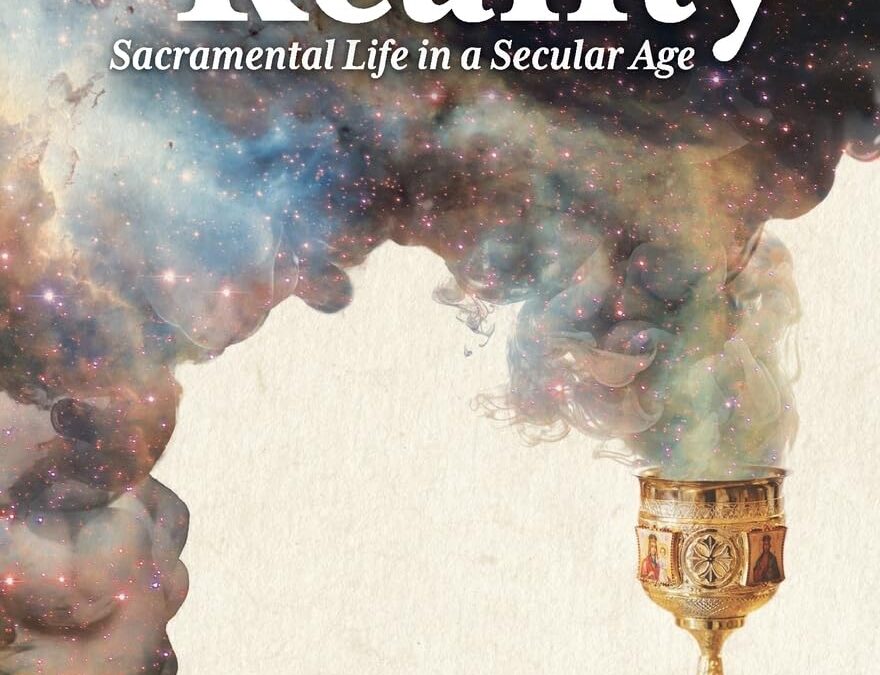
What is reality? And if we have lost the picture of it in the Christian context, how do we return?
This question and more are handled by Zachary Porcu in this very easy to read and understand, yet deeply profound book. While coming from an Eastern Orthodox perspective, the nature of the topic is still immensely applicable to any believer in any context.
Out of the gate, Porcu sets the stage of where we are currently at. For the most part, many in Western Christianity while truly believing in Christ as Lord and Savior, are in every other respect, functioning secular materialists in their worldview and theology. One thing I have appreciated as I have studied the Eastern Orthodox world more is their intention in ensuring that the way we understand and experience reality is in line with the ancient worldview of the early Church rather than the development that culminates from 19th Century German philosophy. This way of seeing the world does not delineate between the spiritual and the physical as we are so use to. Instead, these two realities are intertwined in an inseparable way that was commonly understood in the ancient world, and by the first followers of Christ.
This way of looking at things has led to many unintended consequences. Rather than seeing how Christ may work in a comprehensive way in all things, we either find ourselves in a tug of war between Christ working individually through salvation, or through society to being about the perfect recreation as He intended. This tension between what can be boiled down to the political left and right, are ultimately incorrect in their ultimate assessment, because again, they are looking at the world, and her problems through the lens as a modern secular materialist.
So what is the answer?
Sacramental Christianity. This word might scare some who come from low-liturgy backgrounds, or have fundamentalist tendencies. Porcu makes the excellent point that the way God now, following the ascension of Christ and the coming of the Holy Spirit does not just interact with us in a spirit-to-spirit way, as many in the modern west act. Because of the incarnation, God coming in the flesh, that means that He also interacts through what we would call the physical, and this is through sacrament.
Rather than just looking for that “feel good moment”, sacramental Christianity is about knowing that God works through the means of Grace He has instituted in the Church. The primary focus of this is of course Eucharist (Communion, or the Lord’s Supper). As we journey to understanding the Christian faith is more than just a set of beliefs, but a participation in an ongoing story, we then see how we are empowered to follow Christ as we engage in the life of the Church.
Now, I will note, Porcu does list the seven primary sacraments of the Orthodox faith. As a Protestant, I affirm the two sacraments of Baptism & Eucharist. Yet, I do believe that the others on the list may provide similar sacramental benefit, as they are all involved in engaging us in receiving from Christ.
Through the book he uses a simple analogy. Being a electrical unit that needs plugged in to work. At baptism, the believer is plugged into the wall. And then as we participate in sacrament through the life of the Church (primarily Eucharist) it is the electricity that flows to power us. This can help us see the ongoing work of Christ in our lives, rather than always focusing on the one time salvation experience that we are trained to look for.
The focus of Sacramental Christianity is to retrain our minds and worldview, to see existence as the early followers of Jesus would have. Rather than being dulled by materialism and secularism, we are awakened again to a world charged with the presence of God, where heaven and earth are not competing realms but interpenetrating realities. This shift is not merely intellectual—it is deeply formative. It calls us not just to think differently, but to live differently, to recover practices that reorient our desires, our worship, and our understanding of what it means to be human. In many ways, this is a call to repentance at the level of imagination—a turning away from a flattened, disenchanted view of the world toward one that is alive with meaning, mystery, and divine presence.
Porcu’s strength is in his ability to take what could be an abstract philosophical and theological discussion and ground it in the lived experience of the Church. He is not simply arguing for a different framework; he is inviting the reader into a different way of inhabiting reality. That invitation is both challenging and hopeful. Challenging, because it requires us to unlearn deeply ingrained assumptions shaped by modernity—assumptions that have quietly catechized us into seeing faith as private, inward, and largely disconnected from the material world. Hopeful, because it offers a more coherent and holistic vision of the Christian life—one that refuses to reduce salvation to a moment or faith to mere cognition, but instead presents it as an ongoing participation in the life of God.
One of the most helpful contributions of the book is how it exposes the inadequacy of the categories we often use to talk about Christian life and mission. The common dichotomy between “personal salvation” and “social transformation” begins to break down when viewed through a sacramental lens. In a sacramental worldview, Christ is not working in competition between individual hearts and societal structures, but is redeeming and restoring all things in and through His Body, the Church. This reframing helps dissolve some of the ideological tensions that have come to define much of modern Christianity, particularly in the West. What we often interpret as theological disagreement may, at a deeper level, be the result of a shared but unexamined commitment to a secularized understanding of reality.
For those in pastoral ministry, especially within low-church or revivalist traditions, this book serves as a helpful corrective without being unnecessarily polemical. It does not caricature Protestantism, nor does it demand an abandonment of evangelical convictions. Instead, it gently but persistently presses us to consider whether those convictions have been unintentionally narrowed by a secular framework. It asks whether our emphasis on conversion, for example, has been detached from incorporation into a sacramental community, or whether our understanding of grace has been reduced to an internal experience rather than a lived, embodied reality mediated through the Church.
Why this book matters for Protestants
For Protestant readers in particular, Journey to Reality is valuable not because it argues for Eastern Orthodoxy, but because it exposes a blind spot many of us have inherited. Much of Protestant theology, especially in its modern expressions, has been filtered through post-Enlightenment assumptions that subtly reshape how we read Scripture, understand salvation, and practice the Christian life. The result is often a sincere but truncated faith—rich in conviction, yet thin in sacramental depth and cosmic vision.
Porcu’s work helps Protestants recover categories that are not foreign to our tradition, but foundational to it. The Reformers themselves held a robust view of the means of grace, even where they disagreed with Rome or the East on their number and nature. John Wesley, in particular, spoke of the sacraments as “ordinary channels” through which God conveys grace—language that resonates strongly with the vision Porcu presents. In this sense, the book can serve as a retrieval tool, helping Protestants reconnect with aspects of their own theological heritage that have been neglected or overshadowed.
Additionally, this book provides a needed corrective to the tendency toward individualism that pervades much of Protestant practice. By emphasizing participation in the life of the Church, it calls believers out of a purely personal or privatized faith and into a communal, embodied reality. This is not a denial of personal conversion, but a deepening of it—situating it within the ongoing life of worship, sacrament, and discipleship.
It also challenges the reduction of faith to intellectual assent or emotional experience. In many Protestant contexts, the Christian life is often measured by what one knows or feels. Porcu redirects attention to what God is objectively doing through the Church, inviting believers to trust in and submit to those means of grace even when subjective experience fluctuates. This can be especially grounding in seasons of doubt, dryness, or spiritual fatigue.
Perhaps most importantly, Journey to Reality helps Protestants see that recovering a sacramental worldview does not require abandoning core commitments to Scripture, justification by faith, or the authority of the gospel. Rather, it invites a fuller integration of those commitments into a way of life that takes seriously the Incarnation—that God works not only through words and ideas, but through matter, bodies, and created realities.
In that sense, the book is not a threat to Protestant identity, but an invitation to deepen it.
In that sense, Journey to Reality can function as a bridge text—helping Protestants recover a richer sacramental imagination without requiring full agreement with every aspect of Eastern Orthodox theology. As someone who affirms two sacraments rather than seven, I still found Porcu’s broader point compelling: that God’s grace is not limited to internal or invisible means, but is communicated through tangible, embodied practices that shape us over time. Even where there is theological disagreement, there is still much to be gained by wrestling with the vision he presents.
Another notable strength is the accessibility of the book. Porcu avoids overly technical language without sacrificing depth. His use of analogy—particularly the image of being “plugged in” at baptism and continually energized through participation in the sacramental life of the Church—is simple but effective. It provides a helpful way of understanding the continuity of the Christian life, pushing back against the tendency to overemphasize a one-time decision while neglecting the ongoing means by which God sustains and transforms His people.
This also has significant pastoral implications. In many of our contexts, believers struggle with assurance, spiritual dryness, or a sense that their faith is stagnant. A sacramental framework offers a different approach. Rather than constantly looking inward for evidence of spiritual vitality or chasing emotional experiences, it directs us outward—to the concrete means of grace given to the Church. It roots the Christian life not in fluctuating feelings, but in the steady, objective work of God through Word and sacrament.
At a broader level, Porcu’s work invites us to reconsider what we mean by “reality” itself. If reality is fundamentally sacramental—if it is created and sustained by God, and continually bearing His presence—then the Christian life is not about escaping the world, nor merely managing it better. It is about rightly perceiving it and rightly participating in it. This has implications not only for worship, but for ethics, vocation, and daily life. Work, relationships, creation care, and even suffering can be reinterpreted within a framework where God is actively present and at work.
Of course, readers from different traditions will engage the book in different ways. Some may find certain claims overstated or wish for more nuance in areas of theological disagreement. Others may feel a tension between Porcu’s presentation and their own ecclesial commitments. Yet even where one does not fully agree, the central thrust of the book remains valuable. It raises questions that many of us have not been trained to ask, and it challenges assumptions that have long gone unquestioned.
Ultimately, Porcu reminds us that Christianity is not simply about escaping the world or fixing it through purely human means. It is about participation in the life of God, made available to us through Christ, and continually mediated by the Spirit through the life of the Church. To return to reality, then, is to return to this participatory vision—to see, receive, and live in a world where God is truly present and at work, not just in extraordinary moments, but in the ordinary rhythms of sacramental life.
This is a short book, but it carries weight far beyond its length. It is accessible enough for the average church member, yet substantive enough to provoke deeper theological reflection and meaningful pastoral application. I would especially recommend it to pastors, teachers, and thoughtful laypeople who sense that something is missing in the way faith is often practiced in the modern West. For those willing to engage it seriously, Journey to Reality offers not just a critique, but a path forward—a way of recovering a fuller, richer, and more faithful vision of the Christian life.
by Joel V Webb | May 28, 2026 | Orthodoxy Matters, Theology & Practice
I think all of us are familiar with the words of Christ from Matthew 7:20, “Thus, by their fruit you will recognize them.” We all understand what is being presented, what we produce tells us what we are all about. This too can be said about the kind of disciple that the Church produces. A great example of this is to just look at someone’s pet. So often, the type of person someone is can be seen in their pet. How are they trained, are they skittish, aggressive, shy etc…
My hope is that this is all of our goals in life. The purpose of the Christian life is to be the image of God. To do what we were created to do and look like our creator. In the Eastern Orthodox tradition this theology goes under the name of theosis, “becoming like God”, or “deification.” In my own Methodist tradition we call this Entire Sanctification, or Perfect Love, where the love of Christ is made so thoroughly in us that while we are not perfect in our performance (still being a fallible human), our love, intention or bent has been wholly shaped towards Christ.
This goal, I believe, is the fullness of the Christian life. Not some shallow “fire insurance” joke, where we just skip outta going to hell, but the actual purpose or telos of our creation, to be like the one who made us and loves us. And, by extension of all of this, I believe that this is the mission of the Church. That above everything else is to produce saints—those that look like Christ.
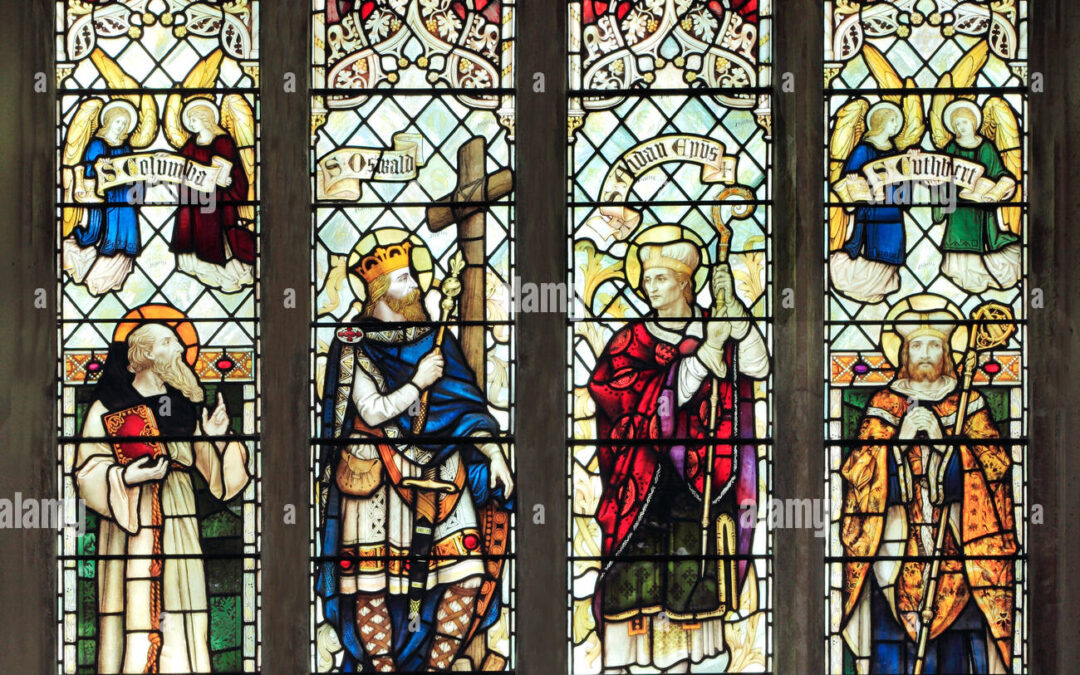
A particular practice that I have picked up last year, when talking about certain people from the Bible and Church history, is to use the honorific “Saint” in front of their name. This title recognizes how that person imaged Christ through thick or thin, and set an example for all of us as to how to follow Jesus no matter what. The fruit of their lives is that they are remembered and known as a saint, one who became like Christ.
The Church is not called to produce leaders as its primary end, but saints, and that distinction shapes everything about how we do ministry.
But what happens when we in the Church forget what we are about? What do we forget, whether in language or action, our purpose and mission? Sure, we know we are to produce something, but what? In recent months I have been confronted with the tacit proposition that our goal is to produce leaders, and it is then through those leaders who produce disciples. For those who have the vision to produce leaders who then make other leaders and disciples, I have no question of their motives. They love Christ and love His Church, and have the best of intentions to grow the Kingdom. They want to see a next generation embrace following Christ and spreading the Gospel to a world in desperate need of His healing.
Where the disconnect comes in is how we go about doing it. There’s a lesson for us to be learned in our day. The methods of leadership development, coaching, advertising and structuring look attractive. They work in the business world, shouldn’t they work in the Church? But the question we need to ask is not, “do they work”, but rather, “is this what we should be doing?”
I spent time in the real estate world in the area of development. I’ve attended countless leadership development and coaching sessions, conferences and seminars all about building your sphere of influence, inspirational ability, sales pipeline, talking points and the like. Those things work, and they are good when you are trying to sell something. These events are crafted for the sake of moving people towards the skills they need to do their work well. And it does work. But is it for us in the Church?
We in the Church are in a completely different sort of work. We don’t sell. Through Christ we shepherd immortal souls. We are not out there trying to invigorate people to get excited about the next initiative. We are called to faithfully preach the Word, and administer the sacraments, knowing that through the power of the Holy Spirit we will be transformed to look like Christ.
During the height of Norse pagan conquest of Anglo-Saxon England, it was the missionary work out of Iona and Lindisfarne on Holy Island from faithful servants like St. Columba and St. Aidan that saw the ravaged land of England and boldly took the Gospel, slowly but surely reconquering the land for Christ as it had once been. These missionary monks were from Ireland, and had been trained by those influenced by St. Patrick, who himself had been from Roman Britain and went and evangelized and converted Ireland for the Gospel.
The entire time, their work was something totally unlike that of how those around them were conquering. While the pagan Vikings conquered England by the sword, these monks emulated Christ and boldly proclaimed the Gospel, even if it meant their death.
It is totally understandable. The Western world is tough right now for the Church, especially denominations. And I am not in a position of leadership outside of my local parish, so I don’t fully understand the perspective or the pressures. But what I do know is the difference in the work we are doing. Yes, we need structures and processes. We need to plan and strategize. But how we in the Church go about that is not acting as if we are dealing with a business that sells widgets and gadgets. Our task is good stewardship in what we have been blessed with. But the product of our work is not leaders or initiatives. It is saints.
How we go about the work of the Kingdom matters—not just that we are doing the work. Sure, we can dress up business models, leadership pipelines and development, growth initiatives and the like. And they might work for a time. We might see raging success and things happen. But in the end, is that work producing results…or is it producing saints? I firmly believe the Church is called to multiply and grow. Yet, the question sits in my mind: what are we multiplying, and how are we doing it?
Leadership is not the telos of the Church; sainthood is. Leaders may be necessary, even beneficial, but they are not the end for which the Body of Christ exists. The Church is not called to produce influence, scale, or organizational success, but to form people who bear the image of Christ in holiness and love. Leadership, rightly understood, emerges as a byproduct of sanctification; those conformed to Christ will often guide and shepherd others. But when leadership itself becomes the goal, we risk substituting competence for communion and effectiveness for faithfulness. The true measure of the Church is not how many leaders it raises up, but whether it is forming saints whose lives radiate the life of God.
When we forget to see the ends to which we are called, we can get lost in the means of going about it. When we get sidetracked by the methods and structures of how someone else operates and try to import it into our world, we start losing the plot to why we even exist. Sure, St. Aidan and St. Columba could have inspired the reconquest of England by Christians. But they knew that wasn’t their way of going about things. They embraced that their task was souls.
We are called to that same task today.