by Joel V Webb | Jun 29, 2026 | Orthodoxy Matters, Sacraments, Spiritual Disciplines, Theology & Practice
There is a lot of buzz in our modern world talking about discipleship. Everywhere you turn there seems to be a new video series, course, or initiative that promises to be the next big thing in discipling the people in your church! And, as often happens with this kind of stuff, while it may be very good, it certainly doesn’t do all that it has promised. But why is this the case? Firstly, it is not about the intention or desire of those wishing to disciple or create this content. Everyone involved has a serious and deep desire to see Jesus transform people’s lives, and to make them disciple making members of God’s Kingdom. The good intentions and love of Christ are not what is questionable here.
I believe more fundamentally in the modern evangelical space, we have somewhat forgotten what discipleship is all about. So many of the pipelines or pathways of discipleship I hear about are all looking to keep people coming back every week, get involved in volunteering, inviting other people to church, and Lord willing to start giving. None of these actions are bad, and we certainly want to see them happen. But, these are not the point of discipleship.
The theological capstone of being a Methodist is the idea of Entire Sanctification, or Perfect Love. Simply put, the work of the Holy Spirit has done its work (to the extent possible in our mortal human lives this side of eternity), where our love has been transformed, and while we are not perfect in performance, our love is wholly set on Christ. Certainly sounds like a lofty goal, but John Wesley and his theological descendants certainly believe it is possible. Where many Methodists stop is looking back to where Wesley was inspired to understand this as the goal of the Christian life, and that comes from the Eastern Orthodox position of theosis. Similar in end, theosis, or deification, where the believer achieves unification or the likeness of God.
Now, this might seem like too much for some, and I certainly get it. But if we look at the Biblical data, we see that ultimately the goal of the Christian life is to look like Jesus. To be His image bearer. While sin entered the world and broke us, Christ in what He has done has paved the way for us to do what we were originally created to do: embody His character and co-create within His good creation.
But if this is the actual goal of the Christian life, how have we gotten to where we are today? Well, in my estimation, much of our discipleship material is decidedly more informational and training based than it is anything else. Fundamentally what we have forgotten is the Christian faith is not a set of ideas you are convinced of and believe. It is a way of life that you embody and engage the world with. It has been a product of post-enlightenment philosophy that has relegated personal belief and faith to a set of ideas, and not an all-encompassing way of life.
When we look at the Old Testament, through to the first centuries of the Church we see not people changing where they go on weekends, but a fundamentally different way of life. And in losing this way of thinking, we have forgotten how to do discipleship. Not because we don’t love Christ, or love people. But because we are limiting something that is supposed to have full reign of our entire being, and turned it into a training program.
So all this being said, what does ancient discipleship look like? It can be boiled down to two primary pillars. Spiritual Disciplines, and the Means of Grace.
Richard Foster describes spiritual disciplines as practices that help us draw closer to Christ and experience spiritual freedom, not as ends in themselves. They are the actions that through encountering Christ in the build up our character and relationship with Christ to know Him more. Practices such as prayer, reading, fasting, silence, giving, worship, celebration and more. I highly encourage people to read Foster’s book, Celebration of Discipline. This classic lays out the forms and flow of the main Christian disciples that make up the Christian way of life.
More than just building up our lives, spiritual disciplines are also essential because they ultimately form what we love. Through repeated and intentional action, doing these things form and shape our minds and lives in a certain way. We are creatures of habit, and when we get set in a way of doing things, it is part of what makes us who we are. So by daily participating in spiritual disciples, we encounter Christ, and we also shape our lives around Him.
Means of Grace as traditionally understood in the Christian faith, and in Methodism are those ways by which God imparts His grace to the believer. Grace is easily understood often as two different things. Unmerited grace and also divine enablement. It is the latter especially that is important here. Because we know as humans we are unable to do what we are called to as followers of Christ in our own strength (or at least I know I can’t!), there are certain ways Christ has promised as channels through which the Holy Spirit endows and bestows His strength and enablement.
With this the first question is, “can’t the Holy Spirit do that without a specific physical means?” Sure He can. But what the Christian faith has always believed is that stuff matters. We are not totally disembodied, and our encounters with God are not just subjective, internal experiences where we meet Him. We are physical beings as much as we are spiritual beings. We cannot get away from stuff, and to disconnect the two is an unfortunate recent trend in particularly the Evangelical world that smacks of a tacit gnosticism that disdains the physical.
It does not mean that God cannot and does not meet us in times of prayer, singing, silence or in hearing the Word. He certainly does do all of those things! But we can never forget that He has also, through His Church, ordained and established various physical means that we know by faith we encounter Him and receive His grace.
Of course there are the Sacraments (which we will talk about in a moment). But there are also other means of grace that are not Sacraments that people have seen how Christ endows His enablement to His followers. Mattox, in his book Responsible Grace, has quite a list of those non-Sacraments means of grace that Wesley recognized. In more traditional expressions of the Church these are called sacramentals. Other means from the Sacraments that grace is given.
The two Sacraments the Protestant world recognizes (I talk about them HERE) are those of Baptism and the Eucharist (Communion/the Lord’s Supper). In Baptism, the initiatory Sacrament there is grace conveyed to the believer as Christ, not the baptized is the primary actor and agent (See St. Paul in Colossians speak about Baptism). The specific effects of the grace conveyed at Baptism are discussed, debated and understood differently. John Wesley spoke about sinning away his baptism by the age of 10 or 12. But what is undisputed is that Baptism brings the person into the Church, and they are given grace, whether they are an infant or a newly converted adult.
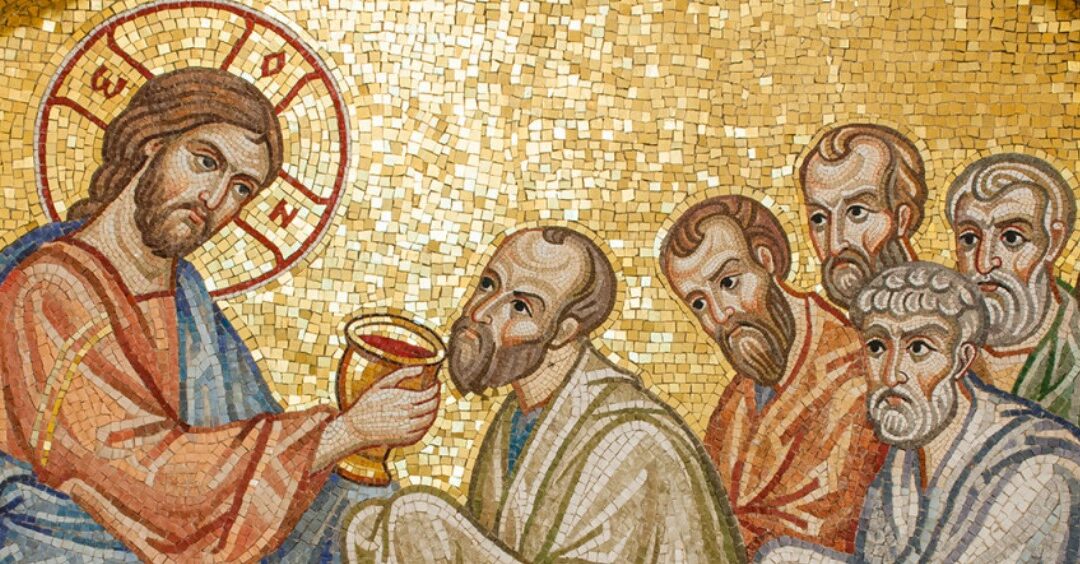
The second of course is the Table. The pinnacle and high point of Christian worship universally for the first 1500 years of the faith, and still for much of the Church in our day. Celebrating Communion is not just a remembrance of what Christ has done, but is also a reception of the benefits of His work on the cross. It is here that we encounter Jesus as both the host of the feast, and as the meal itself. Just as the consumption of the Passover Lamb was an essential part of being saved, likewise in the consuming of the perfect Paschal Lamb, we too receive grace and our salvation as we eat and drink in faith.
It is these two things, the spiritual disciplines and the means of grace that a Christian is discipled. The disciplines are like a lattice that is built. It is a structure or a framework of the Christian life. And then through the means of grace, that life grows, is nourished and eventually fruit is produced. What distinguishes this understanding of discipleship from more modern forms we often see is that this is life encompassing, not just for a time on Sunday and sometime else during the week.
The spiritual disciples are elements we should build our days around. Morning, Midday, Evening & Compline prayer as the traditional offices of the Church provide an opportunity to keep our hearts and minds on the goodness of God, and our ever need for His help. Regular reading and studying of Scripture keep us in constant understanding of the person of Jesus Christ that Holy Scripture points us to. Fasting empties us of our physical strength so that we can better rely on His strength. These, and the other spiritual disciplines construct and formulate our lives around a life knowing it is for God, and God alone that we live. Rather than the modern secular practice of fitting our faith in our life as another thing, classic Christian discipleship recognizes life is truly lived the other way around. We construct our lives around the truth of the world as explained and lived out in the Christian faith.
Then, as that structure is being built we are then nourished by the means of grace. Yes, the spiritual disciples in and of themselves are also offered as means by which Christ, through the Holy Spirit gives His graces to us, and then it is with these others, especially the Lord’s Table that we are nourished. If the spiritual disciples are common means of grace, the Lord’s Supper is as John Wesly called it “the grand channel of God’s grace.” It is not just one among many of the ways God gives His grace to us, but is the primary ordained way in which we encounter the Spirit and are enabled and empowered for the Christian life.
Sure, other kinds of studies, small groups and opportunities for learning the nuts and bolts of the faith are essential and important, but they must be done in conjunction and subject to the work of how the Church has always discipled new believers. Not just by being informational, but first transformational through spiritual disciplines and the means of grace, and then build up with information.
by Joel V Webb | Jun 5, 2026 | Orthodoxy Matters, Sacraments, Theology & Practice
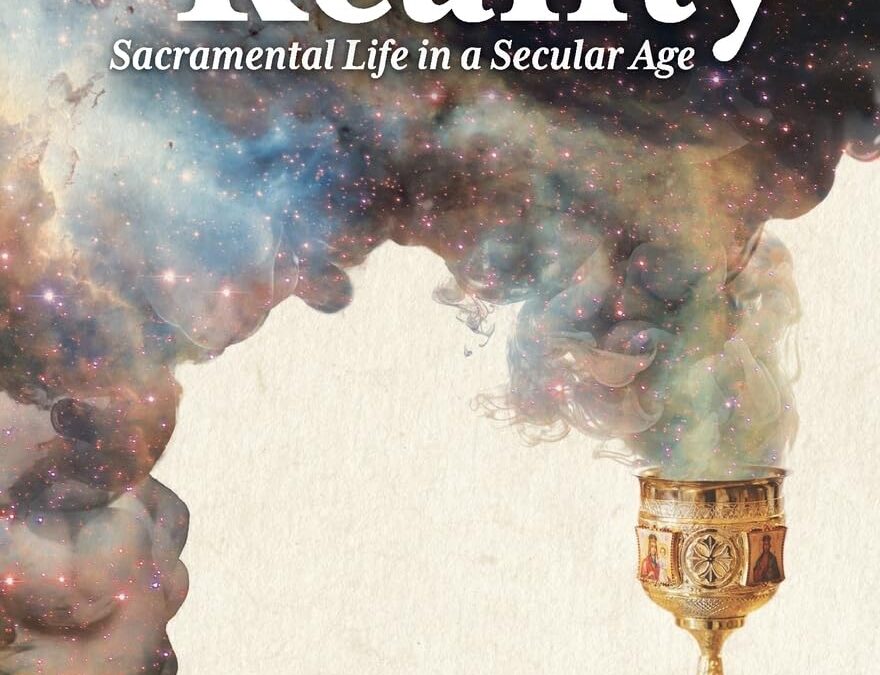
What is reality? And if we have lost the picture of it in the Christian context, how do we return?
This question and more are handled by Zachary Porcu in this very easy to read and understand, yet deeply profound book. While coming from an Eastern Orthodox perspective, the nature of the topic is still immensely applicable to any believer in any context.
Out of the gate, Porcu sets the stage of where we are currently at. For the most part, many in Western Christianity while truly believing in Christ as Lord and Savior, are in every other respect, functioning secular materialists in their worldview and theology. One thing I have appreciated as I have studied the Eastern Orthodox world more is their intention in ensuring that the way we understand and experience reality is in line with the ancient worldview of the early Church rather than the development that culminates from 19th Century German philosophy. This way of seeing the world does not delineate between the spiritual and the physical as we are so use to. Instead, these two realities are intertwined in an inseparable way that was commonly understood in the ancient world, and by the first followers of Christ.
This way of looking at things has led to many unintended consequences. Rather than seeing how Christ may work in a comprehensive way in all things, we either find ourselves in a tug of war between Christ working individually through salvation, or through society to being about the perfect recreation as He intended. This tension between what can be boiled down to the political left and right, are ultimately incorrect in their ultimate assessment, because again, they are looking at the world, and her problems through the lens as a modern secular materialist.
So what is the answer?
Sacramental Christianity. This word might scare some who come from low-liturgy backgrounds, or have fundamentalist tendencies. Porcu makes the excellent point that the way God now, following the ascension of Christ and the coming of the Holy Spirit does not just interact with us in a spirit-to-spirit way, as many in the modern west act. Because of the incarnation, God coming in the flesh, that means that He also interacts through what we would call the physical, and this is through sacrament.
Rather than just looking for that “feel good moment”, sacramental Christianity is about knowing that God works through the means of Grace He has instituted in the Church. The primary focus of this is of course Eucharist (Communion, or the Lord’s Supper). As we journey to understanding the Christian faith is more than just a set of beliefs, but a participation in an ongoing story, we then see how we are empowered to follow Christ as we engage in the life of the Church.
Now, I will note, Porcu does list the seven primary sacraments of the Orthodox faith. As a Protestant, I affirm the two sacraments of Baptism & Eucharist. Yet, I do believe that the others on the list may provide similar sacramental benefit, as they are all involved in engaging us in receiving from Christ.
Through the book he uses a simple analogy. Being a electrical unit that needs plugged in to work. At baptism, the believer is plugged into the wall. And then as we participate in sacrament through the life of the Church (primarily Eucharist) it is the electricity that flows to power us. This can help us see the ongoing work of Christ in our lives, rather than always focusing on the one time salvation experience that we are trained to look for.
The focus of Sacramental Christianity is to retrain our minds and worldview, to see existence as the early followers of Jesus would have. Rather than being dulled by materialism and secularism, we are awakened again to a world charged with the presence of God, where heaven and earth are not competing realms but interpenetrating realities. This shift is not merely intellectual—it is deeply formative. It calls us not just to think differently, but to live differently, to recover practices that reorient our desires, our worship, and our understanding of what it means to be human. In many ways, this is a call to repentance at the level of imagination—a turning away from a flattened, disenchanted view of the world toward one that is alive with meaning, mystery, and divine presence.
Porcu’s strength is in his ability to take what could be an abstract philosophical and theological discussion and ground it in the lived experience of the Church. He is not simply arguing for a different framework; he is inviting the reader into a different way of inhabiting reality. That invitation is both challenging and hopeful. Challenging, because it requires us to unlearn deeply ingrained assumptions shaped by modernity—assumptions that have quietly catechized us into seeing faith as private, inward, and largely disconnected from the material world. Hopeful, because it offers a more coherent and holistic vision of the Christian life—one that refuses to reduce salvation to a moment or faith to mere cognition, but instead presents it as an ongoing participation in the life of God.
One of the most helpful contributions of the book is how it exposes the inadequacy of the categories we often use to talk about Christian life and mission. The common dichotomy between “personal salvation” and “social transformation” begins to break down when viewed through a sacramental lens. In a sacramental worldview, Christ is not working in competition between individual hearts and societal structures, but is redeeming and restoring all things in and through His Body, the Church. This reframing helps dissolve some of the ideological tensions that have come to define much of modern Christianity, particularly in the West. What we often interpret as theological disagreement may, at a deeper level, be the result of a shared but unexamined commitment to a secularized understanding of reality.
For those in pastoral ministry, especially within low-church or revivalist traditions, this book serves as a helpful corrective without being unnecessarily polemical. It does not caricature Protestantism, nor does it demand an abandonment of evangelical convictions. Instead, it gently but persistently presses us to consider whether those convictions have been unintentionally narrowed by a secular framework. It asks whether our emphasis on conversion, for example, has been detached from incorporation into a sacramental community, or whether our understanding of grace has been reduced to an internal experience rather than a lived, embodied reality mediated through the Church.
Why this book matters for Protestants
For Protestant readers in particular, Journey to Reality is valuable not because it argues for Eastern Orthodoxy, but because it exposes a blind spot many of us have inherited. Much of Protestant theology, especially in its modern expressions, has been filtered through post-Enlightenment assumptions that subtly reshape how we read Scripture, understand salvation, and practice the Christian life. The result is often a sincere but truncated faith—rich in conviction, yet thin in sacramental depth and cosmic vision.
Porcu’s work helps Protestants recover categories that are not foreign to our tradition, but foundational to it. The Reformers themselves held a robust view of the means of grace, even where they disagreed with Rome or the East on their number and nature. John Wesley, in particular, spoke of the sacraments as “ordinary channels” through which God conveys grace—language that resonates strongly with the vision Porcu presents. In this sense, the book can serve as a retrieval tool, helping Protestants reconnect with aspects of their own theological heritage that have been neglected or overshadowed.
Additionally, this book provides a needed corrective to the tendency toward individualism that pervades much of Protestant practice. By emphasizing participation in the life of the Church, it calls believers out of a purely personal or privatized faith and into a communal, embodied reality. This is not a denial of personal conversion, but a deepening of it—situating it within the ongoing life of worship, sacrament, and discipleship.
It also challenges the reduction of faith to intellectual assent or emotional experience. In many Protestant contexts, the Christian life is often measured by what one knows or feels. Porcu redirects attention to what God is objectively doing through the Church, inviting believers to trust in and submit to those means of grace even when subjective experience fluctuates. This can be especially grounding in seasons of doubt, dryness, or spiritual fatigue.
Perhaps most importantly, Journey to Reality helps Protestants see that recovering a sacramental worldview does not require abandoning core commitments to Scripture, justification by faith, or the authority of the gospel. Rather, it invites a fuller integration of those commitments into a way of life that takes seriously the Incarnation—that God works not only through words and ideas, but through matter, bodies, and created realities.
In that sense, the book is not a threat to Protestant identity, but an invitation to deepen it.
In that sense, Journey to Reality can function as a bridge text—helping Protestants recover a richer sacramental imagination without requiring full agreement with every aspect of Eastern Orthodox theology. As someone who affirms two sacraments rather than seven, I still found Porcu’s broader point compelling: that God’s grace is not limited to internal or invisible means, but is communicated through tangible, embodied practices that shape us over time. Even where there is theological disagreement, there is still much to be gained by wrestling with the vision he presents.
Another notable strength is the accessibility of the book. Porcu avoids overly technical language without sacrificing depth. His use of analogy—particularly the image of being “plugged in” at baptism and continually energized through participation in the sacramental life of the Church—is simple but effective. It provides a helpful way of understanding the continuity of the Christian life, pushing back against the tendency to overemphasize a one-time decision while neglecting the ongoing means by which God sustains and transforms His people.
This also has significant pastoral implications. In many of our contexts, believers struggle with assurance, spiritual dryness, or a sense that their faith is stagnant. A sacramental framework offers a different approach. Rather than constantly looking inward for evidence of spiritual vitality or chasing emotional experiences, it directs us outward—to the concrete means of grace given to the Church. It roots the Christian life not in fluctuating feelings, but in the steady, objective work of God through Word and sacrament.
At a broader level, Porcu’s work invites us to reconsider what we mean by “reality” itself. If reality is fundamentally sacramental—if it is created and sustained by God, and continually bearing His presence—then the Christian life is not about escaping the world, nor merely managing it better. It is about rightly perceiving it and rightly participating in it. This has implications not only for worship, but for ethics, vocation, and daily life. Work, relationships, creation care, and even suffering can be reinterpreted within a framework where God is actively present and at work.
Of course, readers from different traditions will engage the book in different ways. Some may find certain claims overstated or wish for more nuance in areas of theological disagreement. Others may feel a tension between Porcu’s presentation and their own ecclesial commitments. Yet even where one does not fully agree, the central thrust of the book remains valuable. It raises questions that many of us have not been trained to ask, and it challenges assumptions that have long gone unquestioned.
Ultimately, Porcu reminds us that Christianity is not simply about escaping the world or fixing it through purely human means. It is about participation in the life of God, made available to us through Christ, and continually mediated by the Spirit through the life of the Church. To return to reality, then, is to return to this participatory vision—to see, receive, and live in a world where God is truly present and at work, not just in extraordinary moments, but in the ordinary rhythms of sacramental life.
This is a short book, but it carries weight far beyond its length. It is accessible enough for the average church member, yet substantive enough to provoke deeper theological reflection and meaningful pastoral application. I would especially recommend it to pastors, teachers, and thoughtful laypeople who sense that something is missing in the way faith is often practiced in the modern West. For those willing to engage it seriously, Journey to Reality offers not just a critique, but a path forward—a way of recovering a fuller, richer, and more faithful vision of the Christian life.
by Joel V Webb | May 15, 2026 | History, Methodism, Sacraments, Uncategorized
Whenever a movement or a group of people is looking back to make an assessment of where they are and where they’ve come from, part of doing that correctly is doing so honestly. It’s not about dishonoring the past or those who were faithful in the past with what they had. But we should be able to rightly see where they may not have been, how they should have been, and course-correct from there.
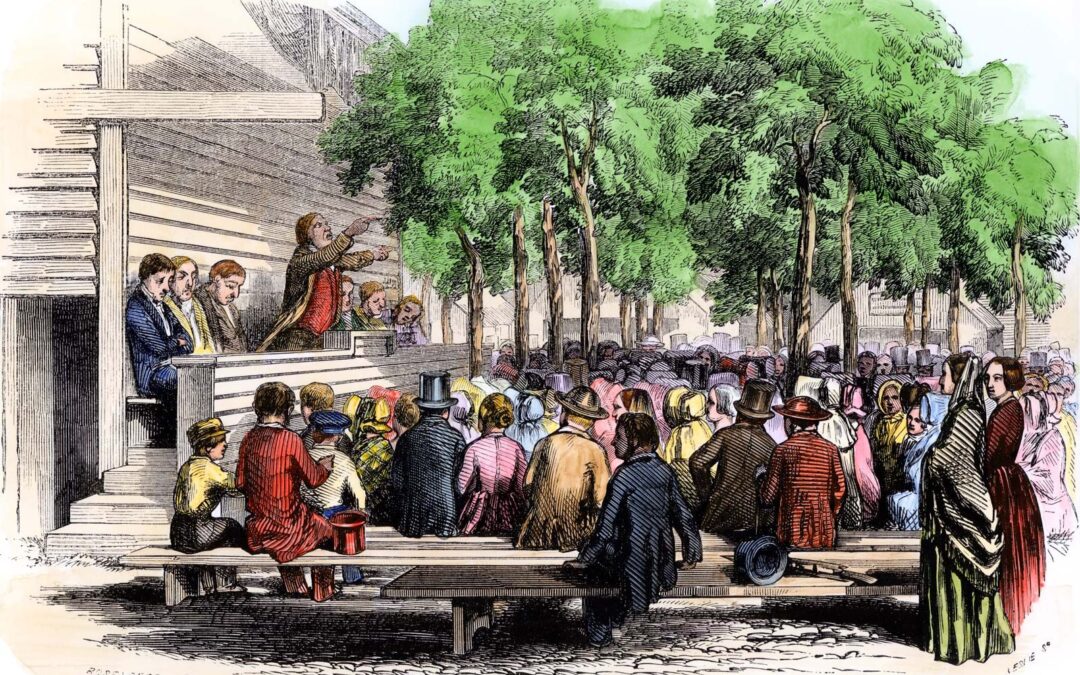
Recently, I have been taking something of a deep dive into early Methodist history. Specifically looking at not just John Wesley himself, but the early pioneers of American Methodism. As someone who did not grow up in the movement, I take seriously the responsibility to understand the place I now call my ecclesiastical home. There is so much of American Methodism to look at with thankfulness to God, for how those faithful trailblazers spread with the pioneers to bring the Gospel to the frontiers of America, leading Methodism to represent the biggest American denomination by the early 19th century.
Yet, with that heritage and legacy, when we look at Methodism today, we see a different story. With about 50 different Methodist/Wesleyan denominations in existence, with a broad range of theological takes and reasons for why they split, including more recent divisions, what has happened here?
In a paper about sacraments in early American Methodism, Paul Sanders writes this:
“Early Methodism in America had failed to achieve sufficient coherence to enable it to preserve the marrow of its legacy while at the same time adapting it to the demands of a new time and a new land. Although maintaining a halting loyalty to its Wesleyan heritage, the church was clearly more concerned with evangelism than with sacramentalism. Wesley’s synthesis was dissolved. As revivalism was not the same as Wesley’s evangelical ministry, so the confused sacramental
teaching and erratic sacramental practice of the Americans was not the same as Wesley’s own. The loss of the fertilizing vitality which results from keeping each close to the other was serious enough; but the loss was finally more serious. The church had been rendered peculiarly vulnerable to the infiltration of alien ideologies, and would find itself unable to maintain either evangelicalism or sacramentalism under the impact of the rise of rational idealism.”
I know there’s a lot going on in that paragraph, and I highly encourage you to look up and read Sanders’ paper, as he does a deep dive into Wesley’s sacramental theology and the importance it played in his life and ministry. And it is this major component that was missing for American Methodism, that didn’t allow for the “marrow” of Wesley’s legacy to endure in totality.
Looking at the reasons that led to this, I get it. You’re in America; you don’t have enough clergy to rightly administer the sacraments (both communion and baptism were an issue), and so very quickly the pragmatic realities set in. Even if you think things like weekly communion are important, you simply can’t do them, and they fall out of practice. And in this, I don’t fault my predecessors for how history went down. Could they have done something differently? Maybe. But I can’t make that call. All I can do is see where there were potential issues and try to course-correct from there.
So that leads us to the question. What was the fatal flaw? In my mind, from the research I have done, the fatal flaw was that early American Methodism didn’t solidify its identity because it failed to maintain the sacramental reality of Wesley’s life and ministry along with his evangelical zeal.
Because there was a lack of this cohesive identity grounded in the table, Sanders suggests—and I would agree and posit—that the multiplicity in American Methodist denominations exists because the sacramental grounding of the movement was not solidified. The focus became the practical necessity of expanding with rapidly growing America. And in this growth, cultural influences were able to weave themselves in at various times and in various places, leading to the muddled landscape we have today.
Now, in the 21st century, the Methodist movement has a new opportunity. With the major realignment of Methodism in the Global Methodist Church, the possibility is open for us across the board to look at where we came from, reassess who we actually are, and then put our noses to the plow of the Gospel work we have to do.
So what is this new path forward?
Recenter the table.
Now, it is a bit more complicated than that, but not by much.
As Methodists, we need to recapture the Spirit-fueled heart of our movement, which was the encounter with the Risen, Ascended, and Reigning Christ that takes place at Holy Communion. It means our pastors and our laypeople need to not just practice and participate, but also understand the how and why. To not just come and remember, but to come and receive the fullness of the work of Christ that He offers to His Church.
Yes, we need excellent preachers, and those who have a passion for evangelism to go out and proclaim the Word. That will always be essential, as it was for Wesley. But backing that up must be a thoroughly grounded understanding and practice of the means of grace. Not just as a catchphrase we use when talking about Wesleyan theology, but as the heartbeat of what we are about.
Looking back at our Methodist forebears, we have so much to be thankful for. They loved and served Christ faithfully. It is not to denigrate their lives and work for the Kingdom, but rather to see the fruit of what they themselves truly desired to see: an American nation captivated by the Gospel, and the power of Christ flowing to every believer as they receive Him week by week.
In the limited scope in which I’ve read the life and works of B. T. Roberts, I am thankful to be a Free Methodist. We have a place and a role in the Kingdom of God to accomplish His will on earth. And through recapturing the heart of Wesley’s life and ministry in the Table, we can bring to fullness what Roberts and others desired to see: a people who lived lives of holiness and set captives free.
What better place to do that than the meal that Christ instituted where it started for us all?
by Joel V Webb | Mar 27, 2026 | Orthodoxy Matters, Sacraments, Theology & Practice
Easter is just around the corner, and for the first time I’ll have the honor of administering the sacrament of baptism on Easter Sunday, one of the traditional days the Church has welcomed those into the Church. The discussion and debates in the church over baptism are a fascinating one. For every Christian, baptism is the universally recognized entrance into life in the people of God, but especially since the Reformation, certain elements of the Church, while acknowledging its importance, have lessened its impact, and flattened the reality and beauty of baptism to a simple, “tell people that you love Jesus.” But what Scripture, and the history and tradition of the Church demonstrates, it is so much more than that.
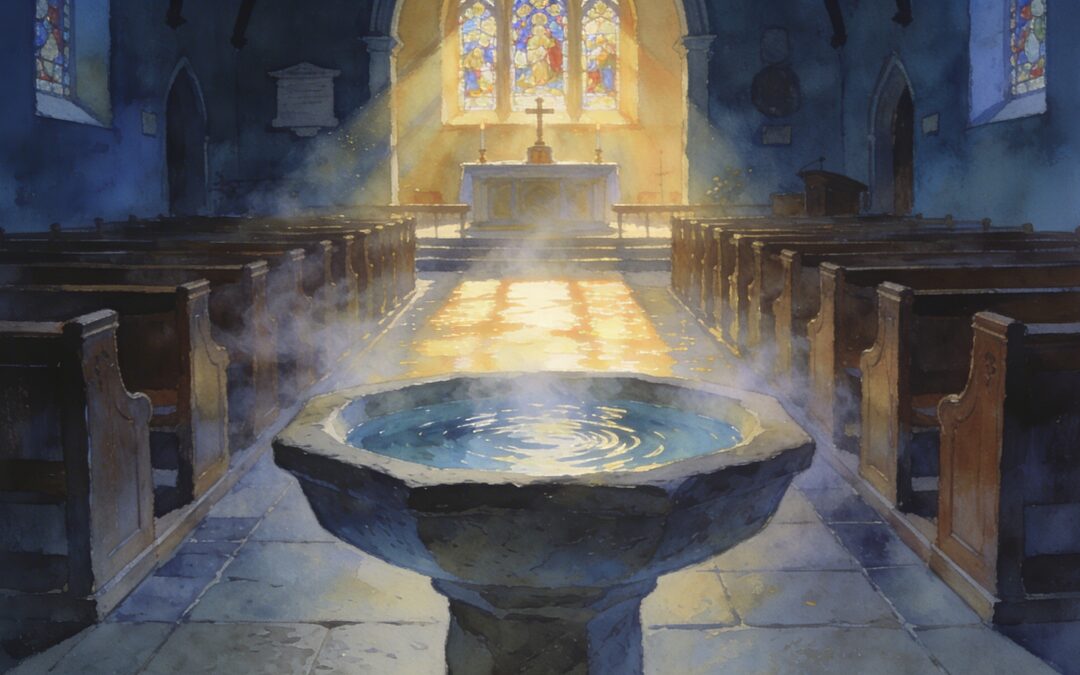
Before addressing anything more specifically, I want to quickly touch the base that Baptism is a Sacrament. In the Free Methodist Church, the denomination I am in, we recognize the two sacraments of Christ, the Eucharist and Baptism. They are the means of grace that Christ has given His Church. Eucharist (Communion or the Lord’s Supper), as spoken of by John Wesley is the ongoing and continual means by which God provides grace to the Christian in their life (see his sermon The Duty of Constant Communion). And, it is Baptism, as spoken of above, that serves as the rite of entrance into the people of God. In my church, the baptismal font is located at the back of the sanctuary, in direct line with the chancel of the altar, representing the truth that you must first pass through baptism to come into the life of the Church.
The word sacrament in this discussion is important because it focuses on the work of God that takes place as we engage in these means that Christ has given us. Yes, we are commanded to keep them in obedience to His word (Christ’s command to baptize in the Great Commission, and His command to keep the table in continual remembrance of Him). It is the witness of Scripture and the early undivided Church that these acts are much more than us doing, they are the avenue and channel of God to work in and through His people. Physicality matters because we are in a physical world, and God stepped in through the incarnation. So thus, God does not stop working through the physical, rather He has given to His people physical signs through which His graces flow. This is why I distinctively use the language of sacrament, rather than something else such as ordinance.
Now back to the main discussion.
Of all the verses, one of the most controversial is 1 Peter 3:21, “this water symbolizes baptism that now saves you also—not the removal of dirt from the body but the pledge of a clear conscience toward God. It saves you by the resurrection of Jesus Christ.” In this verse, Peter does not mince words—he articulates something that should cause modern evangelicals, especially those of a “believer’s baptism only” persuasion, to slow down and read again. “Baptism now saves you.” It’s hard to argue that Peter could have spoken more plainly. But immediately, he anticipates our misunderstanding: it is not “the removal of dirt from the body.” It’s not a magical washing, or a mere ritual dealing with externals. Peter wants us to understand that baptism’s efficacy is grounded not in ritual precision but in the resurrection of Jesus Christ. In other words, baptism saves, not because of water alone, but because in baptism we are united to the saving work of Christ—the same Christ who plunged into death and rose up into new life.
The apostle’s words echo other deep currents running through the New Testament. Paul declares in Romans 6 that “all of us who have been baptized into Christ Jesus were baptized into his death.” Baptism links the believer personally and mysteriously with the passion and resurrection of the Lord. It is not simply a symbol we perform to show our commitment; it is a real participation in Christ’s own redemptive act. Through it, we are joined to his dying and rising—our old self is buried, and a new self, reborn by grace, comes into being. In this way, baptism is not an optional external mark, but an entrance into life in Christ, a sacramental sharing in his work of salvation.
Here is where much of our modern understanding falters. We have come to think of baptism primarily as an expressive act—something we do to communicate something about ourselves: our faith, our repentance, our decision. But biblically and historically, baptism is primarily receptive. It is something God does in and for us. Yes, we approach in faith; yes, it is a sign of commitment to follow Christ—but at its core, baptism is an encounter with the divine initiative, not a declaration of human resolve.
This shift in emphasis is not a matter of semantics. It shapes our entire theology of grace and discipleship. If baptism is my declaration, then my faith stands primarily on the strength of my sincerity and memory of having “made a decision.” But if baptism is Christ’s act toward me, then my faith stands on divine promise and covenant faithfulness. The former centers on my experience, the latter on God’s grace. And this distinction lies close to the heart of the Reformation concern: that our salvation rests not on our performance but on the steadfast mercy of God.
John Wesley, of course, understood this sacramental tension well. In his sermon The New Birth, he draws together faith and baptism in a deeply practical way. He insists that baptism is both a sign and a means of grace—a vehicle through which God works regeneration. But he also recognizes that the waters alone do not automatically confer salvation; they must be received by faith. Wesley’s nuanced view allowed for both divine action and human response, and it serves the Church today as a helpful corrective to both extremes: the notion that baptism functions mechanically without faith, and the opposing view that it is merely a symbol without power.
Throughout Scripture, water is not a neutral or comforting image—it is chaotic, cleansing, and creative all at once. From the primordial deep in Genesis, to the floodwaters in Noah’s day, to the Red Sea and the Jordan River, God repeatedly uses water as the boundary between old life and new creation. It both destroys and delivers. Peter, drawing on the Noah narrative in the preceding verses of 1 Peter 3, connects baptism directly to this cosmic pattern: just as Noah passed through the waters of judgment into a new world, so too we are borne through the waters of baptism into the new creation of Christ.
The early Church Fathers grasped this profoundly. Tertullian, writing in the second century, called baptism the “seal of faith,” by which the Spirit marks and protects the believer. Cyril of Jerusalem described baptism as a “participation in the death and resurrection of Christ,” an event so transformative that he instructed catechumens to remove their garments before baptism as a sign of laying aside the old self, and then clothe themselves anew as a symbol of their resurrection life. These ancient witnesses saw baptism not as an addendum to salvation but as its visible threshold—the place where the promises of God and the faith of the believer meet in a sacrament of grace.
When I think about standing by the baptismal font this Easter, I can’t help but reflect on how baptism folds each of us into the larger story of redemption. It is not merely our story, it is Christ’s story, into which we are grafted. That’s why the baptismal liturgy traditionally includes the Apostles’ Creed, confessing the faith “once delivered to the saints.” In being baptized, a person doesn’t just say, “I believe in Jesus.” They are, more profoundly, saying, “I believe in the God of Abraham, Isaac, and Jacob; I believe in the Father, Son, and Holy Spirit, and I take my place among His people.”
The Church, in her wisdom, locates baptism at this communal crossroads. It’s never a private ceremony, because baptism ushers us into the Body of Christ. We are baptized into one Body, as Paul says in 1 Corinthians 12:13. The Church becomes the womb from which new Christians are born and the family into which they are adopted. That’s why the placement of the font at the entrance, aligned with the altar is so fitting. The believer enters through those waters to approach the table of grace, joining in the full life of the Church.
This brings us, inevitably, to the question of who should be baptized. For many evangelicals, the assumption is that baptism belongs strictly to those old enough to make a personal declaration of faith. And yet, the witness of the early Church and of Scripture itself offers a broader perspective. When Peter finishes preaching on Pentecost, his message concludes with a promise: “The promise is for you and for your children and for all who are far off” (Acts 2:39). Households are baptized, not just individuals. The covenantal logic that once applied to circumcision now unfolds in baptism. It is the sign of belonging to the covenant community—a sign that anticipates faith as much as it springs from it.
This doesn’t mean that faith is unimportant; rather, it means baptism operates within the economy of grace. For infants, it is a sign planted in hope, to be nurtured and fulfilled by future faith. For adults, it is the sacramental seal of faith received. In both cases, what matters is not the sequence of events but the grace of God uniting them.
John Wesley himself baptized infants with full conviction, but always with pastoral care, urging parents and the Church to raise those baptized children in the nurture of the faith. In that sense, baptism begins a process, not ends one. It marks the beginning of the journey of sanctifying grace, that ongoing “going on to perfection” that Wesley so cherished.
Peter’s grounding phrase, “by the resurrection of Jesus Christ,” cannot be overemphasized. Baptism saves because Christ’s resurrection gives it power. Every baptism is, in fact, a mini-Easter. The movement down into the waters mirrors the death and burial of Jesus; the rising up out of them signifies participation in his resurrection. This is why the early Church baptized converts at sunrise, and often on Easter—those being baptized would literally face the East, toward the rising sun, confessing that they were turning away from the darkness of sin and turning toward the Light of Christ.
Theologically, this resurrection motif tells us that baptism is not a static act but a dynamic participation in life eternal. We are not simply cleansed of sin, we are set free for righteousness. The grace received in baptism calls and empowers us to live differently. As Paul reminds us, “just as Christ was raised from the dead through the glory of the Father, we too may live a new life” (Romans 6:4). Baptism, then, is both forgiveness and new vocation. It is an identity-forming event.
Every time a Christian witnesses a baptism or dips their fingers into the font and makes the sign of the cross, it is a renewal of that truth: “I have died with Christ; I have been raised with Him.” Baptism, while once-for-all, continues to shape the believer’s spiritual imagination. Martin Luther, when plagued by temptation or despair, would often cry out, “I am baptized!”—not “I was baptized,” but “I am.” The reality of that moment endured for him as a present-tense grace.
So when the Free Methodist Church, or any church, remembers the baptized, it is a way of re-rooting our faith not in our wavering emotions but in God’s covenantal promise. Whether we were baptized as infants or as adults, in a river or a font, the same divine life is at work. God’s act remains true even when ours falter. Baptism allows us to locate our lives within that steadiness, to live out of an identity that has already been defined by God’s promise.
What, then, does it mean to “live baptismally”? It means living daily out of the truth that we have been united to Christ. It means resisting sin not from guilt or fear but from identity: “that is not who I am anymore.” It means recognizing the Church not as a voluntary association of like-minded individuals but as the family into which we were birthed through water and Spirit. It means approaching the table each week as those who have entered through the font—as resurrection people who have been called out of darkness into marvelous light.
To live baptismally is also to live missionally. The Great Commission does not end with “make disciples”; it continues, “baptizing them… and teaching them.” Baptism and discipleship are inseparable. Every act of evangelism, every act of mercy, every proclamation of the gospel flows from our baptismal identity—those who have been joined to Christ and sent to embody His Kingdom in the world.
As the early Church would declare at the baptismal font: “You are buried with Christ; you are raised with Christ; you are sealed by the Spirit; you belong to God.” This is not mere poetic flourish—it is the substance of Christian life.
So when Peter writes, “baptism now saves you,” he is not contradicting the gospel of grace, he is articulating it sacramentally. Baptism does not replace faith; it embodies it. It does not operate apart from the resurrection; it manifests it. It does not substitute obedience; it initiates it. The water does not save by itself, but by the divine power that has chosen to work through it.
This Easter, as you prepare to stand beside the font and welcome new believers into the family of faith, you participate in an unbroken story stretching back to the Jordan River, to Pentecost, to the empty tomb. The water that splashes from the font bears witness to the same grace that parted seas and burst forth from graves. It is the water through which the Spirit hovers once again, bringing new creation from chaos. And every drop proclaims the gospel in miniature: Christ has died. Christ is risen. Christ will come again.