by Joel V Webb | Aug 13, 2026 | Free Methodism, Sacraments, Theology & Practice
In the Free Methodist Book of Discipline (2023), the phrase ‘means of grace’ is used 10 times throughout, as it should be as the guiding constitutional document for a denomination in the Methodist tradition. While an actual definition is not found within the BOD (it is presumed into the book), that the means of grace can be understood as, “ a broader category referring to all the ways God has appointed to convey his grace to men and women.”1 Simply put what this means is that God has established ways for those in the Church to receive His divine enablement for Christian love and service.
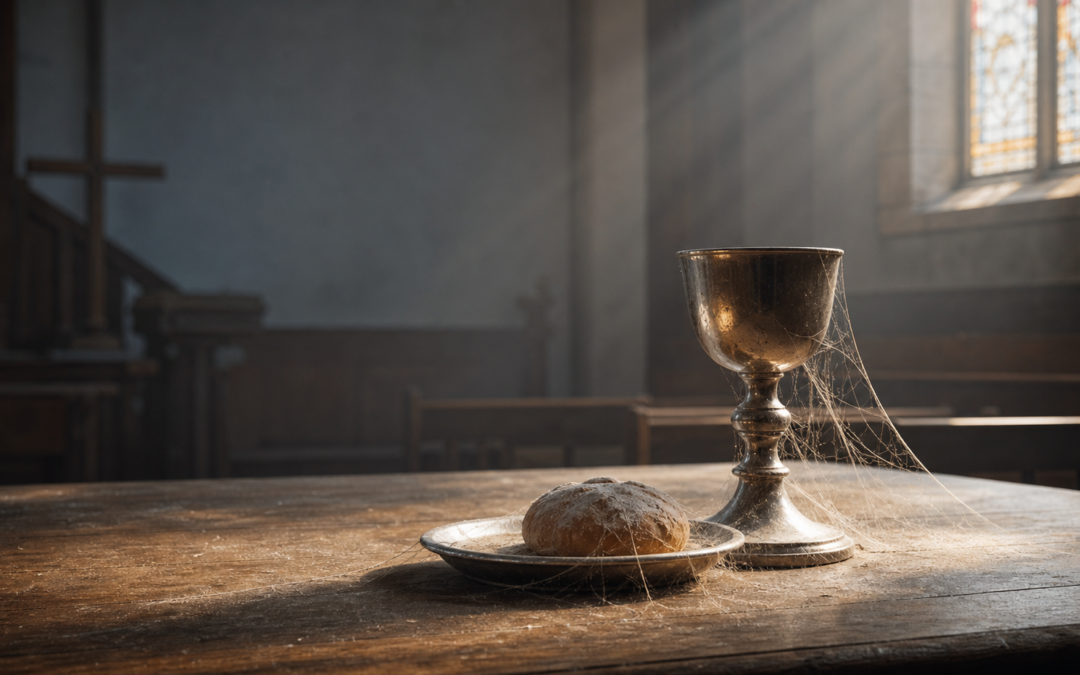
There are many actions that are conduits of God’s grace to people. Everything from preaching, prayer, Scripture reading, Christian fellowship, singing and the list goes on. All of these things are good and necessary parts of Christian life and practice both individually and corporately. And, they are yet eclipsed in effectiveness2 as a means of grace by the two Sacraments that Christ Himself instituted and commanded; Baptism and the Eucharist.
Paragraph 123 of the BOD states:
Water baptism and the Lord’s Supper are the sacraments of the church commanded by Christ. They are means of grace through faith, tokens of our profession of Christian faith, and signs of God’s gracious ministry toward us. By them, He works within us to quicken, strengthen, and confirm our faith.3
And, if you go to the two subsequent paragraphs, each detailing the specifics of our Free Methodist understanding of Baptism and the Eucharist, the language about God’s work in and through these Sacraments is even stronger. All of this to say is that according to our Book of Discipline, the Sacraments should have predominant place in our theology and praxis.
From this I urge Free Methodist congregations to move toward weekly celebration of the Lord’s Supper as the normative goal, while recognizing that pastoral, logistical, and conference-specific circumstances may require a staged path toward that goal. This is not a call to adopt a particular worship style or to diminish preaching, prayer, Scripture, fellowship, or works of mercy. It is a call for our practice to reflect our confession that the sacraments are Christ-commanded means of grace.
I now ask the challenging question. If we affirm what our BOD states (something ALL clergy must do), as the Apostolic teaching of the Church carried through our Anglican heritage into Methodism and then through to us today, why do we withhold them from our congregations?
This question specifically applies to our practice of the Lord’s Supper, as there is not usually a question about the importance of Holy Baptism (even if many hold a more anabaptist view). John Wesley himself felt very strongly about this matter as well. We might go straight to his sermon The Duty of Constant Communion (which I encourage all to read), but rather point our attention to Sermon 26, on the Sermon on the Mount where he said,
“It was the judgment of many of the ancient Fathers, that we are here to understand the sacramental bread also; daily received in the beginning by the whole Church of Christ, and highly esteemed, till the love of many waxed cold, as the grand channel whereby the grace of his Spirit was conveyed to the souls of all the children of God.”4
The grand channel of his grace. This is important and we should not miss it. Wesley is not saying that there are no other means of grace, there certainly are. But what is being claimed, as affirmed in both Scripture and the early church, is that the Table is the primary place that God gives His grace to the Church. This claim likewise is bolstered by the fact that the early Methodists in England were namecalled as sacramentarians for their insistence on frequent celebration of the Lord’s Supper.
So I pose the question again for effect. If this is our Methodist belief and understanding of the Lord’s Supper, as affirmed in Scripture, through Wesley and in our BOD; why do we so constantly withhold it from our churches?
I do not mean that Free Methodist clergy are indifferent to Christ or careless toward their people. I mean that, as a denomination, we have tolerated a pattern of sacramental neglect that can deprive congregations of regular access to a means of grace Christ has commanded and our Discipline commends it. The FMC pastors I have met and know, faithfully preach the Word to their congregations to the churches every single week. And I praise God for that, and commend them for that. Yet, that is only the job. We are stewards of both Word & Sacrament. And if a job is only half-done, is it truly done?
One contributing factor is the way broad evangelical, anabaptist inclined and excessively revivalist habits have shaped many non-mainline Protestant churches, sometimes more deeply than their own confessional and theological inheritances. Congregations understandably observe practices that appear to produce engagement, growth, or visible response and seek to adopt them. Yet such borrowing can become uncritical when we ask only whether a practice appears effective, rather than also asking what theology of grace, conversion, the church, and worship that practice assumes.
A related concern is a significant shift in the way worship is understood and ordered. In some settings, the regular pattern of Word, prayer, praise, and the Lord’s Table has yielded to a service structured chiefly around musical affect, preaching, and an invitation for an immediate response. Contemporary worship music is not itself the problem, nor is an earnest call to conversion. Both can serve the church well. The danger arises when emotional intensity or a visible response becomes the expected climax of worship, while Christ’s instituted means of grace, particularly the Table, are treated as occasional additions rather than a regular act of the gathered church.
This pattern bears resemblance to the revivalist logic associated with Charles Finney’s “new measures,” including the anxious bench: practices designed to elicit an identifiable, immediate decision. The concern is not that people should not respond to the gospel. They must. The concern is that the church may come to measure worship chiefly by the response it can produce, rather than by whether it faithfully gathers the people of God around Word and Table, through which Christ has promised to minister his grace.
My purpose is not to stir indignation against or to accuse faithful pastors and churches. It is to call my Free Methodist brothers and sisters, from laypeople to bishops, to receive afresh and to faithfully and regularly use the means of grace Christ has entrusted to his church; especially the Lord’s Supper. Those of us ordained for ministry are charged not only to proclaim the Word, but also to administer the sacraments; we should therefore seek to order the church’s worship in a manner consistent with that charge.
The regular participation of the table is not just for liturgical churches. While the church I serve, as well as several others such as those in Rochester, NY and Boise, Idaho are irregular expressions for our denomination; there are a growing number of churches that are both contemporary and everything in between that are becoming more sacramentally minded and celebrating communion weekly. This call is not about a specific style or formula of worship, it is rather a call to pursue the things Christ has given His church, and that we as Methodists have from the beginning said are important.
I am so appreciative of our denomination’s pursuit of seeking Christ as to how the Free Methodist expression of the Church is called to impact the world. Our desire to seek together, become a reignited Spirit-fueled movement, to see the living giving holiness of Christ made in each person, and the justice of the Gospel be wrought by our churches in our communities. I am moved by, and love who we feel God is calling us to be. Now, how do we enact it?
It is at the table, primarily that we encounter Christ. We wish to encounter the life giving power of the Holy Spirit, that makes us holy and into the express image of Christ Himself. What better place than where Jesus has promised to encounter us as we eat and drink in faith! We desire justice to flow like a river, as we love mercy and walk humbly before our God. What a better place than where justice was served. Where God Himself gave Himself freely for others as we are called to do likewise! We seek for holy moments where people meet with and do business with the Lord. What a better place than where, again, we know He is. In the breaking of bread that we know He is there, where there is a participation, a koinonia5, with Jesus Himself!
We are looking for answers and solutions to what we see as the problems facing the Church, especially the Church in the West. Yes, these are very real issues we must grapple with. And what if the answer has been before us all along? What if, as we come, truly in faith to the place where Jesus is, at the altar in the bread and the cup that we receive the grace and power of Christ in the Holy Spirit.
So what are the next steps?
Pray and read.
First, pray. Pray that the Holy Spirit opens your eyes to the work that He desires to do in you and your congregations as you come around the Table. Celebrating the Sacrament does not do anything on its own. His power is there when we come in faith, knowing that He is working as He has promised. If you are laity, pray as well. Pray that your pastor comes to see the immense power that Christ promises to endow to His Church through His instituted means.
Second, read. Do a study first of all in Scripture. Look at the pattern of the Passover feast, and how much worship elsewhere in Scripture meant actual consumption of food. Then in the New Testament look at how central the Table is to the identity to the life and practice of the Early Church. Then from that foundation look at the Church Fathers, Scholastics, Reformers, Wesley and others like Thomas Oden and see how essential and central the Table is to not just out practice as Christian, but our identity6.
As these things come together; prayer, study, renewed teaching, and faithful practice, we will more fully receive the grace Christ has promised to give his church at the Table. The Lord’s Supper is not an empty ritual or a technique for producing spiritual results. It is a Christ-commanded means of grace, the “grand channel” through which the Holy Spirit strengthens his people in faith, holy love, and service.
As we come regularly in faith, we are continually reminded of Christ’s saving work and receive its benefits anew. Our identity is more deeply rooted in him; we are formed as one body, nourished for holiness, and sent to love our neighbors in the power of the Spirit.
by Joel V Webb | Jul 13, 2026 | Orthodoxy Matters, Theology & Practice
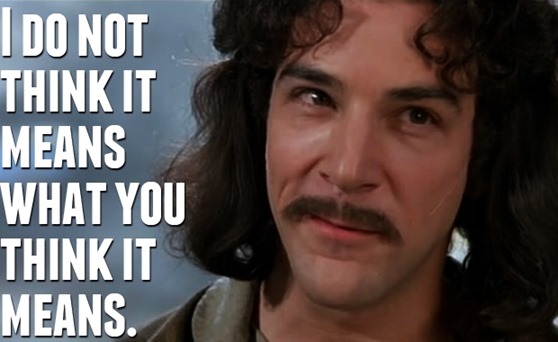
“You keep using that word; I do not think it means what you think it means.”
It is one of the most iconic lines in modern cinema. In The Princess Bride, Inigo Montoya delivers this line in response to Vizzini’s constant use of the word “inconceivable,” a word he clearly does not understand, given how frequently he misapplies it. The humor works because the audience recognizes the gap between the word’s meaning and its usage.
That line often comes to mind when I encounter discussions, especially online, about what are commonly called “Second Commandment violations,” or “2CV” for short.
The argument usually runs like this: because Exodus 20:4 says, “You shall not make for yourself a carved image, or any likeness of anything that is in heaven above…,” any depiction of Jesus, whether in painting, film, or other media, is a direct violation of God’s command and therefore sinful.
To that, I find myself thinking: you keep using that word; I do not think it means what you think it means.
The biggest pitfall with this interpretation is not sincerity. Those who hold this position are often deeply committed believers who want to avoid idolatry at all costs. That instinct is good and worth honoring. But sincerity alone does not guarantee accuracy.
Where this position begins to break down is in two key areas.
First, it fails to read the commandment in context, and not just immediate context, but canonical context.
Sound biblical interpretation requires us to ask not only, “What does this verse say?” but also, “How does Scripture itself apply and clarify this command?” The Second Commandment does not stand alone as an abstract prohibition. It is embedded within a covenantal framework and immediately explained: “You shall not bow down to them or serve them” (Ex. 20:5). The concern is not merely the existence of images, but how they are used.
But the context deepens even further.
In Exodus 32, Israel violates this very commandment with the golden calf. What is striking is not simply that they made an image, but what they claimed about it: “These are your gods, O Israel, who brought you up out of the land of Egypt!” (Ex. 32:4). This is not so much the introduction of a new deity as it is a false representation of the true one, an attempt to render Yahweh visible, controllable, and immediate. That is the heart of the violation.
And then, almost immediately after this, God commands the construction of the tabernacle, which includes images.
In Exodus 25, the Ark of the Covenant is to be fashioned with golden cherubim overshadowing the mercy seat. In Exodus 26, cherubim are woven into the very fabric of the tabernacle curtains. Later, Solomon’s temple is adorned with carved cherubim, palm trees, and open flowers (1 Kings 6:23–29). These are not incidental decorations. They are divinely commanded elements within Israel’s worship.
Even more striking is the bronze serpent in Numbers 21. God commands Moses to make it, and those who look upon it in faith are healed. Yet in 2 Kings 18:4, Hezekiah destroys it because it had become an object of idolatrous devotion.
That example is decisive.
The problem was not that an image existed. The image was commanded by God. The problem was that the image was misused. It shifted from sign to substitute.
So whatever Exodus 20:4 forbids, it cannot be a blanket prohibition on all visual representation. Scripture itself does not allow that conclusion.
The issue is not images. It is idolatry.
Second, it ignores what idol worship actually looked like in the ancient world.
In that world, images were not simply artistic representations. They were understood to participate in the reality they depicted. Through ritual acts, an idol was believed to become a dwelling place of the deity. Offerings were made to it. Prayers were directed toward it. The image functioned not as a reminder, but as a localized presence of the god.
This is the backdrop of the Second Commandment.
God is not prohibiting art. He is prohibiting the construction of rival presences, attempts to represent Him in ways that make Him manageable, containable, or subject to human control. The commandment guards the freedom and transcendence of God.
At this point, an important question arises: what about traditions that use images devotionally, such as icons and statues?
Here we need both clarity and charity.
Before critiquing Catholic or Orthodox practice, we must represent those traditions honestly. It is easy to construct a strawman by assuming that bowing before an image automatically equals worship, or that such practices are simply paganism in Christian dress. But those claims do not reflect how these traditions understand themselves. As Christians, we are called not only to truth, but to truthfulness.
Both Roman Catholic and Eastern Orthodox theology carefully distinguish between worship (latria), which is due to God alone, and veneration (dulia), which is honor given to saints, with a unique form (hyperdulia) accorded to Mary. The Second Council of Nicaea (787) articulated that honor given to an image passes to its prototype. The image is not the endpoint, but a means of directing honor toward Christ or His saints.1
In the Eastern Orthodox tradition especially, this is often expressed through the language of the icon as a “window.” An icon is not understood as a container of the divine, but as a witness that opens the viewer toward a greater reality. It is something one looks through, not merely at. The purpose of the icon is not to localize Christ, but to direct the heart and mind toward Him.
This is deeply tied to the theology of the Incarnation. If the Son of God has truly taken on visible, tangible human flesh, then He can be depicted. The icon becomes, in this sense, a visual confession that the invisible God has made Himself known in Christ. As John of Damascus put it, “I do not worship matter; I worship the Creator of matter who became matter for my sake.”
That is a serious and historically grounded position, and it deserves to be engaged on its own terms.
At the same time, from a Protestant perspective, several concerns remain.
The distinction between worship and veneration, while theologically precise, is not always easily maintained in practice. The Reformers were responding to real pastoral conditions in which the line between honoring and functionally relying upon images had become blurred.
This is strongly reflected in the 39 Articles of Religion of the Church of England,
XXII. Of Purgatory. The Romish Doctrine concerning Purgatory, Pardons, Worshipping and Adoration, as well of Images as of Relics, and also Invocation of Saints, is a fond thing, vainly invented, and grounded upon no warranty of Scripture, but rather repugnant to the Word of God.2
Further, even the “window” language, helpful as it is, raises a question of pastoral caution. Windows are meant to be looked through, but human nature has a way of lingering on the glass. What is intended as a means of directing attention to Christ can, over time or in certain contexts, become an object of misplaced focus.
Here again, the bronze serpent provides a helpful biblical parallel. What God once commanded and used for good can, when misdirected, become an occasion for idolatry.
Finally, the New Testament offers no clear mandate or example of the use of images in the worshiping life of the Church. While that silence does not settle the question, it does suggest that such practices are not essential and should therefore be approached with care.
So we should avoid two equal and opposite errors. We must not misrepresent our Catholic and Orthodox brothers and sisters. At the same time, we must not ignore real pastoral dangers.
The question is not simply whether an image can function as a window.
The question is whether, in practice, it consistently remains one.
The Second Commandment is not violated by the mere existence of an image of Christ.
Scripture itself includes divinely commanded images, even within the holiest spaces of worship. The commandment, therefore, cannot be about representation as such. It is about the misuse of representation, treating something created as if it were the Creator, attempting to bring God under our control, or substituting a manageable image for the living and holy God.
To have a painting of Jesus, to portray Him in film, or to use visual depictions for teaching is not, in itself, a sin. The question is not whether an image exists, but what role it plays.
Does it point beyond itself to the risen Christ revealed in Scripture, or does it subtly replace Him?
The true danger is not that we might depict Christ. It is that we might reduce Him, whether in image or in imagination, to something safer, smaller, and more controllable than He truly is.
And that is precisely what the Second Commandment was given to prevent.

by Joel V Webb | Jul 7, 2026 | Free Methodism, History, Methodism, Orthodoxy Matters, Theology & Practice
Recently a friend of mine, David Wiesner wrote a fantastic article titled “The Wesleyan Quadrilateral Need to Go”, detailing past and current voices in the Methodist movement, along with his own arguments as to why the term coined by Albert Outler should cease to be a framework for theological discernment in the Methodist-Wesleyan tradition. I think he has a very compelling argument, and there are certainly points that I agree with him, and his sources on. Yet, I have my own reasons that I think support the notion that the Quad should stay as the framework for discerning theology and consensus in our pan-Methodist world.
To lay the groundwork, I will quote from Wiesner’s article concerning the origin and definition of the quad, and take specific note of the historic foundations of this framework that Wesley would have derived from his Anglican heritage:
“Outler created the phrase “Quadrilateral” as a way of trying to describe how Wesley came to his theological conclusions and thus as a means for Methodists to likewise do the same. Outler selected scripture, reason, tradition, and experience as the four “legs” of the Quadrilateral based on his understanding of Wesley’s writings and his perception of how Wesley thought, not from anything explicit that Wesley said. Insofar as Wesley remained a devoted Anglican his entire life, it’s more than fair to say Wesley was familiar with the use of scripture, reason, and tradition because (as noted in the quote above) that was and remains the Anglican Trilateral formulation (or Triad) for discerning theology, and adding experience to the mix certainly reflects the importance Wesley placed on spiritual or converting experience within the Christian life.”
There are two arguments of the seven made in Wiesner’s article that I wish to address, and in the order that he did as well. The first, and what I think is the most compelling of these arguments is the misuse of the Quadrilateral. One of the most obvious realities to anyone with eyes is that the United Methodist Church abused and bastardized the Wesleyan Quadrilateral. I am not mincing my words here because there is no way around it. The theological desolation and rejection of Christian orthodoxy that has been seen in the last generation is a result of theological liberalism abusing the quadrilateral to bend orthodox interpretation of Scripture using experience.
Because of this, the Global Methodist Church (GMC) has taken steps away from the quad. This is witnessed in the sourcing of David Watson and others in Wiesner’s article. And I totally and completely understand this move. To see how Outler’s synthesis was abused to allow for everything it did (something Outler himself admitted and regretted towards the end of his life), it makes sense to want to separate from that synthesis and move to a different framework.
That being said, the abuse or misuse of something does not delegitimize the value or goodness of that thing. Just like people blame the Church for the ills and wrongs done to them presently and historically, that in very many cases is true, does not make the Church bad. But it does show the need we have for Christ. And, I would argue the same is true for the quad. The misuse of it by the UMC and others does not negate the need and goodness of it. As we examine its misuse and abuse, we see how its wrong application has wrought the fruit we see now.
The primary problem was how Scripture was relegated to the same level as the other elements of tradition, reason & experience. To understand the quad with Scripture as equal is to not understand the Protestant theological framework, nor is it to understand how Wesley would have understood how to come to the right understanding and doctrine.
I am not in the Sola Scriptura camp. To be of the Anglican heritage, having the synthesis of theologians such as Robert Hooker in his Laws of Ecclesiastical Polity, which would have been foundation to Wesley and his framework (thus the three-legged stool) is to know that the issue is not the truth and reliability of Scripture. The place of diversion comes down to the interpretation of said Holy Scriptures. Hooker at the time of his writing was primarily locked in a theological back and forth with the Puritans who were dogmatically grounded in Continental European Calvinistic theology, and thus if it wasn’t plainly in Scripture then it was wrong (a simplification, but fundamentally true).
Rather, Hooker wrote, “What Scripture doth plainly deliver, to that the first place both of credit and obedience are due; the next whereunto is whatsoever any man can necessarily conclude by force of reason; after these the voice of the Church succeedeth.” (Laws of Ecclesiastical Polity). He also wrote, ““It sufficeth therefore that Nature and Scripture do serve in such full sort, that they both jointly and not severally either of them be so complete, that unto everlasting felicity we need not the knowledge of any thing more than these two may easily furnish our minds with on all sides.” In providing this framework, we see that the issue is not the authority of Scripture, but what we do with interpretation, and with things that scripture does not expressly address.
The reason we must have an avenue of theological synthesis is because heretics use the same Scripture we do. If you listen to the Road to Nicea podcast, or go deeper down the rabbit trail and actually read the Church Fathers (something I think EVERY pastor should be required to do), you see how the argument of the heretics such as the Arians, Gnostics and the like have their root in Scripture. As wrong and faulty as their theology is, it is the interpretation of Scripture that leads to the wrong theology.
So again, the issue is not Scripture itself, but how we come to understand what Scripture is teaching. Because if you have talked theology with someone with aberrant or heretical theology (like I have), they quote Scripture left right and center until their faces are blue. The diversion is that what they believe is not found in the Grand Deposit of faith, handed down to the saints by the saints who have come before, ultimately found in the teaching of the Apostles. That is why we need the Quadrilateral.
It is with this understanding that our conception of the Quadrilateral needs realignment. Scripture must be the unrivaled head of the quad. Yes, tradition, reason & experience are used in the synthesis of what Scripture is saying, but they can never go against what Scripture plainly teaches. And so my encouragement for both David, and those in the GMC (I have both family and dear friends apart of it), is that the problem is not the quad in and of itself, it is the abuse of the tool. Correct the imbalance in the framework of interpretation, don’t jettison the baby with the bathwater (don’t get me started on the paedobaptism discussion, I’m always ready to defend this Scriptural and historic Christian practice!).
Then we come to the second main augment that Wiesner makes, “The reality of how the Church determines theology is a collective and Spirit-infused enterprise, and we should encourage that corporate method instead of the implicitly-individualized method of the Quadrilateral”. My biggest contention with this is that I feel this is a category error. Wiesner commits a category error if he assumes the Quadrilateral’s purpose is to describe exactly the procedural forms the apostles used in Acts, rather than to articulate a method that makes the Spirit‑infused and corporate enterprise of the church intelligible and applicable today.
Again, the concern of this argument is the over individualization of the process that I believe is corrected by right weighting of Scripture as the highest authority, and then I would even posit that experience is the bottom of the pile, with it needing to be ultimately subject to Scripture first, then tradition & reason, before we interject what our experience says.
Part of the reason I am so ardent about this is because I grew up in a theological landscape that had no real and discernable process for making or synthesizing theological decisions outside of the personal experiential authority of a few key leaders. It was not a process or a framework that anyone would be held to if they deviated away from it. Just like how every Sunday in my church’s liturgy we declare the Nicene Creed following my sermon. And, I have explicitly told my congregation the purpose of doing so is that if I preach something contrary to the truths we are declaring, I am to be held to it and corrected.
The quad, I believe, is supposed to function as such for us in the pan-Methodist world. It is a framework that we run ideas, concepts and theologies through to see if it is in concert with true Christian doctrine. As an example, I can take the new Social Standards that the UMC passed just a few years ago following the mass disaffiliation to the new GMC and other similar denominations (like my own parish!). We don’t actually have to go any deeper in the quad than Holy Scripture to see how what was passed is in direct violation of the clear teachings and passages (granted, when you buy into process theology and open-theism, anything is possible). But let’s explore the other elements if we correctly use the quad as intended. As soon as you look at tradition, you will then see that the changes are in clear and direct violation of what the Church has ALWAYS taught, with no grey areas or equivocation. Then with reason and experience, the same conclusion remains: these revisions do not represent a deeper or more faithful reading of Christian truth, but a departure from the settled witness of the Church, the moral logic of Scripture, and the lived moral discernment of the Christian tradition. In other words, when the Quadrilateral is used properly, it does not become a license to baptize novelty; it becomes a means of testing whether a proposed teaching can actually stand within the whole Christian inheritance, and in this case it cannot.
It should be acknowledged that the Church has never discerned theology in a vacuum. Councils, synods, and canonical processes are all legitimate expressions of the Church’s corporate, Spirit-led judgment, and they provide an essential check against purely individual interpretation. The point of the Quadrilateral is not to replace those ecclesial realities, but to give them a coherent theological grammar: Scripture remains the final authority, while tradition, reason, and experience serve the Church as shared and accountable means of discernment. In practice, then, the Quad works alongside the Church’s conciliar life rather than against it, helping to ensure that theological judgments are not merely private opinions, but conclusions tested within the common witness of the body of Christ.
Part of my concern is what is the alternative if the Quadrilateral is done away with? My argument is that the Quadrilateral represents how the Holy Spirit works collectively to bring us to the true doctrine of Christ’s Church. There is a lot of uncharted water if we go a different direction. I have been on the Charismatic/generic Evangelical side of the aisle, where if it process was written down honestly, it would look a heck of a lot like the Quadrilateral. Just like in the Church we need structures and frameworks to operate (like the episcopate), we likewise need to same for discerning how the Holy Spirit is speaking and working in the life and belief of the Church. And I believe the Quadrilateral best represents that vision.
And so, as Methodism in the 21st Century is seeking to figure out who we are, we need the Quadrilateral more than ever. Correctly contextualized and utilized as we seek to determine and define the truth of “the faith entrusted once for all to the saints.” (Jude 1:3 BSB).
by Joel V Webb | Jun 30, 2026 | Orthodoxy Matters, Theology & Practice
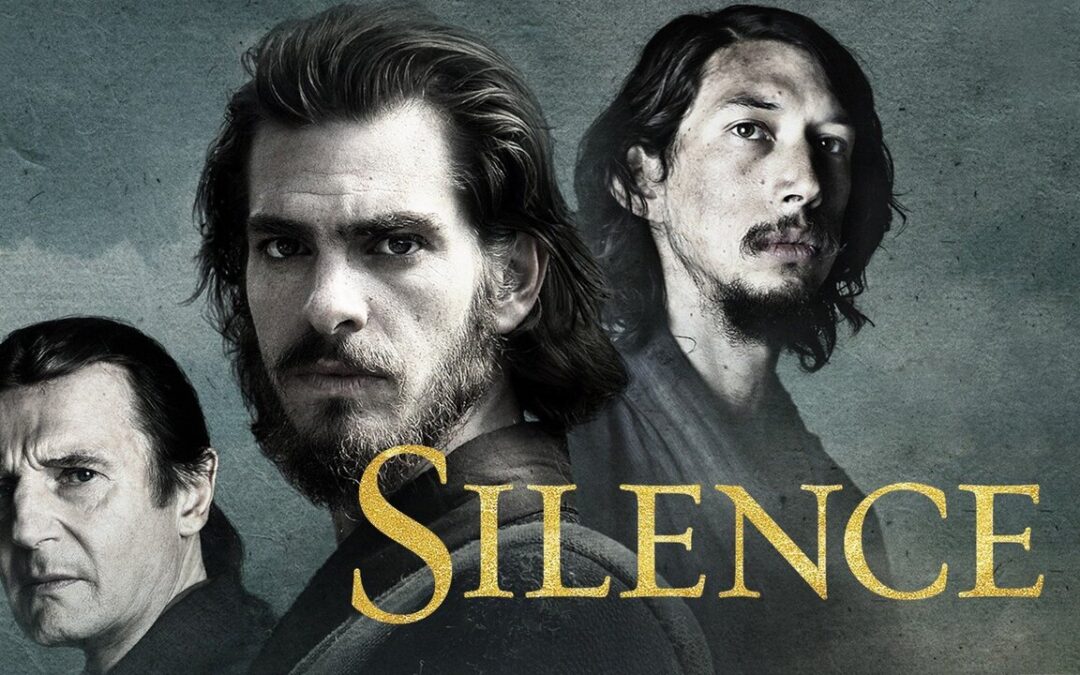
I remember watching the movie Silence a number of years ago when it first came out in 2016. At that time in my life, I was still a part of the more fundamentalist church tradition I grew up in, and so the few others I talked to saw it in a negative light. Yet despite that, there was something in me that thought there was something more there than the sad tale of a person who, through much pain and suffering, leaves their faith.
I won’t give a full-throated walkthrough of the movie, and I highly encourage you to go watch it. It is a testament, firstly, to the sufferings of our brothers and sisters in Christ, still to this day, who go through immense suffering for their faithfulness to Christ—their unwavering allegiance to Him and His Kingdom despite the very real threat of death.
But what does this movie mean for those of us in the West who can still live a life that follows Christ without seemingly costing us anything of significance?
The culmination of the journey of the main character, Rodrigues (played by Andrew Garfield), after his apostatization of the faith, was a comfortable life—a wife, family, status, and a job helping to keep Christianity out of Japan. In the last scene, it is hinted that while he lived his life as someone who renounced the faith and actively worked against it, he may have privately still held to his Christian belief and piety.
And it is in this reality that the problem lies for many of us. It didn’t really matter that Rodrigues may have internally “still been a Christian” because externally no one knew the difference. And that is the challenge for us. Our culture is totally okay with people being Christians…if it’s respectable, nice, and internalized. God forbid we actually believe that our faith in Christ, as members of His Church, means that there are implications in the public sphere. Rather, the zeitgeist of our culture is totally okay with pop stars, actors, politicians, and the general public proclaiming the name of Jesus and being Christian, just as long as it is ultimately private and individual in its impact.
It is this kind of faith that many of us in the West have—a faith similar to that of Rodrigues, where we keep the tenets of our faith to ourselves and live everywhere else as every other secular materialist, and no one knows the difference. But this is not the call of Christ. We are called to pick up our crosses and to follow Him. To deny Him in front of man means that we are denied before the Father, and that is a scary thought to think of.
Does your faith cost you?
Now, this isn’t a call to be a jerk or a Bible-thumping, soapbox-screaming, fire-and-brimstone preacher. That, in itself, becomes the antithesis of the work of the Kingdom. Neither should you be so agreeable to the philosophies, ideas, and ways of the world around us that you are looked at as someone they could work with. We are different, and the difference of being in Christ’s Kingdom means that we will be seen as downright dangerous to the status quo. Why? Because the kingdoms of this world do not wish to turn over their authority to the true and reigning King.
This movie is a call to all Christians—whether you are on the political right or the political left, whether you rightly or unjustly have been given the label nationalist, socialist, racist, homophobe, apostate, or heretic. Maybe the labels are right, but maybe they are not. Rather, are you considered ineligible for integration in the society of the world, or are you able to just float downstream with everyone else?
Silence is a chilling and challenging film to reckon with because we are confronted with the reality that most of us are more like Rodrigues than we like to admit. God, have mercy, and help us by granting us the strength to love and serve you no matter the cost.
by Joel V Webb | Jun 29, 2026 | Orthodoxy Matters, Sacraments, Spiritual Disciplines, Theology & Practice
There is a lot of buzz in our modern world talking about discipleship. Everywhere you turn there seems to be a new video series, course, or initiative that promises to be the next big thing in discipling the people in your church! And, as often happens with this kind of stuff, while it may be very good, it certainly doesn’t do all that it has promised. But why is this the case? Firstly, it is not about the intention or desire of those wishing to disciple or create this content. Everyone involved has a serious and deep desire to see Jesus transform people’s lives, and to make them disciple making members of God’s Kingdom. The good intentions and love of Christ are not what is questionable here.
I believe more fundamentally in the modern evangelical space, we have somewhat forgotten what discipleship is all about. So many of the pipelines or pathways of discipleship I hear about are all looking to keep people coming back every week, get involved in volunteering, inviting other people to church, and Lord willing to start giving. None of these actions are bad, and we certainly want to see them happen. But, these are not the point of discipleship.
The theological capstone of being a Methodist is the idea of Entire Sanctification, or Perfect Love. Simply put, the work of the Holy Spirit has done its work (to the extent possible in our mortal human lives this side of eternity), where our love has been transformed, and while we are not perfect in performance, our love is wholly set on Christ. Certainly sounds like a lofty goal, but John Wesley and his theological descendants certainly believe it is possible. Where many Methodists stop is looking back to where Wesley was inspired to understand this as the goal of the Christian life, and that comes from the Eastern Orthodox position of theosis. Similar in end, theosis, or deification, where the believer achieves unification or the likeness of God.
Now, this might seem like too much for some, and I certainly get it. But if we look at the Biblical data, we see that ultimately the goal of the Christian life is to look like Jesus. To be His image bearer. While sin entered the world and broke us, Christ in what He has done has paved the way for us to do what we were originally created to do: embody His character and co-create within His good creation.
But if this is the actual goal of the Christian life, how have we gotten to where we are today? Well, in my estimation, much of our discipleship material is decidedly more informational and training based than it is anything else. Fundamentally what we have forgotten is the Christian faith is not a set of ideas you are convinced of and believe. It is a way of life that you embody and engage the world with. It has been a product of post-enlightenment philosophy that has relegated personal belief and faith to a set of ideas, and not an all-encompassing way of life.
When we look at the Old Testament, through to the first centuries of the Church we see not people changing where they go on weekends, but a fundamentally different way of life. And in losing this way of thinking, we have forgotten how to do discipleship. Not because we don’t love Christ, or love people. But because we are limiting something that is supposed to have full reign of our entire being, and turned it into a training program.
So all this being said, what does ancient discipleship look like? It can be boiled down to two primary pillars. Spiritual Disciplines, and the Means of Grace.
Richard Foster describes spiritual disciplines as practices that help us draw closer to Christ and experience spiritual freedom, not as ends in themselves. They are the actions that through encountering Christ in the build up our character and relationship with Christ to know Him more. Practices such as prayer, reading, fasting, silence, giving, worship, celebration and more. I highly encourage people to read Foster’s book, Celebration of Discipline. This classic lays out the forms and flow of the main Christian disciples that make up the Christian way of life.
More than just building up our lives, spiritual disciplines are also essential because they ultimately form what we love. Through repeated and intentional action, doing these things form and shape our minds and lives in a certain way. We are creatures of habit, and when we get set in a way of doing things, it is part of what makes us who we are. So by daily participating in spiritual disciples, we encounter Christ, and we also shape our lives around Him.
Means of Grace as traditionally understood in the Christian faith, and in Methodism are those ways by which God imparts His grace to the believer. Grace is easily understood often as two different things. Unmerited grace and also divine enablement. It is the latter especially that is important here. Because we know as humans we are unable to do what we are called to as followers of Christ in our own strength (or at least I know I can’t!), there are certain ways Christ has promised as channels through which the Holy Spirit endows and bestows His strength and enablement.
With this the first question is, “can’t the Holy Spirit do that without a specific physical means?” Sure He can. But what the Christian faith has always believed is that stuff matters. We are not totally disembodied, and our encounters with God are not just subjective, internal experiences where we meet Him. We are physical beings as much as we are spiritual beings. We cannot get away from stuff, and to disconnect the two is an unfortunate recent trend in particularly the Evangelical world that smacks of a tacit gnosticism that disdains the physical.
It does not mean that God cannot and does not meet us in times of prayer, singing, silence or in hearing the Word. He certainly does do all of those things! But we can never forget that He has also, through His Church, ordained and established various physical means that we know by faith we encounter Him and receive His grace.
Of course there are the Sacraments (which we will talk about in a moment). But there are also other means of grace that are not Sacraments that people have seen how Christ endows His enablement to His followers. Mattox, in his book Responsible Grace, has quite a list of those non-Sacraments means of grace that Wesley recognized. In more traditional expressions of the Church these are called sacramentals. Other means from the Sacraments that grace is given.
The two Sacraments the Protestant world recognizes (I talk about them HERE) are those of Baptism and the Eucharist (Communion/the Lord’s Supper). In Baptism, the initiatory Sacrament there is grace conveyed to the believer as Christ, not the baptized is the primary actor and agent (See St. Paul in Colossians speak about Baptism). The specific effects of the grace conveyed at Baptism are discussed, debated and understood differently. John Wesley spoke about sinning away his baptism by the age of 10 or 12. But what is undisputed is that Baptism brings the person into the Church, and they are given grace, whether they are an infant or a newly converted adult.
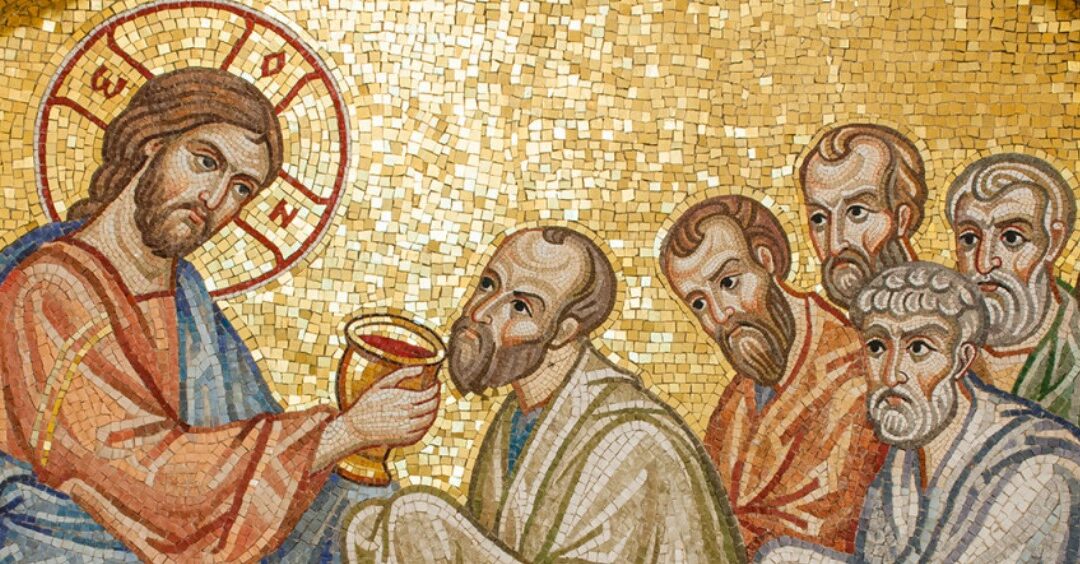
The second of course is the Table. The pinnacle and high point of Christian worship universally for the first 1500 years of the faith, and still for much of the Church in our day. Celebrating Communion is not just a remembrance of what Christ has done, but is also a reception of the benefits of His work on the cross. It is here that we encounter Jesus as both the host of the feast, and as the meal itself. Just as the consumption of the Passover Lamb was an essential part of being saved, likewise in the consuming of the perfect Paschal Lamb, we too receive grace and our salvation as we eat and drink in faith.
It is these two things, the spiritual disciplines and the means of grace that a Christian is discipled. The disciplines are like a lattice that is built. It is a structure or a framework of the Christian life. And then through the means of grace, that life grows, is nourished and eventually fruit is produced. What distinguishes this understanding of discipleship from more modern forms we often see is that this is life encompassing, not just for a time on Sunday and sometime else during the week.
The spiritual disciples are elements we should build our days around. Morning, Midday, Evening & Compline prayer as the traditional offices of the Church provide an opportunity to keep our hearts and minds on the goodness of God, and our ever need for His help. Regular reading and studying of Scripture keep us in constant understanding of the person of Jesus Christ that Holy Scripture points us to. Fasting empties us of our physical strength so that we can better rely on His strength. These, and the other spiritual disciplines construct and formulate our lives around a life knowing it is for God, and God alone that we live. Rather than the modern secular practice of fitting our faith in our life as another thing, classic Christian discipleship recognizes life is truly lived the other way around. We construct our lives around the truth of the world as explained and lived out in the Christian faith.
Then, as that structure is being built we are then nourished by the means of grace. Yes, the spiritual disciples in and of themselves are also offered as means by which Christ, through the Holy Spirit gives His graces to us, and then it is with these others, especially the Lord’s Table that we are nourished. If the spiritual disciples are common means of grace, the Lord’s Supper is as John Wesly called it “the grand channel of God’s grace.” It is not just one among many of the ways God gives His grace to us, but is the primary ordained way in which we encounter the Spirit and are enabled and empowered for the Christian life.
Sure, other kinds of studies, small groups and opportunities for learning the nuts and bolts of the faith are essential and important, but they must be done in conjunction and subject to the work of how the Church has always discipled new believers. Not just by being informational, but first transformational through spiritual disciplines and the means of grace, and then build up with information.

by Joel V Webb | Jun 24, 2026 | Deliverance/Exorcism, Theology & Practice
Short answer. No.
Long answer. No, and it’s complicated.
One of the most fascinating discussions in practical theology is that of deliverance and exorcism. It is an area of practice that is full of fruits and nuts, who do and say kooky things. A lot of misunderstanding, malpractice and unknowns. At the same time, there are also those out there who have a very excellent handle on both the theology and practice of spiritual deliverance and exorcism as it is more widely known, but they are often not as recognizable and are paid much less attention than the people who just shout and scream at demons to leave for the sake of making it a show of power and force.
One of the big reasons why this area is misunderstood or not looked at is because there are certain wings of the Church that don’t believe in the operation of the demonic, or at least in their operation in our day and age. On the edge of this camp are those that believe when the demonic operates, it instantly goes away at salvation.
Then there’s the other end of the spectrum as referenced earlier who thinks that there is a demon behind every lampshade. While theoretically this maybe has some merit it produces in the ways I’ve seen it an overstimulated anxiety over every single part of life. The reality, as it often is in things with theology, is right in the middle.
The first main reason why this get so misunderstood has to do with our Bible translations. A great example of this is Mark 1:32, “When evening came, after the sun had set, they began bringing to Him all who were ill and those who were demon-possessed.” We see the word “demon-possessed” and we immediately think of totally control, that a demonic being has a puppet like control over a person Our minds start flashing with scenes from The Exorcist, or other similar movies with crawling up a wall, floating and speaking in Latin. Part of this comes from the dramatization of Hollywood, and the other part of it comes from the translation not being the most accurate. A better translation of daimonizomenous (used 13 other times in the New Testament) would be “demon oppressed”.
What any practitioner of spiritual deliverance will tell you (be it Roman Catholic, Protestant, Orthodox etc…), is that there are varying levels of oppression and agreement with the demonic. There can be lower levels of oppression from a demon where there is attachment to trauma, patterns of sin and the like, and they like to wreak emotional havoc in a life. It can go from there, to full blown agreement with a demonic being that would be more akin to the possession we often think of.
What this washes out to is for most people (90-99% of cases) there is no direct confrontation with a demonic entity as we often think of.
Now, there is so much here that I have skimmed over, simplified, or not even touched, and at the end of the blog I will link to some excellent resources and books if you are interested in learning more. But back to the main question at hand. Can a Christian be possessed?
Actually possessed by a demon? No, a Holy Spirit residing in them Christian can not be possessed by a demon. But can they be oppressed? Yes. A friend of mine recently put it this way.
“When a person becomes a Christian the deed to their life is transferred from the Kingdom of Darkness to God. So the “house” (person) is legally free from the powers of darkness. But, they still might have garbage strewn across all the floors that need to be cleaned out.”
Everything that happens after salvation is a part of the work of healing and sanctification in a believer’s life. You see, deliverance and exorcism are ultimately rites of healing. It is the work of the Spirit through the authority vested in the Church that a person is healed from the brokenness in their lives, and that includes the demonic oppression that might be there.
This blog post is just the tip of the iceberg when it comes to this topic. As someone who has had some training in this, has been reading more on the topic, and practised a bit, it is a deep, deep rabbit trail. But, I hope this tiny primer has cleared up the initial question, and has also created some more questions to lead to further research and discernment for the future.
The last thing I will say is, Christ wants His people to be free. Our sins have been paid for, bought with the price of His blood, and we are no longer owned by sin and death. And now, just as the image of Christ is to be continually made in us, that also includes clearing out the broken garbage in our lives so we can experience the abundance He has for us.
Recommended books to get started:
Unbounded – Neal Lozano (https://a.co/d/0b4cOe1U)
Deliverance – Jon Thompson (https://a.co/d/08fk7l40)
Thunderstruck – Peter Bellini, a GMC Candidate for Bishop (https://a.co/d/082sQgJi)
Dominion: The Nature of Diabolic Warfare – Fr. Chad Ripperger (https://a.co/d/0hJm8L3P)