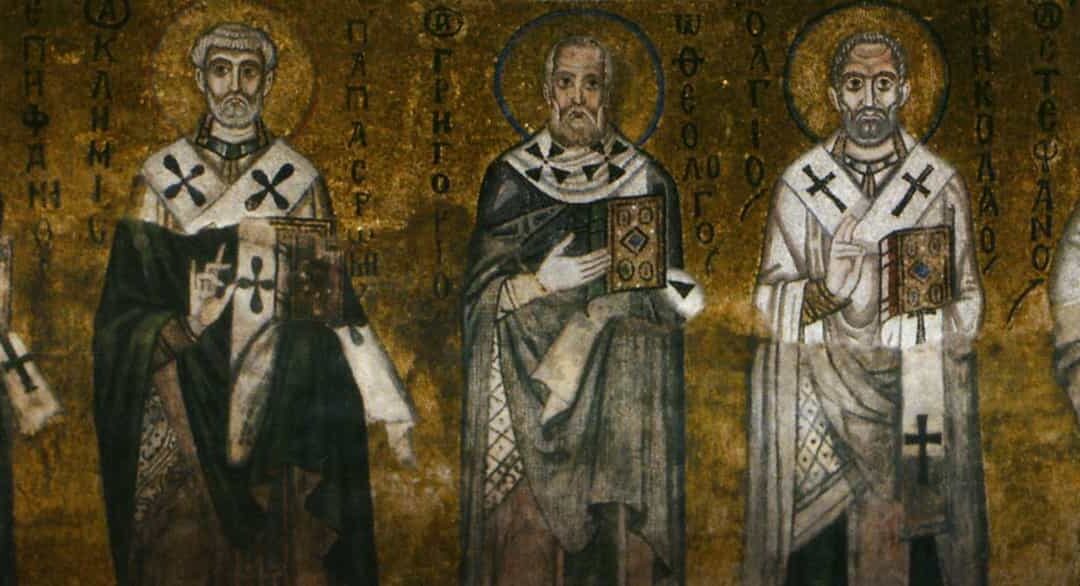
Have you ever had those moments when prayer feels lonely? You may be surrounded by people and still feel like you are the only one praying. At other times, the greater struggle is not loneliness but silence—seasons when life weighs so heavily that we do not know what to say to God. Pressures, fears, and the relentless forward march of time can make us feel like we are holding our breath, not knowing what comes next.
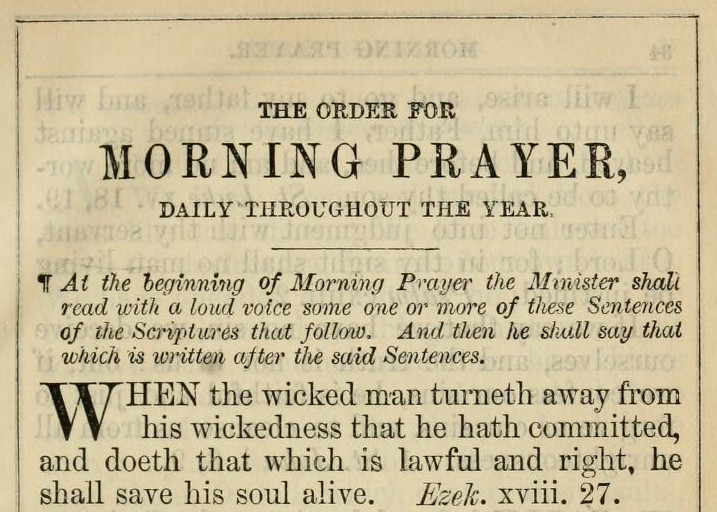
In those moments, it is a gift to remember that we do not pray alone. We can pray with the entire “great cloud of witnesses” who have gone before us [Hebrews 12:1]. This pattern is found in the structured daily office of the Book of Common Prayer. The flows and prayers of Morning and Evening Prayer have their roots in the early church and took definite shape during the English Reformation in the 16th century.
These are the prayers that shaped John Wesley’s spiritual life. As a priest in the Church of England, Wesley was dedicated to praying Morning and Evening Prayer every single day. His journals record innumerable instances of his participation in the daily office, both individually and corporately.
Yet as Free Methodists, we may ask: Why structured prayer? If the Spirit is meant to speak to and through us, won’t preset prayers and a set order inhibit that flow?
The concern is understandable, but it rests on a false opposition. Structure and Spirit are not enemies. In fact, the history of the Church suggests the opposite: the Spirit has consistently formed God’s people through shared patterns of prayer.
Scripture itself gives us structured prayer. The Psalms were not spontaneous utterances in the moment—they were prayed, sung, repeated, and handed down across generations. Israel learned how to pray by being given words. Jesus himself gave a set prayer to his disciples: “When you pray, say…” [Luke 11:2]. The early church did not abandon form in pursuit of freedom; rather, they received forms as gifts that shaped their freedom rightly.
The daily office is not a script that replaces authentic prayer; it is a trellis that helps it grow.
A trellis does not produce fruit, but without it, growth often becomes tangled and stunted. In the same way, the daily office gives shape to our prayer so that it can mature over time. It holds us in a pattern of Scripture, confession, praise, and intercession that gradually forms our hearts.
When words fail us, the office gives us words. When our emotions are chaotic, it steadies us. When our faith feels thin, it lends us the faith of the Church. It teaches us to pray not only from our own experience, but from the full range of human experience before God—joy and sorrow, confidence and doubt, repentance and praise.
This is one of its quiet strengths: it refuses to let us reduce prayer to whatever we happen to be feeling in the moment. Left to ourselves, we often circle around the same concerns, the same anxieties, the same limited vocabulary. The daily office stretches us. It brings us into contact with the breadth of Scripture and the depth of the Church’s prayer across centuries.
There is also a profoundly communal dimension to this practice, even when it is prayed alone.
When you pray the psalms appointed for the day, you are praying words that are being prayed by Christians around the world. When you follow the lectionary readings, you are hearing the same Scriptures that are shaping countless other lives that day. When you pray the familiar collects, you are joining your voice to generations who have carried these prayers through times of persecution, renewal, doubt, and awakening.
This is what it means, in part, to belong to the communion of saints. The daily office makes that communion tangible.
It also reorients our sense of time. Modern life trains us to experience time as something we manage, spend, or lose. It becomes fragmented, driven by urgency and distraction. The daily office gently resists this formation by sanctifying time itself.
Morning Prayer declares that the day begins with God, not with our notifications, responsibilities, or anxieties. Evening Prayer gathers the fragments of the day and returns them to God in thanksgiving and repentance. Over time, this rhythm begins to reshape our awareness. We start to see our lives not as a series of disconnected moments, but as something held within God’s presence.
This is not about adding another burden to already busy lives. It is about receiving a pattern that, paradoxically, lightens the burden by grounding us.
And far from stifling the Spirit, this rhythm often creates space for deeper attentiveness. Many who pray the office regularly discover that spontaneous prayer does not diminish—it becomes richer. The language of Scripture and the cadences of historic prayer begin to inhabit the heart, shaping how we speak to God even outside the set forms.
We might say it this way: structured prayer trains the imagination so that spontaneous prayer can flourish.
There are, of course, common objections beyond concerns about the Spirit.
Some worry that written prayers can become rote or mechanical. That danger is real—but it is not unique to liturgical prayer. Spontaneous prayer can become just as repetitive and inattentive. The issue is not the form, but the heart we bring to it. The daily office, when engaged with even a modest level of attentiveness, can actually cultivate deeper focus precisely because it does not depend on our ability to generate meaningful words in the moment.
Others feel that such practices are too formal or distant from their tradition. Yet for those in the Wesleyan family, this is not foreign ground. Wesley himself never abandoned the rhythms of the Book of Common Prayer. He saw no contradiction between heartfelt religion and structured devotion. In fact, he understood the liturgy as a means of grace—a channel through which God forms and sustains his people.
Recovering the daily office, then, is not about becoming something we are not. It is about reclaiming a means of grace that has always been available to us, though often neglected.
In a time when many feel spiritually isolated, unsure how to pray, or spiritually fatigued, the daily office offers a simple and profound invitation: join the prayer that is already happening.
You do not need to invent the words. You do not need to wait until you feel spiritually strong. You do not even need to feel particularly focused on any given day. You simply step into the stream of prayer that has been flowing long before you arrived.
And over time, that stream begins to carry you.
You are not the first to pray these words. You are not praying them alone. And you are not carrying the weight of prayer by yourself.
The Church is praying—with you, for you, and alongside you—morning and evening, day after day, generation after generation.
And in that shared rhythm, we may find not only words, but rest. Not only structure, but freedom. Not only discipline, but grace.
A few months ago I was accused of mocking. In this particular instance, I would say it was a quick attempt a labeling, a response that it often utilized as a way to write off, and side skirt whatever issue is the topic at hand. In this article we are going to start to develop something of a theology of righteous mocking or scoffing. Why would we even do that? Because like many things that we find in Scripture, there are emotions or actions that can be done correctly, and incorrectly. One major example that people often think of is anger. In modern American Christianity we often instantly associate anger with totally being bad, and thus a sin. But the Scriptural picture is much more nuanced than that. There are several examples presented to us of someone being angry, and it was wholly justified, even righteous. One prime example that we can often think of is Jesus when He cleanses the Temple just days before His crucifixion.
Then Jesus entered the temple area and drove out all those who were selling and buying in the temple courts, and turned over the tables of the money changers and the chairs of those selling doves. 13 And he said to them, “It is written, ‘My house will be called a house of prayer,’ but you are turning it into a denof robbers!” (Matthew 21:12–13, NET 2nd ed.)
There is no way around it in this passage. Jesus is angry, and righteously so. His Father’s house has been defiled by overcharging, and the Court of the Gentiles has been converted from its intended usage of allowing non-Jews to worship the True and Living God, and is being used to extract as much money as possible. Because of this, I think every honest Christian agrees that Jesus is righteously angry.
So now, back to scoffing and mocking. Like anger, this can be done rightly, but we must be so careful, because Scripture does warn about scoffing and mocking. “How blessed is the one who does not follow the advice of the wicked,or stand in the pathway with sinners, or sit in the assembly of scoffers. (Psalm 1:1, NET 2nd ed.). As followers of Christ we must be careful to not be a scoffer by character or reputation. Scoffing is something that can so easily be done incorrectly, and just fall into a mentality of mocking everything. Proverbs paints the scoffer as proud, resistant to correction, and destructive to community life (Prov. 9:7–8; 21:24). In the New Testament, scoffers are those who deny God’s promises and mock His people’s hope (2 Pet. 3:3–4; Jude 18).
This is no small matter. Scoffing is not just a bad habit of speech; it reveals the condition of the heart. To mock truth, holiness, or God’s promises is to place oneself in opposition to Him. For this reason, Christians are urged to avoid contemptuous ridicule and to let their words instead be gracious, seasoned with salt (Col. 4:6).
A striking biblical example of this kind of righteous mockery is found in Elijah’s confrontation with the prophets of Baal on Mount Carmel. As they cried out and cut themselves in a desperate attempt to rouse their god, Elijah began to taunt them: “Shout louder! Perhaps he is a god, but he may be deep in thought, or busy, or traveling. Perhaps he is asleep and needs to be awakened” (1 Kings 18:27). This is not petty ridicule; it is prophetic exposure. Elijah’s words highlight the impotence and absurdity of Baal, contrasting sharply with the living God who answers by fire. His mockery is aimed not at the personal weakness of the prophets, but at the falsehood they represent and the spiritual deception they perpetuate. In doing so, Elijah cuts through the illusion of power surrounding Baal worship and calls the people of Israel back to reality: a god who must be awakened, entertained, or persuaded is no god at all.
The same pattern appears in the wider tradition of the Church. Consider St. Boniface, who famously cut down the sacred oak of Thor at Geismar, not merely as an act of destruction, but as a lived argument, an embodied mockery of pagan impotence when no divine retribution followed. Likewise, the Church Fathers often employed sharp, even biting rhetoric to expose the absurdity of idolatry and false worship. Justin Martyr ridiculed the idea that gods could be fashioned by human hands and then worshiped, while Tertullian sarcastically pressed pagan critics by pointing out the moral contradictions in their own myths and practices. Even Augustine, with his characteristic wit, mocked the Roman gods in The City of God, highlighting their moral failings and the irrationality of trusting them. In each case, the aim was not cruelty, but clarity: to strip false religion of its perceived power and dignity, revealing it as hollow so that the truth of the living God might stand all the more plainly.
There is a correct way to scoff. There are seven principles found in Scripture when it comes to scoffing that keep it in the bounds of righteously doing so correctly. As we will see, mockery is always ultimately done out of the context and foundation of love. This is especially applicable when there are those who are being hurt or led astray by spiritual leadership, or wrong ideologies.
Aim mockery at power, not the vulnerable.
Target: false teachers, abusive leaders, oppressive systems. Never those sincerely struggling, doubting or deceived.
Example: Jesus mocked Pharisees (Matt. 23), but gently restored the confused and broken. (John 4 & 8)
Expose Absurdity, Don’t Just Insult
Mockery should unmask lies by showing their foolishness.
Example: Elijah mocking Baal’s prophets (1 Kings 18:27). His sarcasm made their god look ridiculous, not just insulting them personally.
Check Your Motives
Ask: Am I doing this to protect the flock and glorify Christ, or to boost my ego?
Wrong motive = you become the scoffer condemned in Proverbs (Prov. 21:24).
Keep the Gospel Centered
Satire without truth just tears down. Always point back to Christ as the true alternative.
Example: Paul mocks false apostles (2 Cor. 11:19–20) but immediately re-centers the church on the true gospel.
Use It Sparingly and Strategically
Righteous ridicule is a scalpel, not a sledgehammer.
If every sermon, post, or conversation drips with sarcasm, you risk cynicism.
Example: Jesus rarely used biting mockery—He saved it for entrenched hypocrisy (Matt. 23, Luke 11:37–54).
Make the Falseness Obvious
Highlight contradictions, exaggerations, or hypocrisy.
Example: Isaiah 44:14–20 ridicules idol-makers: burning half a log for firewood while worshipping the other half. The point is crystal clear—idols are absurd.
Be Willing to Weep as Well as Mock
Prophets wept even as they derided falsehood (Jer. 9:1).
Mockery without compassion risks becoming cruelty.
These guidelines laid out are also included in the attached graphic.
So the question is why should Christians know the guidelines of how to correctly scoff or mock? Because in cases of aberrant theology, abusive leadership, or abhorrent evil, mocking and scoffing can be an effective tool at cutting through whatever veil of power or superiority is present in a conversation, especially when there is a huge power differential. The difference lies in intent. Sinful scoffing flows from pride and aims to humiliate. Righteous mockery flows from zeal for God’s glory and aims to expose folly so that repentance might be possible. This means that for most of us, most of the time, scoffing should be avoided. But on rare occasions, in moments of prophetic confrontation, sharp words may be necessary to defend truth and unmask lies.
Of course, objections come quickly. Isn’t mockery unloving? Shouldn’t Christians be humble? Won’t it push people away? These are important questions, and they remind us that mockery is not a tool to be used lightly. Love usually speaks gently. Humility usually refrains from biting words. But sometimes love requires severity, and humility means trusting God enough to call sin what it is.
As a pastor, I find this both challenging and liberating. Challenging, because it calls me to examine my heart before I speak. Am I exposing falsehood for God’s sake, or am I indulging in sarcasm to make myself look clever? Liberating, because it reminds me that God’s people are not called to be endlessly polite in the face of evil. We are called to speak the truth in love, and sometimes love has a sharp edge.
Most of the time, our call is to bless those who mock us and to endure patiently, following Christ who “did not revile in return” (1 Pet. 2:23). But in those rare moments when the honor of God is at stake, Christians may find themselves called to words that cut, not to destroy, but to heal; not to humiliate, but to awaken.
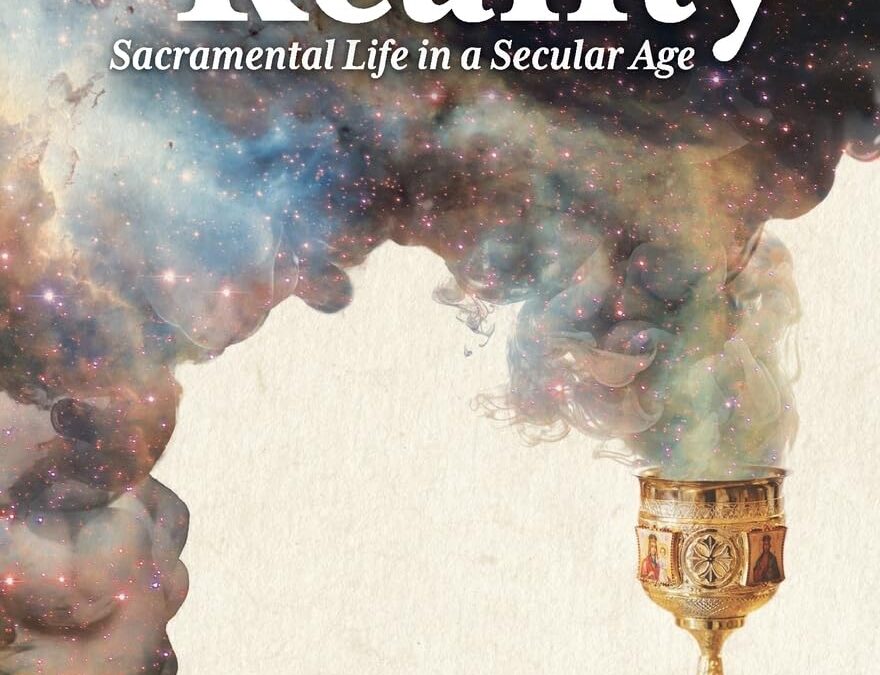
What is reality? And if we have lost the picture of it in the Christian context, how do we return?
This question and more are handled by Zachary Porcu in this very easy to read and understand, yet deeply profound book. While coming from an Eastern Orthodox perspective, the nature of the topic is still immensely applicable to any believer in any context.
Out of the gate, Porcu sets the stage of where we are currently at. For the most part, many in Western Christianity while truly believing in Christ as Lord and Savior, are in every other respect, functioning secular materialists in their worldview and theology. One thing I have appreciated as I have studied the Eastern Orthodox world more is their intention in ensuring that the way we understand and experience reality is in line with the ancient worldview of the early Church rather than the development that culminates from 19th Century German philosophy. This way of seeing the world does not delineate between the spiritual and the physical as we are so use to. Instead, these two realities are intertwined in an inseparable way that was commonly understood in the ancient world, and by the first followers of Christ.
This way of looking at things has led to many unintended consequences. Rather than seeing how Christ may work in a comprehensive way in all things, we either find ourselves in a tug of war between Christ working individually through salvation, or through society to being about the perfect recreation as He intended. This tension between what can be boiled down to the political left and right, are ultimately incorrect in their ultimate assessment, because again, they are looking at the world, and her problems through the lens as a modern secular materialist.
So what is the answer?
Sacramental Christianity. This word might scare some who come from low-liturgy backgrounds, or have fundamentalist tendencies. Porcu makes the excellent point that the way God now, following the ascension of Christ and the coming of the Holy Spirit does not just interact with us in a spirit-to-spirit way, as many in the modern west act. Because of the incarnation, God coming in the flesh, that means that He also interacts through what we would call the physical, and this is through sacrament.
Rather than just looking for that “feel good moment”, sacramental Christianity is about knowing that God works through the means of Grace He has instituted in the Church. The primary focus of this is of course Eucharist (Communion, or the Lord’s Supper). As we journey to understanding the Christian faith is more than just a set of beliefs, but a participation in an ongoing story, we then see how we are empowered to follow Christ as we engage in the life of the Church.
Now, I will note, Porcu does list the seven primary sacraments of the Orthodox faith. As a Protestant, I affirm the two sacraments of Baptism & Eucharist. Yet, I do believe that the others on the list may provide similar sacramental benefit, as they are all involved in engaging us in receiving from Christ.
Through the book he uses a simple analogy. Being a electrical unit that needs plugged in to work. At baptism, the believer is plugged into the wall. And then as we participate in sacrament through the life of the Church (primarily Eucharist) it is the electricity that flows to power us. This can help us see the ongoing work of Christ in our lives, rather than always focusing on the one time salvation experience that we are trained to look for.
The focus of Sacramental Christianity is to retrain our minds and worldview, to see existence as the early followers of Jesus would have. Rather than being dulled by materialism and secularism, we are awakened again to a world charged with the presence of God, where heaven and earth are not competing realms but interpenetrating realities. This shift is not merely intellectual—it is deeply formative. It calls us not just to think differently, but to live differently, to recover practices that reorient our desires, our worship, and our understanding of what it means to be human. In many ways, this is a call to repentance at the level of imagination—a turning away from a flattened, disenchanted view of the world toward one that is alive with meaning, mystery, and divine presence.
Porcu’s strength is in his ability to take what could be an abstract philosophical and theological discussion and ground it in the lived experience of the Church. He is not simply arguing for a different framework; he is inviting the reader into a different way of inhabiting reality. That invitation is both challenging and hopeful. Challenging, because it requires us to unlearn deeply ingrained assumptions shaped by modernity—assumptions that have quietly catechized us into seeing faith as private, inward, and largely disconnected from the material world. Hopeful, because it offers a more coherent and holistic vision of the Christian life—one that refuses to reduce salvation to a moment or faith to mere cognition, but instead presents it as an ongoing participation in the life of God.
One of the most helpful contributions of the book is how it exposes the inadequacy of the categories we often use to talk about Christian life and mission. The common dichotomy between “personal salvation” and “social transformation” begins to break down when viewed through a sacramental lens. In a sacramental worldview, Christ is not working in competition between individual hearts and societal structures, but is redeeming and restoring all things in and through His Body, the Church. This reframing helps dissolve some of the ideological tensions that have come to define much of modern Christianity, particularly in the West. What we often interpret as theological disagreement may, at a deeper level, be the result of a shared but unexamined commitment to a secularized understanding of reality.
For those in pastoral ministry, especially within low-church or revivalist traditions, this book serves as a helpful corrective without being unnecessarily polemical. It does not caricature Protestantism, nor does it demand an abandonment of evangelical convictions. Instead, it gently but persistently presses us to consider whether those convictions have been unintentionally narrowed by a secular framework. It asks whether our emphasis on conversion, for example, has been detached from incorporation into a sacramental community, or whether our understanding of grace has been reduced to an internal experience rather than a lived, embodied reality mediated through the Church.
Why this book matters for Protestants
For Protestant readers in particular, Journey to Reality is valuable not because it argues for Eastern Orthodoxy, but because it exposes a blind spot many of us have inherited. Much of Protestant theology, especially in its modern expressions, has been filtered through post-Enlightenment assumptions that subtly reshape how we read Scripture, understand salvation, and practice the Christian life. The result is often a sincere but truncated faith—rich in conviction, yet thin in sacramental depth and cosmic vision.
Porcu’s work helps Protestants recover categories that are not foreign to our tradition, but foundational to it. The Reformers themselves held a robust view of the means of grace, even where they disagreed with Rome or the East on their number and nature. John Wesley, in particular, spoke of the sacraments as “ordinary channels” through which God conveys grace—language that resonates strongly with the vision Porcu presents. In this sense, the book can serve as a retrieval tool, helping Protestants reconnect with aspects of their own theological heritage that have been neglected or overshadowed.
Additionally, this book provides a needed corrective to the tendency toward individualism that pervades much of Protestant practice. By emphasizing participation in the life of the Church, it calls believers out of a purely personal or privatized faith and into a communal, embodied reality. This is not a denial of personal conversion, but a deepening of it—situating it within the ongoing life of worship, sacrament, and discipleship.
It also challenges the reduction of faith to intellectual assent or emotional experience. In many Protestant contexts, the Christian life is often measured by what one knows or feels. Porcu redirects attention to what God is objectively doing through the Church, inviting believers to trust in and submit to those means of grace even when subjective experience fluctuates. This can be especially grounding in seasons of doubt, dryness, or spiritual fatigue.
Perhaps most importantly, Journey to Reality helps Protestants see that recovering a sacramental worldview does not require abandoning core commitments to Scripture, justification by faith, or the authority of the gospel. Rather, it invites a fuller integration of those commitments into a way of life that takes seriously the Incarnation—that God works not only through words and ideas, but through matter, bodies, and created realities.
In that sense, the book is not a threat to Protestant identity, but an invitation to deepen it.
In that sense, Journey to Reality can function as a bridge text—helping Protestants recover a richer sacramental imagination without requiring full agreement with every aspect of Eastern Orthodox theology. As someone who affirms two sacraments rather than seven, I still found Porcu’s broader point compelling: that God’s grace is not limited to internal or invisible means, but is communicated through tangible, embodied practices that shape us over time. Even where there is theological disagreement, there is still much to be gained by wrestling with the vision he presents.
Another notable strength is the accessibility of the book. Porcu avoids overly technical language without sacrificing depth. His use of analogy—particularly the image of being “plugged in” at baptism and continually energized through participation in the sacramental life of the Church—is simple but effective. It provides a helpful way of understanding the continuity of the Christian life, pushing back against the tendency to overemphasize a one-time decision while neglecting the ongoing means by which God sustains and transforms His people.
This also has significant pastoral implications. In many of our contexts, believers struggle with assurance, spiritual dryness, or a sense that their faith is stagnant. A sacramental framework offers a different approach. Rather than constantly looking inward for evidence of spiritual vitality or chasing emotional experiences, it directs us outward—to the concrete means of grace given to the Church. It roots the Christian life not in fluctuating feelings, but in the steady, objective work of God through Word and sacrament.
At a broader level, Porcu’s work invites us to reconsider what we mean by “reality” itself. If reality is fundamentally sacramental—if it is created and sustained by God, and continually bearing His presence—then the Christian life is not about escaping the world, nor merely managing it better. It is about rightly perceiving it and rightly participating in it. This has implications not only for worship, but for ethics, vocation, and daily life. Work, relationships, creation care, and even suffering can be reinterpreted within a framework where God is actively present and at work.
Of course, readers from different traditions will engage the book in different ways. Some may find certain claims overstated or wish for more nuance in areas of theological disagreement. Others may feel a tension between Porcu’s presentation and their own ecclesial commitments. Yet even where one does not fully agree, the central thrust of the book remains valuable. It raises questions that many of us have not been trained to ask, and it challenges assumptions that have long gone unquestioned.
Ultimately, Porcu reminds us that Christianity is not simply about escaping the world or fixing it through purely human means. It is about participation in the life of God, made available to us through Christ, and continually mediated by the Spirit through the life of the Church. To return to reality, then, is to return to this participatory vision—to see, receive, and live in a world where God is truly present and at work, not just in extraordinary moments, but in the ordinary rhythms of sacramental life.
This is a short book, but it carries weight far beyond its length. It is accessible enough for the average church member, yet substantive enough to provoke deeper theological reflection and meaningful pastoral application. I would especially recommend it to pastors, teachers, and thoughtful laypeople who sense that something is missing in the way faith is often practiced in the modern West. For those willing to engage it seriously, Journey to Reality offers not just a critique, but a path forward—a way of recovering a fuller, richer, and more faithful vision of the Christian life.
I think all of us are familiar with the words of Christ from Matthew 7:20, “Thus, by their fruit you will recognize them.” We all understand what is being presented, what we produce tells us what we are all about. This too can be said about the kind of disciple that the Church produces. A great example of this is to just look at someone’s pet. So often, the type of person someone is can be seen in their pet. How are they trained, are they skittish, aggressive, shy etc…
My hope is that this is all of our goals in life. The purpose of the Christian life is to be the image of God. To do what we were created to do and look like our creator. In the Eastern Orthodox tradition this theology goes under the name of theosis, “becoming like God”, or “deification.” In my own Methodist tradition we call this Entire Sanctification, or Perfect Love, where the love of Christ is made so thoroughly in us that while we are not perfect in our performance (still being a fallible human), our love, intention or bent has been wholly shaped towards Christ.
This goal, I believe, is the fullness of the Christian life. Not some shallow “fire insurance” joke, where we just skip outta going to hell, but the actual purpose or telos of our creation, to be like the one who made us and loves us. And, by extension of all of this, I believe that this is the mission of the Church. That above everything else is to produce saints—those that look like Christ.
A particular practice that I have picked up last year, when talking about certain people from the Bible and Church history, is to use the honorific “Saint” in front of their name. This title recognizes how that person imaged Christ through thick or thin, and set an example for all of us as to how to follow Jesus no matter what. The fruit of their lives is that they are remembered and known as a saint, one who became like Christ.
The Church is not called to produce leaders as its primary end, but saints, and that distinction shapes everything about how we do ministry.
But what happens when we in the Church forget what we are about? What do we forget, whether in language or action, our purpose and mission? Sure, we know we are to produce something, but what? In recent months I have been confronted with the tacit proposition that our goal is to produce leaders, and it is then through those leaders who produce disciples. For those who have the vision to produce leaders who then make other leaders and disciples, I have no question of their motives. They love Christ and love His Church, and have the best of intentions to grow the Kingdom. They want to see a next generation embrace following Christ and spreading the Gospel to a world in desperate need of His healing.
Where the disconnect comes in is how we go about doing it. There’s a lesson for us to be learned in our day. The methods of leadership development, coaching, advertising and structuring look attractive. They work in the business world, shouldn’t they work in the Church? But the question we need to ask is not, “do they work”, but rather, “is this what we should be doing?”
I spent time in the real estate world in the area of development. I’ve attended countless leadership development and coaching sessions, conferences and seminars all about building your sphere of influence, inspirational ability, sales pipeline, talking points and the like. Those things work, and they are good when you are trying to sell something. These events are crafted for the sake of moving people towards the skills they need to do their work well. And it does work. But is it for us in the Church?
We in the Church are in a completely different sort of work. We don’t sell. Through Christ we shepherd immortal souls. We are not out there trying to invigorate people to get excited about the next initiative. We are called to faithfully preach the Word, and administer the sacraments, knowing that through the power of the Holy Spirit we will be transformed to look like Christ.
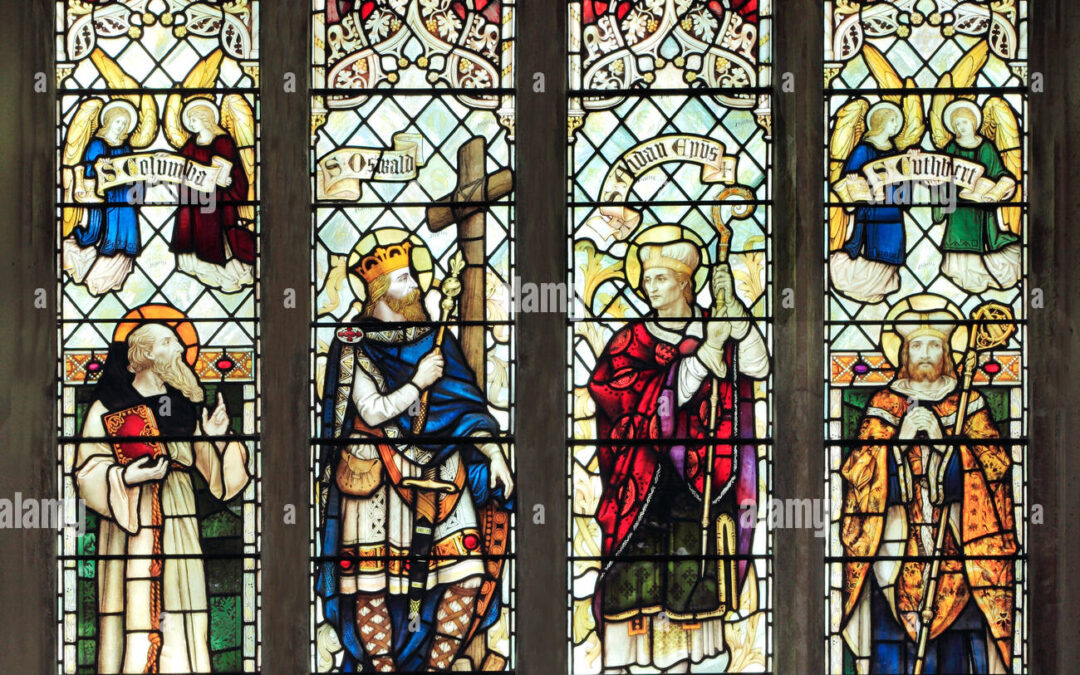
During the height of Norse pagan conquest of Anglo-Saxon England, it was the missionary work out of Iona and Lindisfarne on Holy Island from faithful servants like St. Columba and St. Aidan that saw the ravaged land of England and boldly took the Gospel, slowly but surely reconquering the land for Christ as it had once been. These missionary monks were from Ireland, and had been trained by those influenced by St. Patrick, who himself had been from Roman Britain and went and evangelized and converted Ireland for the Gospel.
The entire time, their work was something totally unlike that of how those around them were conquering. While the pagan Vikings conquered England by the sword, these monks emulated Christ and boldly proclaimed the Gospel, even if it meant their death.
It is totally understandable. The Western world is tough right now for the Church, especially denominations. And I am not in a position of leadership outside of my local parish, so I don’t fully understand the perspective or the pressures. But what I do know is the difference in the work we are doing. Yes, we need structures and processes. We need to plan and strategize. But how we in the Church go about that is not acting as if we are dealing with a business that sells widgets and gadgets. Our task is good stewardship in what we have been blessed with. But the product of our work is not leaders or initiatives. It is saints.
How we go about the work of the Kingdom matters—not just that we are doing the work. Sure, we can dress up business models, leadership pipelines and development, growth initiatives and the like. And they might work for a time. We might see raging success and things happen. But in the end, is that work producing results…or is it producing saints? I firmly believe the Church is called to multiply and grow. Yet, the question sits in my mind: what are we multiplying, and how are we doing it?
Leadership is not the telos of the Church; sainthood is. Leaders may be necessary, even beneficial, but they are not the end for which the Body of Christ exists. The Church is not called to produce influence, scale, or organizational success, but to form people who bear the image of Christ in holiness and love. Leadership, rightly understood, emerges as a byproduct of sanctification; those conformed to Christ will often guide and shepherd others. But when leadership itself becomes the goal, we risk substituting competence for communion and effectiveness for faithfulness. The true measure of the Church is not how many leaders it raises up, but whether it is forming saints whose lives radiate the life of God.
When we forget to see the ends to which we are called, we can get lost in the means of going about it. When we get sidetracked by the methods and structures of how someone else operates and try to import it into our world, we start losing the plot to why we even exist. Sure, St. Aidan and St. Columba could have inspired the reconquest of England by Christians. But they knew that wasn’t their way of going about things. They embraced that their task was souls.
In previous posts I have talked about the various Holy Orders in the Church (twice about deacons, once about pastors as priests). Now, we come to the third order for the function of the Church. The Bishop.
Before we look at the historical development of this role, and contemporary usage, we need to look at what Scripture presents, and clear up some things that might seem cloudy. In the New Testament we get the word bishop from the Greek ἐπίσκοπος episkopos, which when translated is the word overseer (used in Acts 20, Philippians 1, 1 Timothy 3 & Titus 1). In it’s usage the word seems fairly interchangeable with πρεσβύτερος, presbuteros, from which we derive the title Elder or Priest. But, in the usage of the word episkopos there does often seem to be this extra discussion of overseer and authority that is used with it.
Then, moving from Scripture into the first two centuries of the Church we see how this began to play out. What is often seen in the development of the role of bishop is the idea of “elder of the elders”, where the various elders from a given city would select and make one of their own their overseer, providing consistent oversight and authority. This tradition has been carried on where bishops come from the ranks of elders first.
In cities like Alexandria, we see through their history a fairly consistent practice of the elders selecting their bishop from among the elders, which is actually the method that John Wesley referred back to when consecrating Coke & Asbury for mission in America.
The pattern is important because it shows that the bishop was not originally conceived as a detached administrator, but as a pastoral elder among elders, one who carried a coordinating responsibility for teaching, order, and unity within the local church. That matters, because it keeps episcopacy grounded in the life of the presbyterate rather than setting it over against it as though the bishop were a different kind of creature altogether.
This is also why the historical development of the office is so illuminating. The church did not invent the bishop out of nowhere; rather, as the Church grew, the need for settled oversight became more visible, and the role that had already existed in seed form began to take on clearer shape. In that sense, the bishop is best understood as an organic development of apostolic oversight, not a later replacement for it.
That same pattern helps explain why the early church so often assumed that bishops should come from the ranks of the elders. If the office is a higher mode of oversight, then it makes sense that the one who exercises it would first have been tested in the pastoral work of shepherding, teaching, and governing. The bishop is not merely a manager appointed from outside the life of the Church; he is an elder who has been recognized for broader charge and wider responsibility.
This is also the logic that many Anglicans and Methodists have found compelling in tracing their own heritage. John Wesley’s appeal to the ancient practice of episcopal selection was not an attempt to sever the Church from its past, but to recover a pattern of order that he believed belonged to the early Christian witness. In that way, Wesley’s action with Coke and Asbury stands as a reminder that episcopacy has often been defended not as a novelty, but as a faithful continuation of an older apostolic instinct.
If we say it plainly, the bishop exists for the sake of the Church’s unity, doctrine, and mission. They ares called to hold together what is otherwise liable to fragment, to guard what is otherwise liable to drift, and to oversee what is otherwise liable to become disordered. That is why the title itself is so fitting: a bishop is, at root, an overseer.
Of course, this does not erase the close connection between bishop and elder. Rather, it strengthens it. The bishop is not less than an elder, but more properly the elder who bears the wider burden of oversight on behalf of the whole community. And that is precisely why the biblical language matters so much before the historical development is ever discussed.
That line of thought naturally brings us to the bishop as the pastor of pastors. If the bishop is an overseer in the fullest sense, then their first task is not to manage an institution, but to care for the shepherds who care for the flock. They stand in a unique place in the life of the Church, not above the pastoral office in a worldly sense, but within it in a wider and more encompassing way.
This is where the modern age can easily distort the office. When a bishop begins to think of themself primarily as a chief executive, a strategist, or an administrator, they may become efficient but spiritually distant. They may know how to organize systems, but lose touch with the burdens, joys, wounds, and prayers of the people and clergy entrusted to them. The bishop’s calling is not to become less pastoral as their responsibility grows, but more deeply pastoral precisely because it does.
A bishop must therefore be near to their elders/priests, deacons, and local pastors in the way a shepherd is near to their under-shepherds. They listen to them, pray with them, correct them with charity, encourage them in discouragement, and strengthen them for the work they cannot do alone. In this sense, the bishop’s authority is never merely juridical; it is fatherly, spiritual, and relational.
This is also why episcopal leadership must be measured by more than visible results. A bishop may oversee programs, budgets, appointments, and structures, but if they are not tending souls, they have missed the heart of their office. The Church does need order, but order only serves the deeper work of salvation, holiness, preaching, sacrament, discipline, and care. The bishop exists to make that work more faithful, not merely more manageable.
So the bishop must remain a pastor even when they are governing. They must preach as one who believes, counsel as one who has suffered, correct as one who loves, and lead as one who knows that every act of oversight is accountable before Christ the Chief Shepherd. The higher the office, the more urgent the pastoral character of the one who holds it.
That is the real test for bishops in every age. Not whether they can run an organization well, but whether they can carry the heart of a shepherd into the wider field of oversight. A bishop who remains a pastor of pastors strengthens the whole Church; a bishop who becomes only an administrator slowly empties the office of its soul.
One of the hallmarks of corporate style leadership is the ability to take a question, and then use so many words you forgot what the actual question was. Yet, enough was said in that period of time it is assumed that the question was actually answered. When in fact nothing substantial was actually said, but the person answering feels they did so. Sure this is fine in the business world where shareholders need assurances (even though they can see right through it). But what happens when it happens in the Church?
Good Spiritual leadership requires more than just love for Christ and good intentions. I heard that phrase this morning as I listened to Jeffrey Rickman on his PlainSpoken livestream talk about the issues that led to the separation of the UMC, and not wishing to repeat those mistakes in the GMC. While I don’t always agree with Jeffrey on everything, I will always applaud and appreciate his goal of having plain conversation with people, especially those who are in positions of leadership.
In my own world of the Free Methodist Church we have a lot of potential changes on the horizon. Denominational restructuring, merging of conferences, job description changes and the ever growing pressure that people feel we need to change. The desire for change is not unfounded. We live in a very hard time for denominations. At least at this current moment they still seem unpopular, with loose networks of churches and independent church bodies seeming to be the thing in vogue, there is an inherent feeling that we need to adapt, and I don’t think that is totally wrong. The issue comes when we don’t know who we are, and the changes happen in obscurity and there is almost no clarity.
The first issue at hand is we don’t know who we are. If I decided I wanted to renovate my house, but I had no end design in mind and go at the project hoping for something to work out in the end. I would not call that vision. I would call that demolition.
And that is precisely the danger before us. You can tear down walls, move things around, and make constant adjustments, but without a clear telos—without a defined understanding of what the house is supposed to be, you will eventually create something unlivable. It may be new. It may even look impressive for a moment. But it will not be coherent, and it certainly will not be stable.
The same is true for the Church. If we do not have a clear theological, ecclesiological, and sacramental identity, then every proposed “change” becomes reactive rather than purposeful. We start responding to pressures instead of being guided by convictions. And when that happens, leadership begins to rely on language that sounds meaningful but avoids saying anything concrete, because clarity would require commitment.
And commitment, in a moment like ours, feels costly.
But clarity is not only needed in what we say, it is needed in how we develop what we say. One of the deeper issues we face is not just unclear outcomes, but unclear processes. Decisions appear to be formed somewhere “upstream,” and by the time they reach the broader body, they are presented as nearly finished products. At that point, feedback is not truly formative; it is cosmetic.
That is not how a healthy church discerns.
Development takes time. It requires patience. It requires creating real space for pastors and laity to wrestle with ideas, to ask hard questions, and yes, even to disagree. If we rush that process in the name of efficiency, what we gain in speed we lose in trust. And once trust is eroded, no amount of polished language can restore it.
This is where our gatherings, especially our annual and general conferences must be reexamined. Too often they function as inspirational talking sessions, where vision is cast in broad terms, testimonies are shared, and energy is generated. There is certainly a place for that. But if that is all they are, then we have misunderstood their purpose.
Conference should be, in part, an open mic. Not in the sense of disorder or endless debate, but in the sense that there is real, structured opportunity for the body to speak. For questions to be asked plainly. For concerns to be voiced without fear of being dismissed. For leaders not only to present, but to listen and to do so in real time, not through filtered summaries after the fact.
Because if we cannot speak honestly in our own councils, where can we? This kind of openness will slow things down. It will feel messier. It will expose disagreements that are easier to ignore. But it is also how clarity is formed, not imposed, but discerned together under the authority of Christ.
And that is the key distinction. The Church is not a corporation optimizing for efficiency. She is a body seeking faithfulness. Those are not the same thing.
There is another issue that must be named plainly: the increasing reliance on what can only be called “word salad.” By this I mean language that sounds important, full of talking points and polished documents but ultimately says very little. Phrases like “strategic alignment,” “adaptive vision,” and “contextual responsiveness” are repeated until they feel substantive, even when they avoid concrete meaning.
These documents, talks and podcasts are carefully constructed, yet when you ask, “What is actually being proposed?” or “What does this mean for the life of the Church?” the answer is often unclear. And that is the problem.
Word salad does not create unity; it obscures reality. It allows people to nod along because nothing is actually being committed to. It gives leaders cover, but it gives the Church no direction. When clarity finally becomes unavoidable, the underlying disagreements surface with greater force because they were never addressed honestly.
This is not a call for oversimplification. The Church’s work is complex, and careful language matters. But there is a difference between care and evasion. One seeks to illuminate; the other seeks to protect. If a proposal cannot be explained plainly, it is not ready. If a document cannot be understood by those it affects, it has failed its purpose.
Plain speech is not a lack of intelligence. It is a sign of integrity. In a moment where trust is fragile and clarity is desperately needed, the Church cannot afford to communicate in ways that obscure more than they reveal.
So what does it look like to move forward rightly?
It begins with naming things honestly. Who are we as Free Methodists? Not in vague aspirational language, but in concrete theological terms. What do we believe about the Church? About the sacraments? About authority? About holiness? About connectionalism? These are not secondary questions. They are the foundation upon which every structural decision must rest.
From there, we must commit to a process that reflects those convictions. One that allows time for development. One that invites participation rather than managing perception. One that treats clarity not as a threat, but as a gift.
And alongside clarity must come transparency. If changes are necessary, and some likely are then they must be communicated in a way that is direct, accessible, and rooted in shared conviction. Not every detail needs to be broadcast at all times, but the direction, the reasoning, and the theological grounding should never be hidden behind layers of institutional language.
The Church does not need more carefully worded ambiguity. She needs shepherds who are willing to say, “This is who we are, this is where we are going, and this is why.” And just as importantly, shepherds who are willing to say, “Speak, we are listening.”
That kind of leadership will not always be comfortable. It will not always be widely applauded. But it will be faithful. And in the end, faithfulness, not cleverness, not adaptability for its own sake, not institutional survival is the measure by which spiritual leadership is judged.
Why do I say all of this?
Because I love being in the Free Methodist Church. As someone who did not grow up in the denomination, I have grown to deeply love the calling and mission that the FMC historically has had, and I believe God is not done with the FMC. I want to see us be a thriving denomination that is surely grounded in our theological inheritance of Wesley, and confident we are faithfully proclaiming the Gospel. I would like to one day retire in the FMC. But all of this will only happen if we are clear and concise. If we remain faithful as members of the Body of Christ…the Church