
“War…war never changes.”
This haunting quote from a video game franchise I’ve played captures the harsh reality of human conflict. No matter the epoch of history, or the technology available, war is a horrible and terrible thing. I truly believe that violence grieves the heart of God because it is a destruction and violation of his image bearers. One of the promises given to humanity in the New Heavens and Earth is a place where, “They will beat their swords into plowshares, and their spears into pruning hooks. Nations will not take up the sword against other nations, and they will no longer train for war” (Isaiah 2:4 NET). Oh what a place that will be! To not have to deal with the threat of violence and death. And for us as Christians now, we have a role to play in working as the Church in being the people of God to the world as His hands and feet in seeing that come about at his return.
But what does this mean for us in the here and now?
It means acknowledging the tension of living in a fallen world where sin’s curse lingers, and evil doesn’t lay down its arms just because we pray for peace. The Bible doesn’t present violence as neutral, it’s a tragic consequence of our rebellion against God—but neither does it demand pacifism in the face of slaughter. There are times when force, even lethal force, becomes a moral imperative to protect the innocent, restrain wickedness, and restore justice. As a pastor wrestling with Scripture, I’ve come to see this through the lens of biblical texts that frame violence not as vengeance (which God reserves for Himself, Romans 12:19), but as protective duty and restorative order.
The Biblical Case for Protective Violence
Scripture repeatedly calls God’s people to defend the vulnerable, using strength when words fail and threats loom. Consider Exodus 22:2-3, where a homeowner who kills a nighttime thief bears no guilt, self-preservation is presumed righteous amid darkness and danger, though daytime restraint honors life. Nehemiah 4:14 captures this urgency as the wall-builders arm themselves: “Fight for your brothers and your sons and your daughters and your wives and for your homes.” Here, violence isn’t aggression; it’s the shield for family and faith against marauders. Proverbs 24:11-12 drives it home: “Rescue those who are being taken away to death; hold back those who are stumbling to the slaughter. If you say, ‘Behold, we did not know this,’ does not he who weighs the heart perceive it?” God holds us accountable for inaction—turning a blind eye to genocide or tyranny makes us complicit.
Psalm 82:3-4 echoes this divine mandate to rulers: “Give justice to the weak and the fatherless; maintain the right of the afflicted and the destitute. Rescue the weak and the needy; deliver them from the hand of the wicked.” These aren’t abstract ideals; they’re commands to wield authority forcefully when oppressors strike.
Restorative Force and the Sword of Justice
The Bible also entrusts restorative violence to governing powers as agents of God. Romans 13:4 is unflinching: the state “does not bear the sword in vain. For he is the servant of God, an avenger who carries out God’s wrath on the wrongdoer.” This isn’t a call to personal vendettas but to ordered justice, echoed in Genesis 9:6 (“Whoever sheds the blood of man, by man shall his blood be shed”) and the Mosaic laws balancing retribution with mercy. Ecclesiastes 3:8 speaks plainly: there’s “a time for war, and a time for peace,” timed by divine wisdom in a broken creation.
Unchecked violence thrives when red lines are drawn, crossed, and met with nothing, emboldening aggressors, as history shows from appeasement before WWII to modern escalations where impunity begets atrocity. Scripture warns against this passivity.
Jesus Himself models measured force, driving out moneychangers with a whip (John 2:15) and telling disciples, “Let the one who has no sword sell his cloak and buy one” (Luke 22:36), preparing for peril, even as He rebukes Peter’s impulsive strike (John 18:11). These aren’t endorsements of endless conflict but of principled resistance.
Toward a Just War Framework
This scriptural thread weaves into just war theory, a tradition rooted in Augustine and Aquinas but grounded in the Bible’s own principles. War is justifiable (jus ad bellum) only with legitimate authority (Romans 13), just cause like defending innocents (Proverbs 24:11; Nehemiah 4:14), and right intention aimed at peace (Isaiah 1:17). In conduct (jus in bello), it demands proportionality (Deuteronomy 20:10-19, offering terms first) and discrimination (sparing non-combatants). This doesn’t mean every action in a just war is perfect—soldiers sin, leaders err, atrocities occur—but a righteous cause remains righteous, calling for repentance where wrong amid the fight for good.
Unchecked evil, like Pharaoh’s armies drowning innocents or Amalek’s raids, forces a choice: stand idle or intervene. When bullies test boundaries and face no consequence, violence metastasizes; Proverbs 24:12 indicts the silent witness. Loving your neighbor (Mark 12:31) sometimes means rolling in the tanks, not out of hatred, but to halt the butcher’s blade. Jesus’ Sermon on the Mount, “turn the other cheek” (Matthew 5:39), “give to the one who sues you and give your cloak as well” (5:40), “go the extra mile” (5:41), “do not resist the evil person” (5:39), is contextual genius: in Roman-occupied Judea, these subvert oppressors non-violently. Turning the cheek defies dehumanizing slaps (right-hand backhand), offering the left challenges norms; surrendering cloak strips the suing exploiter; walking the extra mile mocks forced labor. It’s bold resistance through grace, not surrender to tyrants or passivity before slaughter.
History’s Echo: The Crusades as Just Response
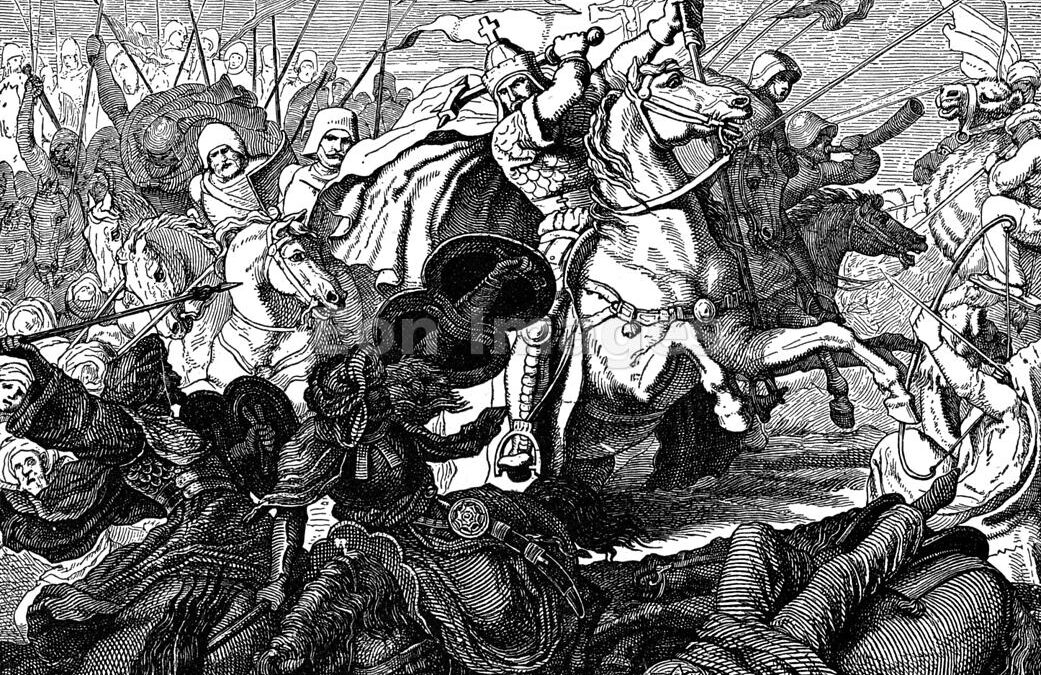
This framework isn’t theoretical, history tests it. Consider the Crusades, often maligned as mindless aggression. In reality, they were a delayed Christian counteroffensive after four centuries of Islamic conquests that devoured two-thirds of the Christian world: from Muhammad’s 630 Tabuk raid on Byzantines, to Jerusalem’s fall (638), North Africa’s seizure, Spain’s invasion (711), and Tours halted only by Charles Martel (732). By 1071, Seljuk Turks crushed Byzantium at Manzikert, threatening Constantinople and pilgrims; Emperor Alexius begged Pope Urban II for aid—red lines crossed repeatedly with no response until then.
The First Crusade (1095-1099) liberated Jerusalem not as imperialism, but reclamation of stolen lands, much like Nehemiah’s wall or Abraham’s rescue (Genesis 14). Papal calls framed it defensively: aid Eastern Christians under “brutal Muslim rule,” halt jihad’s tide. Yes, abuses happened, the responses and actions of those involved weren’t always perfect or right, with cruelties and excesses that demand our sorrow and repentance—but this doesn’t remove the just cause of the entire movement: legitimate authority (Pope/emperor), just defense against expansion (post-Manzikert Seljuk surge), intent to restore pilgrimage access and borders. Without Crusades, Europe might have fallen as Spain nearly did; they bought centuries for Christendom to regroup, proving consequences deter unchecked violence.
Implications for Today: Peace Through Principled Strength
What does this mean practically for Christians in 2026? It calls us to a relentless pursuit of peace; diplomacy, de-escalation, mercy wherever possible, while recognizing that true peacemaking (Matthew 5:9) often demands the courage to confront evil head-on. We’re always working for peace, praying for reconciliation, supporting negotiations, and building bridges across divides. But when aggressors reject peace, slaughter image-bearers, and threaten annihilation, like Russia’s invasion of Ukraine (ignoring red lines from Crimea to full assault), Hamas’s October 7 atrocities, or rising authoritarian threats, the just extension of protection is violence. Not gleefully, but grievously; not endlessly, but proportionately; not vengefully, but restoratively. Even here, individual sins or tactical wrongs don’t negate a war’s moral foundation, we grieve them, seek accountability, but stand firm on rescue. When nothing happens after violations, violence thrives; deterrence saves lives.
This isn’t license for hawkishness or endless wars, Scripture tempers us with “Blessed are the merciful” (Matthew 5:7) and warnings against trusting in chariots (Psalm 20:7). Churches should advocate ceasefires where viable, aid refugees, and disciple nations toward justice. Yet inaction before tyrants echoes the wicked silence of Proverbs 24:12, forfeiting our mandate to rescue the stumbling. In self-defense laws, military service, or policy debates, we uphold the state’s sword (Romans 13) as God’s reluctant gift in a Genesis 3 world. Vote for leaders who prioritize peace through strength; support alliances that deter aggression; pray for enemies even amid the tanks’ rumble.
Peacemaking in the Mud
Being a peacemaker isn’t passive, it’s active pursuit of shalom, which crushes chaos. In our era of rogue regimes, terror networks, and genocides, Christians must champion this dual path: diplomacy first, resolve when atrocities demand response. War never changes, but our calling does, to grieve its necessity while embracing the fight when Scripture bids us stand.
The eschatological hope of Isaiah 2:4 fuels our labor now, but until Christ returns, sometimes the plowshare must wait while we shoulder the sword.