by Joel V Webb | Nov 5, 2025 | Orthodoxy Matters
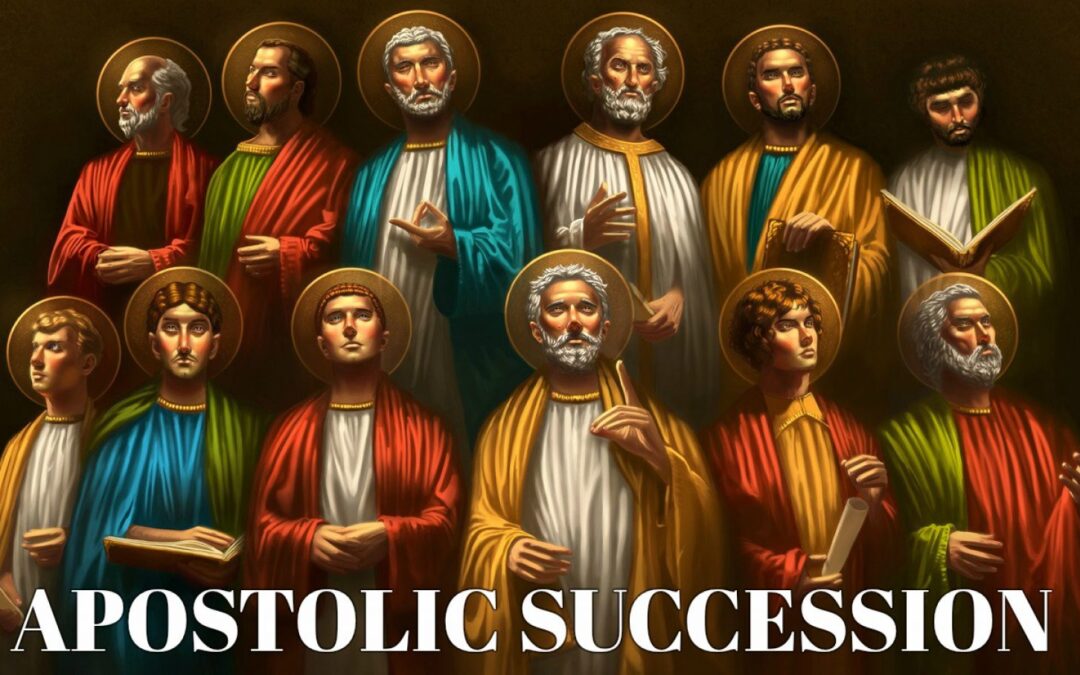
When talking about historic theology, and the development of the Church throughout the ages, one of those topics that is bound to come up, particularly when talking to Roman Catholic or Orthodox brothers & sisters is the idea of Apostolic succession. According to classically define Apostolic succession, in order for a Church, holy orders, and thus sacraments to be valid, they must be administered by clergy, who were ordained by valid bishops, who have a direct line, similar to that of a family tree all the way back to the original 12 Apostles. For them, this means that there is an unbroken line of authority and teaching that has been passed down since the founding of the Church to today.
This is certainly fascinating history to dig into and examine; like this list from Orthodox Wiki that shows the entire line of everyone who has been the Patriarch of Antioch since St. Peter the Apostle would have instituted or planted that particular church. (https://orthodoxwiki.org/List_of_Patriarchs_of_Antioch) While Protestants at first glance might glance this idea off as insignificant or unimportant I think we need to take a moment of pause and to consider the importance of this. We have brothers and sisters in Christ who can trace their church leadership, by name and in great detail back to the 12 apostles. That is amazing in my mind, and a blessing that there has been such continuity in one of the original churches we have listed in the New Testament.
But this is where we hit a snag in the discussion. As a Protestant, according to the Catholic and Orthodox understanding of Apostolic Succession, I am not a part of a church with apostolic succession, and thus do not have valid ordination and valid sacraments. While I am considered a brother in Christ, I do not carry direct unbroken succession since the apostles, and thus am not apart of the One True Church that was founded by Jesus Himself.
This has looked differently throughout Church history since the reformation. Until the late 1800’s, Rome recognized Anglican ordination as valid, until a Papal Bull from Leo XIII axed their validity in Catholic canon law. But generally, anyone who is a theological descendant from the Reformation is not considered valid by the historic churches of Rome and the East.
The first question we might ask, “is this even important?” Certainly to those who descend from the radical reformation, with anabaptist tendencies the answer is likely no. Usually the argument goes that since the church fell away not long after the death of the apostles, the importance is that the true message of the Gospel is preached, and it is on that fact alone that makes a valid church. I think that this take, while containing truth goes too far. While ultimately the validity of the Church comes from it’s faithful transmission of the Gospel, we mustn’t be too quick to dismiss the importance of the institution in of itself.
It’s tempting, especially in our modern, democratic age, to think of the Church as purely a spiritual community, something fluid, dynamic, invisible, and inwardly held together by faith alone. But Scripture presents a far more balanced picture. The Church is both an organism and an institution, both mystical and visible. Paul calls the Church “the household of God” and “the pillar and foundation of the truth” (1 Tim. 3:15). The apostles did not just preach; they ordained elders, appointed deacons, and established tangible order in every city (Acts 14:23, Titus 1:5).
So when the ancient churches talk about apostolic succession, they are not wrong to emphasize continuity and order. God has always worked through tangible structures, through covenant, community, and leadership. The danger comes when we treat the structure as the substance, the line of succession as the guarantee of grace.
As Protestants, we often define the Church not primarily through institutional continuity but through fidelity to the apostolic Gospel—the faith once delivered to the saints (Jude 3). Yet, this doesn’t mean the visible and institutional Church is unimportant or something to shrug off. The Reformers didn’t reject the idea of structure—they rejected corruption and spiritual decay within it. They weren’t trying to destroy the Church’s continuity but to preserve its soul.
Richard Hooker, one of the great Anglican theologians, once argued that succession is only truly apostolic when it’s joined to apostolic doctrine. The laying on of hands, the continuity of ordination—these are good, meaningful signs, but they have to carry the content of the faith with them. John Wesley took a similar approach. Though he was never consecrated by a bishop in the ancient line, he understood himself and his Methodist preachers to be ministers in the apostolic spirit continuing the mission of the apostles to preach repentance and the forgiveness of sins. Though, interestingly enough there is an unverified legend that an Eastern Orthodox Bishop did consecrate Wesley as a bishop, thus potentially giving him valid Apostolic Succession. This is historically unverified, but does make an interesting thought experiment, that those in the Methodist tradition do have a potentially valid line of succession through Wesley himself to the Apostolic era. That being said, generally it is agreed that Wesley’s form of “succession” was not institutional, but spiritually rooted in faithfulness to the apostolic message rather than in the exact tracing of ordaining hands.
So when we talk about apostolic succession, we might say that yes, there’s a visible succession—an institutional passing down of ordination, authority, and office—and that’s important. It provides order, accountability, and continuity in teaching. But there’s also a spiritual succession—a faithful transmission of the Gospel through Word and Sacrament, empowered by the Spirit. Ideally, both should work together.
The institutional form protects the faith from fragmentation, while the spiritual vitality keeps the institution from turning into a museum piece. We need both: structure and Spirit, form and fire.
If there is hope for reconciliation or at least mutual understanding between Protestants, Catholics, and Orthodox believers, it lies in recognizing that both the institutional and the spiritual aspects of apostolic succession are necessary.
The historic churches remind us that the Gospel does not exist in a vacuum; it is always embodied, always transmitted through real people in real communities. Protestants remind the wider Church that structures exist to serve the Gospel, not the other way around. Both perspectives, when purified of pride, reveal vital truths.
There is room for dialogue and even shared recognition here. Protestants might affirm that the historic episcopate, rightly understood, is a gift for maintaining order and unity, a visible sign of the Church’s rootedness. Catholics and Orthodox might, in turn, acknowledge that the Spirit of Christ is not bound to lineage alone, but continues to call and empower ministers who faithfully preach the apostolic faith even outside canonical boundaries.
Perhaps the way forward is not to erase differences, but to listen deeply: to see in one another a shared desire to remain faithful to what has been handed down, and to steward it well for future generations.
A truly catholic (small “c”) vision of the Church would see apostolic succession as both faith and form, a faith faithfully handed down, through an order faithfully preserved. The lines of succession that Rome and the East maintain bear witness to the Church’s visible continuity, while the evangelical insistence on the primacy of the Gospel bears witness to her living continuity. Both, in their own way, protect what Christ entrusted to His Church.
So perhaps the middle way is to honor both truths: to recognize and celebrate the historic continuity of the ancient churches, while also affirming that the living power of the Gospel cannot be contained by institutional boundaries. The Spirit is not bound by human succession, and yet He works through the visible Church to maintain order, teach truth, and transmit grace.
We may not be able to trace our ordinations back to Peter or Paul, but we can trace our message, our Scriptures, and our sacraments to the same source, Jesus Christ, the cornerstone. The continuity of faith, hope, and love across the ages is the truest form of apostolic succession.
In the end, apostolic succession, whether understood institutionally or spiritually is meant to remind us of this: that the Church does not invent itself anew in every generation. We are stewards of something we did not create, heirs of a faith that has been handed down, and participants in a mission that began with twelve ordinary men and continues still through us today.
by Joel V Webb | Nov 3, 2025 | Orthodoxy Matters, Theology & Practice
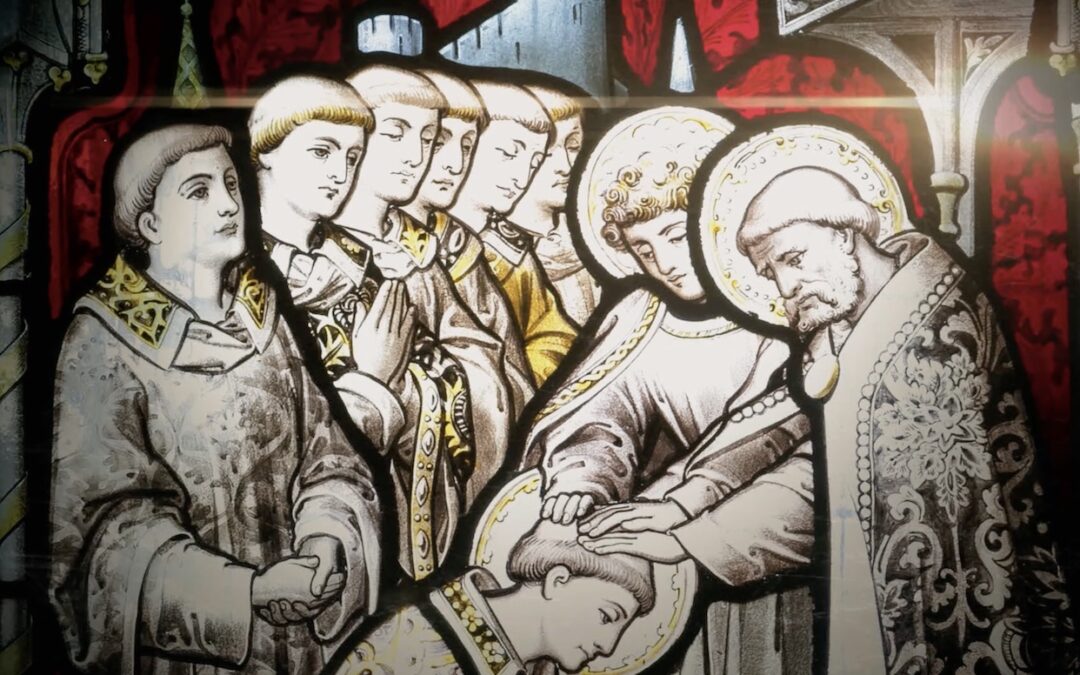
Recently I did a post about the need to refocus the role of pastors (derived from presbyter in the NT and also called priest in some traditions) back to its historic and Scriptural role of being a priest, rather than a business leader. Since then I have been thinking again about the roles of leadership in the Church, and that of deacon came to mind. From this I have taken a bit more of a look at this position, what it has looked like, what it often looks like (or doesn’t look like particularly in an evangelical context), and what the benefits would be for the Church to regain part of the historic nature that this role provided in serving Christ’s Body.
One of the cornerstones of the episcopal structure of Church governance is the three-fold group of Holy Orders of the bishop, elder (in some traditions called priest or pastor) and deacon. In many Christian traditions, the usage of these historic roles has fallen out of use, while maintaining some connection to the Scriptural basis of the roles found in Scripture (something we will touch on in a bit). But while evangelicalism has often sought to simplify church structure in the name of pragmatism, we have perhaps unintentionally surrendered a gift Christ gave to His Church—the ministry of deacons—and substituted something less theologically rich, less biblically rooted, and less spiritually fruitful.
We see the origination of the role of Deacon in Acts 6, where the quickly growing Church faced a problem, the Apostles, who were to teach the good news of the Gospel had much of their time taken with the practical side of alms and good words (nothing wrong with that of course, but focus is important when doing a job). “So the Twelve gathered all the disciples together and said, “It would not be right for us to neglect the ministry of the word of God in order to wait on tables. Brothers and sisters, choose seven men from among you who are known to be full of the Spirit and wisdom. We will turn this responsibility over to them and will give our attention to prayer and the ministry of the word.” Acts 6:2-4 NIV. This newly created role was not just to be a waiter like at a restaurant, but an extension of the Church as the hands and feet of Christ, serving with love and dedication.
Paul’s words in 1 Timothy 3 reinforce the seriousness of the office: deacons are to be tested, spiritually mature, and faithful. They are not simply board members, door greeters, or finance committee volunteers. They are ordained servants, carrying sacramental responsibility and pastoral care in the name of Christ. We also see the role of deacons in the function of the Early Church in the first few centuries. The early Church knew this role well. Deacons were entrusted with:
- Administering alms and mercy ministries
- Assisting at the Eucharist and preparing the table
- Serving bishops and priests in pastoral care
- Preaching, catechizing, and evangelizing
- Carrying communion to the sick
- Guarding the unity and order of worship
St. Ignatius of Antioch, in the early second century, wrote: “Let all respect the deacons as Jesus Christ, just as they respect the bishop as a type of the Father and the presbyters as the council of God.”In other words, the diaconate was not an afterthought—it was woven into the very structure of the Church’s life. For centuries, to remove or diminish the diaconate would have been unthinkable.
And this is what I think we in the Western Evangelical Church have lost sight of in the function and operation of the Church. While in some contexts there is an understanding of this role, much of the focus in running the church is focused on the programmatic operation like a business, rather than the people centric focus of sacramental presence and ministry to hungry people in a broken world. This is not a criticism, but simply an observation, just as I spoke of in the role of pastors and priests, that we as the church must reclaim the historic role of deacons as not just managers, but as ministers who assist in the shepherding of God’s flock.
But more than just returning to the proper function of deacons, many have completely abandoned the role. And in abandoning it, many evangelical churches have unintentionally forced pastors to carry both the apostolic proclamation role and the diaconal mercy-care role, resulting in pastoral exhaustion and congregational under-formation.
The Church needs priests who can pray, preach, shepherd, and administer the sacraments. And the Church needs deacons who can embody the compassionate hands of Christ, serving at the altar and among the poor, binding the church’s worship to its service in the world.
Here in the Free Methodist Church, we reclaimed the office of deacon after a long period without it. Yet we have not fully embraced its depth. At present, deacons are recognized locally, often as pastoral helpers or ministry assistants. This is good, but it can also stop short of the rich and historic calling Scripture and tradition give us.
Recovering the diaconate more fully does not mean abandoning our Wesleyan heritage—it means living into it. Wesley himself sent deacons, commissioned lay preachers, empowered class leaders, and believed the Spirit called people to particular vocations within the Body. Holiness, for Wesley, was not abstract—it was enacted love. And the diaconate is enacted love.
Pastors change from time to time. While the FMC practices longer appointments than other Wesleyan-Holiness denominations, there still can be pastoral turnover. Deacons historically have been a grounding force of ordained ministerial presence that comes up from within the congregation, and is planted in the church, staying consistent even through multiple pastoral changes.
Today, many of our congregations feel the pressure of multiplying needs: pastoral fatigue, growing community crises, loneliness among young adults, hunger for depth, and a longing for embodied faith. This is not a time to narrow the ministry of the Church; it is a time to strengthen it. Not by adding programs, but by recognizing callings.
To restore a robust diaconate—in prayerful, thoughtful, historically rooted ways—is to affirm that God still calls servants, and that the Church still needs them.
So what might it look like for the Free Methodist Church to lean into this calling anew?
It begins with prayerful discernment. By asking who among us God may be calling not simply to “help out,” but to embody the servant-hearted ministry of Christ in a particular and visible way. It looks like pastors and congregations encouraging those with a heart for mercy, intercession, visitation, table service, and Gospel witness in everyday places. It looks like laying hands on them, blessing them, and releasing them to a ministry that is grounded in worship and poured out in love.
We do not restore things because they are ancient; we restore them because they are alive. The diaconate is not nostalgia—it is discipleship. It is not hierarchy—it is humility. It is not about creating distance between clergy and laity—it is about strengthening the Body so that all may flourish.
In a restless age, a Church rooted in Scripture, nourished by sacrament, and enlivened by servant-hearted ministers will shine like a city on a hill. And in a weary world longing for tangible grace, deacons may once again become a signpost of Christ’s presence.
May we have the courage to listen, to bless, and to send those whom the Spirit calls. And may our Church, strengthened by the ministry of servants shaped by the cross, become ever more like the One who came not to be served, but to serve.
by Joel V Webb | Oct 31, 2025 | Uncategorized
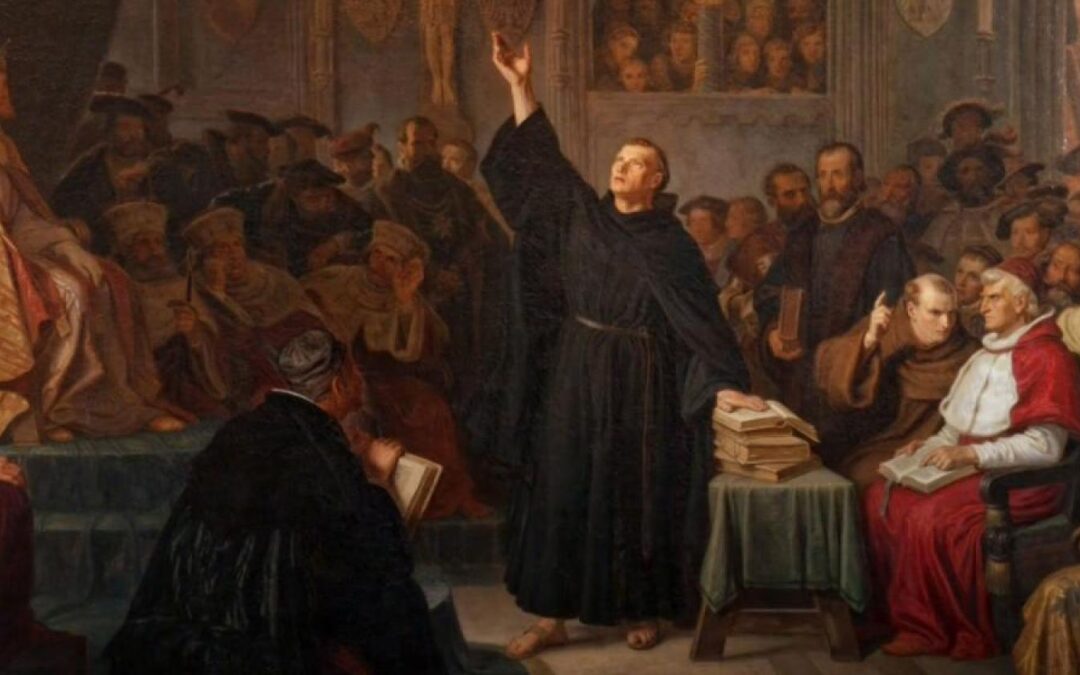
Today is Reformation Day. October 31st is the day that Martin Luther posted his 95 theses, an open request to debate points of theology and abuse going on in the Medieval Roman Catholic Church. Here’s the thing…posts about today from both Protestants and Roman Catholics often talk about Martin Luther separating from the Church. Yet…that’s not the actual story.
The Early Church was seen as a part of the ongoing Jewish faith and practice. Jewish believers in Jesus still met in Synagogues, went to the Temple, and continued in their cultural and religious adherence to the faith, not also fulfilled through the Resurrected Christ. It was not the Christians who ‘split off’ from the rest. They understood they were the fulfillment of the law, now with Gentiles grafted in, and would continue to do so. But just a few years following the close of the New Testament Canon, we see in history the complete separation of the Christian and the Jewish faith. This separation was primarily instigated by the now templeless Jewish worshipers. The desire was not to be separate, but to let God’s people know that all they had been hoping and praying for was now here, and has been fulfilled.
Later on in history after the Reformation we see in the life of John Wesley, who, while remaining an Anglican priest his whole life, faced severe distrust from the State Church because of His Gospel centered and transformational preaching, and the Methodist movement was officially separated almost directly following his death. While this likely would have happened eventually, his desire was not to start a new church movement, but instead to reform and recenter the Anglican Church around the transforming nature and work of the Gospel.
And just a few generations later we see this again with B.T. Roberts in western New York in the late 1800’s. The preaching of the Gospel, and of holiness led the at the time lukewarm Methodist Episcopal church to defrock Roberts and other clergy, leading to the Free Methodist Church being formed in 1860. Again, not a desired separation, but a forced one by those not thrilled about the convictional lives and preaching of Roberts and his compatriots.
This now brings us back to Martin Luther in 1615. Luther did not desire separation, he did not desire to form a new movement, or be anything other than a part of the Church. And yet, he didn’t have any choice. He was forced out by a Papal Bull that excommunicated him. But when Luther nailed the theses to the Church door on October 31, 1615, it was not to start a new church, but to address the abuses and accretions in the Church of that day. And that is the true spirit of the Reformation. Not a desire for schism or control, but the desire, but to see the Church return to the Gospel, and to see abuses remedied.
This was the continued desire of the Magisterial Reformers, which has sadly been overshadowed in large part by the ideas of the radical reformation that almost wholly rejects the premises of reform established by Luther himself.
So the call to the Church today is to continue reforming. But not to just make changes or “get rid of tradition”, but to remain rooted in the Gospel, and the traditions that God has given and established through His Church, and continue spreading the Kingdom until He returns.

by Joel V Webb | Oct 24, 2025 | Orthodoxy Matters, Theology & Practice
The question and conversation of Sacraments, particularly in the Protestant context, is an interesting one. Primarily, it is not even over the number of Sacraments—that, as we’ll see, is a secondary concern. Often the prevailing question is, “Do Sacraments even exist?” As I discussed in a previous post on restorationism, there’s a strong wing in the Protestant Church that seeks to strip away the language of “sacrament” altogether, preferring the term ordinance. In this view, Baptism and Communion are simply things Jesus told us to do as reminders, symbols of faith and obedience, memorials of grace already received.
While there certainly are elements of memorial and obedience present in these practices, that’s a severely myopic view of what the historic Church has understood these actions to be. When we look at Scripture and the witness of the early Church, we find that the Sacraments are more than mere actions, they are means by which God actually works in the world and in our lives.
The classical definition, first clearly articulated by St. Augustine, is that a sacrament is “an outward and visible sign of an inward and spiritual grace.” That is, God uses material things, bread, wine, water, oil, hands, words, and even people—to communicate His unseen grace. Sacraments are moments where heaven and earth intersect, where the invisible grace of God touches the tangible realities of human life.
In the Protestant imagination, this definition has often been treated with suspicion. Some fear it implies a kind of “magical” view of the elements, as though grace were a substance dispensed through ritual. But that is not what the historic Church has ever meant. Rather, the Sacraments are relational and covenantal. God binds Himself to His promises through physical signs, and in faith we receive what He offers. As Augustine said, “The word comes to the element, and it becomes a sacrament.
Traditionally, the Church has spoken of seven sacraments: Baptism, Eucharist, Confirmation, Penance (or Confession), Anointing of the Sick, Marriage, and Holy Orders. The medieval Church taught that all seven were instituted by Christ, but during the Reformation, Protestant theologians made distinctions.
Luther, Calvin, Cranmer, and Wesley each affirmed that Baptism and the Lord’s Supper were directly instituted by Christ Himself, and therefore uniquely sacramental in nature. These two are what we might call the Sacraments of Christ—those commanded by Jesus and visibly tied to the Gospel. They are not merely symbols; they are Gospel enacted. In Baptism, we are buried and raised with Christ (Romans 6:4); in Communion, we are united with His body and blood (1 Corinthians 10:16). Both are means by which the Holy Spirit conveys grace to believers, nourishing faith and deepening union with God.
The other five—Confirmation, Confession, Marriage, Anointing, and Ordination—have deep biblical and theological roots, but were viewed by the Reformers as sacramentals or rites of the Church rather than direct Sacraments of Christ. They are practices through which God’s grace may indeed be experienced, but not necessarily instituted with a visible sign and direct command by Jesus.
At the heart of the sacramental vision is the belief that God is present in and through His creation. The Incarnation itself is the ultimate Sacrament—God taking on flesh. If in Christ, the invisible God becomes visible, then every sacrament participates in that same mystery. Bread and wine, water and oil, are all created means through which the Creator communicates Himself. When we lose the sacramental imagination, we risk reducing the faith to ideas and morals, rather than encounter and transformation.
This is why the early Church saw the Sacraments as mysteries—not puzzles to be solved, but realities to be entered. The Greek term mysterion carried this sense of divine participation, and the Latin word sacramentum added the idea of sacred commitment, a binding oath. Together they express that in the Sacraments, God commits Himself to us, and we respond in faith and obedience. They are not our performances, but God’s gracious initiatives.
The Reformers often spoke of the Word and the Sacraments as the “two hands of God.” Through the Word, God addresses our minds and hearts; through the Sacraments, He touches our bodies and senses. Both are expressions of the same Gospel. The Word declares grace; the Sacraments enact it. The Word proclaims forgiveness; Baptism washes it over us. The Word promises Christ’s presence; Communion feeds us with it.
When either hand is neglected, the fullness of Christian life suffers. A purely verbal faith can become cerebral, disembodied, and disconnected from lived experience. But a sacramental faith without the Word becomes superstition or magic. The balance of the two keeps us grounded—faith comes by hearing, but it is confirmed in tasting, touching, and participating.
If the Sacraments teach us that God works through physical means, then all of life becomes potentially sacramental. Every meal shared in gratitude echoes the Eucharist. Every baptismal remembrance at the sink reminds us we are washed and called. Every confession spoken in humility opens the way to reconciliation. Marriage, ordination, and anointing remind us that vocation, love, and suffering are all places where grace can dwell.
This is where Protestants can rediscover a rich theology of everyday holiness. The same God who meets us at the Table meets us in the mundane—at the dinner table, in the hospital room, in the workplace, and in the home. The “sacrament of daily life” does not replace Baptism or Communion; it flows from them. The worship service becomes the pattern for life, and life becomes an extension of worship.
In our age of rationalism and technology, mystery often feels like an intrusion—something we must explain away or control. Yet the Church is healthiest when it embraces mystery as the place where faith and awe dwell together. To confess that God is truly present in the Sacraments is not to claim we understand how, but to trust that He is faithful to His promises.
For Protestant churches seeking renewal, this may be the way forward: not abandoning the Reformation’s commitment to the Word, but deepening it through a sacramental imagination. We need not fear that reverence for the Sacraments will lead us back to superstition. Instead, it may lead us forward—to a faith that is once again whole: intellectual, embodied, communal, and full of wonder.
Perhaps it’s time for Protestants to see not just two sacraments and five extras, but a whole life that can become sacramental. The Sacraments of Christ remain the sure foundation—Baptism as entrance, Eucharist as sustenance. Yet the other rites of the Church remind us that grace pervades the ordinary: marriage, vocation, healing, reconciliation—all can become signs of grace when offered to God.
The task, then, is not to argue endlessly about number or definition, but to recover the reality they point to: that God delights to make Himself known through signs and symbols, through word and matter, through flesh and spirit. The Sacraments remind us that salvation is not an escape from creation but its redemption. And that, perhaps, is a truth our world needs to see again—grace that is not abstract, but embodied.

by Joel V Webb | Oct 20, 2025 | Uncategorized
Less than a month ago the first woman was appointed to become the next Archbishop of Canterbury. This decision has thrown the Anglican world into a fury of activity and debate as to what to do next. As an outsider of the Anglican Communion it has been fascinating to watch those inside the Anglican movement discuss, debate and make plans for the future from here. The questions and debates brought up because of this appointment are challenging and important.
For many Anglicans, the appointment of Sarah Mullalley represents a foundational theological problem purely on the issue of the ordination of women. Myself, as someone in the Methodist movement overall which originated in Anglicanism, and the Free Methodist Church specifically has a long history of stalwart orthodoxy while also allowing for and advocating for the ordination of women. That being said, it is a point of deep contention within the Anglican world, with some Provinces (national or semi-national) and Dioceses (similar to a conference or district) have differing positions on the issue. With the Anglican Church in North America (ANCA) varying from within on the issue. All of that being said, the new appointment has thrust the debate to the forefront of the conversation, with even more intense vigor.
My contribution to this discussion (as much as it is worth not being formally Anglican) is not to take issue with the appointment of a woman, but with the particular individual who has been appointed. I, like those in my tradition and denomination, uphold women’s ordination to the ministry. Seeing it as the fulfillment of God calling all humanity to be proclaimers and ministers of His Gospel. This is rooted in an Edenic and Kingdom ideal and principle that the divisions and contentions between the sexes are ultimately healed and restored in the coming of Christ’s Kingdom on earth through His Church. I won’t be making the full case for women’s ordination here. It is something I have done in other places, and there are those who do it more regularly than me, such as Marg Mowczko.
My primary issue with the new Archbishop is her overall theological and moral framework and outlook. Sadly, over the decades in the Church of England (CoE), as it has been in Canada and the USA (which led to the creation of the ACNA) has been a quick march away from Biblically foundational truths, particularly surrounding gender, marriage and abortion. These issues in particular are where the new Archbishop to be sadly is deficient in all. Sarah Mullally regardless of her being a man or a woman is not fit to lead the CoE, or act as head of the Anglican Communion purely on the basis of her theological positions that are contrary to the Biblical foundations of not just the Anglican expression as laid out in the 39 Articles of Religion, but that are also found in Scripture.
She has expressly made her position on marriage and abortion clear in the past, demonstrating that it continues to line up with the progressive voices in the Church of England that continue to chip away at the solid truths that it was established on during the Reformation into nothing more than a secularized state church that rather than proclaiming the Gospel, seeks to equivocate on the issues of the day by collapsing at the feet of pandering words and wholly un-Biblical expressions of love that affirm rather than speak truth.
For myself, I am thankful that as a Free Methodist I have Bishops that I can trust. Are they perfect, no. But they have continued to demonstrate their submission to the Word of God, and holding fast to the faith once delivered to the saints.
In response to all of this, GAFCON, which was established itself in 2008 as a clear and Biblical voice to the insanity of liberalizing Anglicanism in the West has now just put themselves forward not as a conservative alternative to the Anglican Communion headed up by Canterbury, but as THE Worldwide Anglican Communion that represents the voice and interest of that tradition worldwide. With it, a majority of Anglicans worldwide, most represented in the global south in Africa, South America and South-east Asia will effectively reduce the historic Anglican Communion to a shell of its former self.
This move, while certainly sad to see in one sense, also seems to be the only option. The pretences and precepts that before allowed differences among the variety of perspectives in the Communion are being totally shorn away, making it clear that there is only one path forward. “Progress at all costs.”
May this be a warning to all followers of Christ in any tradition. Yes, we are to contextualize the sharing of the Gospel to our age and culture. What we are not to do is pervert and fold to the voice of the age, exchanging the truth of God for the shallow pool that is the temporal approval from culture. The Gospel calls for transformation of us into His image, not the other way around.