by Joel V Webb | Nov 21, 2025 | Orthodoxy Matters, Theology & Practice
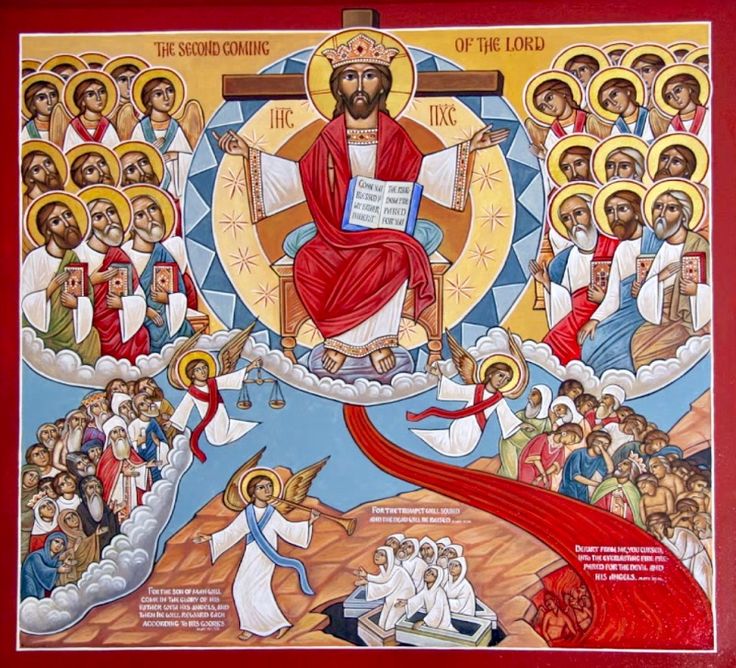
One of the perennial issues of discussion, disagreement, and consternation in modern Christianity is how to solve a “problem” like the book of Revelation (cue The Sound of Music). It is one of the most talked-about and also one of the most misunderstood books of the Bible, precisely because of what makes it so beautiful. It is mysterious, symbolic, imaginative, and at first glance feels opaque enough that Christians often fall back on whatever interpretive framework they inherited. And for many in the Western church, that inherited lens is some version of the dispensational, end-times schema popularized by the Left Behind series.
Recently, a parishioner asked me how to understand Revelation, and I realized quickly that a simple five-minute conversation wouldn’t be enough. The questions behind Revelation are not only about interpretation but about imagination. We need to untangle what the text actually says from the assumptions we bring to it. And this is difficult, because for many Christians even those who do not personally identify as dispensational, our cultural imagination has been shaped by that system. The idea of a seven-year tribulation, an individual Antichrist, a secret rapture, and a sequence of future political events culminating in Armageddon often feels like it “must” be biblical because we’ve heard the system so often and so confidently.
But when we slow down, open the Scriptures, read Revelation in its own historical and literary context, and listen to the witness of the early Church, we discover something surprisingly simple: Revelation is not about decoding a timeline. It is about unveiling the triumph of Jesus Christ and the call for His people to remain faithful in a world that often opposes the Lamb.
It is striking that the book opens not with a puzzle but with a blessing: “Blessed is the one who reads aloud the words of this prophecy” (Revelation 1:3). The early Church never treated Revelation as a secret codebook but as a proclamation, prophetic imagery meant to comfort persecuted Christians, strengthen their worship, and remind them that the Lamb reigns even when Rome seems unshakable.
This is precisely how the earliest Christian writers approached the book. Irenaeus, writing in the second century, did take Revelation seriously as prophecy, but he always tied its hope to the victory already won by Christ. He wrote, “The name of our Lord… is the faith which brings salvation” (Against Heresies 3.18.7). The point is not prediction. The point is fidelity. Origen, commenting on Revelation’s imagery, said that the visions “are to be understood spiritually” and that the book “reveals what Christ has done and is doing” (Commentary on John 2.2). Even Augustine, often accused unfairly of over-allegorizing, was simply following the pastoral instinct of the Church before him when he said that Revelation displays the reality that “the Church is always under trial… yet is always victorious through Christ” (City of God 20.9).
For the early Church, the primary message of Revelation was not fear of what might come, but confidence in what has already come: the Lamb who was slain now stands (Revelation 5:6). Christ’s victory is not future, it is the very lens through which the future must be seen.
This is also why the historic Church never taught a seven-year tribulation. That idea simply does not appear anywhere in Revelation. It emerged from a very particular reading of Daniel 9, developed in the 1800s, in which dispensational writers “paused” Daniel’s 70th week and moved it thousands of years into the future. No Christian writer, east or west, taught this before the modern period. For the early Christians, the “tribulation” was the reality of discipleship in a world that crucified Jesus and still resists His reign (cf. John 16:33). As Tertullian wrote, “The blood of the martyrs is the seed of the Church”—not because the Church awaits a future seven years of horror, but because tribulation is the normal environment of faithful witness.
Likewise, the idea of a single end-times Antichrist figure does not come from Revelation either. The only place in Scripture that uses the word “antichrist” is the Johannine epistles, and there John says plainly: “Many antichrists have come” (1 John 2:18). It is a category, people and powers opposed to Christ—not a cinematic villain. Revelation’s beast imagery is not about a future political leader waiting in the wings; it is prophetic imagery about oppressive empire, idolatrous power, and systems that stand against the Lamb. Early Christians knew this. Victorinus, the earliest commentator on Revelation (3rd century), wrote, “The beast signifies worldly kingdoms… opposed to the Church” (Commentary on Revelation 13). Not an individual. Not a future dictator. A system. A pattern. A recurring reality in history.
In other words, Revelation is not predicting a future empire in exact detail, it is revealing the spiritual nature of all empires that wage war against the Lamb (Revelation 17:14). And the Lamb wins.
Even the Reformers and later theologians continued this historic reading. Luther was initially suspicious of Revelation, but even he insisted its purpose was to “reveal Christ and testify to Him.” Calvin did not write a commentary on Revelation, but he preached from it confidently, saying, “The sum of all prophecy is that God in Christ reconciles the world to Himself.” John Wesley, in his Explanatory Notes Upon the New Testament, reads Revelation as a symbolic depiction of Christ’s ongoing victory and the Church’s call to endurance. Wesley wrote, “The sum of this book is that God governs all things by His providence, for the good of His people.” He never once suggested an end-times timeline, a seven-year tribulation, or a single Antichrist figure.
It is important to say this gently and pastorally: the dispensational approach is very new. It arose in the 1830s through John Nelson Darby, was popularized through the Scofield Reference Bible, and became mainstream in America only in the 20th century. That does not make dispensationalists bad Christians, many of them love Jesus deeply. But it does mean their interpretive framework is not the standard Christian reading and should not be assumed as normative.
This brings us back to Revelation itself, the text, the imagery, the hope. When we set aside the pressure to decode it, Revelation becomes astonishingly clear: the crucified and risen Jesus is the center of all history. The visions unveil not chaos but order; not fear but faithfulness; not despair but triumph. Revelation tells us that the powers of this world may roar, but they are doomed to collapse. The martyrs may seem forgotten, but they stand before the throne in glory (Revelation 7:9–14). The Church may feel besieged, but she is protected by the Lamb who walks among the lampstands (Revelation 1:12–13). The dragon may rage, but it has already been cast down (Revelation 12:7–10). Babylon may boast, but she is fallen before the word is even spoken (Revelation 18:2). Heaven’s cry is not “fear what is coming,” but “Worthy is the Lamb who was slain” (Revelation 5:12).
Revelation is not announcing that Christ will win someday. It is announcing that Christ has won already.
And because He has won, the Church can be faithful even when the world looks like Rome, even when suffering feels heavy, even when the powers rage. Faithfulness is the call; worship is the weapon; perseverance is the witness. As the author of Hebrews reminds us, “we are receiving a kingdom that cannot be shaken” (Hebrews 12:28).
When we read Revelation in continuity with the early Church, with the Reformers, with Wesley, and with the whole sweep of Christian interpretation before the 19th century, we discover that its message is not a coded warning but a cosmic proclamation: Jesus reigns. The Lamb has conquered. The nations will be healed. And God will dwell with His people.
Revelation is not a puzzle to solve but a vision to behold. And when we behold it, without the unnecessary weight of modern timelines—we find precisely what John intended his hearers to find: courage, clarity, and the unshakeable hope that “the kingdom of the world has become the kingdom of our Lord and of His Christ” (Revelation 11:15).
If you wish to further explore this topic, here are some amazing resources to take a look at:

by Joel V Webb | Nov 16, 2025 | Orthodoxy Matters, Theology & Practice
Before I say anything, I want to affirm clearly and without hesitation that I believe in healings. I believe that God acts in the world today in ways that are truly supernatural, transformative, and beyond the reach of human explanation. I believe that the gifts of the Holy Spirit did not end with the close of the apostolic age, nor were they somehow meant to expire once the canon of Scripture was sealed. Rather, they continue to be given, continue to be used, and continue to bless the Church in every generation. In this sense, I am what most people would call a continuationist—not because of any particular theological camp I’m trying to align with, but because this simply seems to be the testimony of Scripture and the lived experience of the Church throughout history. The same God who healed through the apostles and prophets is the God who heals today.
Yet, even as I affirm this, I also believe that Scripture gives us clear guidelines, boundaries, and expectations for how these gifts are to be exercised. The Holy Spirit does not operate chaotically or in contradiction to the order He has inspired. And this is where I differ from many of the charismatic or Pentecostal expressions I grew up around. While I am grateful for the sincerity, zeal, and hunger for God that shaped much of my early faith, I also recognize that sincerity does not automatically equate to biblical practice. Scripture gives parameters for prophecy, for tongues, for healing, and for the discernment of spirits—not to restrict the Spirit’s work, but to protect it, to keep it grounded in truth, and to ensure that it builds up the Church rather than confusing or misdirecting it. Boundaries are not the enemy of spiritual gifts; they are the framework that allows the gifts to flourish in a healthy, Christ-centered way.
Secondly, being more traditional in my ecclesiology, I believe that the Holy Spirit’s primary mode of operation is through Christ’s Church—not merely through isolated individuals acting independently, but through the Body as a whole. Yes, God works through people, and yes, individuals can be uniquely gifted or called, but Scripture consistently shows the Spirit working in and through the gathered people of God, within the structure and sacramental life of the community Christ established. For me, this reinforcement of ecclesial structure is not about stifling the Spirit but about recognizing the Spirit’s own design. The Spirit gives gifts to the Church, not to lone spiritual entrepreneurs. So while I affirm the Spirit’s work in individuals, I also believe that He most often works through the ordered life of the Church—through her elders, her sacraments, her disciplines, her worship, and her unity.
That now being said, on to my main point. Recently I have been seeing a number of para church evangelist and healing ministries that have been making the rounds in my region of the United States. And, being the good social media marketers that they are, they have excellent websites and social media pages, with exciting and energetic videos of their ministries, showing the worship services, testimonies of healing, and how the power of God moves during their revival meetings.
And, generally, I don’t think it’s a bad thing overall. Even if we are not 100% on board with someone’s theology or their particular praxis of ministry, the reality is that God has a long history of working through imperfect vessels—sometimes in spite of them. St. Paul himself acknowledges this when he speaks of Christ being preached even through questionable motives. Somehow, in the mysterious economy of God, the Gospel has a way of slipping through the cracks of our human inconsistencies. People do hear about Jesus. Hearts are stirred. Lives are changed. And the Kingdom of God advances, not because any of us have perfect doctrine or flawless ministry methods, but because the Spirit blows where He wills.
So I want to acknowledge that aspect honestly. I have no desire to stand on the sidelines with crossed arms, smugly pointing out everything that’s wrong. I’m not interested in nitpicking every theological nuance or dismissing entire ministries simply because I find elements of their approach unbalanced or unhelpful. I can rejoice when Christ is magnified, even when the packaging isn’t something I would personally choose. And when people testify to encountering God—whether through healing, worship, repentance, or a renewed sense of His presence—I am inclined to take that seriously.
And I want to be clear: I am not a skeptic. I believe that healings happen, and that they are real. I don’t assume deception or fabrication as a first resort. I believe that God still touches bodies, minds, and spirits in ways that are genuinely miraculous. I have seen healing firsthand, witnessed stories that were far too specific and too well-verified to be emotional exaggerations, and walked alongside people whose lives were undeniably transformed by the power of God. So my concerns are not coming from a place of disbelief or cynicism, but from a desire to preserve the integrity of something sacred. If healing is a genuine gift of God, and it is, then it deserves truthfulness, humility, verification, and reverence.
But…
There seems to be a common denominator in the multitude of testimonies across most of these videos. All the healings are for ailments that are not visible. Hearing issues, back pain, eye problems, intestinal problems, one leg shorter than the other (don’t get me started on that rabbit trail). Now, I am not saying that these are issues that don’t need healing, or that God would not heal. I believe that it is possible, even probable that many have received healing. Yet, with that being said I have a big problem when almost all of the examples we get are with frankly falsifiable ailments.
The human body is really powerful and can do crazy things on its own. There are people who can consistently demonstrate various medical symptoms with no underlying condition, other than they think they have something. And who’s to say that in some of these healings, that through the energy and emotion of everything going on temporarily allows the symptoms to subside. But without follow up, do we even know?
Where in contrast, the healing ministry of Jesus almost exclusively dealt with health problems that were always visible. Leprosy, cripples, the blind and more. My question is not that these various evangelist ministries don’t have the power of God to heal. But, if they do, where are the verified cases of ailments like this, that have been demonstrated through follow-up, affirming through family/friends and medical professionals that something is different. In the case of the 10 lepers that Christ healed, His command was for them to go show themselves to the priest, to verify that they were healed!
While I certainly have theological differences and disagreement with someone like Justin Peters, a very reformed pastor who is a regular critiquer of the charismatic movement, he makes this point often. People like himself (who is very obviously in a wheelchair with a disability), are never the ones brought on to the stage of big healing ministries, because frankly the stakes or too high that the healing or miracle won’t take place, or look like it did. This should give us, to anyone will to self reflect to ask, when was the last time we saw someone totally disfigured be healed at one of these events?
The other question I have is more ecclesiastical in nature. Most, if not all of these ministries are parachurch. They by definition operate outside the confines of the authority or structure of a church, or denomination. That is dangerous. Primarily, because having oversight and accountability is something that we in the church have been learning the hard way for the last twenty years especially. What is the organization of their ministry, who are they accountable or answer to? Recent stories from ministries of people like Todd White continue to show the dangers of very charismatic (in personality) leaders, who have a lot of power, and no accountability. Abuses of people and resources ensue, leading to broken lives, trust and relationships.
And this brings me to the deeper pastoral concern that undergirds all of this. When ministries function without clear ties to the local church, without any real submission to recognized pastoral authority, and without any structure for discipline or correction, the people who end up suffering the most are often the vulnerable, those who come desperate for healing, longing for hope, and willing to trust anyone who speaks in the name of Jesus with enough confidence. When there is no oversight, the spiritual “safety net” that Christ intends in the Church is simply not there.
Because if we believe that healing is real, and I most certainly do, then we must also believe that it is holy. And if it is holy, it must be stewarded with reverence, patience, and discernment. The New Testament never presents healing power as a personal possession or a “brand” to be platformed, but as a gift entrusted to the Church for the care of souls. St. James does not say, “Send for the traveling evangelist,” but rather, “Call for the elders of the church.” He situates healing firmly within the community Christ established, the community where people know each other, where pastors are accountable for the lives they shepherd, and where claims can be tested because relationships actually exist.
This is precisely what is lacking when healing becomes detached from the Church and turned into a spectacle of spiritual entrepreneurship. Without the church’s discernment, without the theological and pastoral ballast of tradition, and without the sacramental context of prayer and repentance, the pursuit of healing can easily drift into confusion at best, and manipulation at worst. The line between genuine ministry and emotional catharsis becomes blurry. The line between faith and performance becomes negotiable. And the line between giving glory to Christ and building a platform for oneself becomes dangerously thin.
My concern is not that people are seeking healing, God knows we need more of that, not less. My concern is that many believers are being unintentionally conditioned to look for the extraordinary outside the very place Christ promised His presence: His Body, the Church. In our hunger for power, we often overlook the very ordinary, structured, accountable means by which the Holy Spirit is already at work among us. The same Spirit who parted seas is the One who works quietly in confession, in anointing, in Eucharist, in the gathering of the faithful, and in the long, slow healing of hearts and bodies that does not fit neatly into a 90-second testimony clip.
Furthermore, when healing is detached from the Church, there is no mechanism to follow up with the person who claimed to be healed. There is no pastoral care, no ongoing discernment, no walking with them in their continued journey toward wholeness. Whether their healing endures, deepens, or proves temporary, no one is there to accompany them. The result is that stories proliferate but discipleship does not.
And this has consequences. When people experience no lasting healing after being told they did, they don’t merely walk away disappointed—they walk away wounded. Often they quietly assume the problem must be with them: “Maybe I didn’t have enough faith. Maybe I didn’t believe hard enough.” They rarely blame the minister; they blame themselves. And this spiritual guilt, this sense of internal failure, is profoundly damaging. It is the opposite of what true healing ministry is meant to produce.
The irony is that the New Testament model for healing actually protects against precisely this kind of spiritual injury. In Scripture, healing is always relational, always communal, and always accountable. It happens in a context where truth can be verified, where people know your story, and where spiritual authority is not self-appointed but recognized by the wider body of Christ.
Do I believe God heals? Yes. Do I believe we should seek prayer for healing? Absolutely. But I believe this must happen within the life of the Church, in the light, with accountability, humility, and truthfulness. If something is real, it can be tested. If something is of God, it will stand. And if something is truly miraculous, it should lead to deeper discipleship, not bigger platforms.
What I am ultimately pleading for is not cynicism, but integrity. Not disbelief, but discernment. Not less expectation of the Spirit’s power, but a more biblical understanding of where that power is ordinarily found. Revival that does not lead people back to the Church is not the revival Scripture envisions. Healing that does not deepen union with Christ’s Body is not the healing Christ models. And ministries that cannot answer to anyone are ministries that cannot be trusted with the souls of the suffering.
If we are going to pray “Come, Holy Spirit,” then we must also be willing to receive the Spirit the way God intends not only in moments of intense emotion, but in the regular, accountable, embodied life of the Church. Because the Spirit does not just give gifts; He gives order. He builds up the Body. And He will not contradict the very structure Christ Himself established.
If we rediscover that, I believe we may also rediscover a more authentic form of healing, one that is quieter perhaps, slower, less cinematic, but far more rooted, far more verifiable, and far more transformative. The kind of healing that leads not merely to testimonies, but to lasting disciples. The kind that glorifies Christ far more than any stage ever could.

by Joel V Webb | Nov 15, 2025 | Theology & Practice
Since becoming a pastor people have asked me what my favorite part of the role is. Initially I would say sermon preparation. And I do love it. The prayer, study, condensing of the message and delivery are things I enjoy very much. But as time has progressed and I am getting close towards one year as a lead pastor, I have started to notice that there is something else that is my favorite part of the role.
Recently I have spent some time doing home visits for a parishioner who has been facing some medical issues. Because of these issues he isn’t always able to make it to church, which means that he misses on coming to the table for communion. So there we are, sitting together in his room, talking and spending some time together, and then I open my portable communion kit, and we share in some prayers, and then eating and drinking together. And it was in that moment that I realized, “this is what I love to do.”
To be sacramental is to understand that what makes the world what it is, is not the scientific understanding of the molecular and atomic as the building blocks of reality. But to know that it is through those means that God utilizes as the delivery method of His grace. We are not disembodied spiritual beings. We are people who are spiritual, that have physical bodies, and at this current moment, during our lives, they are inseparable.
It is gnostic in tendency to believe that the primary experience of the Christian life is cathartically non-material. That it is based on our feelings, or an inward experience that does not have an outward or physical expression. Yes, there is a moment of regeneration that takes place, when the Spirit of God enters a person and they are now a Christian, a member of Christ’s body on the earth, not dedicated to be an ambassador of the Kingdom. But that moment is recognized and understood historically in Christian theology, to be at baptism, when through an act of God, a person is circumcised not by human hands, and is brought into a new life in Christ. The physical act, not in and of itself, is the act by which God operates His grace and works in us and to us.
Here we now come back to Communion. What are the means that we are strengthened and enabled for Christian life and service? This has always been understood in classical Christianity, and through the magisterial reforms to be through coming to the table. John Wesley says in his sermon The Duty of Constant Communion:
The grace of God given herein confirms to us the pardon of our sins, by enabling us to leave them. As our bodies are strengthened by bread and wine, so are our souls by these tokens of the body and blood of Christ. This is the food of our souls: This gives strength to perform our duty, and leads us on to perfection. If, therefore, we have any regard for the plain command of Christ, if we desire the pardon of our sins, if we wish for strength to believe, to love and obey God, then we should neglect no opportunity of receiving the Lord’s Supper.
It is in this primary sacrament that God gives us His grace, and here we see the importance for us to never neglect participating in it. As I have said before, it is unfortunate that this most essential and important act has taken “second fiddle” so to speak in much of the American Protestant experience. Whether through practical consternation, or theological downplaying, we have taken what seems to be an obvious command of Christ, and neglected it.
Part of John’s strength of words on the position was largely due to the practice of receiving the Sacrament during his lifetime. At that time in England, it was law for all a part of the Church of England to receive at minimum the Eucharist three times a year. And, as often happens with minimums, many people took that as the rule, and only received those three times to maintain their participation and status within society. This lax recognition, seeing the reception of the means of grace as the bare minimum of societal participation would of course as we can guess lead to a low view of the Sacraments. As the Rev. Dr. James Wood of the Nazarene Theological College of Australia would say that the Methodist revival was not just evangelical in nature (centered around the Word of God), but also a sacramental revival, as churches where John would administer the Sacrament would have hundreds in attendance (https://podcasts.apple.com/us/podcast/did-wesley-intend-to-start-a-church-with-joseph-wood/id1569988895?i=1000735543639)
This should lead us to have a slightly modified perspective then, as those in the Wesleyan-Methodist movement in the 21st century, that the heritage we hold is not just the centrality of Scripture and holiness, but as well a recentering of the sacraments as the means by which God’s grace is administered and flow through to His Church. Sadly, the result over the last century in particular in those movements such as my own who have influence from the holiness movements have seen that low church drift towards a secondary importance of things like the Lord’s Supper, seeing them an ancillary to the life of the People of God, rather than primary and central that have co-equal necessity in ministry to the life of followers of Christ.
From the Eucharistic Manual of John & Charles Wesley: This Holy Sacrament is not only a Commemorative Sacrifice, but a Feast conveying blessings to man, nurturing and sustaining his soul ; it is the divinely appointed means of access to God, the channel through which His graces are given. To this Feast all Christians are invited to meet their Saviour, and to feed upon His precious Body and Blood, which once having given for the life of the world , He there offers to be the sustenance of every faithful soul.’ It is a sure instrument of present grace, and the only safe pledge of our everlasting inheritance.’
Do we now see what we have so often missed? John himself it is seen from his diaries and other accounts that he took communion at least 4 times a week. And, a central contention in the early Methodist movement, particularly in America was the necessity of clergy who could administer the Sacraments to a quickly expanding United States, with Methodist as a whole growing right alongside it. Wesley’s Sunday Service of the Methodists was a revised Book of Common Prayer edited for the American Methodists to have worship centered around this administration.
This is often the false dichotomy that we create around the Methodist revival. It was not a rejection of the sacramental or liturgical nature of the Anglican tradition, that was moved aside for a more evangelical or in some cases it would be argued charismatic expression of the Christian faith. Rather, it it through the evangelical and charismatic in which the sacramental and liturgical were brought to life, restored to their full benefit and purpose in being the bulwark of living the faith day to day, mediating the grace of God through the Church as had been described and demonstrated from Acts, the Church Fathers, through to the Reformation and then to the Wesley’s.
So here is where we are called. To a re-centering of the Eucharistic heart of the Church. To see that coming to the table is not just a necessity, or something we do from time to time. But instead is, when done in faith and out of love for God, as the “grand channel” of God’s grace (Sermon 11, “Give Us This Day Our Daily Bread.”). And I think, the longer we think about it, the more we realize that in a tired and disenchanted age, we need the mystery, beauty and strength that God gives to us in His body and blood.

by Joel V Webb | Nov 12, 2025 | Orthodoxy Matters
Over my lifetime, I’ve seen a massive shift in how our culture engages with ideas we disagree with. Growing up, disagreement was an opportunity to talk — to debate, discuss, and think through differences, strategies, outcomes, and intentions.
Now, that kind of dialogue feels almost impossible.
One of the biggest reasons for this shift is that we’ve moved from debating to diagnosing.
Instead of hearing another person’s argument at face value and engaging with what they’re actually saying, we jump to labeling or diagnosing what’s wrong with them.
When that happens, conversation stops. What could have been an exchange of ideas turns into an exchange of accusations.
Because of this, many pastors — who truly want to love and care for people — have lost the ability or the desire to say hard truths. The threat of being labeled or “canceled” looms large, so the easier path is to soften the message and avoid anything that might offend.
Even more troubling is how our world has redefined love into something completely unbiblical.
The modern assumption goes like this: If you love someone, you’ll never say anything that might hurt or challenge them.
You’ll “meet them where they are” and never call them to repentance or transformation.
It sounds compassionate — but it isn’t the kind of love the Bible calls us to. As ambassadors of the Kingdom of God, we are called to be salt and light. And sometimes, the most loving thing we can do is say the hard thing.
This becomes especially clear in the conversations surrounding gender and sexuality. The Church often swings between two extremes: full affirmation, welcoming any behavior or lifestyle without question, or harsh rejection, coming across as angry or hateful.
But both miss the heart of biblical love. They are two sides of the same coin — a coin that has lost the image of what love truly is.
To love in the biblical sense is to will and intend the best for another person.
Real love is selfless. It doesn’t prioritize our comfort or another’s feelings above truth. It seeks what is actually best for the person being loved.
As a father, I understand this better than ever.
My one-year-old son doesn’t always like the things I have to do for his good. Sometimes he cries, but I do it anyway — not because I’m cruel, but because I love him. Love that only comforts but never corrects isn’t love at all.
Yet this is exactly what many of us in the Church have forgotten. We’ve mistaken love for acceptance — for making people feel good — rather than seeing it as the pursuit of what’s truly best for them.
That tension becomes painfully real when someone we care about — a friend, a child, a sibling — embraces an identity or lifestyle that contradicts God’s Word.
For some, that moment hardens them into hostility.
For others, it softens their convictions and pulls them toward affirmation.
But followers of Jesus are called to live in the tension.
We know that cultural ideas about gender and sexuality contradict God’s design in creation and Scripture.
And yet we also know that every single one of us is broken by sin and in need of the same redeeming and transforming grace of God.
The Gospel doesn’t just forgive us — it remakes us.
Jesus lived this tension perfectly. He spent time with the outcasts and those on the margins, yet He always called them to repentance and offered transformation — the kind of transformation only He can bring.
This is the calling of the Church today:
To love as Jesus loved — full of compassion, full of truth. To call people to repentance that leads to healing and holiness. If we truly love someone, we will tell them the truth — not to wound, but to heal.
If we withhold truth out of fear, we don’t love them.
But if we speak truth without kindness and mercy, we don’t love them either.
Love without truth isn’t love.
Truth without love isn’t Christlike.
As followers of Jesus, we are called to be salt and light in a world that desperately needs both.
Salt preserves and adds flavor — it stands out.
Light reveals what’s hidden and shows the way forward.
To be salt and light means to be distinct and to guide.
We don’t blend in, but we also don’t blind others with harsh brightness. We shine with the warmth and clarity of Christ.
So, in that spirit, let us go — to love and serve the Lord.
To be people of both truth and love.
To speak hard words with soft hearts.
To live as reflections of Jesus Christ, whose perfect love always tells the truth, and whose truth always loves.

by Joel V Webb | Nov 10, 2025 | Theology & Practice
One of the many things that I have been hearing in a variety of church circles the last couple years is the question, “what makes our church welcoming to an outsider?” And I believe this question comes from a good place, because we want to see people encounter Jesus and have their lives transformed. What this has often led to is taking the how we do our church services, and adapt them to what we think will be welcoming. The question that always remains is, “does this actually work”. While I have my own thoughts (which we will get to shortly), a few months ago I stumbled across a Youtube channel that really answers that question; “what does it look like when an atheist visits church?”
Go into Youtube and type in “atheist church audit”, and what will immediately pop up is the channel Heliocentric, where the host Jared, who is an atheist, goes and visits a wide range of churches. He has been to Evangelical, Baptist, Roman Catholic, Orthodox, Pentecostal, and has even made his way into Mormon and Jehovah Witness’ meetings. While his videos do at times use some foul language, the insights that he brings to what it is like to visit these churches is invaluable. While Jared is an atheist, he says very regularly that he may not believe in God, but he loves religion. And here’s where there’s a fascinating turn of events, Jared was at one point a Christian in ministry.
Coming from a charismatic background, Jared was at one point even in ministry through Michael Brown’s Fire School of Ministry. Through several videos, Jared talks about his deconstruction process, and how unhelpful and unhealthy tendencies and practices eventually led to his deconstruction. (I encourage you to watch those videos, they are very eyeopening to help us see those unhealthy things that have led so many people from my generation to deconstruct their faith). And yet, while no longer following Jesus, believing that He is real, Jared still has a love for religion, what it does, both in the positive and negative. And it is this mindset that he brings to every church he visits. He looks at the things that we often don’t think about. What does everything look like to someone who does not believe it? And this is honestly helpful.
What I found most fascinating in Jared’s videos is that, over time, he began to recognize that not all churches feel the same — and that the ones he personally found most meaningful weren’t the big, flashy, “seeker-friendly” services that we often assume outsiders will prefer. Quite the opposite. Time and again, Jared expresses appreciation for smaller, more traditional, even “old-fashioned” services. Why? Because they feel real.
In his reviews, the large, concert-style churches often left him feeling like he had walked into a production; polished, but impersonal. The sermons could sound more like motivational talks than sacred moments. In contrast, when Jared walked into a small liturgical church, or a traditional congregation with a modest sanctuary and a prayerful tone, he consistently described a sense of peace, reverence, and honesty. Even though he doesn’t share the faith, he notices when people believe what they’re doing matters. The authenticity of worship, not the size of the crowd or the quality of the lighting, is what reaches him.
He often notes that in traditional services, there is a sense of “something ancient” happening, a feeling that what’s taking place isn’t merely for the people in the room, but is connected to generations before. When he steps into an Orthodox liturgy, a Catholic Mass, or even a small Anglican or Lutheran parish, he finds himself respecting the intentionality and gravity of the moment. He says things like, “I don’t believe any of this, but I can tell these people do.” That statement might seem small, but it’s incredibly revealing. Authentic faith doesn’t need to be marketed; it needs to be embodied.
What Jared finds helpful, and what many disenchanted seekers might also find, is not entertainment but encounter. When a church service is smaller, slower, and more reverent, it allows room for reflection. It allows the beauty of the prayers, Scripture, and sacraments to speak for themselves. There’s no pressure to “perform,” only to participate. Ironically, the services least designed to impress outsiders often end up being the most welcoming, precisely because they invite people into something deeper than themselves.
Jared’s experience raises a convicting question for us as Christians: Have we tried so hard to make outsiders comfortable that we’ve stripped away the very mystery that might draw them in? Perhaps what truly welcomes someone isn’t familiarity, but sincerity, not entertainment, but the palpable sense that God is among His people.
If we take Jared’s experiences seriously, they should cause us to pause and reevaluate how we think about being “welcoming.” Many churches, often with good intentions, have tried to remove anything that might seem strange or old-fashioned to a first-time visitor. We shorten prayers, simplify rituals, minimize silence, and replace hymns with songs that sound like the radio. We trade mystery for familiarity, hoping that if people feel at home culturally, they’ll be more open spiritually. But as Jared’s perspective shows, the opposite can often be true.
For someone like him, who doesn’t share the faith but is genuinely curious, it’s not the slick presentation or “relatable” atmosphere that stands out. It’s the weight of something sacred. It’s walking into a small chapel where candles are burning, where the Scriptures are read slowly and reverently, where prayers are ancient yet alive, and where people kneel and stand as though what’s happening actually matters. That difference communicates more than any marketing strategy could. It says, “This isn’t just our weekly gathering, this is holy ground.”
This is not to say that contemporary or creative expressions of worship have no place. But what Jared’s “atheist audits” reveal is that authenticity cannot be fabricated. The most powerful thing we can do to welcome outsiders may be to worship God as if He is truly present, because He is. The church’s task is not to mirror the world, but to reveal a Kingdom that is not of this world.
When we worship with reverence, when our liturgies are filled with Scripture and sacrament, when our communities are small enough for names to be known and prayers to be shared, people like Jared, even without belief, can sense that something real is taking place. And for those quietly searching, that sense of reality might just be the first whisper of grace.
Perhaps the best thing we can offer our modern, skeptical neighbors isn’t a show that looks like everything else, but a glimpse of something wholly other, something ancient, beautiful, and true. The very things we fear might push people away might be what draws them home.
For pastors and worship leaders, Jared’s reflections offer a kind of mirror, an unexpected gift from outside the household of faith. They remind us that people are not looking for another version of what the world already offers; they are searching for something real, something that whispers of eternity. Our call is not to compete with entertainment or comfort, but to cultivate holiness and presence.
If the goal of worship is to help people encounter God, then our services should be less about reducing the strangeness of the sacred and more about inviting people into it. The smells of candles, the cadence of Scripture, the rhythm of prayer, the taste of bread and wine, these are not barriers to newcomers, they are bridges. They engage the whole person, body and soul, in the mystery of grace.
So perhaps the question is not, “How do we make church more welcoming?” but rather, “How do we help people recognize that they are being welcomed into something holy?” The small, traditional, reverent service may not impress the crowd, but it might just open a heart.
On another note, Jared’s story of deconstruction, while painful to hear, is also an opportunity for the Church to pause and reflect, not to compromise the Gospel, but to examine how we have lived it. His journey reminds us that many who leave the faith are not rejecting Christ Himself, but distorted or shallow versions of Him that they encountered in unhealthy church cultures. When we listen to stories like his with humility, we are not abandoning conviction; we are allowing the light of the Gospel to expose where our witness has fallen short. Deconstruction, in that sense, can become a refining fire, a moment to return to the simplicity and beauty of the faith “once delivered to the saints,” grounded not in hype or manipulation, but in the person of Jesus Christ, the Truth who still holds out His wounded hands to a weary world.
Because in the end, what transforms people is not style, but substance, not performance, but Presence. And when that Presence is felt, even an atheist can walk away saying, “I don’t believe in this… but I can tell they do.”