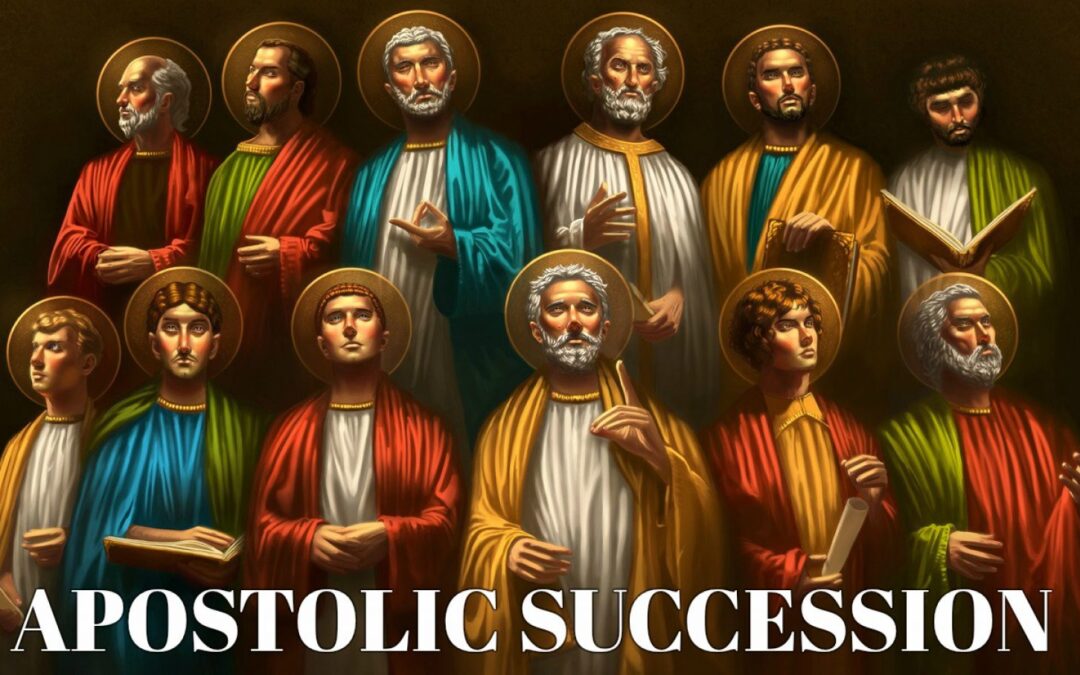
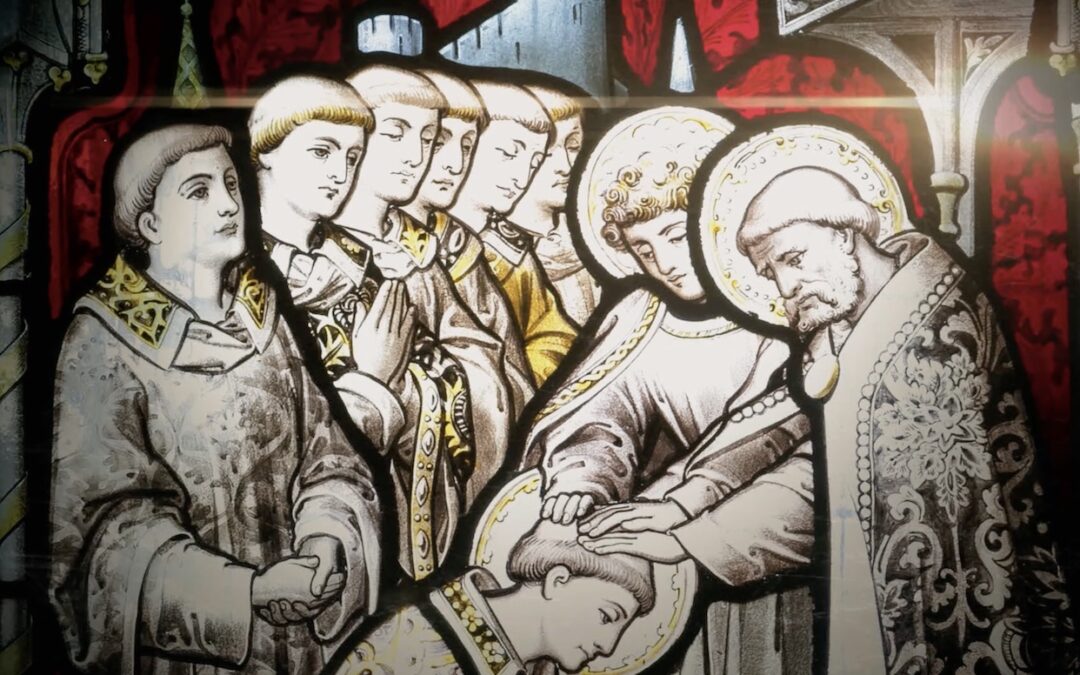
When talking about historic theology, and the development of the Church throughout the ages, one of those topics that is bound to come up, particularly when talking to Roman Catholic or Orthodox brothers & sisters is the idea of Apostolic succession. According to classically define Apostolic succession, in order for a Church, holy orders, and thus sacraments to be valid, they must be administered by clergy, who were ordained by valid bishops, who have a direct line, similar to that of a family tree all the way back to the original 12 Apostles. For them, this means that there is an unbroken line of authority and teaching that has been passed down since the founding of the Church to today.
This is certainly fascinating history to dig into and examine; like this list from Orthodox Wiki that shows the entire line of everyone who has been the Patriarch of Antioch since St. Peter the Apostle would have instituted or planted that particular church. (https://orthodoxwiki.org/List_of_Patriarchs_of_Antioch) While Protestants at first glance might glance this idea off as insignificant or unimportant I think we need to take a moment of pause and to consider the importance of this. We have brothers and sisters in Christ who can trace their church leadership, by name and in great detail back to the 12 apostles. That is amazing in my mind, and a blessing that there has been such continuity in one of the original churches we have listed in the New Testament.
But this is where we hit a snag in the discussion. As a Protestant, according to the Catholic and Orthodox understanding of Apostolic Succession, I am not a part of a church with apostolic succession, and thus do not have valid ordination and valid sacraments. While I am considered a brother in Christ, I do not carry direct unbroken succession since the apostles, and thus am not apart of the One True Church that was founded by Jesus Himself.
This has looked differently throughout Church history since the reformation. Until the late 1800’s, Rome recognized Anglican ordination as valid, until a Papal Bull from Leo XIII axed their validity in Catholic canon law. But generally, anyone who is a theological descendant from the Reformation is not considered valid by the historic churches of Rome and the East.
The first question we might ask, “is this even important?” Certainly to those who descend from the radical reformation, with anabaptist tendencies the answer is likely no. Usually the argument goes that since the church fell away not long after the death of the apostles, the importance is that the true message of the Gospel is preached, and it is on that fact alone that makes a valid church. I think that this take, while containing truth goes too far. While ultimately the validity of the Church comes from it’s faithful transmission of the Gospel, we mustn’t be too quick to dismiss the importance of the institution in of itself.
It’s tempting, especially in our modern, democratic age, to think of the Church as purely a spiritual community, something fluid, dynamic, invisible, and inwardly held together by faith alone. But Scripture presents a far more balanced picture. The Church is both an organism and an institution, both mystical and visible. Paul calls the Church “the household of God” and “the pillar and foundation of the truth” (1 Tim. 3:15). The apostles did not just preach; they ordained elders, appointed deacons, and established tangible order in every city (Acts 14:23, Titus 1:5).
So when the ancient churches talk about apostolic succession, they are not wrong to emphasize continuity and order. God has always worked through tangible structures, through covenant, community, and leadership. The danger comes when we treat the structure as the substance, the line of succession as the guarantee of grace.
As Protestants, we often define the Church not primarily through institutional continuity but through fidelity to the apostolic Gospel—the faith once delivered to the saints (Jude 3). Yet, this doesn’t mean the visible and institutional Church is unimportant or something to shrug off. The Reformers didn’t reject the idea of structure—they rejected corruption and spiritual decay within it. They weren’t trying to destroy the Church’s continuity but to preserve its soul.
Richard Hooker, one of the great Anglican theologians, once argued that succession is only truly apostolic when it’s joined to apostolic doctrine. The laying on of hands, the continuity of ordination—these are good, meaningful signs, but they have to carry the content of the faith with them. John Wesley took a similar approach. Though he was never consecrated by a bishop in the ancient line, he understood himself and his Methodist preachers to be ministers in the apostolic spirit continuing the mission of the apostles to preach repentance and the forgiveness of sins. Though, interestingly enough there is an unverified legend that an Eastern Orthodox Bishop did consecrate Wesley as a bishop, thus potentially giving him valid Apostolic Succession. This is historically unverified, but does make an interesting thought experiment, that those in the Methodist tradition do have a potentially valid line of succession through Wesley himself to the Apostolic era. That being said, generally it is agreed that Wesley’s form of “succession” was not institutional, but spiritually rooted in faithfulness to the apostolic message rather than in the exact tracing of ordaining hands.
So when we talk about apostolic succession, we might say that yes, there’s a visible succession—an institutional passing down of ordination, authority, and office—and that’s important. It provides order, accountability, and continuity in teaching. But there’s also a spiritual succession—a faithful transmission of the Gospel through Word and Sacrament, empowered by the Spirit. Ideally, both should work together.
The institutional form protects the faith from fragmentation, while the spiritual vitality keeps the institution from turning into a museum piece. We need both: structure and Spirit, form and fire.
If there is hope for reconciliation or at least mutual understanding between Protestants, Catholics, and Orthodox believers, it lies in recognizing that both the institutional and the spiritual aspects of apostolic succession are necessary.
The historic churches remind us that the Gospel does not exist in a vacuum; it is always embodied, always transmitted through real people in real communities. Protestants remind the wider Church that structures exist to serve the Gospel, not the other way around. Both perspectives, when purified of pride, reveal vital truths.
There is room for dialogue and even shared recognition here. Protestants might affirm that the historic episcopate, rightly understood, is a gift for maintaining order and unity, a visible sign of the Church’s rootedness. Catholics and Orthodox might, in turn, acknowledge that the Spirit of Christ is not bound to lineage alone, but continues to call and empower ministers who faithfully preach the apostolic faith even outside canonical boundaries.
Perhaps the way forward is not to erase differences, but to listen deeply: to see in one another a shared desire to remain faithful to what has been handed down, and to steward it well for future generations.
A truly catholic (small “c”) vision of the Church would see apostolic succession as both faith and form, a faith faithfully handed down, through an order faithfully preserved. The lines of succession that Rome and the East maintain bear witness to the Church’s visible continuity, while the evangelical insistence on the primacy of the Gospel bears witness to her living continuity. Both, in their own way, protect what Christ entrusted to His Church.
So perhaps the middle way is to honor both truths: to recognize and celebrate the historic continuity of the ancient churches, while also affirming that the living power of the Gospel cannot be contained by institutional boundaries. The Spirit is not bound by human succession, and yet He works through the visible Church to maintain order, teach truth, and transmit grace.
We may not be able to trace our ordinations back to Peter or Paul, but we can trace our message, our Scriptures, and our sacraments to the same source, Jesus Christ, the cornerstone. The continuity of faith, hope, and love across the ages is the truest form of apostolic succession.
In the end, apostolic succession, whether understood institutionally or spiritually is meant to remind us of this: that the Church does not invent itself anew in every generation. We are stewards of something we did not create, heirs of a faith that has been handed down, and participants in a mission that began with twelve ordinary men and continues still through us today.
Recently I did a post about the need to refocus the role of pastors (derived from presbyter in the NT and also called priest in some traditions) back to its historic and Scriptural role of being a priest, rather than a business leader. Since then I have been thinking again about the roles of leadership in the Church, and that of deacon came to mind. From this I have taken a bit more of a look at this position, what it has looked like, what it often looks like (or doesn’t look like particularly in an evangelical context), and what the benefits would be for the Church to regain part of the historic nature that this role provided in serving Christ’s Body.
One of the cornerstones of the episcopal structure of Church governance is the three-fold group of Holy Orders of the bishop, elder (in some traditions called priest or pastor) and deacon. In many Christian traditions, the usage of these historic roles has fallen out of use, while maintaining some connection to the Scriptural basis of the roles found in Scripture (something we will touch on in a bit). But while evangelicalism has often sought to simplify church structure in the name of pragmatism, we have perhaps unintentionally surrendered a gift Christ gave to His Church—the ministry of deacons—and substituted something less theologically rich, less biblically rooted, and less spiritually fruitful.
We see the origination of the role of Deacon in Acts 6, where the quickly growing Church faced a problem, the Apostles, who were to teach the good news of the Gospel had much of their time taken with the practical side of alms and good words (nothing wrong with that of course, but focus is important when doing a job). “So the Twelve gathered all the disciples together and said, “It would not be right for us to neglect the ministry of the word of God in order to wait on tables. Brothers and sisters, choose seven men from among you who are known to be full of the Spirit and wisdom. We will turn this responsibility over to them and will give our attention to prayer and the ministry of the word.” Acts 6:2-4 NIV. This newly created role was not just to be a waiter like at a restaurant, but an extension of the Church as the hands and feet of Christ, serving with love and dedication.
Paul’s words in 1 Timothy 3 reinforce the seriousness of the office: deacons are to be tested, spiritually mature, and faithful. They are not simply board members, door greeters, or finance committee volunteers. They are ordained servants, carrying sacramental responsibility and pastoral care in the name of Christ. We also see the role of deacons in the function of the Early Church in the first few centuries. The early Church knew this role well. Deacons were entrusted with:
Administering alms and mercy ministries
Assisting at the Eucharist and preparing the table
Serving bishops and priests in pastoral care
Preaching, catechizing, and evangelizing
Carrying communion to the sick
Guarding the unity and order of worship
St. Ignatius of Antioch, in the early second century, wrote: “Let all respect the deacons as Jesus Christ, just as they respect the bishop as a type of the Father and the presbyters as the council of God.”In other words, the diaconate was not an afterthought—it was woven into the very structure of the Church’s life. For centuries, to remove or diminish the diaconate would have been unthinkable.
And this is what I think we in the Western Evangelical Church have lost sight of in the function and operation of the Church. While in some contexts there is an understanding of this role, much of the focus in running the church is focused on the programmatic operation like a business, rather than the people centric focus of sacramental presence and ministry to hungry people in a broken world. This is not a criticism, but simply an observation, just as I spoke of in the role of pastors and priests, that we as the church must reclaim the historic role of deacons as not just managers, but as ministers who assist in the shepherding of God’s flock.
But more than just returning to the proper function of deacons, many have completely abandoned the role. And in abandoning it, many evangelical churches have unintentionally forced pastors to carry both the apostolic proclamation role and the diaconal mercy-care role, resulting in pastoral exhaustion and congregational under-formation.
The Church needs priests who can pray, preach, shepherd, and administer the sacraments. And the Church needs deacons who can embody the compassionate hands of Christ, serving at the altar and among the poor, binding the church’s worship to its service in the world.
Here in the Free Methodist Church, we reclaimed the office of deacon after a long period without it. Yet we have not fully embraced its depth. At present, deacons are recognized locally, often as pastoral helpers or ministry assistants. This is good, but it can also stop short of the rich and historic calling Scripture and tradition give us.
Recovering the diaconate more fully does not mean abandoning our Wesleyan heritage—it means living into it. Wesley himself sent deacons, commissioned lay preachers, empowered class leaders, and believed the Spirit called people to particular vocations within the Body. Holiness, for Wesley, was not abstract—it was enacted love. And the diaconate is enacted love.
Pastors change from time to time. While the FMC practices longer appointments than other Wesleyan-Holiness denominations, there still can be pastoral turnover. Deacons historically have been a grounding force of ordained ministerial presence that comes up from within the congregation, and is planted in the church, staying consistent even through multiple pastoral changes.
Today, many of our congregations feel the pressure of multiplying needs: pastoral fatigue, growing community crises, loneliness among young adults, hunger for depth, and a longing for embodied faith. This is not a time to narrow the ministry of the Church; it is a time to strengthen it. Not by adding programs, but by recognizing callings.
To restore a robust diaconate—in prayerful, thoughtful, historically rooted ways—is to affirm that God still calls servants, and that the Church still needs them.
So what might it look like for the Free Methodist Church to lean into this calling anew?
It begins with prayerful discernment. By asking who among us God may be calling not simply to “help out,” but to embody the servant-hearted ministry of Christ in a particular and visible way. It looks like pastors and congregations encouraging those with a heart for mercy, intercession, visitation, table service, and Gospel witness in everyday places. It looks like laying hands on them, blessing them, and releasing them to a ministry that is grounded in worship and poured out in love.
We do not restore things because they are ancient; we restore them because they are alive. The diaconate is not nostalgia—it is discipleship. It is not hierarchy—it is humility. It is not about creating distance between clergy and laity—it is about strengthening the Body so that all may flourish.
In a restless age, a Church rooted in Scripture, nourished by sacrament, and enlivened by servant-hearted ministers will shine like a city on a hill. And in a weary world longing for tangible grace, deacons may once again become a signpost of Christ’s presence.
May we have the courage to listen, to bless, and to send those whom the Spirit calls. And may our Church, strengthened by the ministry of servants shaped by the cross, become ever more like the One who came not to be served, but to serve.
The question and conversation of Sacraments, particularly in the Protestant context, is an interesting one. Primarily, it is not even over the number of Sacraments—that, as we’ll see, is a secondary concern. Often the prevailing question is, “Do Sacraments even exist?” As I discussed in a previous post on restorationism, there’s a strong wing in the Protestant Church that seeks to strip away the language of “sacrament” altogether, preferring the term ordinance. In this view, Baptism and Communion are simply things Jesus told us to do as reminders, symbols of faith and obedience, memorials of grace already received.
While there certainly are elements of memorial and obedience present in these practices, that’s a severely myopic view of what the historic Church has understood these actions to be. When we look at Scripture and the witness of the early Church, we find that the Sacraments are more than mere actions, they are means by which God actually works in the world and in our lives.
The classical definition, first clearly articulated by St. Augustine, is that a sacrament is “an outward and visible sign of an inward and spiritual grace.” That is, God uses material things, bread, wine, water, oil, hands, words, and even people—to communicate His unseen grace. Sacraments are moments where heaven and earth intersect, where the invisible grace of God touches the tangible realities of human life.
In the Protestant imagination, this definition has often been treated with suspicion. Some fear it implies a kind of “magical” view of the elements, as though grace were a substance dispensed through ritual. But that is not what the historic Church has ever meant. Rather, the Sacraments are relational and covenantal. God binds Himself to His promises through physical signs, and in faith we receive what He offers. As Augustine said, “The word comes to the element, and it becomes a sacrament.
Traditionally, the Church has spoken of seven sacraments: Baptism, Eucharist, Confirmation, Penance (or Confession), Anointing of the Sick, Marriage, and Holy Orders. The medieval Church taught that all seven were instituted by Christ, but during the Reformation, Protestant theologians made distinctions.
Luther, Calvin, Cranmer, and Wesley each affirmed that Baptism and the Lord’s Supper were directly instituted by Christ Himself, and therefore uniquely sacramental in nature. These two are what we might call the Sacraments of Christ—those commanded by Jesus and visibly tied to the Gospel. They are not merely symbols; they are Gospel enacted. In Baptism, we are buried and raised with Christ (Romans 6:4); in Communion, we are united with His body and blood (1 Corinthians 10:16). Both are means by which the Holy Spirit conveys grace to believers, nourishing faith and deepening union with God.
The other five—Confirmation, Confession, Marriage, Anointing, and Ordination—have deep biblical and theological roots, but were viewed by the Reformers as sacramentals or rites of the Church rather than direct Sacraments of Christ. They are practices through which God’s grace may indeed be experienced, but not necessarily instituted with a visible sign and direct command by Jesus.
At the heart of the sacramental vision is the belief that God is present in and through His creation. The Incarnation itself is the ultimate Sacrament—God taking on flesh. If in Christ, the invisible God becomes visible, then every sacrament participates in that same mystery. Bread and wine, water and oil, are all created means through which the Creator communicates Himself. When we lose the sacramental imagination, we risk reducing the faith to ideas and morals, rather than encounter and transformation.
This is why the early Church saw the Sacraments as mysteries—not puzzles to be solved, but realities to be entered. The Greek term mysterion carried this sense of divine participation, and the Latin word sacramentum added the idea of sacred commitment, a binding oath. Together they express that in the Sacraments, God commits Himself to us, and we respond in faith and obedience. They are not our performances, but God’s gracious initiatives.
The Reformers often spoke of the Word and the Sacraments as the “two hands of God.” Through the Word, God addresses our minds and hearts; through the Sacraments, He touches our bodies and senses. Both are expressions of the same Gospel. The Word declares grace; the Sacraments enact it. The Word proclaims forgiveness; Baptism washes it over us. The Word promises Christ’s presence; Communion feeds us with it.
When either hand is neglected, the fullness of Christian life suffers. A purely verbal faith can become cerebral, disembodied, and disconnected from lived experience. But a sacramental faith without the Word becomes superstition or magic. The balance of the two keeps us grounded—faith comes by hearing, but it is confirmed in tasting, touching, and participating.
If the Sacraments teach us that God works through physical means, then all of life becomes potentially sacramental. Every meal shared in gratitude echoes the Eucharist. Every baptismal remembrance at the sink reminds us we are washed and called. Every confession spoken in humility opens the way to reconciliation. Marriage, ordination, and anointing remind us that vocation, love, and suffering are all places where grace can dwell.
This is where Protestants can rediscover a rich theology of everyday holiness. The same God who meets us at the Table meets us in the mundane—at the dinner table, in the hospital room, in the workplace, and in the home. The “sacrament of daily life” does not replace Baptism or Communion; it flows from them. The worship service becomes the pattern for life, and life becomes an extension of worship.
In our age of rationalism and technology, mystery often feels like an intrusion—something we must explain away or control. Yet the Church is healthiest when it embraces mystery as the place where faith and awe dwell together. To confess that God is truly present in the Sacraments is not to claim we understand how, but to trust that He is faithful to His promises.
For Protestant churches seeking renewal, this may be the way forward: not abandoning the Reformation’s commitment to the Word, but deepening it through a sacramental imagination. We need not fear that reverence for the Sacraments will lead us back to superstition. Instead, it may lead us forward—to a faith that is once again whole: intellectual, embodied, communal, and full of wonder.
Perhaps it’s time for Protestants to see not just two sacraments and five extras, but a whole life that can become sacramental. The Sacraments of Christ remain the sure foundation—Baptism as entrance, Eucharist as sustenance. Yet the other rites of the Church remind us that grace pervades the ordinary: marriage, vocation, healing, reconciliation—all can become signs of grace when offered to God.
The task, then, is not to argue endlessly about number or definition, but to recover the reality they point to: that God delights to make Himself known through signs and symbols, through word and matter, through flesh and spirit. The Sacraments remind us that salvation is not an escape from creation but its redemption. And that, perhaps, is a truth our world needs to see again—grace that is not abstract, but embodied.
Over my lifetime I have seen many different types of Church leadership styles come and go, in and out of vogue. Most of them have been focused on the leadership qualities and abilities that one possesses, and how do we develop them further for use in the church setting. This from the get go makes sense. We need competent people who can lead teams and congregations for the growth of the Kingdom. This has been especially true since the explosion of Church programs in churches since the 70’s and 80’s. At the same time, we have also started to see cracks along the edges. The turnover rate in the pastoral ministry is higher than ever, with only 1 in 10 pastors who actually retire while still in the job, and 42% of pastors in the US considering leaving the ministry annually. That is staggering!. What has happened? I don’t think it’s an issue with the overall calling that people have to the ministry. That’s never been the issue.
What I have been increasingly convinced of is that we have unduly repackaged the role of a pastor. The pattern of Scripture shows that the pastor fulfills a role that is more akin to a priest, where in our Westernized context have transformed this priestly calling into that of a CEO type leader of an organization. Think of the difference between cattle driving and sheep herding. Recovering this priestly identity is not nostalgia or an attempt to be “traditional.” It’s essential for the health, witness, and formation of the Church.
I understand the general trepidation in talking about the pastor being a priest. It is usually grounded in a skepticism of, and desire to not have appearances of things that could be considered “Roman Catholic”. Yet, in that desire, those of us in the Evangelical world have unduly separated ourselves from the riches of what the historic Church has understood to be true and in line with Scripture. With that in mind,
Shepherding – Jesus said to Peter: “Feed my sheep… Tend my sheep… Feed my sheep.” – John 21:15–17
Shepherding is relational, incarnational, and sacrificial. It’s not about delegating tasks, but entering deeply into the life of the flock. Often in our contemporary era the idea of successfully leading a church is by gauging the number of programs that are offered, and how many people are attending those programs. This, as a measure of success, is able to chart the growth or decline of a ministry solely on the number of people participating in it. Often, “discipleship” is focused on making a pathway where someone comes to church, believes, starts getting more involved, starts giving financially, and then volunteers their time. While these are all good things, the focus is on the programmatic nature of their involvement, and the success of their discipleship is gauged off involvement in said programs.
Rather, pastors as priests are called to shepherding. Instead of driving people to programs, the role is all about being with the flock as they go about their lives. Just as a shepherd would live with the sheep in the field, the pastor is called to be in and about the flock in the normal rhythms of life, not shut-up in an office planning the next worship extravaganza or coordinating the next program.
Teaching – Pastors guard truth and call people to holiness: “Preach the word; be ready in season and out of season; reprove, rebuke, and exhort, with complete patience and teaching.” – 2 Timothy 4:2
Of all the tasks and roles that a pastor is to fulfill, teaching and preaching are the ones that go without question. We can never remove the teaching importance of the pastor from a priestly understanding. In the Old and New Testaments, it was incumbent upon those in leadership in the Temple or Early Church to teach God’s Words and ways to His people. The role of preaching and teaching must of course never be removed, but it should be put in its proper place alongside the other roles that the pastor as priest fulfills. What has generally happened in the last half century, particularly in Western Christianity is the simplification of preaching into something that is no more than inspiration and platitudes. That must be rectified to return the permanence of solid preaching that correctly conveys the purpose and will of God to His people through His Word.
Intercession – The pastor stands between God and the people—not as a barrier, but as a bridge. Paul urges Timothy, “I urge that supplications, prayers, intercessions, and thanksgivings be made for all people” (1 Timothy 2:1). This is not mere sentiment; it is a priestly calling. The pastor’s intercession is an act of love, lifting the names and needs of the flock before the throne of grace. Prayer is one of the last vestiges of the priestly ministry that has remained intact in much of the Evangelical world. Yet even here, something has been lost. The modern trend toward purely extemporaneous prayer has, at times, replaced the deep rhythm and form of a life steeped in prayer. Historically, the priestly pattern of prayer was not spontaneous alone but structured—rooted in the “Daily Office,” where morning and evening prayers wove together Scripture, intercession, and thanksgiving for all people. This rhythm trained the heart to carry the congregation into the presence of God continually, not just reactively. The pastor’s intercession is not a task to check off but a vocation to inhabit—an ongoing participation in Christ’s own ministry of prayer for His Church.
Sacramental Ministry – In a sacramental vision of ministry, the pastor becomes a steward of the mysteries of God. Baptism, the Lord’s Supper, and absolution are not symbolic niceties but tangible means through which Christ gives Himself to His people. As Paul writes, “The cup of blessing that we bless, is it not a participation in the blood of Christ?” (1 Corinthians 10:16). The sacraments are where heaven touches earth, where the grace of God is not only declared but embodied. The pastor’s role in administering them is not about power or prestige but service—serving as Christ’s hands extended, offering grace that is not their own to give but His alone. In Free Methodist and broader evangelical contexts, we must recover this sacramental imagination: to see baptism not as a public statement of faith alone but as a moment of new creation; to see communion not merely as a memorial but as a mysterious participation in Christ’s body and blood; to see confession and absolution as the embrace of the Father to the prodigal. The sacramental ministry is where the Word becomes flesh again and again in the life of the Church.
Living Sacrifice – If the pastor’s ministry is priestly, then their life must also be sacrificial. Paul writes, “Present your bodies as a living sacrifice, holy and acceptable to God, which is your spiritual worship” (Romans 12:1). The pastor’s calling is not simply to lead worship but to become worship—to live a life that mirrors Christ’s own self-giving love. Ministry, at its heart, is poured-out living. Paul describes his own life this way: “I am poured out as a drink offering” (Philippians 2:17). This is not a romantic image; it is the gritty reality of discipleship. The priestly pastor embodies a life of surrender, of holiness offered to God for the sake of others. Every sermon prepared, every bedside prayer whispered, every unseen act of service becomes part of that offering. In a world that prizes comfort, efficiency, and personal fulfillment, the pastor is called to a different pattern—the pattern of the cross. To be a living sacrifice is to allow one’s own life to become the altar where the love of Christ is made visible.
True pastoral authority is not rooted in charisma, charm, or organizational success—it is grounded in ordination under Christ and expressed through faithfulness in ministry. Peter exhorts pastors to “shepherd the flock of God… not domineering over those in your charge, but being examples to the flock” (1 Peter 5:2–3). The authority of the pastor is not managerial but sacramental; it is not seized but received. It comes through the laying on of hands, through a calling that is both divine and communal, confirmed by the Church and commissioned by Christ Himself. In a culture that often measures leadership by visibility, influence, or metrics, the pastor’s authority is quiet, cruciform, and deeply relational. It is the authority of the towel and basin, not the throne and scepter. The pastor’s task is not to control but to care, not to command but to cultivate holiness in the people of God. When the Church recovers this vision of authority as humble participation in Christ’s own shepherding, pastoral leadership ceases to be a performance and becomes once again a vocation of love—faithful, steady, and shaped by the cross.
Authority is cruciform, sacrificial, and relational—not transactional.
Dimension
Pastor as CEO / Org‑Leader
Pastor as Priest under Christ
Identity
Manager, strategist
Mediator, shepherd, steward of grace
Primary Task
Growth, outreach
Spiritual nourishment, holiness, sacramental life
Metrics of Success
Attendance, budget
Faithfulness, spiritual fruit
Preaching
Relevant, motivational
Proclaiming Word, truth, repentance
Worship & Sacrament
Optional
Central, formative
Care
Programmatic
Personal, incarnational
Authority
Skill-based
Call & ordination under Christ
Goal
Performance
Holiness & participation in Christ
Recovering the pastoral priesthood reshapes churches, leaders, and congregations:
Formation over Platform: Investment in pastoral holiness, not only skill.
Intercession & Spiritual Care: Deeply entering into the spiritual life of the congregation.
Authority as Servanthood: Leadership is given, not grasped.
Holiness over Popularity: Sometimes speaking truth is unpopular—but faithful.
Church as Temple, Not Corporation: Visible sanctity and grace, not just programs.
When the Church recovers the language and practice of the priesthood… we begin to see people not as consumers of religion but as participants in the mystery of Christ. Pastors, the call is urgent. Will we embrace a role as priests of God’s household, stewards of the mysteries of Christ, bearers of the flock to God? Or will we settle for being managers of institutions, administrators of programs, or performers for applause?
Christ said to Peter:
“Feed my sheep.” – John 21:17
It’s not about building organizations. It’s about bearing God to His people, and His people to God. That is priestly ministry. That is true pastoral leadership.
Evangelical Christianity has rightly emphasized that forgiveness is grounded in the once-for-all atoning work of Jesus Christ (Hebrews 10:10–14), received by grace through faith alone (Ephesians 2:8–9). Yet Scripture and the historic Christian tradition alike reveal that the means by which this grace transforms believers are not purely internal or private. Confession—verbal, relational, and restorative—stands as one of the chief practices through which the gospel is embodied in the life of the Church.
For many Protestants, the very idea of confession evokes imagery of Roman Catholic practice: a believer entering a confessional booth, disclosing sins to a priest, and receiving absolution. This often triggers skepticism: “We only have one mediator—Christ—and only God can forgive sin!” Such a reaction is understandable, especially in light of historical abuses. Yet beneath this instinct lies an incomplete picture of what confession truly is and how it functions in Scripture and the Church’s life.
One of the key differences between Protestant and Roman Catholic understandings of confession lies in the theology of the sacraments. Roman Catholicism recognizes seven sacraments, including penance, whereas most Protestant traditions affirm only two—Baptism and the Eucharist—as dominical sacraments, instituted directly by Christ. However, this need not exclude other practices from being understood as sacramental—that is, as outward signs that convey inward grace—even if they are not sacraments in the strictest sense.
A sacrament may be defined as an outward and visible sign of an inward and spiritual grace, instituted by Christ himself, whereby God works effectively to convey and confirm that grace to the believer. Rooted in Augustine’s classic definition (De Catechizandis Rudibus 26.50) and received through the Anglican formularies (Article XXV of the Thirty-Nine Articles), this understanding was embraced and expanded by John Wesley. Wesley described the sacraments as “means of grace”—channels through which the Holy Spirit works to awaken, justify, and sanctify believers (cf. Sermon 16, The Means of Grace).
Scripturally, these means are grounded in Christ’s own commands: “Do this in remembrance of me” (Luke 22:19) and “Repent and be baptized… for the forgiveness of your sins” (Acts 2:38). The sacraments are therefore both divine acts and human responses—signs of covenantal grace that unite the Church to Christ and to one another.
At its most basic, a sacrament is an avenue of divine grace for the believer who approaches in faith. In the Anglican tradition, two sacraments—Baptism and the Eucharist—are recognized as instituted by Christ, while five additional “sacraments of the Church” (confirmation, ordination, marriage, penance, and unction) are regarded as sacramental practices that, while not dominical, still convey grace as means of grace. Through this framework, confession (or penance) can rightly be seen as a vital part of Christian life—biblically grounded and pastorally fruitful—without elevating it beyond the authority of Scripture.
Why, then, emphasize confession in particular? Because of all the “sacraments of the Church,” it is the only one largely absent from Evangelical practice. Marriage is universally observed; ordination and the laying on of hands continue in various forms; prayer for the sick remains common; and church membership often functions analogously to confirmation. Yet confession—or Penance and Reconciliation—is virtually without an equivalent in most Evangelical contexts. While believers are encouraged to confess sins privately to God or occasionally to one another in accountability settings, these practices often lack the theological depth, consistency, and pastoral intentionality that historic confession embodies. Recovering a form of confession rooted in Scripture and Wesleyan spirituality could therefore restore an essential dimension of the Church’s ministry of healing and holiness.
In Scripture, confession and repentance are rarely private matters. Sin has both a vertical dimension (against God) and a horizontal one (against others and the covenant community). For this reason, biblical confession almost always involves both acknowledgment before God and accountability or restitution before others.
In the Old Testament, confession was typically public and tied to tangible acts of repentance. Leviticus 5:5–6 commands that “when anyone becomes aware that they are guilty… they must confess in what way they have sinned,” followed by a guilt offering to make atonement. Numbers 5:6–7 likewise directs that when one wrongs another, “they must confess the sin they have committed” and “make full restitution for the wrong, adding a fifth of the value to it.” Confession here is both verbal and restorative—it seeks to repair relationships and restore justice.
Public confession also marked Israel’s communal life. In Ezra 10:1, Ezra prays, “We have been unfaithful,” prompting the people to gather and confess together. Similarly, Nehemiah 9:2–3 depicts the people standing and confessing “their sins and the sins of their ancestors.” Repentance in these contexts is not merely individual but corporate—acknowledging that sin damages the whole covenant community.
This pattern continues into the New Testament. John the Baptist’s ministry of repentance included open confession: “They were baptized by him in the river Jordan, confessing their sins” (Matthew 3:6). James instructs believers, “Confess your sins to one another and pray for one another, that you may be healed” (James 5:16), emphasizing both mutual accountability and the healing power of truth-telling.
Restitution also remains integral to repentance. When Zacchaeus encounters Jesus, his faith expresses itself through reparation: “If I have defrauded anyone of anything, I restore it fourfold” (Luke 19:8). Jesus affirms this as genuine repentance, declaring, “Today salvation has come to this house.” Repentance, then, is never merely inward—it manifests in transformed behavior and restored relationships.
Even the Lord’s Prayer ties divine forgiveness to human reconciliation: “Forgive us our trespasses, as we forgive those who trespass against us” (Matthew 6:12). Our reconciliation with God is inseparable from our reconciliation with one another.
Thus, biblically, confession is not a private transaction between the sinner and God alone. It is a relational act—rooted in community, expressed through words and deeds, and often requiring public acknowledgment and restitution. The grace of forgiveness is never cheap or isolated; it calls us into restored fellowship with both God and neighbor, embodying the gospel’s ministry of reconciliation (2 Corinthians 5:18–19).
Confession to another believer is a powerful act of humility and healing (James 5:16). Yet confession to an ordained pastor carries a distinct biblical and ecclesial significance, recognizing the Church as the appointed instrument through which Christ ministers reconciliation. Throughout Scripture, God’s forgiveness is declared through authorized representatives—prophets, priests, and ultimately the apostles—to whom Christ entrusted the authority of forgiveness: “If you forgive the sins of any, they are forgiven” (John 20:23; cf. 2 Corinthians 5:18–20).
The pastor, as a steward of Word and Sacrament, stands not as a private confidant but as a public servant of Christ and his Church—entrusted to declare absolution, offer pastoral counsel, and guide the work of restitution in the name of the gospel. Confession before a pastor thus anchors repentance in the visible life of the Church, guards against self-deception, and assures the penitent that forgiveness is not merely a feeling but a divine reality—announced through Christ’s ordained minister.
Attached here is the PDF of this entire article, along with confessional rubrics and guidelines for privacy and legal requirements.