by Joel V Webb | Nov 15, 2025 | Theology & Practice
Since becoming a pastor people have asked me what my favorite part of the role is. Initially I would say sermon preparation. And I do love it. The prayer, study, condensing of the message and delivery are things I enjoy very much. But as time has progressed and I am getting close towards one year as a lead pastor, I have started to notice that there is something else that is my favorite part of the role.
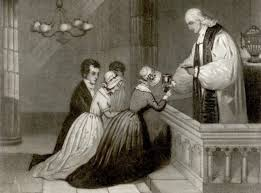
Recently I have spent some time doing home visits for a parishioner who has been facing some medical issues. Because of these issues he isn’t always able to make it to church, which means that he misses on coming to the table for communion. So there we are, sitting together in his room, talking and spending some time together, and then I open my portable communion kit, and we share in some prayers, and then eating and drinking together. And it was in that moment that I realized, “this is what I love to do.”
To be sacramental is to understand that what makes the world what it is, is not the scientific understanding of the molecular and atomic as the building blocks of reality. But to know that it is through those means that God utilizes as the delivery method of His grace. We are not disembodied spiritual beings. We are people who are spiritual, that have physical bodies, and at this current moment, during our lives, they are inseparable.
It is gnostic in tendency to believe that the primary experience of the Christian life is cathartically non-material. That it is based on our feelings, or an inward experience that does not have an outward or physical expression. Yes, there is a moment of regeneration that takes place, when the Spirit of God enters a person and they are now a Christian, a member of Christ’s body on the earth, not dedicated to be an ambassador of the Kingdom. But that moment is recognized and understood historically in Christian theology, to be at baptism, when through an act of God, a person is circumcised not by human hands, and is brought into a new life in Christ. The physical act, not in and of itself, is the act by which God operates His grace and works in us and to us.
Here we now come back to Communion. What are the means that we are strengthened and enabled for Christian life and service? This has always been understood in classical Christianity, and through the magisterial reforms to be through coming to the table. John Wesley says in his sermon The Duty of Constant Communion:
The grace of God given herein confirms to us the pardon of our sins, by enabling us to leave them. As our bodies are strengthened by bread and wine, so are our souls by these tokens of the body and blood of Christ. This is the food of our souls: This gives strength to perform our duty, and leads us on to perfection. If, therefore, we have any regard for the plain command of Christ, if we desire the pardon of our sins, if we wish for strength to believe, to love and obey God, then we should neglect no opportunity of receiving the Lord’s Supper.
It is in this primary sacrament that God gives us His grace, and here we see the importance for us to never neglect participating in it. As I have said before, it is unfortunate that this most essential and important act has taken “second fiddle” so to speak in much of the American Protestant experience. Whether through practical consternation, or theological downplaying, we have taken what seems to be an obvious command of Christ, and neglected it.
Part of John’s strength of words on the position was largely due to the practice of receiving the Sacrament during his lifetime. At that time in England, it was law for all a part of the Church of England to receive at minimum the Eucharist three times a year. And, as often happens with minimums, many people took that as the rule, and only received those three times to maintain their participation and status within society. This lax recognition, seeing the reception of the means of grace as the bare minimum of societal participation would of course as we can guess lead to a low view of the Sacraments. As the Rev. Dr. James Wood of the Nazarene Theological College of Australia would say that the Methodist revival was not just evangelical in nature (centered around the Word of God), but also a sacramental revival, as churches where John would administer the Sacrament would have hundreds in attendance (https://podcasts.apple.com/us/podcast/did-wesley-intend-to-start-a-church-with-joseph-wood/id1569988895?i=1000735543639)
This should lead us to have a slightly modified perspective then, as those in the Wesleyan-Methodist movement in the 21st century, that the heritage we hold is not just the centrality of Scripture and holiness, but as well a recentering of the sacraments as the means by which God’s grace is administered and flow through to His Church. Sadly, the result over the last century in particular in those movements such as my own who have influence from the holiness movements have seen that low church drift towards a secondary importance of things like the Lord’s Supper, seeing them an ancillary to the life of the People of God, rather than primary and central that have co-equal necessity in ministry to the life of followers of Christ.
From the Eucharistic Manual of John & Charles Wesley: This Holy Sacrament is not only a Commemorative Sacrifice, but a Feast conveying blessings to man, nurturing and sustaining his soul ; it is the divinely appointed means of access to God, the channel through which His graces are given. To this Feast all Christians are invited to meet their Saviour, and to feed upon His precious Body and Blood, which once having given for the life of the world , He there offers to be the sustenance of every faithful soul.’ It is a sure instrument of present grace, and the only safe pledge of our everlasting inheritance.’
Do we now see what we have so often missed? John himself it is seen from his diaries and other accounts that he took communion at least 4 times a week. And, a central contention in the early Methodist movement, particularly in America was the necessity of clergy who could administer the Sacraments to a quickly expanding United States, with Methodist as a whole growing right alongside it. Wesley’s Sunday Service of the Methodists was a revised Book of Common Prayer edited for the American Methodists to have worship centered around this administration.
This is often the false dichotomy that we create around the Methodist revival. It was not a rejection of the sacramental or liturgical nature of the Anglican tradition, that was moved aside for a more evangelical or in some cases it would be argued charismatic expression of the Christian faith. Rather, it it through the evangelical and charismatic in which the sacramental and liturgical were brought to life, restored to their full benefit and purpose in being the bulwark of living the faith day to day, mediating the grace of God through the Church as had been described and demonstrated from Acts, the Church Fathers, through to the Reformation and then to the Wesley’s.
So here is where we are called. To a re-centering of the Eucharistic heart of the Church. To see that coming to the table is not just a necessity, or something we do from time to time. But instead is, when done in faith and out of love for God, as the “grand channel” of God’s grace (Sermon 11, “Give Us This Day Our Daily Bread.”). And I think, the longer we think about it, the more we realize that in a tired and disenchanted age, we need the mystery, beauty and strength that God gives to us in His body and blood.
by Joel V Webb | Nov 14, 2025 | Resources
I love Bibles. My wife will tell you that I have too many. Being a pastor, preparing sermons weekly, doing deep dives into themes and Scriptures, studying for fun, or for devotion, it is helpful to have a variety of study resources available to help one look at the variety of aspects of Scripture. The historical context, the theological outworkings, and various perspectives on certain points of theology, or exegesis of the text. Because of the Protestant world’s focus and centrality of Scripture (a good thing), we have developed a plethora of resources from every perspective possible that aids in our study and understanding of God’s Word. That is why I was surprised that after getting my copy and starting to utilize the Ignatius Catholic Study Bible, it has quickly turned into one of my go-to resources for studying the Bible.
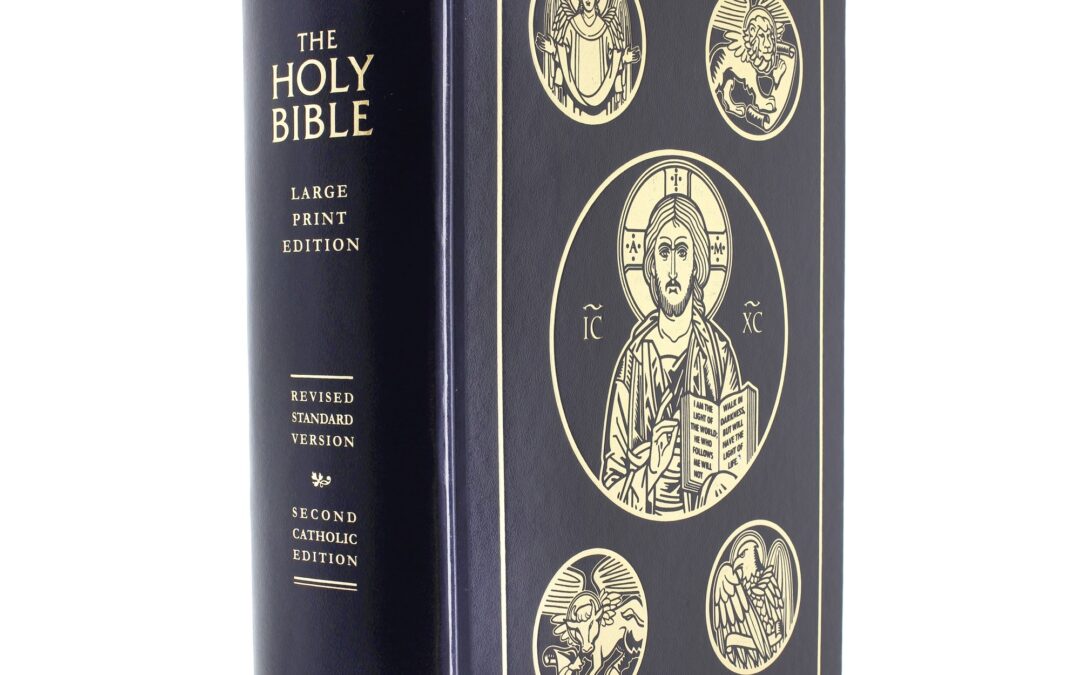
Being a product that has taken 30 years of research, study and compiling, the Ignatius Study Bible is the largest study Bible that I own. It is a massive brick that is beautifully constructed, with traditional icons of Christ, and the four Gospels adorning the front. When you open the pages, it is a beautifully laid out Bible that presents the 2nd Edition of the RSV text, and the commentary notes with clarity, and paper thickness that makes it easy to use.
What makes a Catholic study Bible like the Ignatius so valuable for a Protestant is that it provides a depth of theological engagement that goes beyond what many Protestant study Bibles offer, without requiring agreement with all Catholic doctrines. In Protestant circles, we are rightly focused on Scripture as the final authority, but this focus can sometimes lead to readings that are highly individualistic or narrowly doctrinal. The Ignatius Study Bible, with its grounding in the Church Fathers, historical theology, and careful literary and canonical analysis, invites a Protestant to see Scripture as part of a larger conversation that has spanned centuries. This is not about compromising convictions; it is about enriching understanding.
One clear example of this is in the commentary on the Gospels. Take the Sermon on the Mount in Matthew 5–7. The Ignatius notes consistently trace the ethical and covenantal threads of Jesus’ teaching back through the Old Testament and the interpretations of early Church theologians. A Protestant might not affirm every Catholic sacramental or ecclesial reading of the text, but even critically reading these notes illuminates dimensions of Christ’s teaching that are sometimes underexplored in Protestant study resources. For instance, seeing how the Church Fathers understood mercy, righteousness, and the Beatitudes in the context of covenantal obedience can deepen our grasp of the continuity between the law and the gospel—without requiring a shift toward justification by works.
Similarly, the notes on the Pauline epistles are instructive. Catholics emphasize the Church’s role in Paul’s theology, particularly in letters like Ephesians and 1 Corinthians, often highlighting the communal and sacramental dimensions of faith. While Protestants emphasize justification by faith and the primacy of Christ’s work, encountering the Catholic interpretation can sharpen our own theological understanding. For example, a note discussing Paul’s use of the “mystery of Christ” in Ephesians may highlight a sacramental understanding of the Church, which contrasts with a Protestant view of the Church as primarily a gathering of the faithful. Engaging with that interpretation challenges the reader to think critically about ecclesiology, Christology, and the relationship between covenant and community—without necessarily adopting the Catholic position.
The deuterocanonical books provide another compelling reason for a Protestant to engage with a Catholic study Bible, even if one does not accept these texts as canonical. These books—Wisdom, Sirach, Tobit, Judith, Baruch, and 1–2 Maccabees—offer a rich window into the theological, moral, and spiritual world of Second Temple Judaism, the very context out of which Jesus and the apostles emerged. Ignoring them risks missing the cultural, religious, and ethical currents that shaped the New Testament writers and the early Church.
Even when read critically, these books illuminate key themes that run throughout the Bible. For example, the Wisdom of Solomon speaks of God’s justice, providence, and care for the righteous. Paul alludes to this when he contrasts the righteousness of the faithful with the folly of the ungodly (cf. Romans 1:18–32), and Hebrews draws on similar themes of wisdom and the reward of the faithful (Hebrews 1:3; 11:35). Sirach, with its emphasis on the fear of the Lord as the beginning of wisdom, resonates in passages like James 3:13–18, which contrasts earthly and heavenly wisdom. Tobit’s depiction of divine guidance and angelic intervention finds echo in the angelic visitations in Luke and the providential patterns of God’s care in Acts. Judith’s courage and reliance on God to deliver Israel prefigure themes in the Gospels and in Hebrews, where faith and God’s deliverance are central.
Even more explicitly, several New Testament authors quote or allude directly to deuterocanonical texts. For instance, Jude 1:14–15 cites 1 Enoch, a related intertestamental work, showing early Jewish engagement with literature outside the Hebrew canon. Romans 1:17 and Galatians 3:11 reflect Habakkuk 2:4, a text that resonates closely with Wisdom traditions echoed in Sirach and Wisdom of Solomon. 2 Maccabees, which recounts martyrdom and prayer for the dead (2 Maccabees 12:44–45), provides historical context for Paul’s discussions of resurrection and the body of Christ, and helps explain why early Christians, even within Jewish contexts, considered the afterlife and God’s justice so carefully. While Protestants may not affirm the doctrinal conclusions drawn from these texts, understanding them clarifies the theological milieu in which Jesus and the apostles ministered.
Critically engaging these books enriches the Protestant reading of Scripture without requiring assent to Catholic canon or doctrine. They reveal the worldview, ethical reasoning, and devotional life of God’s covenant people in the centuries leading up to Christ. They help answer questions such as: How did Second Temple Jews understand God’s justice, mercy, and covenant faithfulness? How did these understandings shape the New Testament authors’ perspectives? How does knowing these texts deepen our grasp of typology, covenant continuity, and the moral patterns God worked in history?
In short, even without assigning canonical authority, the deuterocanonical books are invaluable for historical, theological, and exegetical insight. They show that Scripture did not arise in a vacuum but within a living, reflective, and morally attuned community. For a Protestant, engaging with these books critically is not a compromise of faith; it is a means of seeing the New Testament—and God’s redemptive plan—from a fuller, richer perspective.
Even areas of explicit theological disagreement can be instructive. The Ignatius commentary on the Eucharist, for instance, clearly articulates the Catholic understanding of the real presence and sacrificial character of the Mass. A Protestant may reject transubstantiation, but reading the reasoning behind the doctrine offers a chance to engage Scripture and tradition from a perspective that is historically coherent and biblically argued. Similarly, notes on Marian devotion, purgatory, or apostolic succession highlight the historical development of doctrines we do not affirm. Engaging these critically strengthens one’s own theological convictions and equips one to articulate them clearly, especially in ecumenical or pastoral contexts.
Moreover, the Ignatius commentary often emphasizes typology and covenantal continuity in Scripture. Passages like Genesis 22, the binding of Isaac, or the sacrificial system in Leviticus are connected to Christ in ways that go beyond the typical Reformed footnotes. A Protestant can appreciate the theological insight even while disagreeing with the liturgical or sacramental applications. This helps in preaching, teaching, and pastoral counseling, as it allows for a richer understanding of God’s unfolding plan and the interconnections of the biblical narrative.
In practice, using a Catholic study Bible encourages a Protestant to see Scripture in a more holistic and historically grounded way. It provides tools for understanding the interpretive frameworks of early Christianity, the historical and literary contexts of the text, and the ways in which doctrines have developed. It reminds us that theology is not just about abstract ideas, but about how communities of faith over centuries have grappled with God’s revelation.
In short, a Protestant using the Ignatius Study Bible gains a rigorous theological resource, a bridge to the broader Christian tradition, and a framework for understanding, critiquing, and applying Scripture in a historically informed way. The disagreements—the Eucharist, Marian theology, purgatory, and ecclesial authority—do not diminish its value; they sharpen discernment and encourage a more precise articulation of one’s own convictions. It is a tool for deepening understanding, fostering critical engagement with tradition, and cultivating a theological imagination that is both historically aware and faithfully Protestant.

by Joel V Webb | Nov 12, 2025 | Orthodoxy Matters
Over my lifetime, I’ve seen a massive shift in how our culture engages with ideas we disagree with. Growing up, disagreement was an opportunity to talk — to debate, discuss, and think through differences, strategies, outcomes, and intentions.
Now, that kind of dialogue feels almost impossible.
One of the biggest reasons for this shift is that we’ve moved from debating to diagnosing.
Instead of hearing another person’s argument at face value and engaging with what they’re actually saying, we jump to labeling or diagnosing what’s wrong with them.
When that happens, conversation stops. What could have been an exchange of ideas turns into an exchange of accusations.
Because of this, many pastors — who truly want to love and care for people — have lost the ability or the desire to say hard truths. The threat of being labeled or “canceled” looms large, so the easier path is to soften the message and avoid anything that might offend.
Even more troubling is how our world has redefined love into something completely unbiblical.
The modern assumption goes like this: If you love someone, you’ll never say anything that might hurt or challenge them.
You’ll “meet them where they are” and never call them to repentance or transformation.
It sounds compassionate — but it isn’t the kind of love the Bible calls us to. As ambassadors of the Kingdom of God, we are called to be salt and light. And sometimes, the most loving thing we can do is say the hard thing.
This becomes especially clear in the conversations surrounding gender and sexuality. The Church often swings between two extremes: full affirmation, welcoming any behavior or lifestyle without question, or harsh rejection, coming across as angry or hateful.
But both miss the heart of biblical love. They are two sides of the same coin — a coin that has lost the image of what love truly is.
To love in the biblical sense is to will and intend the best for another person.
Real love is selfless. It doesn’t prioritize our comfort or another’s feelings above truth. It seeks what is actually best for the person being loved.
As a father, I understand this better than ever.
My one-year-old son doesn’t always like the things I have to do for his good. Sometimes he cries, but I do it anyway — not because I’m cruel, but because I love him. Love that only comforts but never corrects isn’t love at all.
Yet this is exactly what many of us in the Church have forgotten. We’ve mistaken love for acceptance — for making people feel good — rather than seeing it as the pursuit of what’s truly best for them.
That tension becomes painfully real when someone we care about — a friend, a child, a sibling — embraces an identity or lifestyle that contradicts God’s Word.
For some, that moment hardens them into hostility.
For others, it softens their convictions and pulls them toward affirmation.
But followers of Jesus are called to live in the tension.
We know that cultural ideas about gender and sexuality contradict God’s design in creation and Scripture.
And yet we also know that every single one of us is broken by sin and in need of the same redeeming and transforming grace of God.
The Gospel doesn’t just forgive us — it remakes us.
Jesus lived this tension perfectly. He spent time with the outcasts and those on the margins, yet He always called them to repentance and offered transformation — the kind of transformation only He can bring.
This is the calling of the Church today:
To love as Jesus loved — full of compassion, full of truth. To call people to repentance that leads to healing and holiness. If we truly love someone, we will tell them the truth — not to wound, but to heal.
If we withhold truth out of fear, we don’t love them.
But if we speak truth without kindness and mercy, we don’t love them either.
Love without truth isn’t love.
Truth without love isn’t Christlike.
As followers of Jesus, we are called to be salt and light in a world that desperately needs both.
Salt preserves and adds flavor — it stands out.
Light reveals what’s hidden and shows the way forward.
To be salt and light means to be distinct and to guide.
We don’t blend in, but we also don’t blind others with harsh brightness. We shine with the warmth and clarity of Christ.
So, in that spirit, let us go — to love and serve the Lord.
To be people of both truth and love.
To speak hard words with soft hearts.
To live as reflections of Jesus Christ, whose perfect love always tells the truth, and whose truth always loves.

by Joel V Webb | Nov 10, 2025 | Theology & Practice
One of the many things that I have been hearing in a variety of church circles the last couple years is the question, “what makes our church welcoming to an outsider?” And I believe this question comes from a good place, because we want to see people encounter Jesus and have their lives transformed. What this has often led to is taking the how we do our church services, and adapt them to what we think will be welcoming. The question that always remains is, “does this actually work”. While I have my own thoughts (which we will get to shortly), a few months ago I stumbled across a Youtube channel that really answers that question; “what does it look like when an atheist visits church?”
Go into Youtube and type in “atheist church audit”, and what will immediately pop up is the channel Heliocentric, where the host Jared, who is an atheist, goes and visits a wide range of churches. He has been to Evangelical, Baptist, Roman Catholic, Orthodox, Pentecostal, and has even made his way into Mormon and Jehovah Witness’ meetings. While his videos do at times use some foul language, the insights that he brings to what it is like to visit these churches is invaluable. While Jared is an atheist, he says very regularly that he may not believe in God, but he loves religion. And here’s where there’s a fascinating turn of events, Jared was at one point a Christian in ministry.
Coming from a charismatic background, Jared was at one point even in ministry through Michael Brown’s Fire School of Ministry. Through several videos, Jared talks about his deconstruction process, and how unhelpful and unhealthy tendencies and practices eventually led to his deconstruction. (I encourage you to watch those videos, they are very eyeopening to help us see those unhealthy things that have led so many people from my generation to deconstruct their faith). And yet, while no longer following Jesus, believing that He is real, Jared still has a love for religion, what it does, both in the positive and negative. And it is this mindset that he brings to every church he visits. He looks at the things that we often don’t think about. What does everything look like to someone who does not believe it? And this is honestly helpful.
What I found most fascinating in Jared’s videos is that, over time, he began to recognize that not all churches feel the same — and that the ones he personally found most meaningful weren’t the big, flashy, “seeker-friendly” services that we often assume outsiders will prefer. Quite the opposite. Time and again, Jared expresses appreciation for smaller, more traditional, even “old-fashioned” services. Why? Because they feel real.
In his reviews, the large, concert-style churches often left him feeling like he had walked into a production; polished, but impersonal. The sermons could sound more like motivational talks than sacred moments. In contrast, when Jared walked into a small liturgical church, or a traditional congregation with a modest sanctuary and a prayerful tone, he consistently described a sense of peace, reverence, and honesty. Even though he doesn’t share the faith, he notices when people believe what they’re doing matters. The authenticity of worship, not the size of the crowd or the quality of the lighting, is what reaches him.
He often notes that in traditional services, there is a sense of “something ancient” happening, a feeling that what’s taking place isn’t merely for the people in the room, but is connected to generations before. When he steps into an Orthodox liturgy, a Catholic Mass, or even a small Anglican or Lutheran parish, he finds himself respecting the intentionality and gravity of the moment. He says things like, “I don’t believe any of this, but I can tell these people do.” That statement might seem small, but it’s incredibly revealing. Authentic faith doesn’t need to be marketed; it needs to be embodied.
What Jared finds helpful, and what many disenchanted seekers might also find, is not entertainment but encounter. When a church service is smaller, slower, and more reverent, it allows room for reflection. It allows the beauty of the prayers, Scripture, and sacraments to speak for themselves. There’s no pressure to “perform,” only to participate. Ironically, the services least designed to impress outsiders often end up being the most welcoming, precisely because they invite people into something deeper than themselves.
Jared’s experience raises a convicting question for us as Christians: Have we tried so hard to make outsiders comfortable that we’ve stripped away the very mystery that might draw them in? Perhaps what truly welcomes someone isn’t familiarity, but sincerity, not entertainment, but the palpable sense that God is among His people.
If we take Jared’s experiences seriously, they should cause us to pause and reevaluate how we think about being “welcoming.” Many churches, often with good intentions, have tried to remove anything that might seem strange or old-fashioned to a first-time visitor. We shorten prayers, simplify rituals, minimize silence, and replace hymns with songs that sound like the radio. We trade mystery for familiarity, hoping that if people feel at home culturally, they’ll be more open spiritually. But as Jared’s perspective shows, the opposite can often be true.
For someone like him, who doesn’t share the faith but is genuinely curious, it’s not the slick presentation or “relatable” atmosphere that stands out. It’s the weight of something sacred. It’s walking into a small chapel where candles are burning, where the Scriptures are read slowly and reverently, where prayers are ancient yet alive, and where people kneel and stand as though what’s happening actually matters. That difference communicates more than any marketing strategy could. It says, “This isn’t just our weekly gathering, this is holy ground.”
This is not to say that contemporary or creative expressions of worship have no place. But what Jared’s “atheist audits” reveal is that authenticity cannot be fabricated. The most powerful thing we can do to welcome outsiders may be to worship God as if He is truly present, because He is. The church’s task is not to mirror the world, but to reveal a Kingdom that is not of this world.
When we worship with reverence, when our liturgies are filled with Scripture and sacrament, when our communities are small enough for names to be known and prayers to be shared, people like Jared, even without belief, can sense that something real is taking place. And for those quietly searching, that sense of reality might just be the first whisper of grace.
Perhaps the best thing we can offer our modern, skeptical neighbors isn’t a show that looks like everything else, but a glimpse of something wholly other, something ancient, beautiful, and true. The very things we fear might push people away might be what draws them home.
For pastors and worship leaders, Jared’s reflections offer a kind of mirror, an unexpected gift from outside the household of faith. They remind us that people are not looking for another version of what the world already offers; they are searching for something real, something that whispers of eternity. Our call is not to compete with entertainment or comfort, but to cultivate holiness and presence.
If the goal of worship is to help people encounter God, then our services should be less about reducing the strangeness of the sacred and more about inviting people into it. The smells of candles, the cadence of Scripture, the rhythm of prayer, the taste of bread and wine, these are not barriers to newcomers, they are bridges. They engage the whole person, body and soul, in the mystery of grace.
So perhaps the question is not, “How do we make church more welcoming?” but rather, “How do we help people recognize that they are being welcomed into something holy?” The small, traditional, reverent service may not impress the crowd, but it might just open a heart.
On another note, Jared’s story of deconstruction, while painful to hear, is also an opportunity for the Church to pause and reflect, not to compromise the Gospel, but to examine how we have lived it. His journey reminds us that many who leave the faith are not rejecting Christ Himself, but distorted or shallow versions of Him that they encountered in unhealthy church cultures. When we listen to stories like his with humility, we are not abandoning conviction; we are allowing the light of the Gospel to expose where our witness has fallen short. Deconstruction, in that sense, can become a refining fire, a moment to return to the simplicity and beauty of the faith “once delivered to the saints,” grounded not in hype or manipulation, but in the person of Jesus Christ, the Truth who still holds out His wounded hands to a weary world.
Because in the end, what transforms people is not style, but substance, not performance, but Presence. And when that Presence is felt, even an atheist can walk away saying, “I don’t believe in this… but I can tell they do.”
by Joel V Webb | Nov 5, 2025 | Orthodoxy Matters
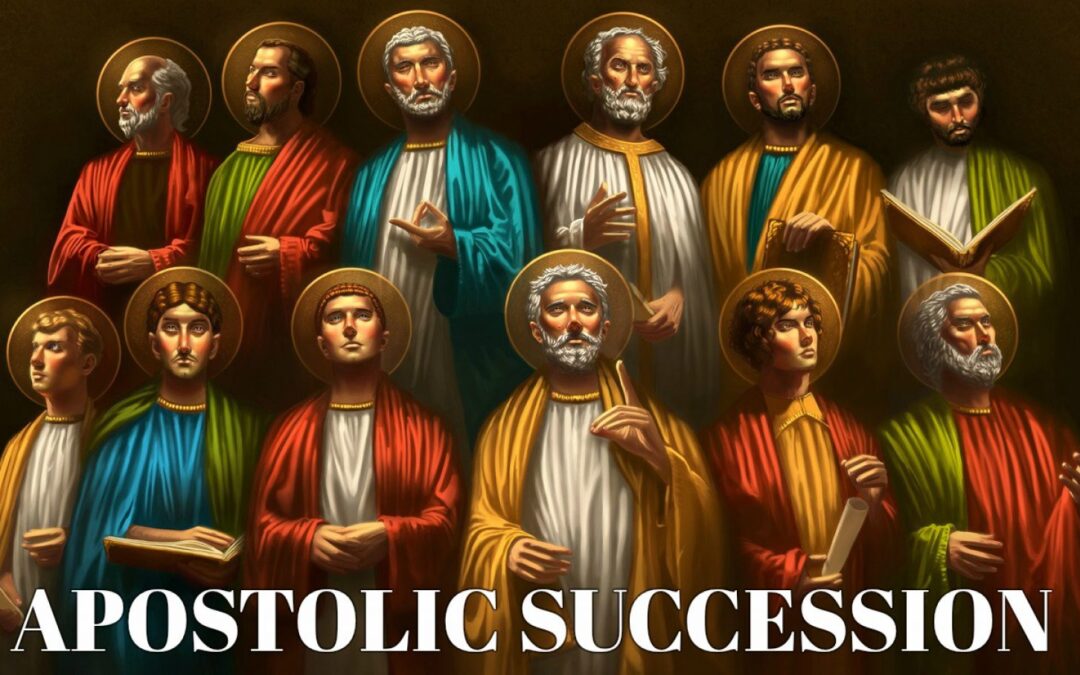
When talking about historic theology, and the development of the Church throughout the ages, one of those topics that is bound to come up, particularly when talking to Roman Catholic or Orthodox brothers & sisters is the idea of Apostolic succession. According to classically define Apostolic succession, in order for a Church, holy orders, and thus sacraments to be valid, they must be administered by clergy, who were ordained by valid bishops, who have a direct line, similar to that of a family tree all the way back to the original 12 Apostles. For them, this means that there is an unbroken line of authority and teaching that has been passed down since the founding of the Church to today.
This is certainly fascinating history to dig into and examine; like this list from Orthodox Wiki that shows the entire line of everyone who has been the Patriarch of Antioch since St. Peter the Apostle would have instituted or planted that particular church. (https://orthodoxwiki.org/List_of_Patriarchs_of_Antioch) While Protestants at first glance might glance this idea off as insignificant or unimportant I think we need to take a moment of pause and to consider the importance of this. We have brothers and sisters in Christ who can trace their church leadership, by name and in great detail back to the 12 apostles. That is amazing in my mind, and a blessing that there has been such continuity in one of the original churches we have listed in the New Testament.
But this is where we hit a snag in the discussion. As a Protestant, according to the Catholic and Orthodox understanding of Apostolic Succession, I am not a part of a church with apostolic succession, and thus do not have valid ordination and valid sacraments. While I am considered a brother in Christ, I do not carry direct unbroken succession since the apostles, and thus am not apart of the One True Church that was founded by Jesus Himself.
This has looked differently throughout Church history since the reformation. Until the late 1800’s, Rome recognized Anglican ordination as valid, until a Papal Bull from Leo XIII axed their validity in Catholic canon law. But generally, anyone who is a theological descendant from the Reformation is not considered valid by the historic churches of Rome and the East.
The first question we might ask, “is this even important?” Certainly to those who descend from the radical reformation, with anabaptist tendencies the answer is likely no. Usually the argument goes that since the church fell away not long after the death of the apostles, the importance is that the true message of the Gospel is preached, and it is on that fact alone that makes a valid church. I think that this take, while containing truth goes too far. While ultimately the validity of the Church comes from it’s faithful transmission of the Gospel, we mustn’t be too quick to dismiss the importance of the institution in of itself.
It’s tempting, especially in our modern, democratic age, to think of the Church as purely a spiritual community, something fluid, dynamic, invisible, and inwardly held together by faith alone. But Scripture presents a far more balanced picture. The Church is both an organism and an institution, both mystical and visible. Paul calls the Church “the household of God” and “the pillar and foundation of the truth” (1 Tim. 3:15). The apostles did not just preach; they ordained elders, appointed deacons, and established tangible order in every city (Acts 14:23, Titus 1:5).
So when the ancient churches talk about apostolic succession, they are not wrong to emphasize continuity and order. God has always worked through tangible structures, through covenant, community, and leadership. The danger comes when we treat the structure as the substance, the line of succession as the guarantee of grace.
As Protestants, we often define the Church not primarily through institutional continuity but through fidelity to the apostolic Gospel—the faith once delivered to the saints (Jude 3). Yet, this doesn’t mean the visible and institutional Church is unimportant or something to shrug off. The Reformers didn’t reject the idea of structure—they rejected corruption and spiritual decay within it. They weren’t trying to destroy the Church’s continuity but to preserve its soul.
Richard Hooker, one of the great Anglican theologians, once argued that succession is only truly apostolic when it’s joined to apostolic doctrine. The laying on of hands, the continuity of ordination—these are good, meaningful signs, but they have to carry the content of the faith with them. John Wesley took a similar approach. Though he was never consecrated by a bishop in the ancient line, he understood himself and his Methodist preachers to be ministers in the apostolic spirit continuing the mission of the apostles to preach repentance and the forgiveness of sins. Though, interestingly enough there is an unverified legend that an Eastern Orthodox Bishop did consecrate Wesley as a bishop, thus potentially giving him valid Apostolic Succession. This is historically unverified, but does make an interesting thought experiment, that those in the Methodist tradition do have a potentially valid line of succession through Wesley himself to the Apostolic era. That being said, generally it is agreed that Wesley’s form of “succession” was not institutional, but spiritually rooted in faithfulness to the apostolic message rather than in the exact tracing of ordaining hands.
So when we talk about apostolic succession, we might say that yes, there’s a visible succession—an institutional passing down of ordination, authority, and office—and that’s important. It provides order, accountability, and continuity in teaching. But there’s also a spiritual succession—a faithful transmission of the Gospel through Word and Sacrament, empowered by the Spirit. Ideally, both should work together.
The institutional form protects the faith from fragmentation, while the spiritual vitality keeps the institution from turning into a museum piece. We need both: structure and Spirit, form and fire.
If there is hope for reconciliation or at least mutual understanding between Protestants, Catholics, and Orthodox believers, it lies in recognizing that both the institutional and the spiritual aspects of apostolic succession are necessary.
The historic churches remind us that the Gospel does not exist in a vacuum; it is always embodied, always transmitted through real people in real communities. Protestants remind the wider Church that structures exist to serve the Gospel, not the other way around. Both perspectives, when purified of pride, reveal vital truths.
There is room for dialogue and even shared recognition here. Protestants might affirm that the historic episcopate, rightly understood, is a gift for maintaining order and unity, a visible sign of the Church’s rootedness. Catholics and Orthodox might, in turn, acknowledge that the Spirit of Christ is not bound to lineage alone, but continues to call and empower ministers who faithfully preach the apostolic faith even outside canonical boundaries.
Perhaps the way forward is not to erase differences, but to listen deeply: to see in one another a shared desire to remain faithful to what has been handed down, and to steward it well for future generations.
A truly catholic (small “c”) vision of the Church would see apostolic succession as both faith and form, a faith faithfully handed down, through an order faithfully preserved. The lines of succession that Rome and the East maintain bear witness to the Church’s visible continuity, while the evangelical insistence on the primacy of the Gospel bears witness to her living continuity. Both, in their own way, protect what Christ entrusted to His Church.
So perhaps the middle way is to honor both truths: to recognize and celebrate the historic continuity of the ancient churches, while also affirming that the living power of the Gospel cannot be contained by institutional boundaries. The Spirit is not bound by human succession, and yet He works through the visible Church to maintain order, teach truth, and transmit grace.
We may not be able to trace our ordinations back to Peter or Paul, but we can trace our message, our Scriptures, and our sacraments to the same source, Jesus Christ, the cornerstone. The continuity of faith, hope, and love across the ages is the truest form of apostolic succession.
In the end, apostolic succession, whether understood institutionally or spiritually is meant to remind us of this: that the Church does not invent itself anew in every generation. We are stewards of something we did not create, heirs of a faith that has been handed down, and participants in a mission that began with twelve ordinary men and continues still through us today.