There is a lot of buzz in our modern world talking about discipleship. Everywhere you turn there seems to be a new video series, course, or initiative that promises to be the next big thing in discipling the people in your church! And, as often happens with this kind of stuff, while it may be very good, it certainly doesn’t do all that it has promised. But why is this the case? Firstly, it is not about the intention or desire of those wishing to disciple or create this content. Everyone involved has a serious and deep desire to see Jesus transform people’s lives, and to make them disciple making members of God’s Kingdom. The good intentions and love of Christ are not what is questionable here.
I believe more fundamentally in the modern evangelical space, we have somewhat forgotten what discipleship is all about. So many of the pipelines or pathways of discipleship I hear about are all looking to keep people coming back every week, get involved in volunteering, inviting other people to church, and Lord willing to start giving. None of these actions are bad, and we certainly want to see them happen. But, these are not the point of discipleship.
The theological capstone of being a Methodist is the idea of Entire Sanctification, or Perfect Love. Simply put, the work of the Holy Spirit has done its work (to the extent possible in our mortal human lives this side of eternity), where our love has been transformed, and while we are not perfect in performance, our love is wholly set on Christ. Certainly sounds like a lofty goal, but John Wesley and his theological descendants certainly believe it is possible. Where many Methodists stop is looking back to where Wesley was inspired to understand this as the goal of the Christian life, and that comes from the Eastern Orthodox position of theosis. Similar in end, theosis, or deification, where the believer achieves unification or the likeness of God.
Now, this might seem like too much for some, and I certainly get it. But if we look at the Biblical data, we see that ultimately the goal of the Christian life is to look like Jesus. To be His image bearer. While sin entered the world and broke us, Christ in what He has done has paved the way for us to do what we were originally created to do: embody His character and co-create within His good creation.
But if this is the actual goal of the Christian life, how have we gotten to where we are today? Well, in my estimation, much of our discipleship material is decidedly more informational and training based than it is anything else. Fundamentally what we have forgotten is the Christian faith is not a set of ideas you are convinced of and believe. It is a way of life that you embody and engage the world with. It has been a product of post-enlightenment philosophy that has relegated personal belief and faith to a set of ideas, and not an all-encompassing way of life.
When we look at the Old Testament, through to the first centuries of the Church we see not people changing where they go on weekends, but a fundamentally different way of life. And in losing this way of thinking, we have forgotten how to do discipleship. Not because we don’t love Christ, or love people. But because we are limiting something that is supposed to have full reign of our entire being, and turned it into a training program.
So all this being said, what does ancient discipleship look like? It can be boiled down to two primary pillars. Spiritual Disciplines, and the Means of Grace.
Richard Foster describes spiritual disciplines as practices that help us draw closer to Christ and experience spiritual freedom, not as ends in themselves. They are the actions that through encountering Christ in the build up our character and relationship with Christ to know Him more. Practices such as prayer, reading, fasting, silence, giving, worship, celebration and more. I highly encourage people to read Foster’s book, Celebration of Discipline. This classic lays out the forms and flow of the main Christian disciples that make up the Christian way of life.
More than just building up our lives, spiritual disciplines are also essential because they ultimately form what we love. Through repeated and intentional action, doing these things form and shape our minds and lives in a certain way. We are creatures of habit, and when we get set in a way of doing things, it is part of what makes us who we are. So by daily participating in spiritual disciples, we encounter Christ, and we also shape our lives around Him.
Means of Grace as traditionally understood in the Christian faith, and in Methodism are those ways by which God imparts His grace to the believer. Grace is easily understood often as two different things. Unmerited grace and also divine enablement. It is the latter especially that is important here. Because we know as humans we are unable to do what we are called to as followers of Christ in our own strength (or at least I know I can’t!), there are certain ways Christ has promised as channels through which the Holy Spirit endows and bestows His strength and enablement.
With this the first question is, “can’t the Holy Spirit do that without a specific physical means?” Sure He can. But what the Christian faith has always believed is that stuff matters. We are not totally disembodied, and our encounters with God are not just subjective, internal experiences where we meet Him. We are physical beings as much as we are spiritual beings. We cannot get away from stuff, and to disconnect the two is an unfortunate recent trend in particularly the Evangelical world that smacks of a tacit gnosticism that disdains the physical.
It does not mean that God cannot and does not meet us in times of prayer, singing, silence or in hearing the Word. He certainly does do all of those things! But we can never forget that He has also, through His Church, ordained and established various physical means that we know by faith we encounter Him and receive His grace.
Of course there are the Sacraments (which we will talk about in a moment). But there are also other means of grace that are not Sacraments that people have seen how Christ endows His enablement to His followers. Mattox, in his book Responsible Grace, has quite a list of those non-Sacraments means of grace that Wesley recognized. In more traditional expressions of the Church these are called sacramentals. Other means from the Sacraments that grace is given.
The two Sacraments the Protestant world recognizes (I talk about them HERE) are those of Baptism and the Eucharist (Communion/the Lord’s Supper). In Baptism, the initiatory Sacrament there is grace conveyed to the believer as Christ, not the baptized is the primary actor and agent (See St. Paul in Colossians speak about Baptism). The specific effects of the grace conveyed at Baptism are discussed, debated and understood differently. John Wesley spoke about sinning away his baptism by the age of 10 or 12. But what is undisputed is that Baptism brings the person into the Church, and they are given grace, whether they are an infant or a newly converted adult.
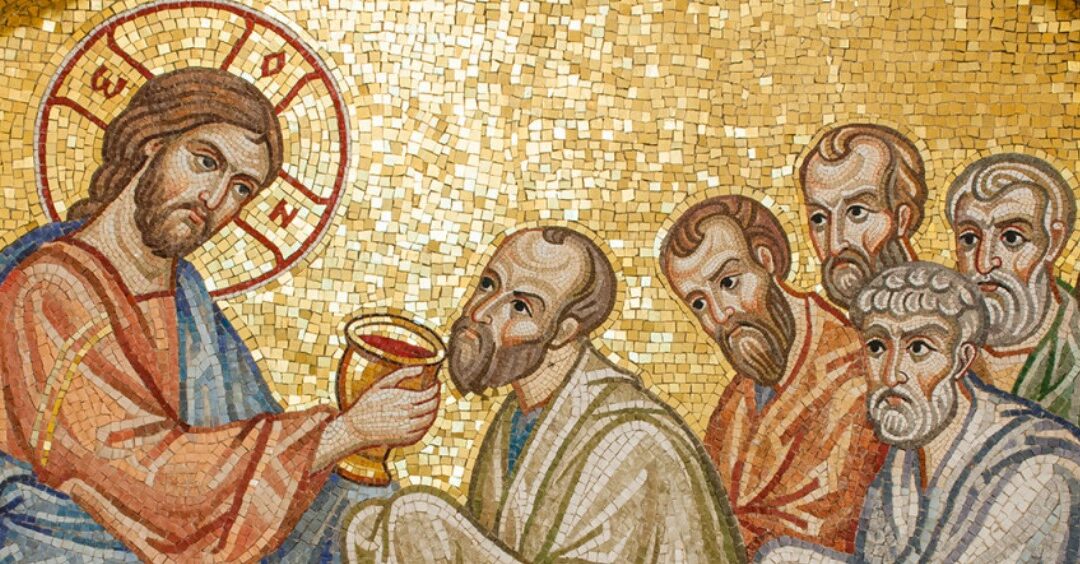
The second of course is the Table. The pinnacle and high point of Christian worship universally for the first 1500 years of the faith, and still for much of the Church in our day. Celebrating Communion is not just a remembrance of what Christ has done, but is also a reception of the benefits of His work on the cross. It is here that we encounter Jesus as both the host of the feast, and as the meal itself. Just as the consumption of the Passover Lamb was an essential part of being saved, likewise in the consuming of the perfect Paschal Lamb, we too receive grace and our salvation as we eat and drink in faith.
It is these two things, the spiritual disciplines and the means of grace that a Christian is discipled. The disciplines are like a lattice that is built. It is a structure or a framework of the Christian life. And then through the means of grace, that life grows, is nourished and eventually fruit is produced. What distinguishes this understanding of discipleship from more modern forms we often see is that this is life encompassing, not just for a time on Sunday and sometime else during the week.
The spiritual disciples are elements we should build our days around. Morning, Midday, Evening & Compline prayer as the traditional offices of the Church provide an opportunity to keep our hearts and minds on the goodness of God, and our ever need for His help. Regular reading and studying of Scripture keep us in constant understanding of the person of Jesus Christ that Holy Scripture points us to. Fasting empties us of our physical strength so that we can better rely on His strength. These, and the other spiritual disciplines construct and formulate our lives around a life knowing it is for God, and God alone that we live. Rather than the modern secular practice of fitting our faith in our life as another thing, classic Christian discipleship recognizes life is truly lived the other way around. We construct our lives around the truth of the world as explained and lived out in the Christian faith.
Then, as that structure is being built we are then nourished by the means of grace. Yes, the spiritual disciples in and of themselves are also offered as means by which Christ, through the Holy Spirit gives His graces to us, and then it is with these others, especially the Lord’s Table that we are nourished. If the spiritual disciples are common means of grace, the Lord’s Supper is as John Wesly called it “the grand channel of God’s grace.” It is not just one among many of the ways God gives His grace to us, but is the primary ordained way in which we encounter the Spirit and are enabled and empowered for the Christian life.
Sure, other kinds of studies, small groups and opportunities for learning the nuts and bolts of the faith are essential and important, but they must be done in conjunction and subject to the work of how the Church has always discipled new believers. Not just by being informational, but first transformational through spiritual disciplines and the means of grace, and then build up with information.