I think all of us are familiar with the words of Christ from Matthew 7:20, “Thus, by their fruit you will recognize them.” We all understand what is being presented, what we produce tells us what we are all about. This too can be said about the kind of disciple that the Church produces. A great example of this is to just look at someone’s pet. So often, the type of person someone is can be seen in their pet. How are they trained, are they skittish, aggressive, shy etc…
My hope is that this is all of our goals in life. The purpose of the Christian life is to be the image of God. To do what we were created to do and look like our creator. In the Eastern Orthodox tradition this theology goes under the name of theosis, “becoming like God”, or “deification.” In my own Methodist tradition we call this Entire Sanctification, or Perfect Love, where the love of Christ is made so thoroughly in us that while we are not perfect in our performance (still being a fallible human), our love, intention or bent has been wholly shaped towards Christ.
This goal, I believe, is the fullness of the Christian life. Not some shallow “fire insurance” joke, where we just skip outta going to hell, but the actual purpose or telos of our creation, to be like the one who made us and loves us. And, by extension of all of this, I believe that this is the mission of the Church. That above everything else is to produce saints—those that look like Christ.
A particular practice that I have picked up last year, when talking about certain people from the Bible and Church history, is to use the honorific “Saint” in front of their name. This title recognizes how that person imaged Christ through thick or thin, and set an example for all of us as to how to follow Jesus no matter what. The fruit of their lives is that they are remembered and known as a saint, one who became like Christ.
The Church is not called to produce leaders as its primary end, but saints, and that distinction shapes everything about how we do ministry.
But what happens when we in the Church forget what we are about? What do we forget, whether in language or action, our purpose and mission? Sure, we know we are to produce something, but what? In recent months I have been confronted with the tacit proposition that our goal is to produce leaders, and it is then through those leaders who produce disciples. For those who have the vision to produce leaders who then make other leaders and disciples, I have no question of their motives. They love Christ and love His Church, and have the best of intentions to grow the Kingdom. They want to see a next generation embrace following Christ and spreading the Gospel to a world in desperate need of His healing.
Where the disconnect comes in is how we go about doing it. There’s a lesson for us to be learned in our day. The methods of leadership development, coaching, advertising and structuring look attractive. They work in the business world, shouldn’t they work in the Church? But the question we need to ask is not, “do they work”, but rather, “is this what we should be doing?”
I spent time in the real estate world in the area of development. I’ve attended countless leadership development and coaching sessions, conferences and seminars all about building your sphere of influence, inspirational ability, sales pipeline, talking points and the like. Those things work, and they are good when you are trying to sell something. These events are crafted for the sake of moving people towards the skills they need to do their work well. And it does work. But is it for us in the Church?
We in the Church are in a completely different sort of work. We don’t sell. Through Christ we shepherd immortal souls. We are not out there trying to invigorate people to get excited about the next initiative. We are called to faithfully preach the Word, and administer the sacraments, knowing that through the power of the Holy Spirit we will be transformed to look like Christ.
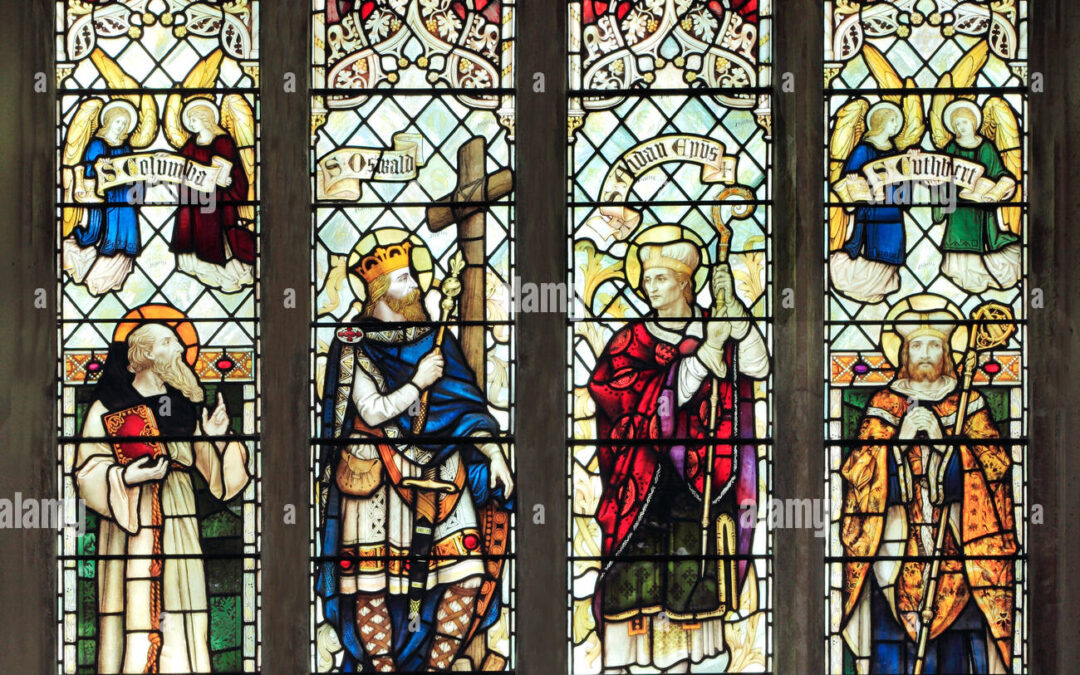
During the height of Norse pagan conquest of Anglo-Saxon England, it was the missionary work out of Iona and Lindisfarne on Holy Island from faithful servants like St. Columba and St. Aidan that saw the ravaged land of England and boldly took the Gospel, slowly but surely reconquering the land for Christ as it had once been. These missionary monks were from Ireland, and had been trained by those influenced by St. Patrick, who himself had been from Roman Britain and went and evangelized and converted Ireland for the Gospel.
The entire time, their work was something totally unlike that of how those around them were conquering. While the pagan Vikings conquered England by the sword, these monks emulated Christ and boldly proclaimed the Gospel, even if it meant their death.
It is totally understandable. The Western world is tough right now for the Church, especially denominations. And I am not in a position of leadership outside of my local parish, so I don’t fully understand the perspective or the pressures. But what I do know is the difference in the work we are doing. Yes, we need structures and processes. We need to plan and strategize. But how we in the Church go about that is not acting as if we are dealing with a business that sells widgets and gadgets. Our task is good stewardship in what we have been blessed with. But the product of our work is not leaders or initiatives. It is saints.
How we go about the work of the Kingdom matters—not just that we are doing the work. Sure, we can dress up business models, leadership pipelines and development, growth initiatives and the like. And they might work for a time. We might see raging success and things happen. But in the end, is that work producing results…or is it producing saints? I firmly believe the Church is called to multiply and grow. Yet, the question sits in my mind: what are we multiplying, and how are we doing it?
Leadership is not the telos of the Church; sainthood is. Leaders may be necessary, even beneficial, but they are not the end for which the Body of Christ exists. The Church is not called to produce influence, scale, or organizational success, but to form people who bear the image of Christ in holiness and love. Leadership, rightly understood, emerges as a byproduct of sanctification; those conformed to Christ will often guide and shepherd others. But when leadership itself becomes the goal, we risk substituting competence for communion and effectiveness for faithfulness. The true measure of the Church is not how many leaders it raises up, but whether it is forming saints whose lives radiate the life of God.
When we forget to see the ends to which we are called, we can get lost in the means of going about it. When we get sidetracked by the methods and structures of how someone else operates and try to import it into our world, we start losing the plot to why we even exist. Sure, St. Aidan and St. Columba could have inspired the reconquest of England by Christians. But they knew that wasn’t their way of going about things. They embraced that their task was souls.
We are called to that same task today.