We all know that shifting uncomfortable feeling when someone in the
room goes just a bit too far with a joke. That moment of silence when
the tension can be cut with knife, and everyone is darting their eyes
around, looking for some kinds of out.
If there’s one part of the Bible that makes most evangelical
Christians uncomfortable its the imprecatory psalms in the book of
Psalms. To imprecate means to invoke judgment, calamity, or curses on
ones enemy. And sometimes the language can be really stark. An
example of this is Ps. 69:24, “Pour out your wrath on them; let
your fierce anger overtake them.” Wow, that seems pretty harsh for
a God of love!.
This is where we
really need to be careful. A knee-jerk reaction may be to say, “Well,
the God of the Old Testament is just like that, the one we see in the
Gospels is different!” That understanding is Marcionism, which was
a heresy in the early church that has been dealt with. God is the
same, yesterday, today and forever.
So how do we
reconcile or understand this?
One of the issues
that really flattens how we seek to understand Scripture is our
understanding of the spiritual world, and the realities of the
spiritual realm. Most of us don’t know, but many Christians have
imbibed more materialism into our worldviews than we think, even
those in the Charismatic movement. Through Scripture and tradition we
know that there is a lot more going on in the spiritual world than we
give credit for. But when we take that into account, things really
come into focus.
(For an introduction
into the entire area of Biblical studies and theology I highly
recommend Supernatural by
Michael Heiser, and The Lord of Spirits by
Andrew Damick as primers into understanding what goes on in the
spiritual world.)
Once
our spiritual landscape is more fleshed out then we begin to see what
these imprecatory psalms are speaking to. The writer of the Psalms is
not necessarily look to God to strike down his natural enemies (maybe
we can read it that way). They are instead asking for the one true
God to give them victory of the spiritual powers and authorities over
pagan nations that they are facing against.
While
yes God does command the destruction of humans when wickedness is
full (i.e. the flood, the conquest of the Promised Land), there is
always a strong influence of what we can only call demonic activity
that is going on, that has corrupted humanity into doing great evil.
These demonic forces have redirected worship that is due to the true
God, and instead take it for themselves, having the people under them
commit horrid acts.
It
is against these spiritual foes, pagan demonic forces that are coming
against God’s people, seeking to destroy them, or mix them up in
what everyone else is doing.
This
theme continues on through to the New Testament. The Apostle Paul
speaks of our weapons not being natural and physical, but instead
spiritual that can tear down strongholds (2 Cor. 10:4).
So
what does this mean for us today? The people “out there” that we
think are our enemies really aren’t. Those who are not followers of
Christ are not just misguided or lost. They are slaves of demonic
forces that are desiring nothing but the destruction of humanity
because we are image bearers of God. No matter how vile or horrid
they seem, they are ultimately lost and in need of the thing all of
us are in need of. Christ, the savior and King to free them from
death, and their slavery of sin, to become part of His Kingdom and
join the fight in conquering the world with the Gospel.
As
we do that, keeping singing these Psalms, asking Christ to strengthen
you in the fight against the spiritual powers and forces that are
holding those you love captive. And do not fear, love as won! Hell
has been harrowed, and the enemy is in retreat.
Family is messy and complicated. Blood runs thicker than water as you
know, and we don’t choose the family that we have. So what is the
most necessary thing for a healthy family? Is it a well ordered
structure where the authority lines are abundantly clear and no one
gets out of line with the tune everyone plays? Not really. That sort
of family culture breeds contempt and hurt.
Rather the most
important thing for a family is honesty and truth. Unity is not about
sameness, but about oneness. Being together, unified. And the only
way that happens is when there is open honestly and everyone is on
the same page. The opposite of this is playing a game of wack-a-mole
when someone steps out of line.
One of the best
examples of this I know of is from the TV show Blue Bloods. If
you haven’t seen it I highly recommend it. The show follows a large
family, all either working in or around the NYPD. The patriarch is
the current police commissioner, the grandpa is a former police
commissioner, one brother is a detective, the other a beat-cop, and
the sister is a prosecutor. They all have different perspectives,
life-experiences and ways of doing things. In every single episode
they come together for a family meal on Sunday, pray, and enjoy time
together.
The
crazy thing is that with that unity and love that they share it is
also filled with so much conflict. The siblings get is fights over
work related stuff, there is tension between kid and parent, and all
the other messiness that comes along with being a person in a family
of similarly broken and complicated people. And yet in all of that
there is abounding love, even in the deepest of disagreements. Why?
Because there is honesty. Watch the linked clip above if you haven’t to see what I mean!
What
happens when the opposite is true? I have in the past known and lived
some of the tensions of that reality. Where the presumed pretense is
to keep your mouth closed, and your opinions to yourself because they
go against the prevailing dogma. The truth and honesty between people
is not there, and you never actually get to know the other person
because you are presenting a fascade to “go along to get along”,
and you know the other person is likely as well.
Jesus
talked about whited sepulchers when describing the pharisees (Matthew
23:27). The outside may have looked pretty, but inside was rotting
flesh, and dry bones.
So
which one is better. Honest messiness that doesn’t look as pretty,
but is real and true? Or a fabricated image of “everything is
perfect, there are no problems, and we are all in line”? I can just
about guarantee with few exceptions that the latter is a fabrication
that is built on fear and hurt. We are all messy and broken. That is
the reality of being human. And even more fundamentally that is the
hope that the Gospel brings.
In
all of our broken messiness, Christ loved us so much He gave His life
while we were yet sinners! For
those of us who have accepted that gift of salvation we are now part
of His family and His Kingdom. But that Kingdom is not one of rigid
uniformity and sameness. Rather, Christ’s Kingdom is built of all
of our differences beautifully pieced together like a mosaic, working
together to build His Kingdom as a representation of the beauty of
His creation. We are all different, and with that difference we are
all commonly bonded together by that amazing work of salvation
through Christ.
The
unity of His Kingdom is not sameness, it is recognizing how our
common experience of salvation reinstates us to the fullness of our
created intention, in all its many differences.
Think
bigger and broader. If you are in a place of rigidity, where
everything is forced to look and operate in a specific way, there is
so much more that Christ offers.
I don’t really know much about boating. I’ve been on them, I love touring old warships. But when it comes to practical sailing knowledge, that’s not really my area of expertise. But one thing I do know is that anchors hold the boat where it is. We all have that image of a ship cutting through the water, and then it drops it’s anchor and as the anchor and the chain begin dragging across the bottom the ship comes to a stop (I’m particularly thinking of that epic scene from the 2012 movie Battleship!).
As apart of this conversation I also want to mention Paul’s words in Ephesians 4:14, “Then we
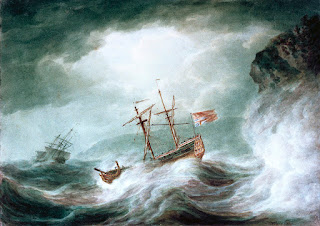
will no longer be infants, tossed back and forth by the waves, and blown here and there by every wind of teaching and by the cunning and craftiness of people in their deceitful scheming” (NIV). A lot of imagery in this passage that relates to a ship, really in need of an anchor. When a boat is anchored, even in a terrible storm it can be held, and while it might get battered a bit, it can remain where it needs to.
We live in a day and age with a lot of teachings that seem to go all over the place. A lot of “theology” that is done in our post-modern era is sometimes problematic at best, or as the text suggests sometimes
deceitful.
How are we to tell!? How could we possible know what is sound doctrine and what is not. It can be really hard because most of the time everyone is using the same Bible, and yet people come to vastly
different interpretations and understandings.
The answer is we have to make sure we are anchored. The anchor that we have in Christianity is that of the classical Christian consensus of the Church found in the creeds and in the writing of the early church fathers (a.k.a the patristics). When we hold commonly what the early church believed (summed in the creeds and presented in the patristic writings) we find an anchor that a follower of Jesus in any age is able to go to, yank on it a bit and see if they are still attached to it.
Gnosticism was an early church heresy (that even Paul deals with), where they believed they had special revelation and knowledge of salvation, securing them no matter what they did. This obviously led to many problems. When we then turn to the creeds and early church fathers we find out how these issues were dealt with, and we can assess from there is we are attached to the anchor or not.
My encouragement for us all is to make sure that we are anchored. In the last year I have memorized the Apostle’s Creed, and it has been so live giving. I can recite the core historic beliefs of the Christian
faith, and it is a constant reminder that I am anchored to the faith once delivered to the saints, which has been proclaimed since the day of Pentecost.
Go learn the creed (The Apostle’s Creed, Nicaean Creed & the Athanasian Creed are the core ones) and read some of the early church fathers (Athanasius, John Chrysostom, Justin Martyr, Clement of Rome,
Polycarp, Clement of Alexandria, Origen just to name a few). You will find that the thoughts and questions of our modern age really aren’t that new, and you will likewise be amazed at the depth of thought that the Church has for us today. Be anchored.
What does on in the spiritual realm? Is there more, and if there is
what does it look like, and how does it operate?
These questions are
more pertinent than ever as despite a very post-Chrisitan culture in
the West the concept of “being spiritual” is at an all time high.
Of course the Christian story explains all of these other things
going on without compromising one iota of doctrine.
Sadly much of what
is found in the Protestant world when it comes to the “spiritual
place” (angels, demons, nephilim, powers & principalities etc…)
is often either fanciful, not well grounded, immature and sometimes
just silly to be frank.
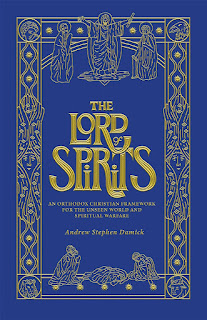
That is where this
book, The Lord of Spirits
enters from stage right to provide a very accessible primer into
understanding the Christian perspective of the spiritual world. While
it does come from the Eastern Orthodox tradition, it is filled to the
brim with a comprehensive understanding of spiritual matters from
Scripture, the early church fathers and tradition.
From
reading this book I have walked away with what I feel is a more
grounded and realistic understanding of how the spiritual world
interacts with the physical world, and through that how the Gospel is
front and center in combating the forces of darkness that want
nothing more than to destroy humanity (image bearers of God).
Steven
Damick in the entirety of this volume defines just about everything
that would need defined, and helps give shape and form to the often
lacking spiritual frameworks that can be found often in
evangelicalism. Of course there are things that I don’t agree with
(as it like is with just about any book). But the fundamental truths
of what Scripture presents are laid out in The Lord of
Spirits bolstered by the history
and tradition of the Church through the ages.
For
anyone who wants to jump from ankle to knee deep or higher on this
topic, this is a book to add to your collection.
In our day and age of virulent political activism, actors on both sides of the political aisle withing Christianity are vying for power. “If only WE could be the ones to control it, then we can institute God’s vision for His Kingdom!” For either side it is either a vision for a Christian Nationalism where God’s laws are almost mercilessly enforced to ensure righteousness (legalism), or another vision of the Kingdom is enforced where power is used to punish those who have held power in the past (rightly or unjustly) as a means to make up for old evils for those considered “the powerless and oppressed”.
Both of these visions are wrong.
Why?
Jesus tells Pilate in John 18:36, “My kingdom is not of this world. If it were, my servants
would fight to prevent my arrest by the Jewish leaders. But now my
kingdom is from another place.” (NIV)
Christ’s Kingdom is not of this world. What does that mean? It means that the way of expanding God’s Kingdom here on earth does not follow the pattern of how they are built by the powers of this world.
Now, I don’t disagree that it is a good thing to have followers of Christ in positions of political authority or be apart of political change. What I am saying is that if our primary goal to expand Christ’s Kingdom is to focus on that, we are misguiding ourselves and building our own means of control rather than how the Kingdom of Heaven is supposed to be expanded.
Be is the Assyrians, Babylonians, Macedonians, Romans, Huns, Caliphate’s, Crusaders, Holy Roman Empire, French, British, Nazi’s, Soviets, Maoists, Americans or anyone else all these empires have been expanded through power and conquest.
The Kingdom of that Christ rules expands exclusively through love. The power of the Gospel that transforms even the most broken hard-hearted person is through the love of God that came down to die and rise for them. That same love that is seen through the followers of Him that love their enemies, pray for those who persecute them, and go the extra mile because of the command of their King that measures success in a different way.
So what does that mean for us today?
Nothing has really changed for how Christ has commanded His people to pursue the conquest of the world. We are to do so not through the power that others try to do so. Instead we are called to pick up our crosses, wash others feet and proclaim the Good News to a broken and dying world. It is in the power of that love that we are to take stands, and person by person will be conquered for God’s Kingdom by love.
One of the heralded phrases that I have heard much of my life about being a follower of Jesus is, “it’s a relationship, not a religion!” I’m sure many of you who are reading this right now have at least heard this, if not subscribe to this in some fashion.
It sounds good on the surface, doesn’t it? Let’s get rid of all the stuffy old stuff, and have our walk with Jesus be filled with life, joy and excitement! This has been the common phrase particularly the last 50 years of much of Evangelical Christianity in America. But is this call a good thing? Have we been thinking about this all the wrong way, and actually participated in much of the damage that is going on in the Evangelical world?
One of the things that I have so appreciated about the TV show The Chosen, is the portrayal of Jesus and the disciples as good observant Jews, practicing the rituals, liturgy and festivals. Every time there is a scene showing someone waking up, or going to bed, there is the common phrase, “praise be to you Lord God, King of the Universe…”. These practices would not have been jettisoned by the newly minted followers of “The Way” following the ascension of Jesus. Most followers of Christ were still Jews who followed the law, and saw Christ as the fulfillment of the messianic prophecies.
The frank reality is that ALL of us, no matter what church we go to participate in some form of liturgy, or regular religious practice. The question is, do we recognize it or not? The danger is that for many, we have felt that we have gotten rid of formulated or patterned worship for “freedom in the Spirit”. What has really happened is that one form of liturgy has been replaced with a different form that goes by a different name. Certain things always happen at the same time, and things are generally practiced the same way every time.
This is fine! But we must recognize it as a liturgy, lest we be deceived.
Another phrase in this track that I have grown to appreciate is “those who don’t recognize their tradition are the most controlled by it.” We are all standing on the shoulders of the faithful men and women who have followed Christ before us. And there is nothing wrong with recognizing that we are following a certain pattern or way of doing things.
So back to the question of religion.
I have become increasingly convinced that the statement that Christianity is a “relationship, not a religion” fails to understand either word, and actually does the disservice of debasing Christianity from the reality of truth for all creation to be boiled down to essentially trying to feel good most of the time. Now, I do agree, Christianity has a relationship component that cannot be ejected from the conversation. But to reject the “religion” aspect is likewise to knock out one of the legs and then ask why the building is no longer standing.
Humans are fundamentally religious beings. We were created to look for ways of connecting with God, the One who created us and desires a relationship with us. This reality is borne out of the plethora of
religions that exist around the world that are merely shadows seeking to explain the reality of the world around us. With that, there is a need for us to be organized in not just our common belief, but also common practice of our worship of Christ. Essentially, any group of people following an organized set of beliefs is religion. Christ established His Church for the purpose of being a community together to pursue the spread of the Gospel, and the expansion of Christ’s Kingdom with the ultimate hope of
resurrection and restoration of the creation.
I think what many in our culture have become disenfranchised with is a false folk religion. There is a problem when we hold the forms and movements of religious practice without the truth and life that must be accompanied in the lives of the people. The Gospel is powerful and is meant to impact and transform every single part of our lives, and everything around us as well. But when we segregate our religious practice to an hour, one day a week it becomes neutered and powerless.
So instead of throwing the baby out with the bathwater, let’s see the beauty that there is in the tradition of the Christian faith. And instead of rejecting religion, embrace it and seek to live it to the
fullest Christ intended it to be.
.png)



.png)