
by Joel V Webb | Dec 4, 2024 | Orthodoxy Matters
Excess leads to error.
An over extension of how God’s sovereignty works leads to a once saved always saved mentality. An over extension of how human free will works leads to an eternal insecurity mentality.
One thing that I have been noticing is his over extension in the Church particularly on the issue of justice and justification. Often a group will be solely focused on “justice”, and seek to work for the poor, needy & oppressed. On the other hand another group will be focused so much on “justification” and only ever evangelize, never caring for people in this life.
In the movement of liberation theology that arose from primarily Roman Catholic scholars in Central & South America that has a focus on liberating people socially & politically to bring on human flourishing has some interesting perspectives. One of the more fascinating ideas was that even atheists who do good for the poor should be canonized in the Church as a saint. That is excess. With an overbearing focus on earthly justice and flourishing that completely forgets the work of Christ, and the message of the Gospel. Thus reducing it to good ideas that only answer problems here and now.
On the other hand there are places like in the tradition I grew up in that had a narrow focus on “justification”, where much of the here and now really are on the periphery. There really isn’t a need to do much of what Scripture talks about for the widow, orphan & oppressed because everything is about becoming so much like Jesus that you will be apart of a special rapture before or during the great tribulation, then you can reign and rule with Christ in the millennium and through eternity (a simple reduction of the general worldview).
The reality is that the Gospel holds both of these in an active tension where followers of Christ are to do both. Sadly, it seems that these tow characteristics have been picked up by partisan sides, which exasperates the issue further. Yet Christ calls all of His followers as part of His Kingdom to care about both justice and justification.
I highly encourage you to check out this sermon by the late Timothy Keller HERE where he tackles this topic. If the Church is to be the salt and the light in the world we are called to be, we must hold both justice and justification in correct balance.
Justice does not matter if it is grounded and flows out of the working of the Gospel.
Justification is not demonstrated if justice is not the fruit in the lives of those justified.
Excess either way leads to error.
by Joel V Webb | Nov 27, 2024 | Orthodoxy Matters
We live in a very
pluralistic society. So much of the discourse is focused on “your
truth, and my truth”, without ever asking the question, is there
such thing as the truth? The question this begs as well is what is
the response of the Christian faith? We practice an ancient faith
that stretches back to early human history, telling the story of the
almighty creator God who has been revealing Himself to humanity, to
show the way as bring creation back to how it was intended.
In the 21st
century the Church faces the issue that it has since it’s
inauguration at Pentecost. From time to time the vision and holistic
picture of who God is gets muddied up and lost. Combined with ideas
that help calm the human mind to reconcile God Himself with their own
desires. Instead of being transformed by the Gospel, they seek to
transform the Gospel to look like them.
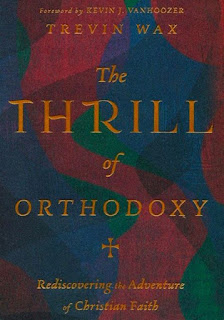
This is the question
that Trevin Wax seeks to answer in his book The Thrill of
Orthodoxy. Trevin defines
orthodoxy as what can be called “classic Christianity”, or the
consensus that has been formed on the faith since the apostles that
is found throughout the Church till today. Orthodoxy is composed of
the essential truths that define what being a Christian is. We define
orthodoxy through what we call creeds (the 3 primary ones being the
Apostles, Nicene & Athanasian creeds). They provide concise
universal statements of the defining truths of the Christian faith.
Which means that going outside of them puts you in the category of
heresy, or wrong teaching.
The
discussion on what theology actually is, is important. Theology is
the study of God. While many may write-off theology as unimportant,
what we can often miss is that theology defines who God is, and if
that is off then we face the challenge of understanding Him
incorrectly. How can we get to know someone if our perception of who
He is, is incorrect?
Trevin
then discusses the natural we have as humans to drift, “because of
out natural tendency to apathy and inattention”. After exploring
the four primary ways that people tend to drift from orthodoxy (going
through the motions, works focus, unsettled by the counter cultural
truth of the Gospel, activism over evangelism), the discussion shifts
to how orthodoxy ultimately is swimming against the flow of the
river. In order to stop the drift we must have “the thrill of
orthodoxy.” We need to find a better excitement about the truth of
God that holds us to Him, rather than being taken away.
The
main crux of Trevin’s work deals with rejecting some of the
presuppositions in some popular theology today. Many seek to provide
either a theology that is either totally interested in the here and
now, or only interested in the world to come. Orthodoxy provides a
true tension between the two. A poignant example he discusses in
regard to this is the topic of justice, and social justice. Yes,
Scripture calls us to be just, personally and sin a societal way. But
something happens when we miss the premise of orthodoxy in this
pursuit.
“When
you lose that larger perspective, and when you stress only those
aspects of life that are “this world” and downplay the reality of
future judgment you lose the hope of eternal justice, which means
that earthly justice is all that’s left. Unless you achieve total
justice here and now, you’ll never see it, which makes every
pursuit of justice in this world a life-or-death struggle.”
Orthodoxy
expands out vision above the here and the now, giving us the ultimate
perspective that justice will be had by a loving and holy God. This
should not make us disinterested. In fact, it should activate us to
action, while not leaving behind the vision of when He makes all
things right.
A
final point of focus that struck me was his discussion towards the
end of tradition vs traditionalism, and how orthodoxy combats the
ideologies of our day to stay Gospel focused. Often times people
discount the need for orthodoxy by challenging that “you’re just
holding on to dead religion”. But this is an incorrect assumption.
“Tradition
is the living faith of the dead. Traditionalism is the dead faith of
the living”
Because
of the saints who have gone before us, we are called to live the
truth that they held to as well. But when we lose the trill and
excitement of knowing God truly, then it turns into dead faith that
does not live.
Fundamentally,
as followers of Christ we must have a definition of our faith. There
are things that must be held dogmatically. Our culture does not like
that, but that is the truth.
“The
problem with doctrine-less and ‘undogmatic’ Christianity is that
it becomes a religious veneer for blessing your life as it already
is. Christianity without dogma leaves us with a tame God.”
Truth
orthodox Christianity challenges our feelings and assumptions. It
will offend our sensibilities because our human nature does not want
to change. But that is the word of the Gospel. To take and change us
to be more like Christ. Some would charge that to progress forward we
must change and reject orthodoxy. All that does is lead us toward
heresy, which will kill us.
I
highly recommend this book to anyone and everyone. We live in
challenging times. With so many ideologies and theologies that seek
to take the historic Christian faith, and neuter it to be “kind &
nice”, rather than a sword that divides soul and spirit. Process
theology seeks to take God and adapt him to our own ideas of what is
right so that we can live how we want (and most of the time sleep
with who we want). Instead of transforming us, our culture seeks to
make Jesus into our image.
So
what does the future look like? Trevin encourages us to dig into the
historic Church. Read the early church fathers and see how their
unwavering commitment to Christ, even in the face of death answers
most of the questions we have in our day. Ill close with this final
quote as an exhortation as to what to do.
“The
future Church will not be forged by those who tire of the thrill of
orthodoxy, but by those whose roots run deep through the ages of the
Christian church and back into the pages of God’s inspired Word.
by Joel V Webb | Nov 25, 2024 | Orthodoxy Matters
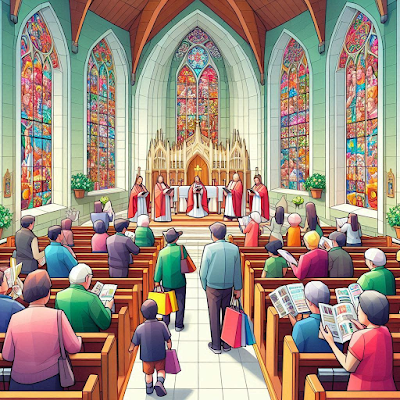
I lead the music part of worship every week at my church. Music is an important element of worshiping God, and always has been in different ways. Something my wife told me shortly after we got married was that she misses older songs, especially those found in hymnals because they helped teach people to sing, the melody and the harmony. The simpler instrumentation really brought the voices to the forefront, and there would be a robust sense of everyone singing together. At first I shrugged it off. But now, I see her point, and am wondering how do we get it back?
I love a lot of the contemporary worship that is out there. Especially the new stuff from the Getty’s, CityAlight, Phil Wickham and several others in particular. But with the general trends of Christian worship in the last 30 years, elements of the concert vibe really have been impacting how we worship together on a Sunday morning. This doesn’t mean we don’t use the latest and greatest tech when it makes sense. Our worship team uses in-ear monitors, backing tracks w/ click tracks to help fill in some sounds, and keep us all in timing.
But, how do we also work towards reengaging the entire congregation so they don’t feel like they are just attending a concert with Christian music, and then a message?
The most poignant and impactful tool that I have found for this is spoken liturgy.
Liturgy is defined as “the work of the people”. It is something that everyone participates in as part of worship. No one is left out, because all can join in the prayers, and the call and responses of each part of the service. More than that, the liturgy that the Church has used in the Orthodox, Roman & Protestant traditions are steeped in Scripture. You can hardly go from one word to another without stumbling upon a list of Scriptures that are being referenced to. So in this case, not only is everyone participating, but people are also taking in Scripture.
In my context the usage of liturgy has taken the form of regularly reciting The Apostle’s Creed, and the Lord’s Prayer. These two pieces provide a framework and foundation of Christian understanding that all can participate in, and remind them of the truth of the Gospel every time we repeat it.
At the end of the day, the liturgy is only as dead as the person participating in it. While we have more of a neo-liturgical experience (a blend of both contemporary and traditional service elements), it helps keep us grounded in the truth and wisdom of those who have gone before, while also allowing us to tap into the fresh expressions of Christian worship music.
Both of these takes on worship can be problematic if seen as the ends, rather than the means. The focus is always to be on Christ, and the proclamation of the Gospel message.
So how do we get everyone involved? Find various ways that integrate the outward involvement of everyone in the Church during worship. The collective action of praying and speaking the same things is a strong builder of commonality as we worship our great God!
by Joel V Webb | Nov 20, 2024 | Orthodoxy Matters
Now the Bereans were more noble-minded than the Thessalonians, for they
received the message with great eagerness and examined the Scriptures
every day to see if these teachings were true. – Acts 17:11 (BSB)
I talked about Bible translations in a post a while ago, and highlighted how we have more translations than ever. Our age is blessed with a variety of translations that cover the spectrum of exact word-for-word (ESV,NASB,NRSV), that get the exact language of the original text. We also have more thought-for-thought translations that seek to grasp the expressions of the text, and what was meant to be said, rather than just the exact words (NIV, CSB), and then paraphrases that are more of a restatement of the text to bring it up to modern vernacular and expression (NLT, TLB, MSG). No one translation is perfect, and the best translation is the one that you will actually read. The exception to this statement is “The Passion Translation” which is problematic on many levels, and I warn anyone from using it as the sourcing of the translation is frankly heretical and dangerous.
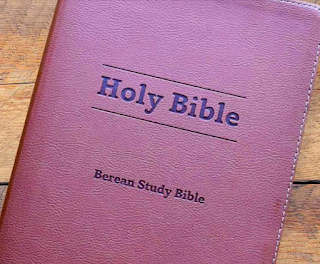
So what is the Berean Standard Bible (BSB), and why another Bible translation?
One of the facts that many people don’t know is the amount of copyright that surrounds most Bible translations. Most major Christian publishing houses are owned by larger, usually non-christian investment business’ and often hold the copyright to certain Bible translations. These copyrights limit the usage and means of Bible translations in published works, that may in some cases require royalty payments to the holder of said copyright. For more of a deep-dive on this read this article from SellingJesus.org.
This is where the Berean Bible translation enters the picture. From the outset the goal was to make a readable translation that is a cross between the KJV (a literal translation), and the NIV (a more thought-for-thought translation), which still remaining faithful to the original languages, and readable to a modern audience. All of this while remaining completely open-source in it’s ownership, allowing for anyone to use it for free without any cost of licensing.
Over the last year I have starting utilizing the BSB more regularly as apart of the translations I use. And as of November 2024, it is my primary Bible translation. I still use the NIV, NLT, NET & the NRSV for deep study. But for my daily reading & preaching, I will be utilizing the BSB.
On my weekly podcast The Pastor’s Call Podcast I had the pleasure of interviewing Gary Hill who was one of the primary scholars who worked on the BSB. You can listen to his interview HERE and find our more about the origins, purpose and intent of the translation. As part of interviewing him I was blessed to receive physical review copy of the BSB. It is a beautiful real-leather bible, that is of excellent quality. They use a thicker paper (39 gsm), which makes the experience of using it very tactile and satisfying. The layout is different than what I have seen in other Bibles, and I have appreciated how readable it is. For an intro and more info on bible build terminology, check out this fantastic video HERE. I feel that I will be able to use this Bible for my lifetime and hand it down to my kids. Very high quality.
But it doesn’t stop at the physical Bibles you can purchase. One their website you can download the entire Bible in Word, PDF, Kindle, excel, audio and other digital formats for anything you might use a Bible for! This is a huge help to integrating this Bible translation into the various Church tech that I use. This is unparalleled for a Bible translation to offer this completely for FREE!
All of this being said, I recommend at least checking out the BSB. What they are offering is a quality Bible translation that is easily accessible to everyone, with no cast barriers, especially in the digital realm.
You can find out more about the BSB, and shop for physical Bibles from them at bereanbibles.com
by Joel V Webb | Nov 15, 2024 | Orthodoxy Matters
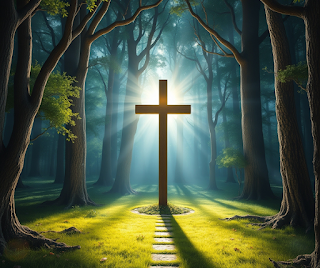
A key theme in the literary genre of fantasy fiction is that of enchantment, or being enchanted. It usually has a magical overtone by which someone or something is imbued with special power or qualities that makes them stand out from everything else around them. Almost every magical story has an enchanted forest where the magical, mythological and fanciful creatures reside, and the protagonist usually has to go in order to continue their quest intentionally or by circumstance. It is in these places that is separated by the hum drum of the world around them, and their eyes are open to what is really going on. This is exemplified in the story of Prince Caspian, written by C.S. Lewis. Caspian enters the “dark forest” where we encounters the truth of the creatures of Narnia, and his true purpose is given to him to free the true Narnians from the oppression surrounding them. Caspian’s imagination is enchanted with what is really going on, and he can move forward in clarity to whatever is next, and into his true calling.
We live in a world that has lost all of its enchantment. Materialism, secularism and modernism have stamped out our ability to have almost any imagination. We are only concerned with what is physically in front of us..and outside of that anything doesn’t have much importance. Sure, we make ascent to the existence of a spiritual world that exists, but there is no real practical application to how we live our day to day lives.
A friend of mine put it this way. “We have made a fasutian bargain with technology. We know everything about the physical world, but we have lost the sense and knowledge of our spiritual selves, which makes us human.” I love technology & science. We have all been blessed by the wisdom that God has given humanity to understand the creation, and from that to harness it for the betterment of human living. But in that we have forgotten the truth of the spiritual world. We live as if our Christian faith is an add-on to our lives, that is part of what we do, rather than understanding that our faith is the understanding of everything.
Just as Prince Caspian experienced, we all need to take a little stroll into the enchanted forest, to have our eyes opened to what is really going on. We live in a world, that while made up of physical things, is really a world of spiritual beings and realities that interact via a physical reality. Our imaginations need to be re-enchanted with the worldview of Scripture, to see beyond the near-sighted reality of material existence, and understand that there is more.
But how can we do this? What can pull us out of our material slumber, and enable us to see the light that is above the low clouds of secularism?
One thing that I have found amazingly helpful is the Lord’s Prayer. While often spoken of as just a pattern on how to pray, this prayer is really a deeply Scriptural and theologically rich prayer that realigns our imagination and vision to how Christ desires His people to see the world around us. In this prayer we begin to see and understand that while stuff is going on around us, our call as followers of ‘The Way’ is to subvert our normal human reaction, and to work in a way that points to Christ’s Kingdom that is in, but not of this world. More of this concept can be explored in the book “Liturgy in the Wilderness” by D.J. Marotta.
This is just a small first step, but the first step is usually the biggest one. Christ calls us to look at the world around us in a different way. Not just as a place that exists with power dynamics and limited opportunities for redemption. But rather as a place that is the field of battle of epic proportions of powerful spiritual forces desiring us to image themselves, rather than the Creator of all things. There isn’t a demon under every lampshade, but there are demonic forces that try often to divert us away from our true calling. And in that same thought there are angels that seek to aid us in keeping us true to the One True King, Jesus.
It might sound crazy. But this is the real world that we live in. So let’s take a jaunt into the enchanted forest and begin to see what is really going on.
Further up, and further in.


.png)


