
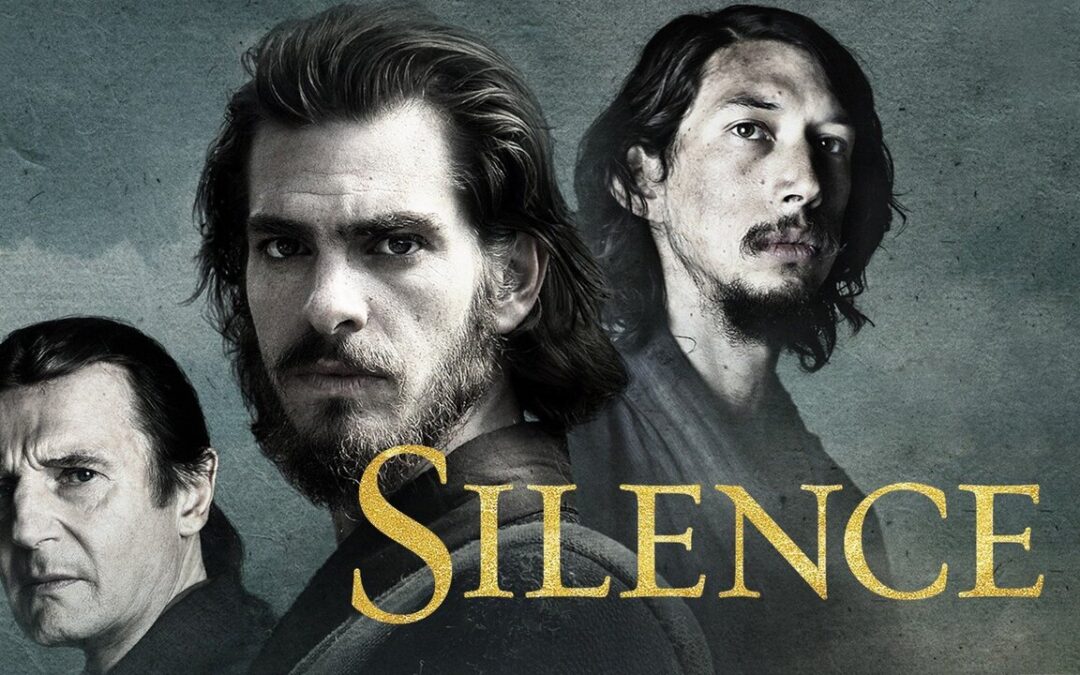
I remember watching the movie Silence a number of years ago when it first came out in 2016. At that time in my life, I was still a part of the more fundamentalist church tradition I grew up in, and so the few others I talked to saw it in a negative light. Yet despite that, there was something in me that thought there was something more there than the sad tale of a person who, through much pain and suffering, leaves their faith.
I won’t give a full-throated walkthrough of the movie, and I highly encourage you to go watch it. It is a testament, firstly, to the sufferings of our brothers and sisters in Christ, still to this day, who go through immense suffering for their faithfulness to Christ—their unwavering allegiance to Him and His Kingdom despite the very real threat of death.
But what does this movie mean for those of us in the West who can still live a life that follows Christ without seemingly costing us anything of significance?
The culmination of the journey of the main character, Rodrigues (played by Andrew Garfield), after his apostatization of the faith, was a comfortable life—a wife, family, status, and a job helping to keep Christianity out of Japan. In the last scene, it is hinted that while he lived his life as someone who renounced the faith and actively worked against it, he may have privately still held to his Christian belief and piety.
And it is in this reality that the problem lies for many of us. It didn’t really matter that Rodrigues may have internally “still been a Christian” because externally no one knew the difference. And that is the challenge for us. Our culture is totally okay with people being Christians…if it’s respectable, nice, and internalized. God forbid we actually believe that our faith in Christ, as members of His Church, means that there are implications in the public sphere. Rather, the zeitgeist of our culture is totally okay with pop stars, actors, politicians, and the general public proclaiming the name of Jesus and being Christian, just as long as it is ultimately private and individual in its impact.
It is this kind of faith that many of us in the West have—a faith similar to that of Rodrigues, where we keep the tenets of our faith to ourselves and live everywhere else as every other secular materialist, and no one knows the difference. But this is not the call of Christ. We are called to pick up our crosses and to follow Him. To deny Him in front of man means that we are denied before the Father, and that is a scary thought to think of.
Does your faith cost you?
Now, this isn’t a call to be a jerk or a Bible-thumping, soapbox-screaming, fire-and-brimstone preacher. That, in itself, becomes the antithesis of the work of the Kingdom. Neither should you be so agreeable to the philosophies, ideas, and ways of the world around us that you are looked at as someone they could work with. We are different, and the difference of being in Christ’s Kingdom means that we will be seen as downright dangerous to the status quo. Why? Because the kingdoms of this world do not wish to turn over their authority to the true and reigning King.
This movie is a call to all Christians—whether you are on the political right or the political left, whether you rightly or unjustly have been given the label nationalist, socialist, racist, homophobe, apostate, or heretic. Maybe the labels are right, but maybe they are not. Rather, are you considered ineligible for integration in the society of the world, or are you able to just float downstream with everyone else?
Silence is a chilling and challenging film to reckon with because we are confronted with the reality that most of us are more like Rodrigues than we like to admit. God, have mercy, and help us by granting us the strength to love and serve you no matter the cost.