A Protestant and a Catholic Study Bible
I love Bibles. My wife will tell you that I have too many. Being a pastor, preparing sermons weekly, doing deep dives into themes and Scriptures, studying for fun, or for devotion, it is helpful to have a variety of study resources available to help one look at the variety of aspects of Scripture. The historical context, the theological outworkings, and various perspectives on certain points of theology, or exegesis of the text. Because of the Protestant world’s focus and centrality of Scripture (a good thing), we have developed a plethora of resources from every perspective possible that aids in our study and understanding of God’s Word. That is why I was surprised that after getting my copy and starting to utilize the Ignatius Catholic Study Bible, it has quickly turned into one of my go-to resources for studying the Bible.
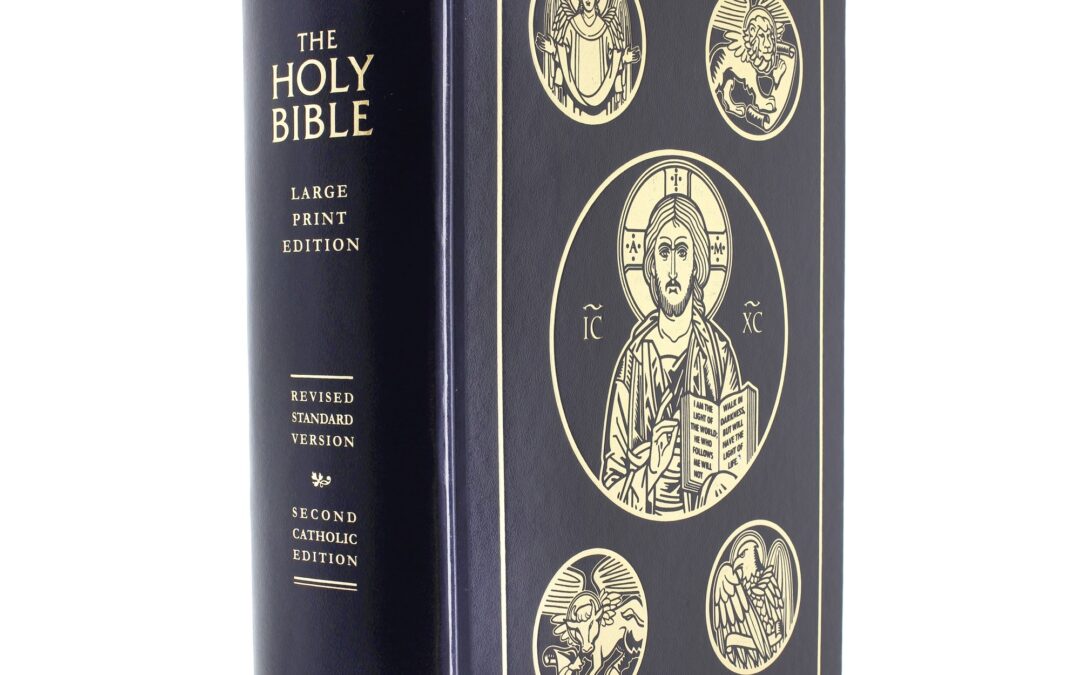
Being a product that has taken 30 years of research, study and compiling, the Ignatius Study Bible is the largest study Bible that I own. It is a massive brick that is beautifully constructed, with traditional icons of Christ, and the four Gospels adorning the front. When you open the pages, it is a beautifully laid out Bible that presents the 2nd Edition of the RSV text, and the commentary notes with clarity, and paper thickness that makes it easy to use.
What makes a Catholic study Bible like the Ignatius so valuable for a Protestant is that it provides a depth of theological engagement that goes beyond what many Protestant study Bibles offer, without requiring agreement with all Catholic doctrines. In Protestant circles, we are rightly focused on Scripture as the final authority, but this focus can sometimes lead to readings that are highly individualistic or narrowly doctrinal. The Ignatius Study Bible, with its grounding in the Church Fathers, historical theology, and careful literary and canonical analysis, invites a Protestant to see Scripture as part of a larger conversation that has spanned centuries. This is not about compromising convictions; it is about enriching understanding.
One clear example of this is in the commentary on the Gospels. Take the Sermon on the Mount in Matthew 5–7. The Ignatius notes consistently trace the ethical and covenantal threads of Jesus’ teaching back through the Old Testament and the interpretations of early Church theologians. A Protestant might not affirm every Catholic sacramental or ecclesial reading of the text, but even critically reading these notes illuminates dimensions of Christ’s teaching that are sometimes underexplored in Protestant study resources. For instance, seeing how the Church Fathers understood mercy, righteousness, and the Beatitudes in the context of covenantal obedience can deepen our grasp of the continuity between the law and the gospel—without requiring a shift toward justification by works.
Similarly, the notes on the Pauline epistles are instructive. Catholics emphasize the Church’s role in Paul’s theology, particularly in letters like Ephesians and 1 Corinthians, often highlighting the communal and sacramental dimensions of faith. While Protestants emphasize justification by faith and the primacy of Christ’s work, encountering the Catholic interpretation can sharpen our own theological understanding. For example, a note discussing Paul’s use of the “mystery of Christ” in Ephesians may highlight a sacramental understanding of the Church, which contrasts with a Protestant view of the Church as primarily a gathering of the faithful. Engaging with that interpretation challenges the reader to think critically about ecclesiology, Christology, and the relationship between covenant and community—without necessarily adopting the Catholic position.
The deuterocanonical books provide another compelling reason for a Protestant to engage with a Catholic study Bible, even if one does not accept these texts as canonical. These books—Wisdom, Sirach, Tobit, Judith, Baruch, and 1–2 Maccabees—offer a rich window into the theological, moral, and spiritual world of Second Temple Judaism, the very context out of which Jesus and the apostles emerged. Ignoring them risks missing the cultural, religious, and ethical currents that shaped the New Testament writers and the early Church.
Even when read critically, these books illuminate key themes that run throughout the Bible. For example, the Wisdom of Solomon speaks of God’s justice, providence, and care for the righteous. Paul alludes to this when he contrasts the righteousness of the faithful with the folly of the ungodly (cf. Romans 1:18–32), and Hebrews draws on similar themes of wisdom and the reward of the faithful (Hebrews 1:3; 11:35). Sirach, with its emphasis on the fear of the Lord as the beginning of wisdom, resonates in passages like James 3:13–18, which contrasts earthly and heavenly wisdom. Tobit’s depiction of divine guidance and angelic intervention finds echo in the angelic visitations in Luke and the providential patterns of God’s care in Acts. Judith’s courage and reliance on God to deliver Israel prefigure themes in the Gospels and in Hebrews, where faith and God’s deliverance are central.
Even more explicitly, several New Testament authors quote or allude directly to deuterocanonical texts. For instance, Jude 1:14–15 cites 1 Enoch, a related intertestamental work, showing early Jewish engagement with literature outside the Hebrew canon. Romans 1:17 and Galatians 3:11 reflect Habakkuk 2:4, a text that resonates closely with Wisdom traditions echoed in Sirach and Wisdom of Solomon. 2 Maccabees, which recounts martyrdom and prayer for the dead (2 Maccabees 12:44–45), provides historical context for Paul’s discussions of resurrection and the body of Christ, and helps explain why early Christians, even within Jewish contexts, considered the afterlife and God’s justice so carefully. While Protestants may not affirm the doctrinal conclusions drawn from these texts, understanding them clarifies the theological milieu in which Jesus and the apostles ministered.
Critically engaging these books enriches the Protestant reading of Scripture without requiring assent to Catholic canon or doctrine. They reveal the worldview, ethical reasoning, and devotional life of God’s covenant people in the centuries leading up to Christ. They help answer questions such as: How did Second Temple Jews understand God’s justice, mercy, and covenant faithfulness? How did these understandings shape the New Testament authors’ perspectives? How does knowing these texts deepen our grasp of typology, covenant continuity, and the moral patterns God worked in history?
In short, even without assigning canonical authority, the deuterocanonical books are invaluable for historical, theological, and exegetical insight. They show that Scripture did not arise in a vacuum but within a living, reflective, and morally attuned community. For a Protestant, engaging with these books critically is not a compromise of faith; it is a means of seeing the New Testament—and God’s redemptive plan—from a fuller, richer perspective.
Even areas of explicit theological disagreement can be instructive. The Ignatius commentary on the Eucharist, for instance, clearly articulates the Catholic understanding of the real presence and sacrificial character of the Mass. A Protestant may reject transubstantiation, but reading the reasoning behind the doctrine offers a chance to engage Scripture and tradition from a perspective that is historically coherent and biblically argued. Similarly, notes on Marian devotion, purgatory, or apostolic succession highlight the historical development of doctrines we do not affirm. Engaging these critically strengthens one’s own theological convictions and equips one to articulate them clearly, especially in ecumenical or pastoral contexts.
Moreover, the Ignatius commentary often emphasizes typology and covenantal continuity in Scripture. Passages like Genesis 22, the binding of Isaac, or the sacrificial system in Leviticus are connected to Christ in ways that go beyond the typical Reformed footnotes. A Protestant can appreciate the theological insight even while disagreeing with the liturgical or sacramental applications. This helps in preaching, teaching, and pastoral counseling, as it allows for a richer understanding of God’s unfolding plan and the interconnections of the biblical narrative.
In practice, using a Catholic study Bible encourages a Protestant to see Scripture in a more holistic and historically grounded way. It provides tools for understanding the interpretive frameworks of early Christianity, the historical and literary contexts of the text, and the ways in which doctrines have developed. It reminds us that theology is not just about abstract ideas, but about how communities of faith over centuries have grappled with God’s revelation.
In short, a Protestant using the Ignatius Study Bible gains a rigorous theological resource, a bridge to the broader Christian tradition, and a framework for understanding, critiquing, and applying Scripture in a historically informed way. The disagreements—the Eucharist, Marian theology, purgatory, and ecclesial authority—do not diminish its value; they sharpen discernment and encourage a more precise articulation of one’s own convictions. It is a tool for deepening understanding, fostering critical engagement with tradition, and cultivating a theological imagination that is both historically aware and faithfully Protestant.