
by Joel V Webb | Mar 11, 2024 | Uncategorized
Whenever I tell my wife that I love her, what usually
happens is she smiles, and says “I love you” back, something chuckling out of
the joy that came from that statement. The question is, what came first, the
statement or the reaction? From this
example we obviously know that it was the statement that produced the reaction.
If I were to confuse the order of things and just go after the reaction, that
would cause problems because it is the knowledge of my wife knowing that I love
her, more than any other human that produces it, not the reaction she gives
that produces the love from where the statement derived.
In many ways, the Gospel is the same thing. There are so
many expected outcomes when the gospel “good news” message is preached. But
what happens when we start to focus on making everything about the results of the
gospel, rather than the source of the results? The equation gets messed up
because without the source, the results become shallow, and even perverted.
An example of this is good works. This topic gets dealt with
throughout the New Testament, and was s driving force behind Martin Luther at
the beginning of the Reformation (so much so he didn’t like the book of James
being apart of the canon of Scirpture!). We know that no one can be saved by
good works. If that were the case than the gospel would not be good news! It
would be dead religion, seen so many other places in the world with people hopelessly
trying to do enough good to pay off their debt. We also know that when a person
has received the free gift of salvation, and the transformation into a new
creature that follows, it is good works that then come from that person (James
2). This is something that any Christian within the classical consensus can
agree on.
What we are now seeing is the proper equation of the gospel
becoming inverted in other areas of the faith, and it is potentially making the
impact of the gospel lessened as it is no the focus, but rather the results of
it are.
Scripture is replete with commands for those who follow Christ
are to do justice (Isa. 1:17, Mic. 6:8, Amos 5:24, Ps. 33:5, Luke 18:1-8, and
there are so many more). To be just, and to treat other image bearers all as
equal is a non-negotiable in the Church. I have come from a background that
doesn’t focus much on there here and now, mostly being concerned for the
here-after (for various eschatological reasons).
But what can also happen is a complete pendulum swing to the
other end of the spectrum where the focus of all our Christian lives becomes “justice”
(often defined in modern political terms). This is not all bad, history
demonstrates that almost all of the advances in human rights, and righting
major injustices have been spear-headed by followers of Christ. Though we do
have to be careful that the work of our lives does not move from preaching the
gospel, to preaching justice. Or, by conflating “doing justice” with preaching
the gospel.
Justice, true biblical justice that transforms the world
into the creation God intended it to be does not come about by pouring all of
our energy into the singular focus of justice. Rather, justice comes as a
natural outworking and product when the gospel is preached, and people are
discipled into followers of Jesus. This call and command is not calling us to
be apolitical (as has been the fault of some in the Church in the past), but to
rather be wholly informed in what we do by the gospel in every area we work.
If God has called us to focusing issues of justice (racial,
socio-economic etc…) than how we address those issue must be informed by the
gospel, rather than our gospel work informed by philosophies and worldviews
produced by the world seeking to side-step dealing with issues of sin.
This is a hard line to walk, its one that I am working on
myself as we speak. I am compelled by the experiences of those who have face
injustice to act from the love of Christ to see people transformed by the
gospel (and likewise the systems that are made up of people), and on the same
hand in the sure knowledge that it is only the gospel that addresses the issues
in a constructive and renewing way. That while not always easy, produces the
result of changing hearts through the power of the Holy Spirit, not trying to
coordinate political power to overthrow something.
As since the early Church, the Gospel will conquer the world
not through power, but through love.
by Joel V Webb | Mar 6, 2024 | Uncategorized
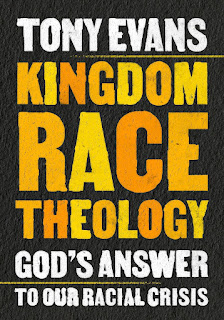
There is a deep tension in our society right now when it comes to the issue of race and racial relations. Up until recently, I have found many of the methods to identify and answer these questions to be severely wanting. They would either deny there is a problem or take the problem so far as to think racism permeates every single part of life, separating people into classes originally devised by Marxist ideology.
So what are we to do? How can we address these questions thoughtfully and realistically while still remaining faithful to the framework of Scripture? One thing the dominant perspective gets right is stating that there is a problem. The thing it fails to do is offer the only true answer to the problem: the ultimate atonement for sin on the cross.
In Tony Evans’s book, he lays things out frankly and honestly. He does not pull punches in seeing how the Bible addresses the issues of racial tension we are seeing today. And this goes for both sides of the aisle. Racism is real, and it does exist, and those who are followers of Jesus deny the basic reality of a person being an image bearer if they are racist. There is no room for racism in God’s Kingdom. Likewise, he leaves no room for those who seek to divide us by our melanin levels, as is with the derivatives of critical theory. He shows that in the gospel, there is a unity in Christ that bridges all divides and brings true reconciliation.
At the end, there is a provided list, particularly for black and white Christians, of serious questions to be considered. I found it challenging and hopeful. While it certainly pressed points of things I have not considered before, it is done wholly in the love and grace of Jesus, and it does so for both lists. Whoever reads it will feel challenged to do better and to love more.
I highly recommend this book. It provides a path forward that is not found at the whims of questionable philosophical origins and frameworks, and is wholly built upon the transformative power of the gospel. Unlike some of the other options that are out there to wholly focus on what makes us different and always left me feeling misunderstood or angered, Evans’s take points us ultimately to the cross that reconciles us all together to God. If the divide of sin and death could be resolved, so can our divisions over race as well.
You can find the book here – https://a.co/d/aT1WgNE

by Joel V Webb | Feb 22, 2024 | Uncategorized
One of my favorite songs
of all time is In Christ Alone written by the Getty’s. In its last verse
comes a very rousing theme of being secure in Christ.
No guilt in life, no fear
in death—
This is the pow’r of
Christ in me;
From life’s first cry to
final breath,
Jesus commands my destiny.
No pow’r of hell, no
scheme of man,
Can ever pluck me from His
hand;
Till He returns or calls
me home—
Here in the pow’r of
Christ I’ll stand.
“No power of hell, no
scheme of man can ever pluck me from His hand.” In a previous church context I
was a part of I was told we could not sing that 4th verse because of that
particular line which struck the pastor as “too reformed” for his comfort, and to
not have to deal with whatever issues would come from a line like that, we
could sing all the verses but that one.
I sadly didn’t push back
more at that time. I should have. Unfortunately in our day and age the concept
of perseverance of the saints has been relegated by many to be only a doctrine
of the Reformed tradition. I argue it is not. While the Wesleyan Arminian take
on the doctrine may be somewhat different, the core element is the same. If we
are found in Christ, we are secure in Him. This thought is directly talked of
in Romans 8:38b-39, “Neither death nor life, neither angels nor demons, neither
our fears for today nor our worries about tomorrow—not even the powers of hell
can separate us from God’s love. 39 No power in the sky above or in the earth
below—indeed, nothing in all creation will ever be able to separate us from the
love of God that is revealed in Christ Jesus our Lord.”
Nothing is ever able to
take us from God’s hand. If we remain in Christ then we are secure in Him. Of
course, we can choose to walk out of His hand if we so choose. The question can
then be raised, “what does it mean to be found in Christ?” Simply put it can be
asked, Am I, having recognized the truth of the gospel, that Jesus alone is my
hope for salvation by His death and resurrection and no works of my own,
and through the enabling power of His Holy Spirit I am living as a
representative of Christ and His Kingdom, allegiant to Him alone. If the answer
is yes to that question, truly and honestly then you are found in Christ.
How does this look in
practice? We are all human. We suffer and struggle with the reality of our
fallen humanity. Maybe there is a habit that we have desperately been asking
the Lord to break in us. Does that mean I am not saved if I stumble and fall?
The question is, like King David after his sin concerning Bathsheba and Uriah:
do I remain loyal to the Lord alone? Unlike the other Kings in Israel’s history
before their captivity, they would start worshiping other idols. Even though
David horrifically sinned, he remained loyal to God.
So as we look at our own
lives, we may have times where we stumble and fall (I certainly have in my
past). But, if we remain loyal to Christ, pursuing Him and getting back up
again with His help we will be found in Him and persevere no matter what comes against
us. No power of hell, or scheme of man can ever pluck us from His hand!

by Joel V Webb | Feb 16, 2024 | Uncategorized
A lot of buzz has been going around the Christian internet sphere
about the recent ad campaign from “He Gets Us”. I have seen a lot
of posts from people who are either for or against the campaign. For
myself personally I think they both have valid points.
For the against
crowd their focus is on the lack of a repentance message. Ultimately,
no matter how you parse it the core of the Gospel is that we are to
turn to Christ, repent, and follow Him in the new life He offers. If
we leave this out (even under the guise of pre-evangelism),
people may think that following Jesus can happen without a change.
That change can only truly come from the power of the Holy Spirit
working in our lives. Through prevenient grace, God opens our eyes to
our need for repentance to make the choice to ask Christ to forgive
us, and then we begin to follow Him. Demonstrating our allegiance to
our King in every aspect of our lives. I do also share some of the
political leaning concerns as well. The messaging that is presented
does utilize imagery and hints towards a more progressive liberal
political message that is hard to separate from what they are trying
to do. The definition of “hate” in our modern world really means,
“you don’t agree or accept how I live my life, so you hate me!”
That is not the definition of hate, and utilizing that definition,
then Jesus would be called a hater for calling people out of their
sin. Not making them comfortable in it.
On the other hand,
there is room to agree with some of the heart that this particular
campaign is getting at. From my perspective many in the Evangelical
world have traded gospel witness for political activity. This is not
to say we shouldn’t be involved in politics. We are to be! But it
seems that for some the primary method of bringing about change has
turned to political mechanisms, rather than the Great Commission.
Instead of proclaiming Christ as King and having our hope in Him,
some seem to ascribe messianic power to the presidency of whoever is
their candidate of choice (be it Republican or Democrat). As
Christians our method of impacting the world around us never has
been, and never will be politics…rather transformed hearts. When we
trade God’s Kingdom for setting up our own it leads to tyranny,
injustice and death. Because of much of this many’s discourse has
become very militant and unloving. Rather than presenting the gospel,
we also throw in whichever partisan politics we want to see
established.
So what are we to
do?
Balance and wisdom
are needed. Any gospel preached without repentance is not actually
good news because it does not solve our greatest human need.
Salvation. Likewise, we are to love and be gracious. Jesus didn’t
demand the Zealots or Pharisees to join the others movement, but
rather to follow Him and sin no more. We can and should stand firm on
the truth of the gospel, while at the same time being filled with
love and grace towards those who are hurt and broken, in need of
hearing the transforming message of the gospel. Just like all who now
follow Christ did before coming to a saving knowledge of King Jesus.
The washing takes
place, the washing away of our sins.

by Joel V Webb | Jan 17, 2024 | Uncategorized
We look at the world around us and wonder what is going on!? We see so much polarization, conflict and no matter what issue it seems there is either one side or the other.
What do we do? What is our path forward?
The question among most faithful Christians is “do we have the right position?” This is an important question to ask. Is the position we have truly grounded in a faithful interpretation of Scripture. Are we in line with what Christians have believed for most of our history and is it in line with God’s story seen in Scripture.
I don’t think for most of us this is the issue. For many we seem to be inside the big tent of orthodoxy. Yes, we don’t all line up exactly on every single issue, but overall, we are in agreement about the big stuff.
So, then what is the problem? Why is it that in some towns there needs to be 2 pastor’s prayer groups. Not because of schedule, but because some feel they can’t be in the same room praying as others. Why are we so quick to circle the wagons when our issue of choice comes up?
This comes down to not being an issue of position, but of posture. We spend so much time making sure we are thinking the way Jesus wants me to think about this thing (which does have importance), and taking no time to think “how would Jesus have gone about this?”
If we are honest, we realize that in most cases we would be with the group of people who were ready to stone the woman in adultery. How many of us would truly be the ones standing in the way of that. Yes, we are to follow Jesus faithfully in all things. Though we seem to get that confused with living our lives with rigid legalism, that if no one lines up then “TO HECK WITH EM”.
The last couple days I have spent a lot of time thinking about this. This side of new creation we are ALL going to image Christ imperfectly. No matter how hard we try, or how good we think out theology is, it’s going to be imperfect.
Maybe what needs to happen in a world that is rife with conflict, and people going to either side of the spectrum on any given issue to be the person standing in the middle. Yes, having a position that is consistent with a faithful Christian witness, that does not compromise the truth. And a posture that is loving and merciful, being a healing balm to a world that is hurting and in search of something more than the next talking point.

.png)


