
The phrase “life giving church” gets thrown around a lot these days. It’s used in prayers, fills mission statements, church websites, and social media posts that promise energy, joy, and transformation. It sounds good on the surface. Who wouldn’t want to be part of something described as life giving? Yet when I hear it used so casually and so often, I grow skeptical. What exactly do people mean by it? And why does it so frequently carry the whiff of criticism aimed at churches that don’t fit a particular mold?
For many, the phrase describes a certain atmosphere: lively music, passionate preaching, a palpable sense of excitement in the room. It feels alive, modern, relevant. I’ve sat in those spaces and felt the draw. But let’s be honest. The way “life giving church” gets deployed often functions as coded criticism of historic expressions of the faith. Quieter, more liturgical congregations, with their ordered prayers, ancient creeds, and reverence for sacrament, get quietly dismissed as lifeless or outdated. The implication hangs in the air: if your worship doesn’t pulse with contemporary energy, if it doesn’t chase emotional highs, then it must not be giving life. Is that fair? Or is it just a subtle way to elevate one style while sidelining centuries of faithful Christian practice?
That skepticism runs deep for me. Life in the biblical sense cannot be reduced to mood, tempo, or emotional experience. If “life giving church” means anything substantial, it must be rooted in something deeper and more enduring than surface vitality. Otherwise, it risks becoming a slogan that divides rather than builds up the body of Christ.
Over the last few decades, the phrase has morphed into a kind of brand identity. Churches wield it like businesses tout “fresh” or “authentic,” signaling a cultural style over theological depth. The assumption seems to be that the church’s job is to manufacture an atmosphere of aliveness, as if the Holy Spirit’s work depends on our production values. But does it? There is a place for joy and warmth in worship, to be sure. God wired us as emotional creatures, and joy is a fruit of the Spirit. Yet the early church never marketed itself as life giving because of its energy or entertainment. It simply abided in communion with the risen Christ, letting His life flow through ordinary means. When we make liveliness our yardstick, we exchange the living water of the gospel for decorative fountains, pretty but ultimately shallow.
The Book of Acts offers the clearest scriptural portrait of life together in Christ. Luke records, “They devoted themselves to the apostles’ teaching and the fellowship, to the breaking of bread and the prayers.” There’s the pattern, plain and unadorned. They were alive because they were devoted. Life wasn’t manufactured; it flowed from nearness to the living Christ through four unchanging practices.
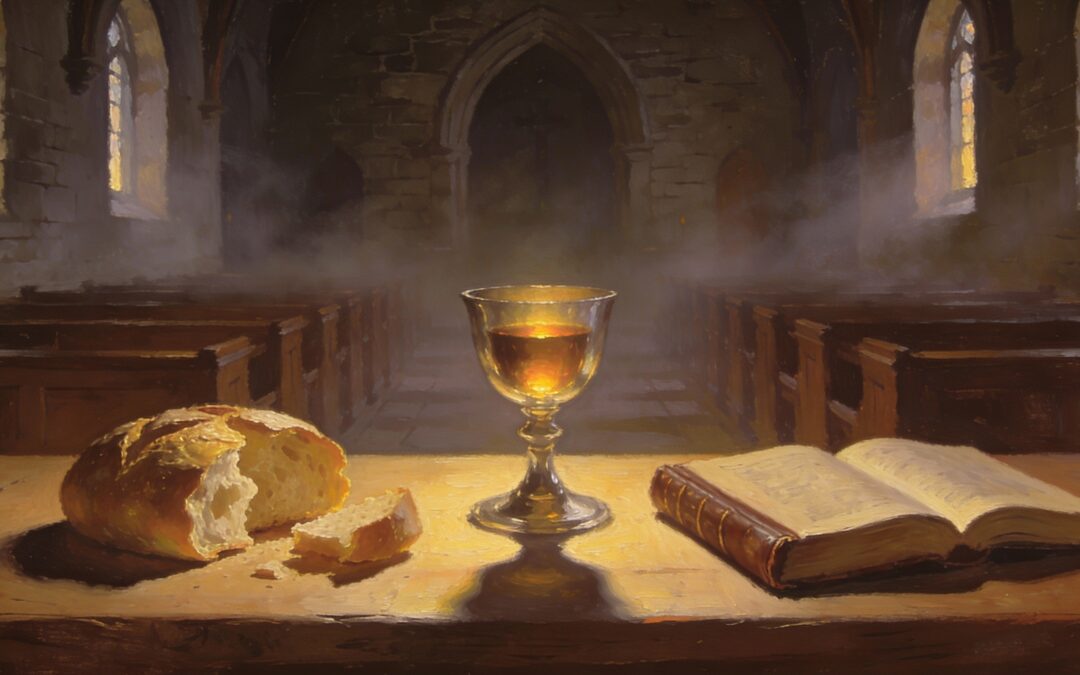
They clung to teaching, the apostles’ doctrine handed down from Jesus Himself. That Word was their anchor, not an optional add-on. Wherever Christ’s truth is faithfully proclaimed and received, the breath of life stirs. They practiced fellowship, true koinonia, where believers bore burdens, forgave freely, and shared generously. Life grows when it is poured out for others. They gathered at the breaking of bread, the Eucharistic feast where Christ offers Himself as bread for the world. In that sacred mystery, the church finds its pulse, feeding on the One who conquered death. And they prayed without ceasing, their lives a constant turning toward God’s presence and will.
What strikes me most in this picture? The absence of any mention of style, mood, or method. No guitars or fog machines, no emphasis on feeling “filled.” The church in Acts was life giving precisely because it fixed its gaze on Christ, not because it nailed the perfect vibe. To question that is to question whether we’ve learned anything from the first Christians.
Jesus Himself cuts through the confusion: “I am the way, the truth, and the life.” Life isn’t a sensation; it’s a Person. Paul unpacks this in Romans: “We have been united with Him in a death like His… united with Him in a resurrection like His.” The church’s vitality is participation in Christ’s risen life, mediated through Word and sacrament. Baptism buries us with Him and raises us anew. The Eucharist feeds us with that same life, week by week. This isn’t fleeting emotion but deepening communion. A life giving church makes Christ present: His Word thundered or whispered, His table spread humbly, His Spirit moving among the gathered faithful.
Such a church might look traditional or contemporary, urban or rural, high church or low. Skepticism of the phrase “life giving” arises precisely because it so often polices those boundaries, casting shade on historic forms as if they can’t possibly pulse with divine life. But they can, and they do, when rooted in the same devotions.
We needn’t scrap the phrase altogether. It holds truth worth reclaiming, but only if measured by Scripture, not trends. A life giving church centers the gospel, forgives sinners, welcomes strangers as family. It feeds the hungry in body and soul, weaves prayer and hospitality into daily rhythm. Its life shows in love’s generosity, not song’s volume. This frees us profoundly. Pastors needn’t stage excitement. Congregations needn’t mimic the popular. Life is gifted in Christ; we simply abide and receive.
Recall Christ’s post-resurrection moment with His disciples: He breathed on them, saying, “Receive the Holy Spirit.” That breath, divine life shared with dust, animates us still. A life giving church carries that breath outward, becoming springs of living water through Word, sacrament, fellowship. It’s presence, not performance, echoing from Jerusalem’s upper room to today’s pews and folding chairs.
The church isn’t called to sell liveliness but to live it faithfully, devoted to Acts’ four pillars until the world glimpses Christ dwelling among us. That’s a truly life giving church: not styled by preference, but saved by a Savior; rooted in Word and Sacrament, sustained by prayer, bound by love. It may not always thrill, but it endures. And in that quiet endurance, it gives life to the world.