The Danger of Needing to Be Certain
In my mind one of the greatest problems we can face in modern American evangelicalism is a sort of pathological need for certainty. We seek to have everything we can sorted out, with a bulletproof argument that is airtight and nothing can touch it. Yet, the reality of the human experience is fraught with times of doubt, questioning, and wondering. And when we have this baseline of having to have sure certainty, when those times of doubts or questions come, we fall apart.
Thankfully, this is not the picture of faith that Scripture gives to us. Yes, we can know for certain that God is real and His Word is true. But that does not mean we shouldn’t have times where we wonder, question, or struggle with our faith. In fact, it is when we do this that our faith becomes more grounded, stronger, and we look like Christ even more.
The Forgotten Day: Holy Saturday
This is what brings us to Holy Saturday—an often forgotten and overlooked day when it comes to Holy Week. We have the triumphal entry on Palm Sunday, the institution of Holy Communion and the washing of the disciples’ feet on Maundy Thursday, and the Passion narrative of Good Friday where Christ dies for the sins of the world. What we often forget, in between Christ’s death and His glorious resurrection on that Easter Sunday, is the period of time on Saturday where all was not well. Yet, if we are honest, most of us find ourselves in times and seasons in our lives that feel more like Holy Saturday than they do like Easter Sunday.
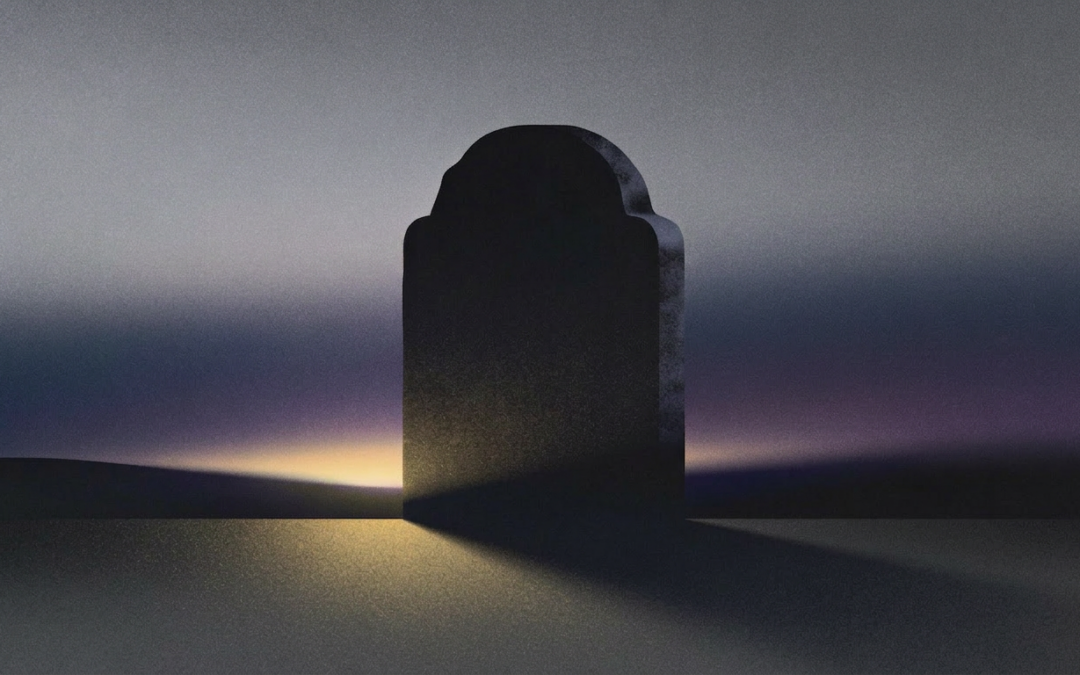
I would argue, in fact, that part of what makes the impact of Easter so powerful is the reality of the day before. The disciples had just seen their Rabbi, the one whom they confessed was not just the Messiah but God Himself, be brutally tortured and crucified. They witnessed His lifeless body being taken down from the cross, prepared and buried in the tomb, with the heavy stone rolled over its entrance. I’m sure there was a sense of desperate finality as the final rumble of stone meeting stone was heard… and then silence.
The Stillness of God
That silence is what defines Holy Saturday. God does not speak. There are no miracles. No visions. No appearances of angels or prophetic words. The tomb is closed, and God seems utterly absent. The disciples are scattered, fearful, and in shock. Even Mary, who had treasured all things in her heart from the day the angel first spoke to her, now must sit in grief beside Joseph’s borrowed tomb.
This silence is sacred. It is not the silence of abandonment—it is the silence of waiting. But from the perspective of those who lived it, it was desolation. They did not yet know how the story would end. To them, the promises seemed broken, the mission failed, the Kingdom delayed. All they had left was a memory of Jesus’ words and the ache of hope deferred.
And that is often where we live. Between promise and fulfillment. Between Good Friday’s pain and Easter Sunday’s joy. In the long, confusing silence of Saturday.
Faith in the In-Between
We see moments like this throughout Scripture as well. Abraham, in those few moments before making a sacrifice of his only son Isaac, must have felt the knife of doubt as much as the knife he held in his hand. God had promised descendants through Isaac—yet now God asked him to give Isaac up. The faith that was “credited to him as righteousness” did not come from perfect understanding but from trust in the middle of contradiction.
So too with Joseph, languishing in the Egyptian prison. He had received dreams of greatness, of God’s favor, of leadership and blessing. But those dreams seemed impossibly far away in the darkness of the dungeon. Yet it was precisely in the waiting—in the years of silence—that his faith was formed into something steadfast and wise.
The psalms, too, are full of “Holy Saturday moments.” “How long, O Lord?” David cries again and again. “Will you forget me forever?” (Psalm 13). These laments are not the voices of faithlessness, but of faith struggling honestly before God. They reveal a God who invites our questions, our confusion, and even our frustration. In doing so, they teach us that faith is not the absence of doubt, but trust in the midst of it.
The Modern Idol of Certainty
This may be why modern evangelicalism struggles so deeply with doubt. We have, in many places, elevated certainty to an idol. We confuse faith with intellectual security, discipleship with having the right answers, and orthodoxy with the inability to ask new questions. We have learned to preach “victory” so loudly that we no longer know how to sit in silence.
Yet the church of the past—the church of the saints, mystics, and martyrs—knew the value of “the cloud of unknowing.” The mystics spoke of the “dark night of the soul” not as something to be feared, but as something through which God forms His saints. It was in St. John of the Cross’s darkness that he found greater intimacy with God.
When we sanitize our theology of its mystery, we lose the very heart of what it means to walk by faith. Hebrews 11 defines faith not as knowing everything, but as the assurance of things hoped for and the conviction of things not seen. Faith leans forward, hopeful yet uncertain, precisely because we cannot yet see the whole picture.
Waiting in Hope
Holy Saturday tells us that waiting is not wasted. The disciples’ grief does not nullify the promise—it prepares their hearts to fully receive it. When Easter morning dawns, it is not the victorious who recognize the risen Christ first, but the grieving. Mary Magdalene, still weeping in the garden, hears her name spoken by her risen Lord. Her waiting becomes wonder. Her sorrow becomes song.
In our lives, too, God often works in the silence. Not through flashy miracle or instant resolution, but through stillness that draws us deeper into dependence. The silence of God is never His absence—it is the quiet preparation of resurrection.
Holy Saturday faith is the kind that waits beside the tomb, trusting that even when everything looks finished, God is not done. It is the faith that still comes to the grave, still rolls the spices, still keeps watch through the night—because love compels it.
Living Holy Saturday Faith
To live “Holy Saturday faith” in our own world means learning to embrace mystery. It means discipling our hearts to sit in unanswered questions without despair. It means comforting others not with platitudes but with presence. It means teaching our children that God is faithful even when He seems silent, and that wrestling with faith is not rebellion but relationship.
Perhaps this is the witness the modern church most needs: a people unafraid to sit in the tension between death and resurrection, who confess with trembling lips, “I believe—help my unbelief.”
In the end, Easter does not erase Holy Saturday—it redeems it. The silence becomes a stage for the song of resurrection. The darkness becomes the fertile soil from which new life bursts forth. And the waiting becomes testimony that our hope is not in our certainty, but in the God who transcends it.