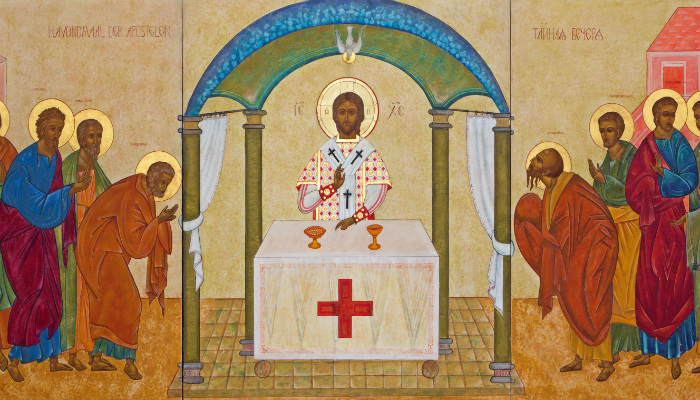
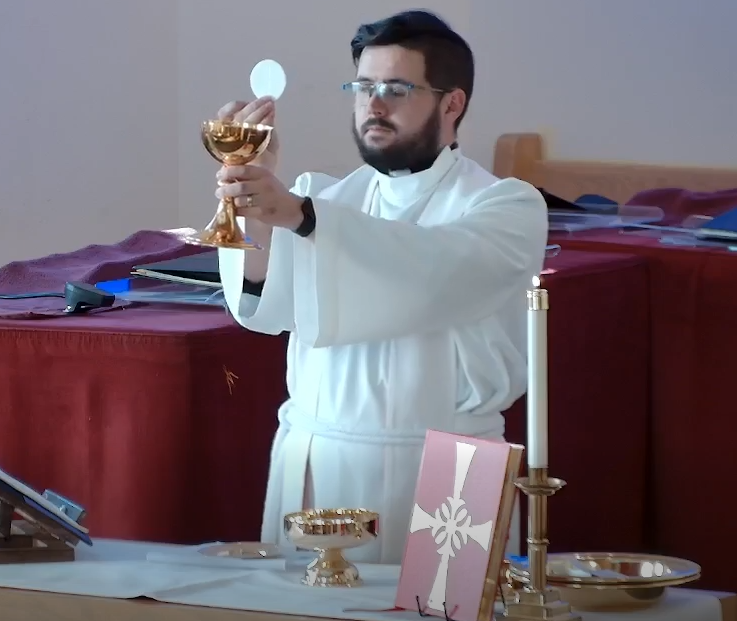
When one studies Church history as a Protestant there are one of two avenues to approach it. The first is that of the magisterial reformers such as Luther, Calvin, Cranmer and others who saw the ongoing move of the Church as good, with the need to reform and adapt to the issues being presented to maintain the fidelity and effectiveness of Christ’s Kingdom on earth. The second approach likewise stems from the reformation from characters like Zwingli, and others of the radical reformation that saw the medieval church as wholly apostate and unfaithful, having been that way some few generations after the close of the book of Acts, and it is their job to bring the Church back to the true apostolic practice of the Christian faith.
I used to be a part of that latter group. I was unequivocally taught that while there is always a faithful remnant, the Church really got back on track with Martin Luther in the 16th Century, and while things have not always been done correctly, we have the true and best version of the faith. These tendencies are particularly found in low-church Reformed circles, anabaptist, baptist and non-denomination evangelicalism. Anything traditional is viewed with suspicion as being “too Catholic” (Roman Catholic), and generally there is a HUGE knowledge gap between the book of Acts and Martin Luther, because frankly there’s not much worth knowing until the church was saved by Luther. The problem with this mentality is that in its desire to be faithful, it ends up throwing out the baby with the bathwater, and ultimately rejects what the reformers sought to do.
To actually be Protestant—and not restorationist—means recovering what the Reformers themselves knew in their bones: that the faith of the apostles was never lost, but preserved, guarded, and handed down through the centuries by the Church under the guidance of the Holy Spirit. The Protestant Reformation was never meant to erase history, but to redeem it—to scrape off the corrosion of error and neglect so that the gold of the Gospel could shine once again.
Modern Protestants often forget this. We imagine that the Reformation was about starting over, about “getting back to the Bible” as though no one in fifteen hundred years had ever read it rightly. But that’s not how Luther, Calvin, Cranmer, or any of the magisterial Reformers saw their work. They saw themselves as continuing the one, holy, catholic, and apostolic Church—reforming her where she had strayed, but never abandoning her. They were heirs of the Fathers, not orphans. Their vision of reformation was renewal within the story of God’s people, not rebellion against it.
When you actually read the Reformers, you see how deeply they drew from the well of patristic theology. Luther was steeped in Augustine; Calvin filled his Institutes with quotations from Chrysostom, Basil, and the early councils. Cranmer built the Book of Common Prayer on the bones of ancient liturgies, purified and translated for the English people. These men saw no contradiction between Scripture and the Church’s historical witness; they believed that the same Spirit who inspired the Word also preserved its faithful interpretation through the ages.
That conviction stands in sharp contrast to the restorationist impulse that dominates much of modern evangelicalism. Restorationism assumes that the Church fell off the rails almost immediately after the apostles died—that by the second or third century, Christianity was already hopelessly compromised. It views history not as a story of God’s faithfulness, but as a long night of corruption and error until “we” finally rediscovered the truth. Its posture toward the past is suspicion, not gratitude.
But such thinking is historically false and spiritually dangerous. It cuts the believer off from the communion of saints, leaving each generation to reconstruct Christianity on its own terms. It treats the Holy Spirit as though He took a sabbatical for 1,400 years, only to return in the 16th century or, worse, in a 19th-century revival meeting. That’s not faithfulness to Scripture—it’s arrogance cloaked in piety.
Thomas Oden, one of the most important theologians of the 20th century, saw this clearly. After decades as a progressive theologian chasing modern trends, he underwent what he called a “paleo-orthodox” conversion—a return to the consensual tradition of the early Church. Oden realized that genuine renewal comes not from innovation but from remembrance. He argued that the Church’s future depends on recovering her ancient consensus, what he called “the great cloud of witnesses” of the first five centuries.
Oden’s rediscovery of the Fathers was not mere academic nostalgia; it was a spiritual awakening. He came to see that the early Church’s theology was not speculative philosophy but lived wisdom—the fruit of prayer, persecution, and pastoral care. These were men and women who wrestled with heresy, hammered out the creeds, and preserved the integrity of the Gospel under immense pressure. They gave us the vocabulary of Christian faith: Trinity, Incarnation, grace, and salvation. To ignore them is to amputate ourselves from our own theological bloodstream.
The Reformers understood this instinctively. Calvin wrote, “If we wish to provide in the best way for the consciences of men, we must go back to the ancient Church.” Luther affirmed that he taught nothing new but “the same faith that Augustine and the Fathers held.” Cranmer’s Anglican liturgy drew directly from patristic sources such as the Didache, Chrysostom, and the Gelasian Sacramentary. They didn’t imagine a sharp divide between the apostolic and the catholic; they saw themselves as faithful heirs of both.
By contrast, restorationism tries to make every believer an apostle and every church a new Jerusalem. It erases history, treating the Church as a failed experiment that must be rebooted from scratch. The result is a dizzying array of “New Testament” churches, each claiming to have recaptured the primitive faith, yet all differing on baptism, the Lord’s Supper, authority, and even the Gospel itself. What was once meant to restore unity ends up multiplying division.
True Protestantism offers a different way. It stands with Scripture as the final authority, but never apart from the Church’s living memory. It reforms what has been corrupted but keeps what is good, refusing both blind traditionalism and reckless innovation. It honors the Fathers as witnesses to how the early Church lived, prayed, and understood the Word of God. It confesses that the Spirit who inspired Scripture is the same Spirit who preserved its meaning through the generations.
Thomas Oden put it simply: “The next reformation will be a recovery of memory.” That is the call of genuine Protestantism—to remember who we are, to recover the faith that formed us, to recognize that the Church is not a modern invention but an ancient household. If the Reformers could say with confidence that they stood in continuity with the Fathers, can we?
To be Protestant, rightly understood, is to be reformed and rooted—to be biblical and historical—to be evangelical and catholic. It means confessing the faith of the Nicene Creed without embarrassment, praying words shaped by centuries of saints, and reading Scripture through the same lenses worn by those who first received it. It means recognizing that tradition, when purified by the Word, is not our enemy but our inheritance.
Our age does not need another “new” version of Christianity. It needs a remembering Church—a Protestantism that knows its Fathers, honors its Reformers, and lives its faith as part of the one Body that stretches across time and space. That kind of Protestantism is not a protest of rebellion, but a protest of witness: a bearing forth of the ancient Gospel in every generation, until the Lord returns.
Over my lifetime I have seen many different types of Church leadership styles come and go, in and out of vogue. Most of them have been focused on the leadership qualities and abilities that one possesses, and how do we develop them further for use in the church setting. This from the get go makes sense. We need competent people who can lead teams and congregations for the growth of the Kingdom. This has been especially true since the explosion of Church programs in churches since the 70’s and 80’s. At the same time, we have also started to see cracks along the edges. The turnover rate in the pastoral ministry is higher than ever, with only 1 in 10 pastors who actually retire while still in the job, and 42% of pastors in the US considering leaving the ministry annually. That is staggering!. What has happened? I don’t think it’s an issue with the overall calling that people have to the ministry. That’s never been the issue.
What I have been increasingly convinced of is that we have unduly repackaged the role of a pastor. The pattern of Scripture shows that the pastor fulfills a role that is more akin to a priest, where in our Westernized context have transformed this priestly calling into that of a CEO type leader of an organization. Think of the difference between cattle driving and sheep herding. Recovering this priestly identity is not nostalgia or an attempt to be “traditional.” It’s essential for the health, witness, and formation of the Church.
I understand the general trepidation in talking about the pastor being a priest. It is usually grounded in a skepticism of, and desire to not have appearances of things that could be considered “Roman Catholic”. Yet, in that desire, those of us in the Evangelical world have unduly separated ourselves from the riches of what the historic Church has understood to be true and in line with Scripture. With that in mind,
Shepherding – Jesus said to Peter: “Feed my sheep… Tend my sheep… Feed my sheep.” – John 21:15–17
Shepherding is relational, incarnational, and sacrificial. It’s not about delegating tasks, but entering deeply into the life of the flock. Often in our contemporary era the idea of successfully leading a church is by gauging the number of programs that are offered, and how many people are attending those programs. This, as a measure of success, is able to chart the growth or decline of a ministry solely on the number of people participating in it. Often, “discipleship” is focused on making a pathway where someone comes to church, believes, starts getting more involved, starts giving financially, and then volunteers their time. While these are all good things, the focus is on the programmatic nature of their involvement, and the success of their discipleship is gauged off involvement in said programs.
Rather, pastors as priests are called to shepherding. Instead of driving people to programs, the role is all about being with the flock as they go about their lives. Just as a shepherd would live with the sheep in the field, the pastor is called to be in and about the flock in the normal rhythms of life, not shut-up in an office planning the next worship extravaganza or coordinating the next program.
Teaching – Pastors guard truth and call people to holiness: “Preach the word; be ready in season and out of season; reprove, rebuke, and exhort, with complete patience and teaching.” – 2 Timothy 4:2
Of all the tasks and roles that a pastor is to fulfill, teaching and preaching are the ones that go without question. We can never remove the teaching importance of the pastor from a priestly understanding. In the Old and New Testaments, it was incumbent upon those in leadership in the Temple or Early Church to teach God’s Words and ways to His people. The role of preaching and teaching must of course never be removed, but it should be put in its proper place alongside the other roles that the pastor as priest fulfills. What has generally happened in the last half century, particularly in Western Christianity is the simplification of preaching into something that is no more than inspiration and platitudes. That must be rectified to return the permanence of solid preaching that correctly conveys the purpose and will of God to His people through His Word.
Intercession – The pastor stands between God and the people—not as a barrier, but as a bridge. Paul urges Timothy, “I urge that supplications, prayers, intercessions, and thanksgivings be made for all people” (1 Timothy 2:1). This is not mere sentiment; it is a priestly calling. The pastor’s intercession is an act of love, lifting the names and needs of the flock before the throne of grace. Prayer is one of the last vestiges of the priestly ministry that has remained intact in much of the Evangelical world. Yet even here, something has been lost. The modern trend toward purely extemporaneous prayer has, at times, replaced the deep rhythm and form of a life steeped in prayer. Historically, the priestly pattern of prayer was not spontaneous alone but structured—rooted in the “Daily Office,” where morning and evening prayers wove together Scripture, intercession, and thanksgiving for all people. This rhythm trained the heart to carry the congregation into the presence of God continually, not just reactively. The pastor’s intercession is not a task to check off but a vocation to inhabit—an ongoing participation in Christ’s own ministry of prayer for His Church.
Sacramental Ministry – In a sacramental vision of ministry, the pastor becomes a steward of the mysteries of God. Baptism, the Lord’s Supper, and absolution are not symbolic niceties but tangible means through which Christ gives Himself to His people. As Paul writes, “The cup of blessing that we bless, is it not a participation in the blood of Christ?” (1 Corinthians 10:16). The sacraments are where heaven touches earth, where the grace of God is not only declared but embodied. The pastor’s role in administering them is not about power or prestige but service—serving as Christ’s hands extended, offering grace that is not their own to give but His alone. In Free Methodist and broader evangelical contexts, we must recover this sacramental imagination: to see baptism not as a public statement of faith alone but as a moment of new creation; to see communion not merely as a memorial but as a mysterious participation in Christ’s body and blood; to see confession and absolution as the embrace of the Father to the prodigal. The sacramental ministry is where the Word becomes flesh again and again in the life of the Church.
Living Sacrifice – If the pastor’s ministry is priestly, then their life must also be sacrificial. Paul writes, “Present your bodies as a living sacrifice, holy and acceptable to God, which is your spiritual worship” (Romans 12:1). The pastor’s calling is not simply to lead worship but to become worship—to live a life that mirrors Christ’s own self-giving love. Ministry, at its heart, is poured-out living. Paul describes his own life this way: “I am poured out as a drink offering” (Philippians 2:17). This is not a romantic image; it is the gritty reality of discipleship. The priestly pastor embodies a life of surrender, of holiness offered to God for the sake of others. Every sermon prepared, every bedside prayer whispered, every unseen act of service becomes part of that offering. In a world that prizes comfort, efficiency, and personal fulfillment, the pastor is called to a different pattern—the pattern of the cross. To be a living sacrifice is to allow one’s own life to become the altar where the love of Christ is made visible.
True pastoral authority is not rooted in charisma, charm, or organizational success—it is grounded in ordination under Christ and expressed through faithfulness in ministry. Peter exhorts pastors to “shepherd the flock of God… not domineering over those in your charge, but being examples to the flock” (1 Peter 5:2–3). The authority of the pastor is not managerial but sacramental; it is not seized but received. It comes through the laying on of hands, through a calling that is both divine and communal, confirmed by the Church and commissioned by Christ Himself. In a culture that often measures leadership by visibility, influence, or metrics, the pastor’s authority is quiet, cruciform, and deeply relational. It is the authority of the towel and basin, not the throne and scepter. The pastor’s task is not to control but to care, not to command but to cultivate holiness in the people of God. When the Church recovers this vision of authority as humble participation in Christ’s own shepherding, pastoral leadership ceases to be a performance and becomes once again a vocation of love—faithful, steady, and shaped by the cross.
Authority is cruciform, sacrificial, and relational—not transactional.
Dimension
Pastor as CEO / Org‑Leader
Pastor as Priest under Christ
Identity
Manager, strategist
Mediator, shepherd, steward of grace
Primary Task
Growth, outreach
Spiritual nourishment, holiness, sacramental life
Metrics of Success
Attendance, budget
Faithfulness, spiritual fruit
Preaching
Relevant, motivational
Proclaiming Word, truth, repentance
Worship & Sacrament
Optional
Central, formative
Care
Programmatic
Personal, incarnational
Authority
Skill-based
Call & ordination under Christ
Goal
Performance
Holiness & participation in Christ
Recovering the pastoral priesthood reshapes churches, leaders, and congregations:
Formation over Platform: Investment in pastoral holiness, not only skill.
Intercession & Spiritual Care: Deeply entering into the spiritual life of the congregation.
Authority as Servanthood: Leadership is given, not grasped.
Holiness over Popularity: Sometimes speaking truth is unpopular—but faithful.
Church as Temple, Not Corporation: Visible sanctity and grace, not just programs.
When the Church recovers the language and practice of the priesthood… we begin to see people not as consumers of religion but as participants in the mystery of Christ. Pastors, the call is urgent. Will we embrace a role as priests of God’s household, stewards of the mysteries of Christ, bearers of the flock to God? Or will we settle for being managers of institutions, administrators of programs, or performers for applause?
Christ said to Peter:
“Feed my sheep.” – John 21:17
It’s not about building organizations. It’s about bearing God to His people, and His people to God. That is priestly ministry. That is true pastoral leadership.
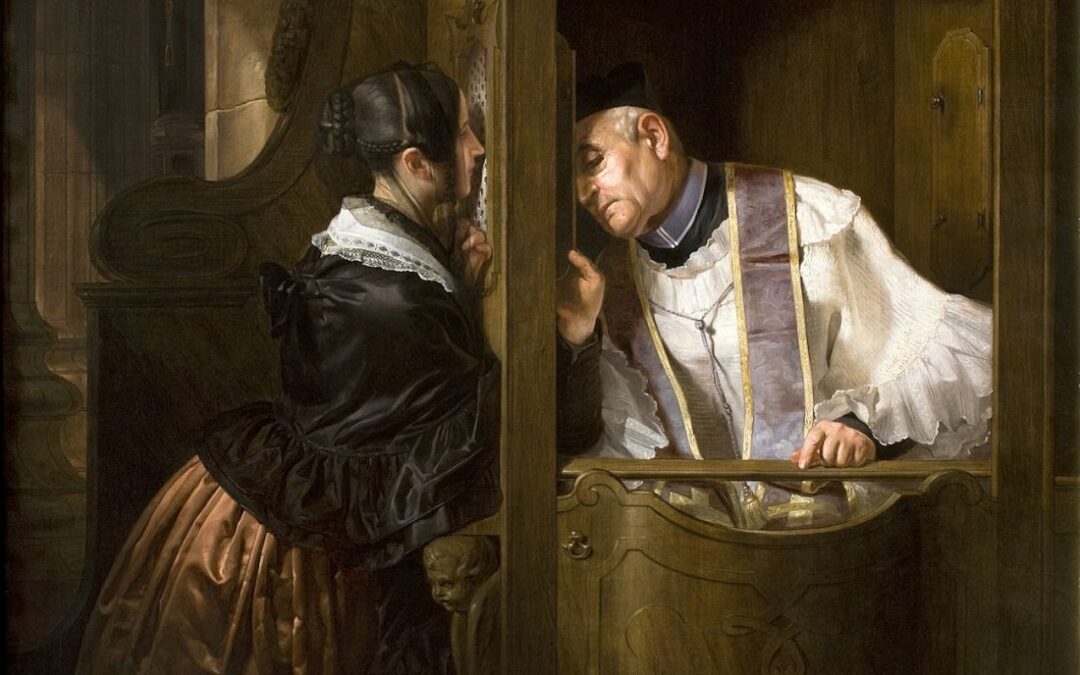
Evangelical Christianity has rightly emphasized that forgiveness is grounded in the once-for-all atoning work of Jesus Christ (Hebrews 10:10–14), received by grace through faith alone (Ephesians 2:8–9). Yet Scripture and the historic Christian tradition alike reveal that the means by which this grace transforms believers are not purely internal or private. Confession—verbal, relational, and restorative—stands as one of the chief practices through which the gospel is embodied in the life of the Church.
For many Protestants, the very idea of confession evokes imagery of Roman Catholic practice: a believer entering a confessional booth, disclosing sins to a priest, and receiving absolution. This often triggers skepticism: “We only have one mediator—Christ—and only God can forgive sin!” Such a reaction is understandable, especially in light of historical abuses. Yet beneath this instinct lies an incomplete picture of what confession truly is and how it functions in Scripture and the Church’s life.
One of the key differences between Protestant and Roman Catholic understandings of confession lies in the theology of the sacraments. Roman Catholicism recognizes seven sacraments, including penance, whereas most Protestant traditions affirm only two—Baptism and the Eucharist—as dominical sacraments, instituted directly by Christ. However, this need not exclude other practices from being understood as sacramental—that is, as outward signs that convey inward grace—even if they are not sacraments in the strictest sense.
A sacrament may be defined as an outward and visible sign of an inward and spiritual grace, instituted by Christ himself, whereby God works effectively to convey and confirm that grace to the believer. Rooted in Augustine’s classic definition (De Catechizandis Rudibus 26.50) and received through the Anglican formularies (Article XXV of the Thirty-Nine Articles), this understanding was embraced and expanded by John Wesley. Wesley described the sacraments as “means of grace”—channels through which the Holy Spirit works to awaken, justify, and sanctify believers (cf. Sermon 16, The Means of Grace).
Scripturally, these means are grounded in Christ’s own commands: “Do this in remembrance of me” (Luke 22:19) and “Repent and be baptized… for the forgiveness of your sins” (Acts 2:38). The sacraments are therefore both divine acts and human responses—signs of covenantal grace that unite the Church to Christ and to one another.
At its most basic, a sacrament is an avenue of divine grace for the believer who approaches in faith. In the Anglican tradition, two sacraments—Baptism and the Eucharist—are recognized as instituted by Christ, while five additional “sacraments of the Church” (confirmation, ordination, marriage, penance, and unction) are regarded as sacramental practices that, while not dominical, still convey grace as means of grace. Through this framework, confession (or penance) can rightly be seen as a vital part of Christian life—biblically grounded and pastorally fruitful—without elevating it beyond the authority of Scripture.
Why, then, emphasize confession in particular? Because of all the “sacraments of the Church,” it is the only one largely absent from Evangelical practice. Marriage is universally observed; ordination and the laying on of hands continue in various forms; prayer for the sick remains common; and church membership often functions analogously to confirmation. Yet confession—or Penance and Reconciliation—is virtually without an equivalent in most Evangelical contexts. While believers are encouraged to confess sins privately to God or occasionally to one another in accountability settings, these practices often lack the theological depth, consistency, and pastoral intentionality that historic confession embodies. Recovering a form of confession rooted in Scripture and Wesleyan spirituality could therefore restore an essential dimension of the Church’s ministry of healing and holiness.
In Scripture, confession and repentance are rarely private matters. Sin has both a vertical dimension (against God) and a horizontal one (against others and the covenant community). For this reason, biblical confession almost always involves both acknowledgment before God and accountability or restitution before others.
In the Old Testament, confession was typically public and tied to tangible acts of repentance. Leviticus 5:5–6 commands that “when anyone becomes aware that they are guilty… they must confess in what way they have sinned,” followed by a guilt offering to make atonement. Numbers 5:6–7 likewise directs that when one wrongs another, “they must confess the sin they have committed” and “make full restitution for the wrong, adding a fifth of the value to it.” Confession here is both verbal and restorative—it seeks to repair relationships and restore justice.
Public confession also marked Israel’s communal life. In Ezra 10:1, Ezra prays, “We have been unfaithful,” prompting the people to gather and confess together. Similarly, Nehemiah 9:2–3 depicts the people standing and confessing “their sins and the sins of their ancestors.” Repentance in these contexts is not merely individual but corporate—acknowledging that sin damages the whole covenant community.
This pattern continues into the New Testament. John the Baptist’s ministry of repentance included open confession: “They were baptized by him in the river Jordan, confessing their sins” (Matthew 3:6). James instructs believers, “Confess your sins to one another and pray for one another, that you may be healed” (James 5:16), emphasizing both mutual accountability and the healing power of truth-telling.
Restitution also remains integral to repentance. When Zacchaeus encounters Jesus, his faith expresses itself through reparation: “If I have defrauded anyone of anything, I restore it fourfold” (Luke 19:8). Jesus affirms this as genuine repentance, declaring, “Today salvation has come to this house.” Repentance, then, is never merely inward—it manifests in transformed behavior and restored relationships.
Even the Lord’s Prayer ties divine forgiveness to human reconciliation: “Forgive us our trespasses, as we forgive those who trespass against us” (Matthew 6:12). Our reconciliation with God is inseparable from our reconciliation with one another.
Thus, biblically, confession is not a private transaction between the sinner and God alone. It is a relational act—rooted in community, expressed through words and deeds, and often requiring public acknowledgment and restitution. The grace of forgiveness is never cheap or isolated; it calls us into restored fellowship with both God and neighbor, embodying the gospel’s ministry of reconciliation (2 Corinthians 5:18–19).
Confession to another believer is a powerful act of humility and healing (James 5:16). Yet confession to an ordained pastor carries a distinct biblical and ecclesial significance, recognizing the Church as the appointed instrument through which Christ ministers reconciliation. Throughout Scripture, God’s forgiveness is declared through authorized representatives—prophets, priests, and ultimately the apostles—to whom Christ entrusted the authority of forgiveness: “If you forgive the sins of any, they are forgiven” (John 20:23; cf. 2 Corinthians 5:18–20).
The pastor, as a steward of Word and Sacrament, stands not as a private confidant but as a public servant of Christ and his Church—entrusted to declare absolution, offer pastoral counsel, and guide the work of restitution in the name of the gospel. Confession before a pastor thus anchors repentance in the visible life of the Church, guards against self-deception, and assures the penitent that forgiveness is not merely a feeling but a divine reality—announced through Christ’s ordained minister.
Attached here is the PDF of this entire article, along with confessional rubrics and guidelines for privacy and legal requirements.
Within the spiritual framework and practice of many evangelical Christians in the United States, there exists a significant gap in our understanding and application of the historical theology and praxis of the sacraments—or, more broadly, of sacramental actions. These are actions that, while not instituted sacraments of Christ (such as Baptism and the Eucharist), still bear a sacramental quality in that they serve as means of grace: tangible conduits through which God communicates His grace to His people. In classical Methodist and Wesleyan theology, these are understood as divinely appointed channels by which the life of God is imparted to the believer (cf. John Wesley, Sermon 16: The Means of Grace).
The Modern Divide Between the Physical and the Spiritual
One of the primary roots of this deficiency lies in the modern dichotomy between the spiritual and the physical. Western thought since the Enlightenment has often driven a rigid bifurcation between the two realms, sometimes even veering toward a subtle Gnosticism—a disdain for the physical in favor of the “purely spiritual.” This worldview is foreign to the biblical imagination.
In Scripture, and in the world that birthed it, the physical and spiritual are deeply intertwined. Creation itself is sacramental in that it reveals God’s invisible nature through visible means (Romans 1:20). Humanity, made in the image of God (Genesis 1:27), embodies this intersection of spirit and matter. God’s interactions with His people consistently employ physical means—anointing oil, water, bread, wine, touch, and even dust—to communicate spiritual realities.
The Incarnation as the Foundation of Sacramentality
At the heart of a sacramental worldview lies the Incarnation: “The Word became flesh and dwelt among us” (John 1:14). In Christ, God sanctified matter itself, showing that the physical world can be a vessel of divine grace. To affirm this is not to drift toward superstition, but to stand squarely within the center of Christian orthodoxy.
The Incarnation declares that God does not despise material creation; He works through it. From the water of baptism (Acts 2:38; Titus 3:5), to the bread and wine of the Eucharist (1 Corinthians 10:16–17), to the laying on of hands (2 Timothy 1:6), the pattern is consistent: God uses the physical to effect the spiritual.
The Laying on of Hands: A Sacramental Action
Paul reminds Timothy, “Do not neglect the gift you have, which was given you by prophecy when the council of elders laid their hands on you” (1 Timothy 4:14). Here, something more than symbolic recognition occurs—grace is conferred. The act of laying on hands is a physical sign through which God imparts spiritual empowerment and affirmation of calling. This understanding echoes throughout Church history, from the apostolic era to the present day.
John Calvin, while cautious about overextending the term “sacrament,” still recognized that God uses external signs as “instruments of His grace” (Institutes, IV.xiv.1). Likewise, Wesley emphasized that means of grace are “outward signs, words, or actions, ordained of God, and appointed for this end—to be the ordinary channels whereby He might convey His grace to men.”
The Eucharist and the Sacramental Imagination
The same principle applies to the Eucharist. While we eat bread and drink wine, we do so in faith that through these elements we participate in the Body and Blood of Christ (1 Corinthians 10:16). The physical act points beyond itself; it is both remembrance and participation (anamnesis and koinonia). As Jesus said, “This is my body… this is my blood” (Matthew 26:26–28).
Such an understanding guards against a reductionist view of the Lord’s Table as mere memorial. The mystery of Christ’s presence is not explained by philosophical categories but experienced by faith within the Church’s worship.
The Loss of the Sacramental Imagination
Unfortunately, in the last two centuries, the rise of scientific rationalism and modernistic philosophy has profoundly shaped Protestant imagination. Evangelicals often seek the movement of the Spirit, but only in “spiritual” ways—detached from the physical and the ordinary. We have come to expect God in the spectacular, forgetting that He often chooses the simple, tangible, and embodied.
Recovering Evangelical Sacramentalism
To recover a robust sacramental worldview is not to abandon evangelical conviction—it is to deepen it. Evangelical sacramentalism affirms that grace is not confined to the invisible realm but permeates all creation. It insists that God meets us in Word and matter, Spirit and flesh.
When we anoint with oil (James 5:14), lay hands in prayer (Acts 8:17), break bread in communion (Luke 24:30–31), or even gather in corporate worship (Hebrews 10:24–25), we participate in the mystery of a God who mediates His presence through His creation.
The Church’s task, then, is to reclaim this incarnational imagination—to see the world once again as charged with the grandeur of God (Psalm 19:1). By doing so, we do not drift into ritualism, but rediscover the very heart of our faith: that the God who became flesh continues to meet us in the ordinary, to make us holy, and to confer grace through the tangible signs of His love.
Today is World Communion Sunday—a day I honestly hadn’t paid much attention to until this week. I saw a church I follow on social media post that they would be celebrating Communion today because of the occasion. I paused for a moment and thought, That’s wonderful. A day specifically set aside to highlight and participate in one of the central Sacraments Christ commanded His Church to observe—“as often as you drink it”—is something to celebrate.
Over the past year, I’ve noticed a growing renewal of interest in the Table—whether you call it the Eucharist, Communion, the Lord’s Supper, or the Lord’s Table. In many churches, there’s a quiet but steady movement to return to the centrality of this sacred meal in worship. And it’s not without reason.
When we look at Scripture, we see that the early Church placed the Table right at the heart of their gatherings. Acts 2:42 tells us, “They devoted themselves to the apostles’ teaching and to fellowship, to the breaking of bread and to prayer.” The “breaking of bread” here isn’t just sharing a meal—it’s the Eucharist. The early believers didn’t treat Communion as an occasional ritual. It was a regular and vital act of worship, a visible expression of their fellowship with Christ and with one another.
And that pattern continued for centuries. Through the early Church Fathers, through the medieval Church, through the Reformation and beyond, the weekly celebration of the Eucharist was the norm. It’s still the case today in many Anglican, Orthodox, Lutheran, and Catholic churches. The Table wasn’t an optional extra—it was the very center of Christian worship, the place where heaven and earth meet in the mystery of God’s grace.
But somewhere along the way—particularly in Protestant churches in America—that rhythm changed. For many congregations, especially in non-denominational or contemporary settings, Communion is now a monthly or quarterly event, sometimes even less. It’s not that these churches don’t love Jesus or value the cross—it’s that the Table has been unintentionally sidelined.
Part of this happened out of necessity. In the early years of the United States, the Church was spreading faster than clergy could keep up. Methodist circuit riders, for example, traveled hundreds of miles to serve multiple congregations. They might only reach a particular church once a month, and when they did, that was when the Lord’s Supper was celebrated. It was a practical and pastoral reality, not a theological one—and in many places, it’s still necessary today.
But over time, this practical limitation became a habit, and that habit became a tradition. What began as an issue of logistics slowly reshaped our theology and expectations. People grew accustomed to celebrating Communion infrequently, and that irregularity came to feel normal—even spiritual.
The second shift was theological, and this one has had a deeper, more lasting impact. During the Radical Reformation, some reformers—wanting to distance themselves from perceived excesses in medieval theology—rejected the idea that Christ is truly present in the elements. They reduced Communion to a symbolic act of remembrance, a kind of mental exercise to recall the crucifixion.
Now, remembrance is indeed part of the Supper. Jesus Himself said, “Do this in remembrance of me.” But to say it is only remembrance is to strip away something sacred and mysterious. For the first 1,500 years of Christianity, believers of every tradition—East and West—affirmed some form of the Real Presence of Christ in the Eucharist. They might have debated how it happens, but they agreed that when we gather at the Table, Christ is truly present among us in a unique and powerful way.
Even the early Reformers like Luther, Calvin, and Cranmer held to this conviction, each in their own language. The Anglican tradition developed a rich understanding that Christ is “really and spiritually present” in the Eucharist, not in a crude or mechanical sense, but through the mystery of the Holy Spirit. The Wesleys inherited this view, and through Methodism, they brought a renewed emphasis on the Eucharist as a means of grace—a channel through which God works to strengthen, renew, and sanctify His people.
But over time, the symbolic-only view spread widely, especially through revival movements and the broader Evangelical world. Many sincere and faithful believers came to see Communion as little more than a memorial, a time to think about what Jesus did for us. And while that reflection is good and necessary, it misses the deeper truth that the Supper is not just something we do for God, but something God does in us.
In much of Evangelicalism today, even in denominations that officially affirm the Real Presence, the practice of Communion has been shaped more by the radical reformers than by the classical Christian consensus. Part of the reason is the proliferation of evangelical publishing—books, study guides, and devotional materials that are biblically faithful and orthodox in many ways, yet often reflect a theology of the sacraments that is thin or incomplete. These materials have shaped generations of believers who, though belonging to liturgical or sacramental traditions, now think and practice more like Baptists or Zwinglians when it comes to the Table.
I don’t say that to criticize—it’s simply the reality of how ideas spread. People need good content to learn and grow from, and for a long time, most of what was available leaned toward a non-sacramental framework. That’s why I’m so encouraged by organizations like Seedbed, which are creating thoughtful and engaging resources from a Methodist and Wesleyan perspective—resources that help reclaim a fuller, richer understanding of grace and sacrament.
So here’s my plea to the Church: let’s come back to the Table. Let’s make the Lord’s Supper central again. Not as a token observance, but as the heartbeat of our worship. When we gather around the Table, we don’t just remember Christ’s sacrifice—we receive it afresh. We are nourished by His grace. We are united with one another. We are strengthened for mission. The Eucharist is not an empty symbol—it’s a living encounter with the risen Christ who meets us where He promised to be.
And this isn’t something that only large or liturgical churches can do. Whether you worship with a guitar and projector or a choir and organ, whether you meet in a cathedral or a rented school gym, Christ’s Table fits every context. The meal He gave us isn’t bound by style or size. It’s the meal where He Himself is both the host and the feast.
If we long to see revival in our churches, renewal in our lives, and transformation in our communities, we won’t find it through better programs or slicker production. It starts where the early Church started—with the breaking of bread, with the Word, with prayer, with fellowship around the Table.
Because when we gather there, Christ Himself is in our midst.